Paris was exhilarating; Paris was exhausting. By Easter, especially with all the extra services the choir had to attend, I felt in need of a break. One problem: no money. Then someone at St. George’s Church told me that a few members had recently gone on a retreat at a Benedictine monastery. It sounded restful and inexpensive. It sounded interesting. I wrote to the Benedictines and asked if it would be possible for me to work instead of paying them for my stay. Of course, they replied. There is always gardening to do. And that is how I came to visit Bec-Hellouin in Normandy for the first time.
The abbey at Bec dates back to the 11th century. The parishioners of St. George’s had gone there because of its strong connections to the Church of England. William the Conqueror was from those parts and called on a friend from Bec Abbey, Lanfranc, to take the position of Archbishop of Canterbury. Most of the church had been destroyed during the Revolution (a tower remained), but in the late 1940s, a group of monks resettled the remaining abbey buildings. The former refectory – an austerely beautiful vaulted space in a Neoclassical building dating from the 17th century, which had been used as a stable during the Revolution – became the new church.

My destination was not the abbey itself, but the nearby Monastère Ste-Françoise Romaine, whose residents were called moniales, rather than nuns. The monastery was about two kilometres from the abbey and consisted of a main building and several large, comfortable houses for guests. One of the wonderful features of the place, for me, was the fact that on Sundays and feast days, the moniales joined the monks in the abbey, so they were able to sing the vast repertoire of four-part church music, rather than being restricted to women-only or men-only music. In fact, the choir was renowned and had made several records.
On the Tuesday after Easter, I left Paris early in the morning and took a train to Evreux. I bought a coffee in Evreux station as I waited for a bus. I was hungry, but I was anxious not to spend much money. Then a mother standing beside me bought her child a fresh brioche. That was too much for me. I bought one. I don’t think anything has ever tasted better.
The bus from Evreux wandered through the countryside, stopping in small villages. A couple of hours later, I got off and walked up the road leading to the monastery. As I approached, I saw the black-robed moniales were getting onto a minibus. Soeur Marie-Josèphe, the guest mistress, took my bag, put it under a seat on the minibus, and motioned me to a seat at the back. The moniales were on their way to sing Vespers at the Abbey, and I was apparently going with them.
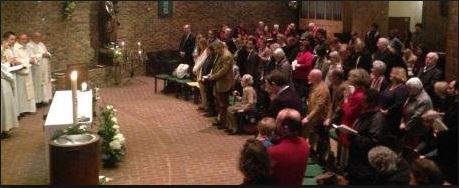
At twilight, having had nothing more than that coffee and brioche all day, I found myself in a long hall made of pale stone, where the monks and moniales stood in a circle around the altar, chanting. The monks wore cream-coloured robes and the moniales wore floor-length cream-coloured veils over their black habits. They still do, as this image from the monastery website shows.
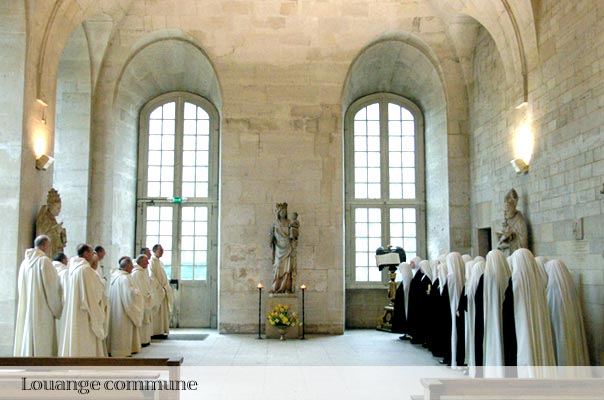
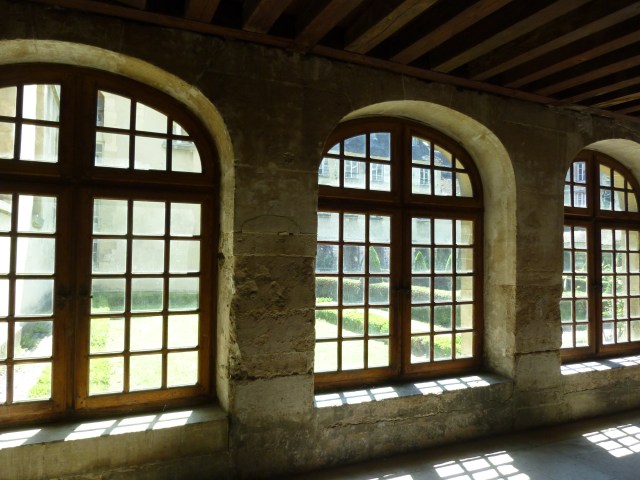
The windows of the former refectory were clear glass, with a view of fields and trees. The light outside faded, the candles in the church glowed. The music took me far away.
Back to the monastery in the minibus in the dark. (This was a special dispensation for a new arrival – after that, I walked to and from the abbey on my own, through the quiet Normandy countryside.)
After dinner, at which I struggled to stay awake, I was shown to a room at the top of one of the houses on the property. It was plain, but more comfortable than my Paris room, and joy of joys, there was a bathroom with a huge, claw-footed bathtub.
In this aerial view of the Monastère from a postcard I sent to my parents, you can see the main building, and at the bottom right, the guesthouse with its blue roof. The dormer on the left was the room I occupied.

I spent five days there, mostly on my knees, either weeding the leeks or at services in the moniales’ Oratoire or at the Abbey. The food was simple and plentiful. I ate as much as I could. I took frequent baths. I met with and talked to the moniales, who were well-informed and perceptive. Soeur Marie-Josèphe could be very funny. One of the guests asked her what nuns did during their recreation time. She raised one eyebrow. “Figurez-vous,” she said, “we are mostly silent all week. What do you think we do?”
I hated to leave, but Paris waited, with its work and obligations. And it wouldn’t be my last visit to Bec.
Back on the rue du Ranelagh, the hectic pace continued. My mother has kept many of the letters I wrote during that time and as I read them now, I am astonished at the amount I managed to pack in week after week. Here is something I wrote in April:
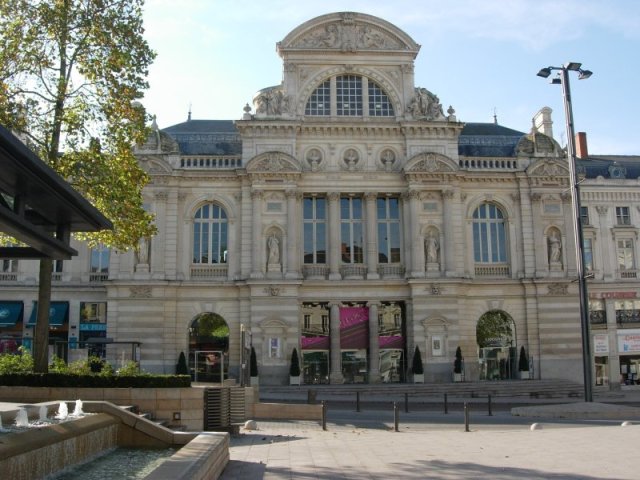
I sang in a concert with the Jeunesses Musicales de France – the Mozart Requiem at the Salle Pleyel, a 30’s recital hall with no atmosphere/ambience whatsoever. Even backstage was about as thrilling as the lounge at Central Mortgage and Housing. We had to wear long black skirts and awful synthetic blouses with pobbly buttons down the back to ensure discomfort when you sit down and which split apart when you bend over. The effect was to make us all look severe and sexless (80 female choristers who reproduce by budding or spores). Still, it went off all right.
The reference to Central Mortgage and Housing was from a dreary summer job in Halifax, and the bit about reproduction betrays my recent degree in biology.

The letters also describe a busy social life. A friend from the Jeunesses introduced me to some great cheap places to eat. When an American friend from Angers visited with her parents and grandparents, I was able to put this knowledge to good use. I also made two good friends at church, both Yale students. Larry was studying organ with Marie-Claire Alain and Adrienne was doing research for her Ph.D. in art history on the work of Theodore Rousseau (not to be confused with Douanier Rousseau) and the iconography of trees.
Larry and I formed a habit of walking the length of the Champs-Elysées after church on Sunday. He once dragged me into the McDonalds near the Arc de Triomphe to sample the milkshakes, which he said were so much better than the equivalent in the United States, because they used such creamy milk (!). Adrienne lived in the Cité Universitaire, but once house-sat for some American friends in a place near the Pantheon. I remember an evening there making and then eating cheesecake, something neither of us had been able to find in Paris.
In May, I wrote:
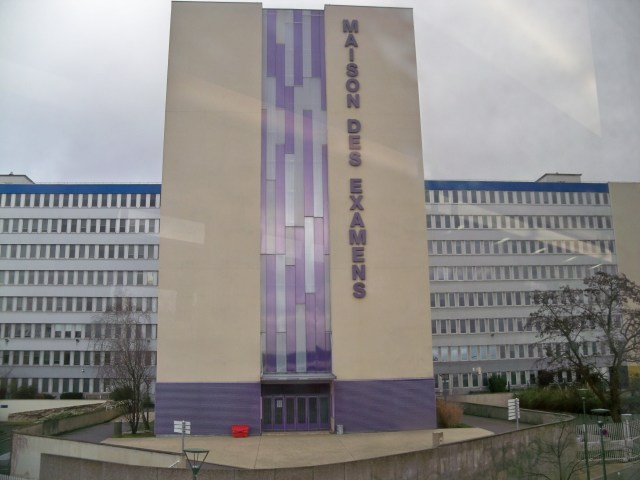
I’ve had 6 hours’ worth of exam writing so I am temporarily sick of life – it was no better and no worse than I expected, with one or two GLARING exceptions. As I may have mentioned, owing to the fact that all 140,000 students in Paris write their exams in the same few weeks at the end of term, we [foreign students] had our exams moved forward to today, whereas lectures continue until next Friday. The questions were written and submitted by the professors months ago and as a result there were a couple of questions [on topics] that had not been developed in classes yet. Oh well, improvise, improvise. By the sixth hour I had writer’s cramp up to my biceps and I would have put anything down just to finish and get away.
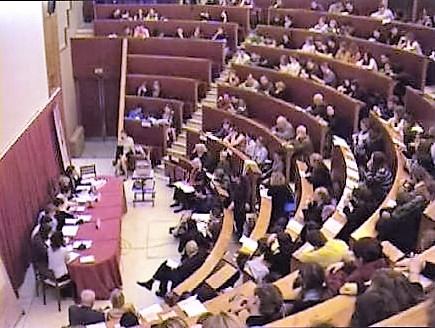
The exams were held in large modern buildings in Arceuil, a suburb south of Paris. To add insult to injury, the location was outside the zone allowable on my Carte Orange, so I had to pay an extra fare to get there.
When term was over, I headed back to Bec-Hellouin, this time for a longer stay. I was run down and my resistance to infection was low (another whole story there, involving a trip to hospital, but I shan’t go into it now). I may be one of the few people to have experienced malnourishment in Paris, because I spent money on everything except food. But two weeks of gardening and chapel and the moniales’ hearty meals put me back together again.
Then on to Caen, Anne-Marie, and her family. They had recently had a death in the family, and I asked Anne-Marie if I should stay away. No, she replied, please come. I think I provided a useful distraction at a difficult time, and as always, they were generous and kind.
When I returned to Paris just before my departure for home, my chambre de bonne was occupied by an exchange student visiting one of Madame L.’s sons, but we had prepared for this. Monsieur St-Hilaire let me stay in his granddaughter’s room. She stayed with him in term time (though she was never there when I visited), but had returned to her family in La Baule. So my last week was spent in comfortable surroundings.
The night before I left, Adrienne and I had dinner together. I had booked a cheap charter flight from London to New York, and she gave me the names and numbers of two friends in London. I expected to be in Gatwick for only a few hours and assumed the information would be of no use. I was wrong.
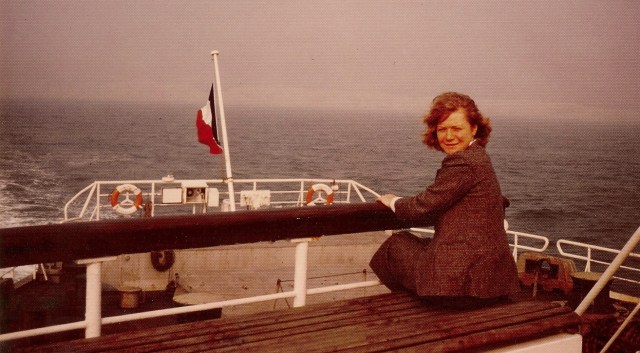
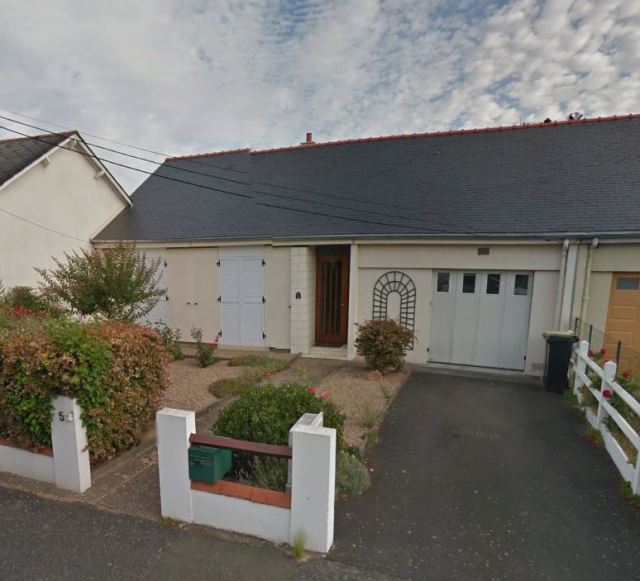
When I arrived at Gatwick after a hovercraft trip across the Channel, my flight was overbooked. There would, however, be a place for me on a flight that left in three days’ time. After taking a little while to absorb this information, I hunted for the numbers Adrienne had given me. The first person I called was no help. The second told me to call back in half an hour. When I did, he told me to come to William Goodenough House, a residence near the University of London.* He had arranged a room there for me. I checked everything but an overnight bag and my guitar at the airport and set off for three days of unexpected sightseeing in London.

The journey home had one further wrinkle in store. Before leaving Paris, I had gone to American Express and several banks in Paris in an attempt to change francs into U.S. dollars. There was some bureaucratic barrier to this exchange, and I was told to change my money at the airport. At Gatwick, the woman at the exchange desk told me she would have to convert the funds first to pounds and then to dollars, and that I would lose quite a bit on the transaction. Change them on arrival in New York, she suggested.
But the flight was delayed, and I arrived at Kennedy Airport well after midnight. The exchange desks were closed and I had nothing but English pounds and French francs. I needed to get to La Guardia to catch a morning flight to Toronto. I went out to the taxi stand and asked for suggestions. One fellow said he had a taxi-driver friend who might take foreign currency. The friend was summoned, and I paid for my trip across New York in French francs. I slept on the floor La Guardia near the Air Canada check-in desk and got the first flight out to Toronto and home.
Text by Philippa Campsie, photographs from the the Wikipedia entries for the Abbey of Bec Hellouin, Salle Pleyel, and the Maison des Examens in Arcueil, and the websites of the Monastère Ste-Françoise Romaine and William Goodenough House.













![Compagnie_parisienne_d'éclairage_et_de_[...]Fernique_Albert_btv1b1200034x (3)](https://parisianfields.com/wp-content/uploads/2016/08/compagnie_parisienne_dc3a9clairage_et_de_-fernique_albert_btv1b1200034x-3.jpeg?w=640&h=590)
![Compagnie_parisienne_d'éclairage_et_de_[...]Fernique_Albert_btv1b1200034x (2)](https://parisianfields.com/wp-content/uploads/2016/08/compagnie_parisienne_dc3a9clairage_et_de_-fernique_albert_btv1b1200034x-2.jpeg?w=640&h=522)
![Compagnie_parisienne_d'éclairage_et_de_[...]Fernique_Albert_btv1b1200034x (10)](https://parisianfields.com/wp-content/uploads/2016/08/compagnie_parisienne_dc3a9clairage_et_de_-fernique_albert_btv1b1200034x-10.jpeg?w=640&h=549)
![Compagnie_parisienne_d'éclairage_et_de_[...]Fernique_Albert_btv1b1200034x](https://parisianfields.com/wp-content/uploads/2016/08/compagnie_parisienne_dc3a9clairage_et_de_-fernique_albert_btv1b1200034x.jpeg?w=640&h=617)

![Vue_perspective_de_l'abbaye_de_[...]Cochin_Louise-Madeleine_btv1b84049665](https://parisianfields.com/wp-content/uploads/2016/07/vue_perspective_de_labbaye_de_-cochin_louise-madeleine_btv1b84049665.jpeg?w=640&h=577)


















 Parisian Fields
