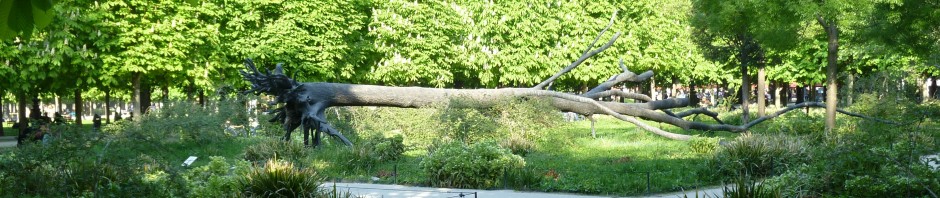
When I was a child, my mother, my sister and I would make a twice-yearly pilgrimage to downtown Toronto to Eaton’s and Simpson’s department stores to buy summer or winter clothes. We dressed in nice clothes for the occasion, took the subway (my sister and I would commandeer the seat at the front or the back of the train to enjoy the view of the tunnels rushing towards us or spooling away), entered the store directly from the basement (I once got stuck in the revolving door to Eaton’s, but received nothing worse than a spectacular bruise on my arm), and returned home in the late afternoon with shopping bags and aching feet.
Eaton’s and Simpson’s (the latter eventually became known as the Hudson’s Bay Company) are long gone. A nice Montréal chain, Simon’s, has opened a branch in the Eaton Centre offering clothing and housewares, but gone are the downtown emporia selling everything from gloves to washing machines. I miss them. There is no sense of occasion to shopping in a suburban big-box store.
Paris, by comparison, has held on to many of its department stores. Galeries Lafayette, Printemps, and Bon Marché continue to attract shoppers (not all of them tourists). Our old favourite, the Bazar de l’Hôtel de Ville, survives, but just barely. New owners (including a Canadian firm) propose new uses for the space, including a luxury hotel. We’ll see.
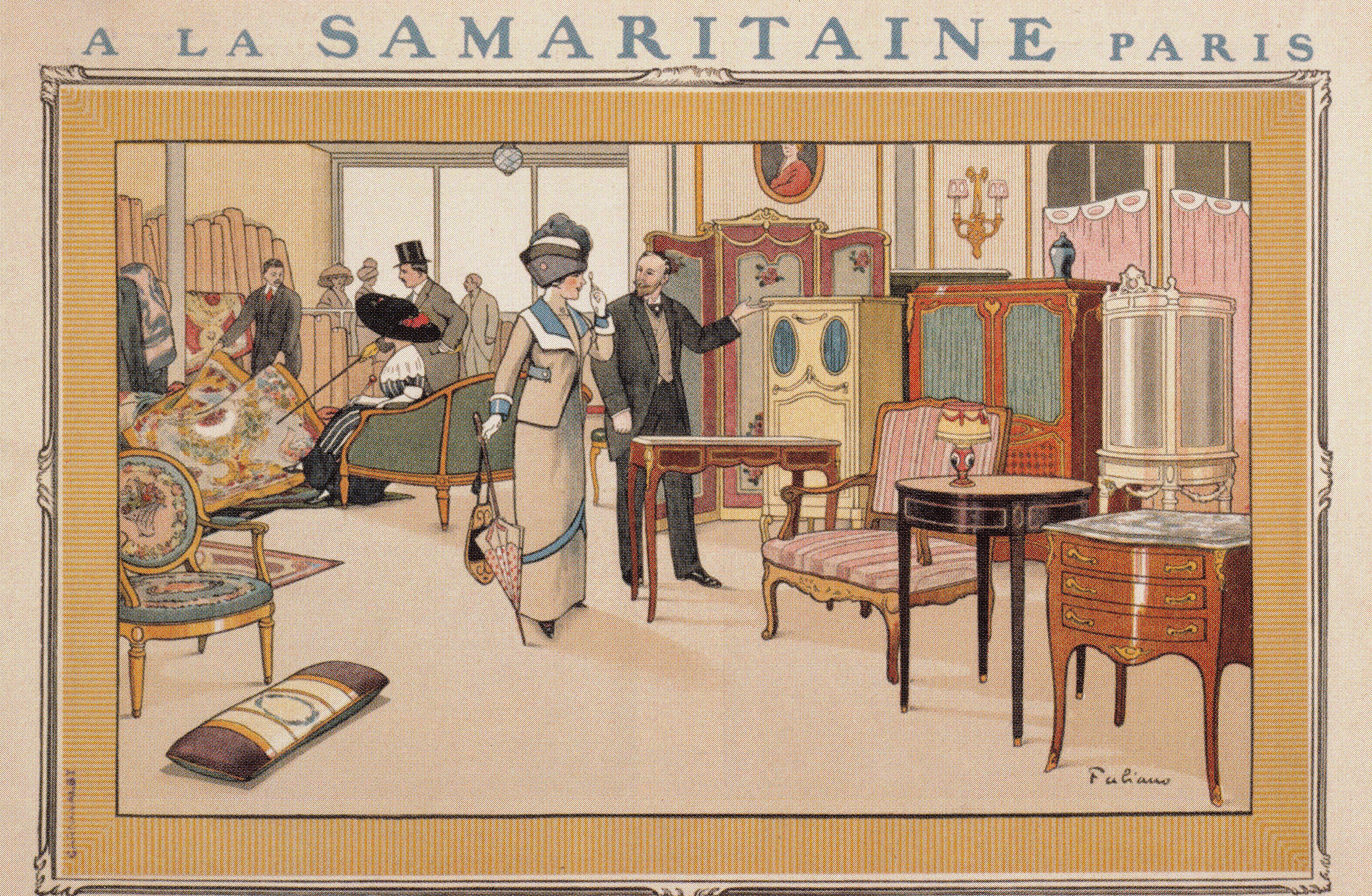
La Samaritaine has reopened with a glorious interior but a more limited range of goods than before. This was the store of which it was once said, “On trouve tout à la Samaritaine” (you can find everything at La Samaritaine). Not any more, but it is still very beautiful. This postcard is a modern reproduction of an old advertisement.
These five stores are the remainders of a host of glittering retail palaces from the 19th and early 20th centuries.
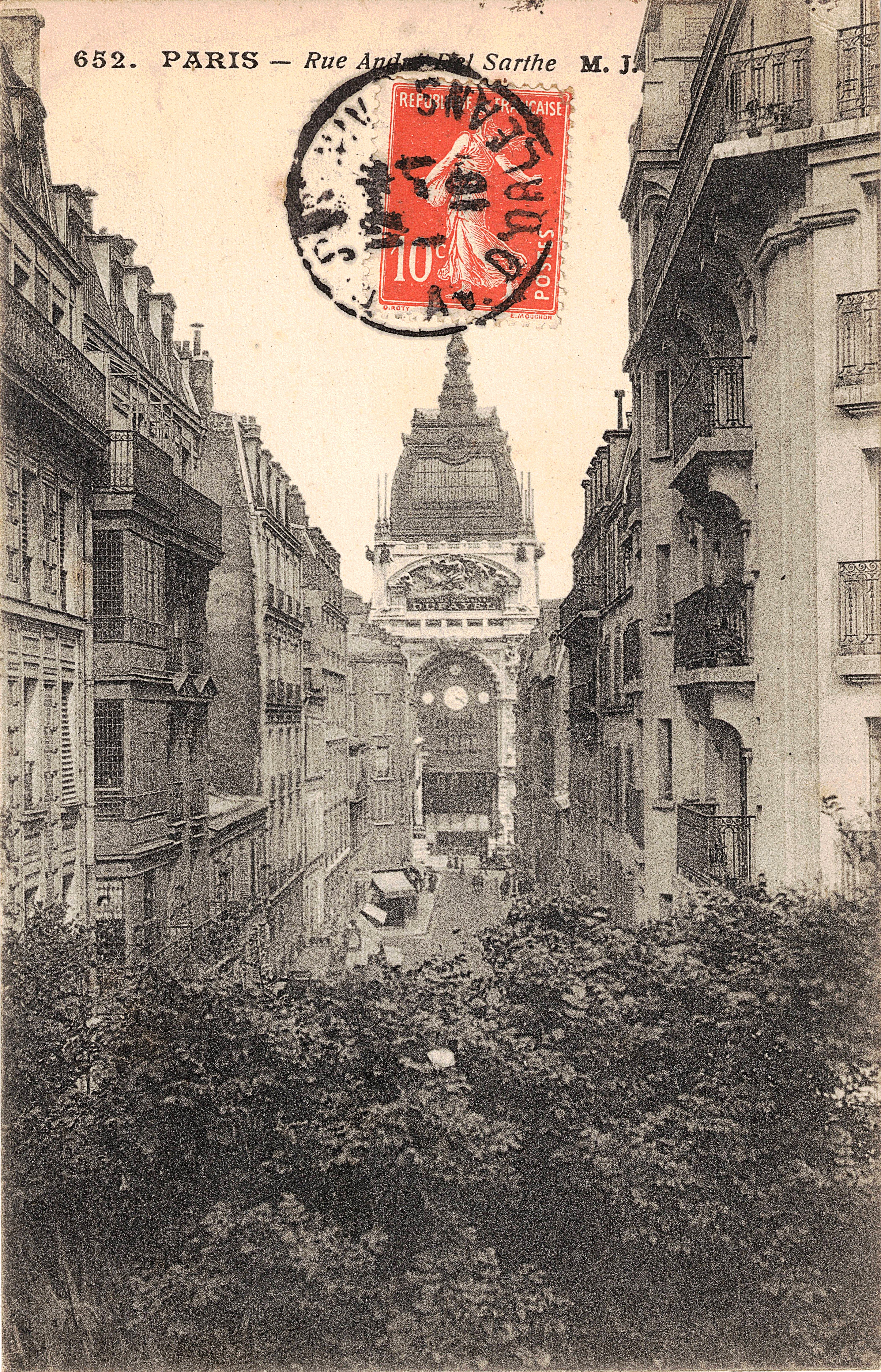
My favourite is Dufayel in Montmartre, which disappeared in the 1920s. Its founder, Georges Dufayel, pioneered purchases on credit and had a vast advertising business that put his name on walls throughout the city. The store included a cinema that showed films by Georges Méliès. I discovered the existence of the store because of a flea-market postcard I bought in 2011, and since then, I have snapped up every postcard I find with the name Dufayel on it. I bought the most recent one this past May, showing the entrance from a slightly different perspective compared with my original postcard. The tower above the entrance had a beacon that lit up the night.
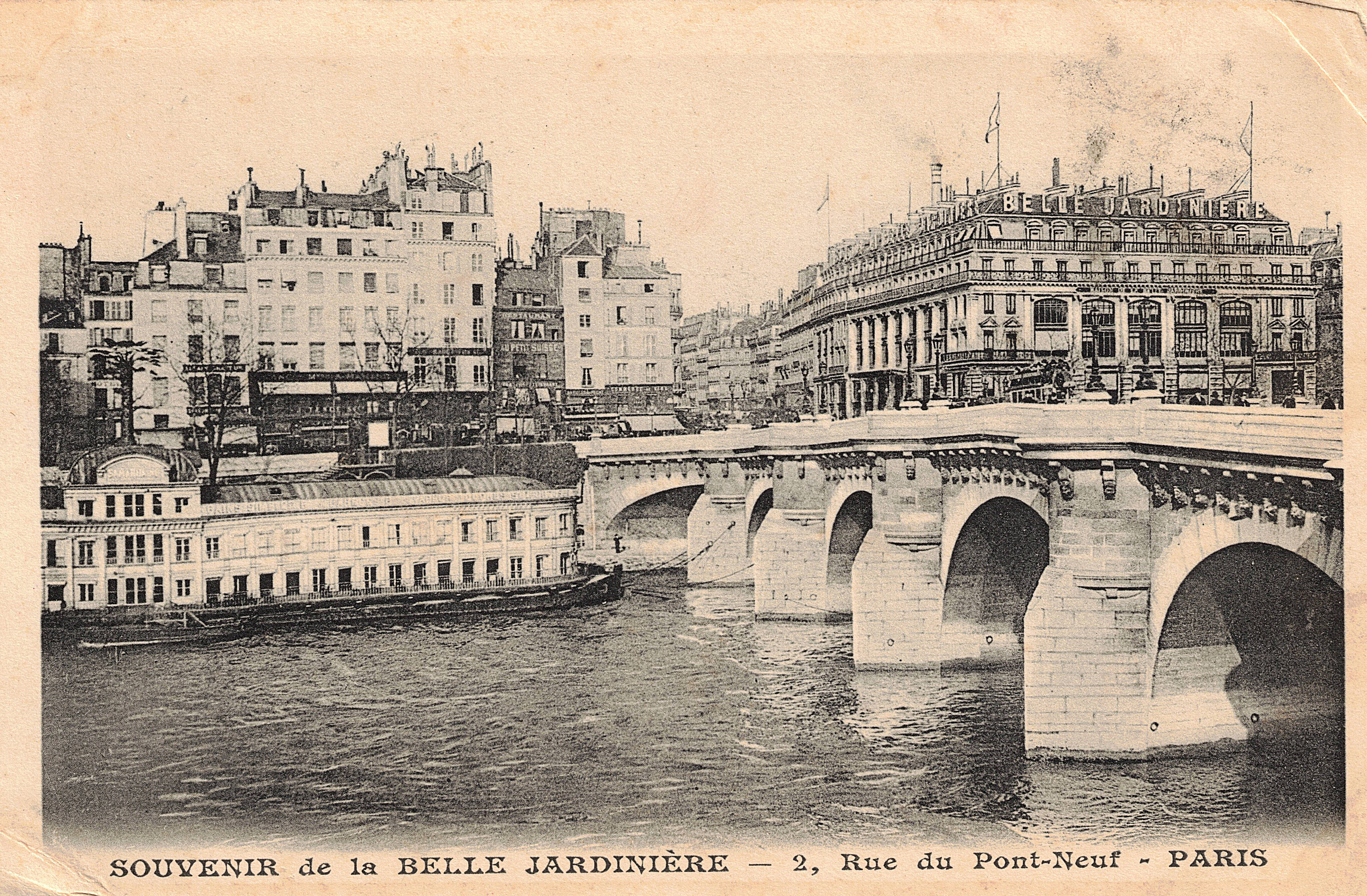
Recently, in a blog about photographs from the 1970s, I found an image of the workshops of La Belle Jardinière. The store itself once graced a building on the Seine near the Pont-Neuf, as shown in this early flea-market find.
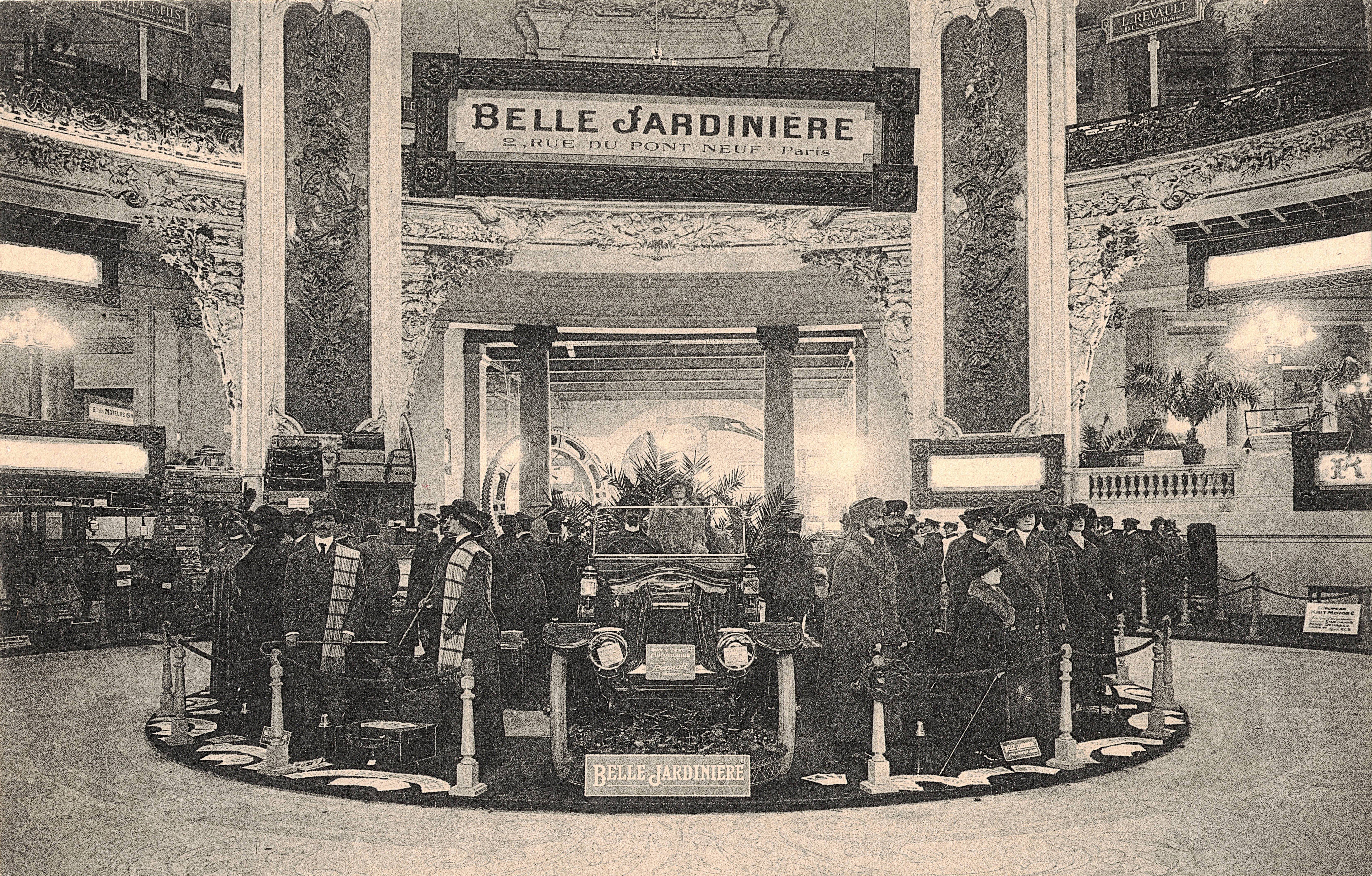
I bought a new postcard in May showing the interior and a display focused on automobile travel. The clothing and the Renault motor car place it in the early 20th century. La Belle Jardinière closed in the late 1970s.
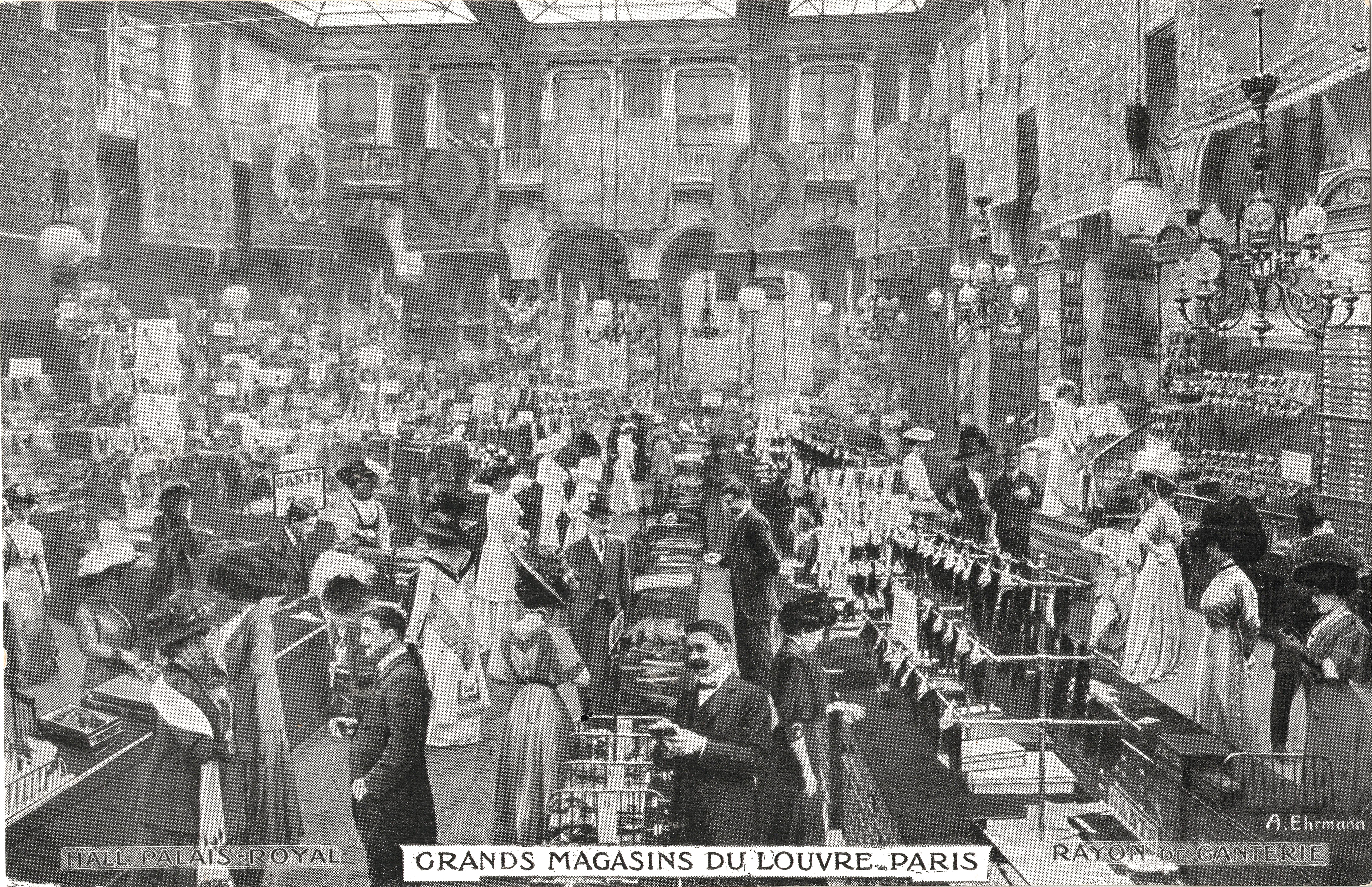
Also at the market, I found an interior of the Grands Magasins du Louvre from the same period. This huge department store was located between the Palais Royal and the Louvre (hence the name). The postcard is a reproduction in halftone of an older image, which itself seems a little unreal: posed and stilted, and possibly altered to add more people. Not all the people pictured seem to be in the right scale and the man in the centre foreground seems to be hovering in midair.
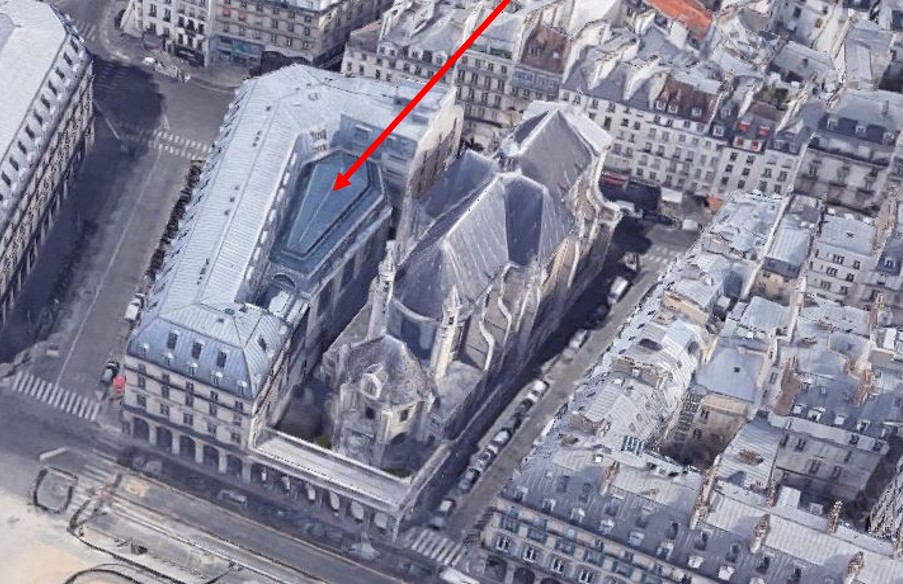
The Grands Magasins was badly damaged by a fire caused by a plane crash during the Second World War. The walls of the building held up but the interior was destroyed. Nevertheless it continued in some form until the 1970s, when it became Le Louvre des Antiquaires, an antiques market. Today it is the home of the Cartier Foundation. A strange coffin-shaped annex for carpets and rugs, which I discovered when looking at satellite photos, remains hidden behind a neighbouring building, squeezed up against a church. It is now occupied by a fashion design company.
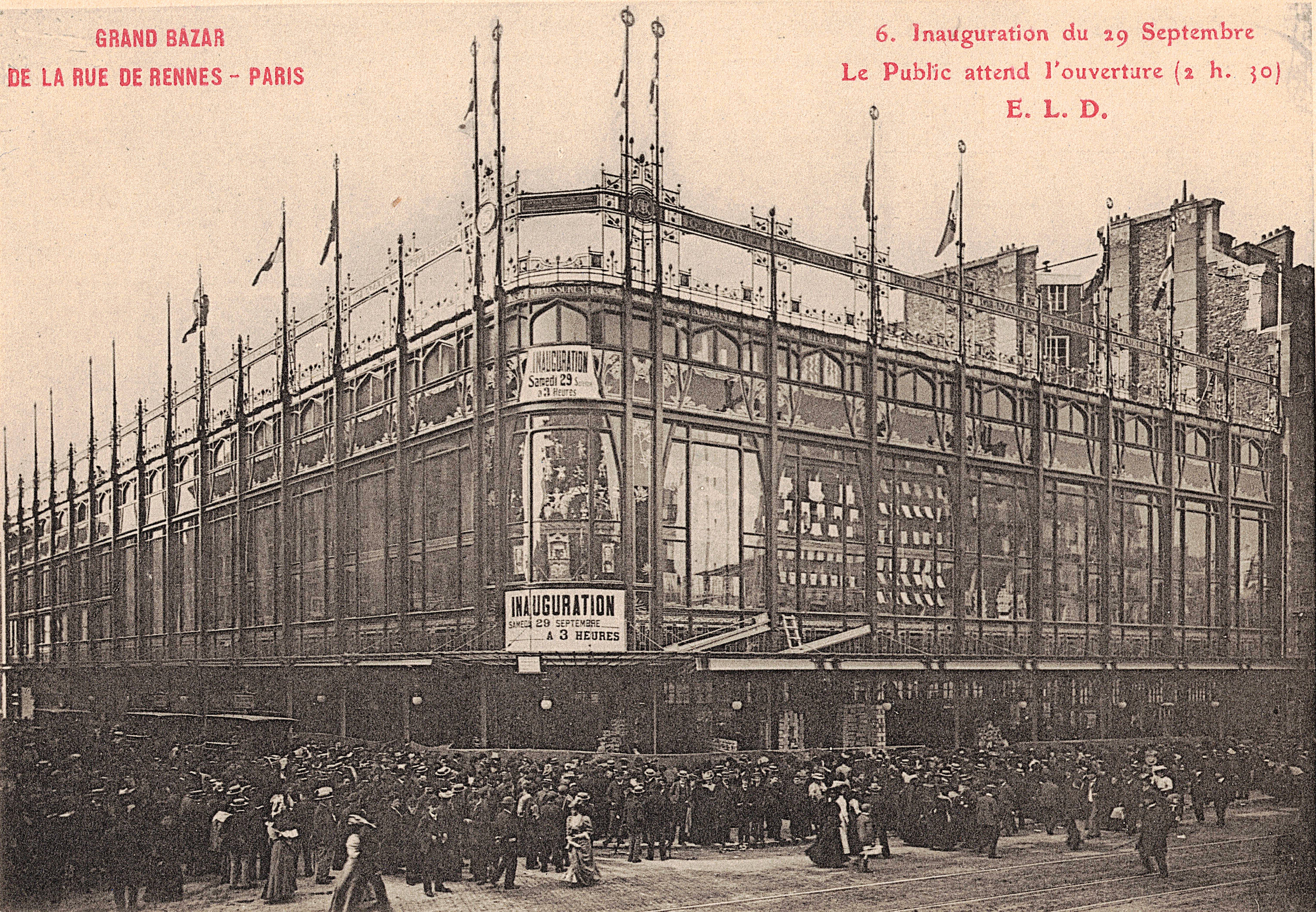
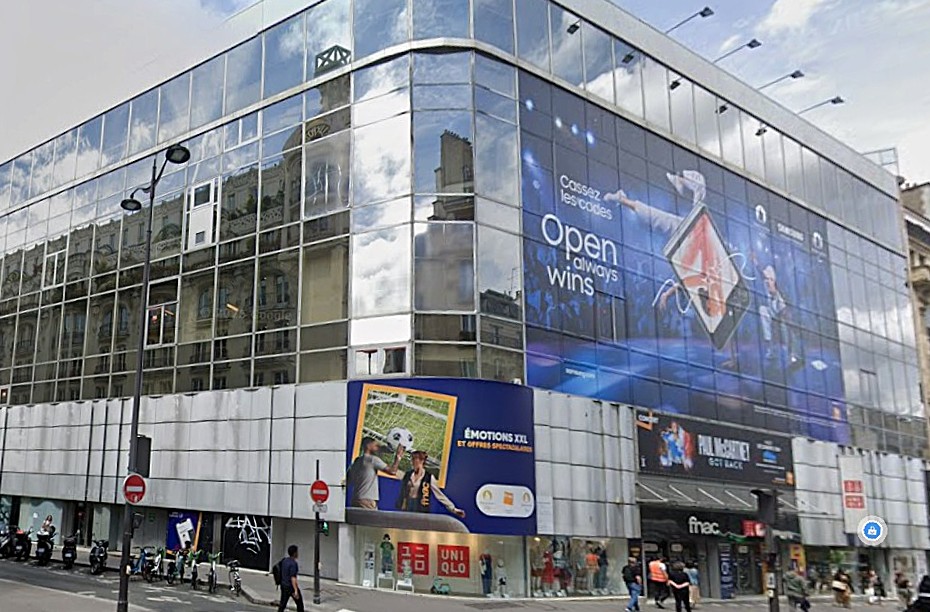
A more obscure store that emerged from my postcard collection was the Grand Bazar de la Rue de Rennes, which opened in 1906. The postcard depicts the opening.
In the 1920s, the store became part of the Magasins Réunis, a chain based in Nancy, in the east of France. In the 1970s, the building was modernized beyond all recognition and is now a Fnac (a media store).
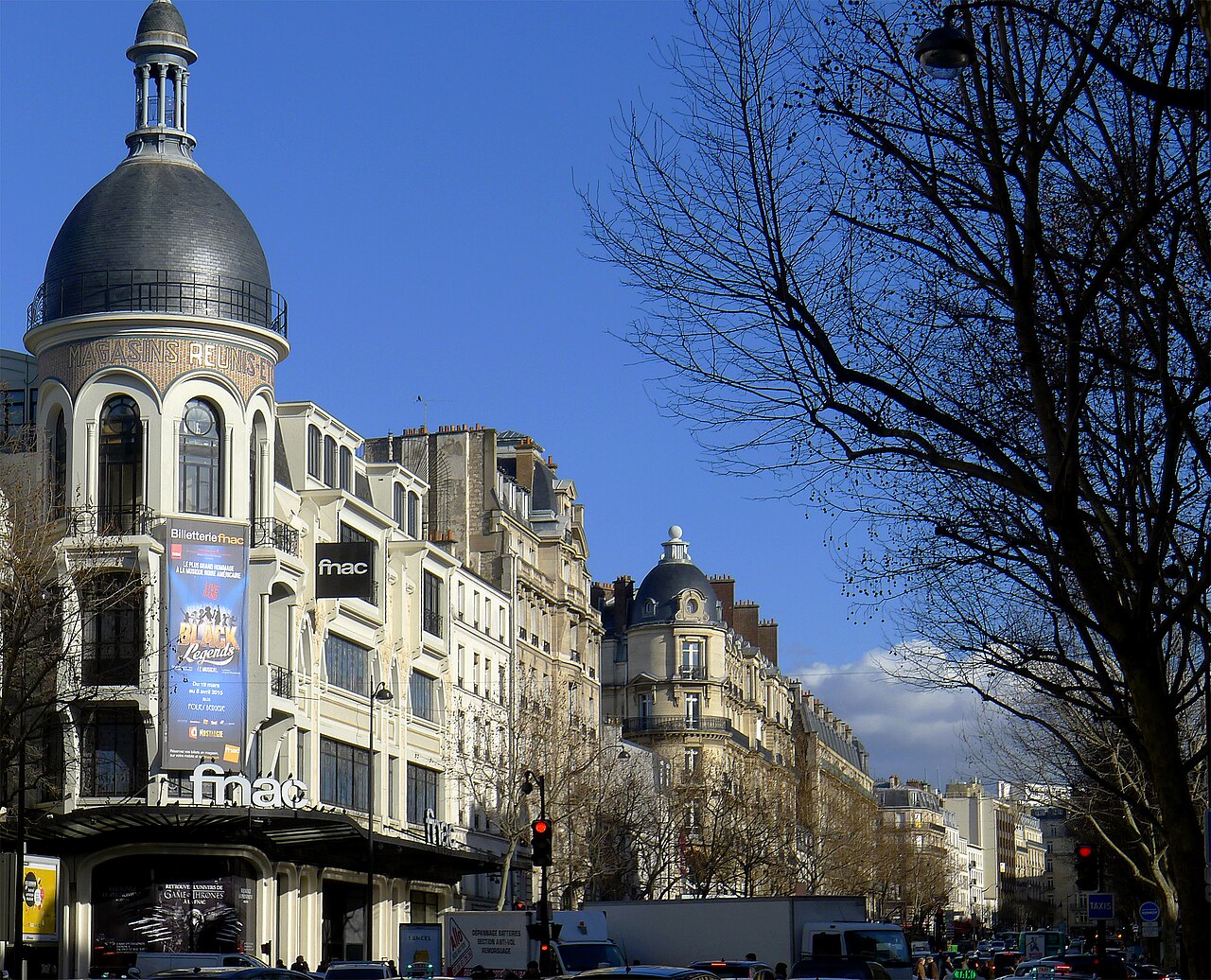
Another part of the Magasins Réunis chain, a big store on the Avenue des Ternes with a lovely dome, has also become a Fnac store, but at least the exterior of the original building has been retained.
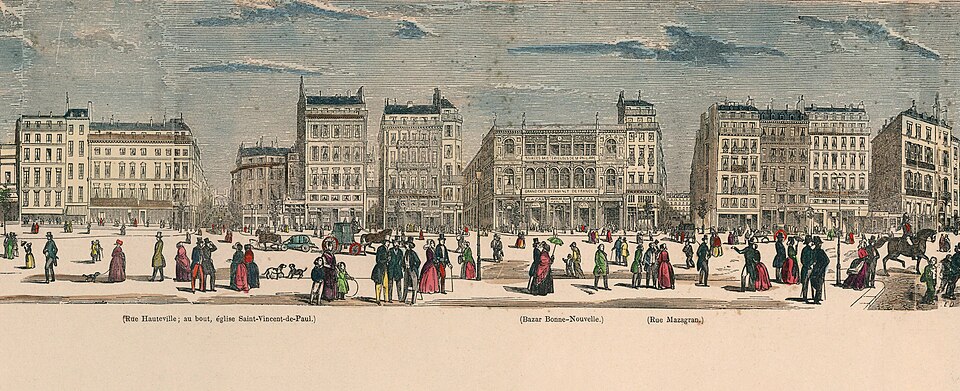
Another bazaar was the Bazar Bonne Nouvelle, which closed in 1930 after a fire. This charming hand-coloured engraving shows it and the surrounding buildings in about 1846. The image is just part of a massive panorama 5 metres long showing the grand boulevards from La Madeleine to La Bastille.
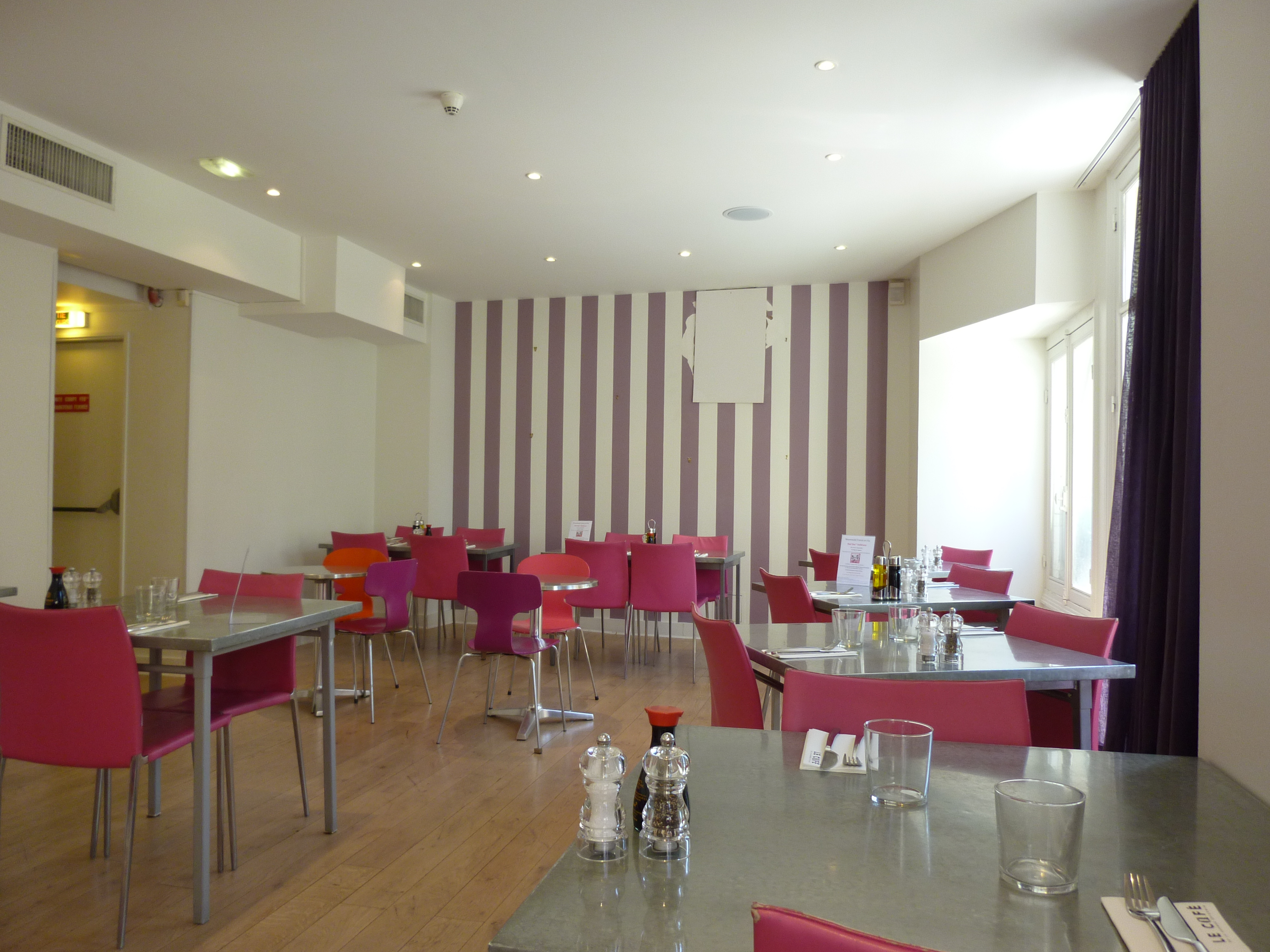
Among the changes I’ve seen myself over the years is the disappearance of a small department store, Franck & Fils in Passy, which is now a branch of the Bon Marché’s Grande Epicerie de Paris. I still have a dress I bought there years ago. I took this photo in the sunny tearoom on the top floor, where I had a splendid lunch in 2011 while doing research for a walking tour in the area.
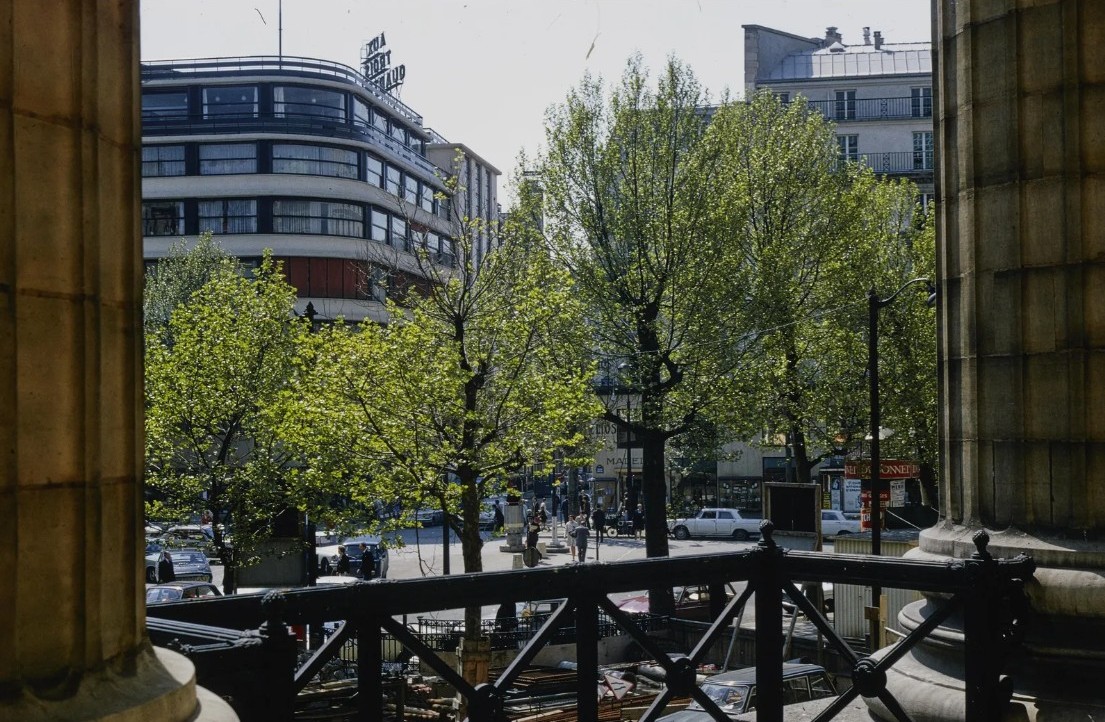
Aux Trois Quartiers in the Place de la Madeleine disappeared at the end of the 1980s. This photograph from the 1970s captures it on the corner of boulevard de la Madeleine and rue Duphot, shot from the top of the steps of the Madeleine church. At that point, it was an Art Deco building from the 1930s, although the store was originally founded in the 19th century.
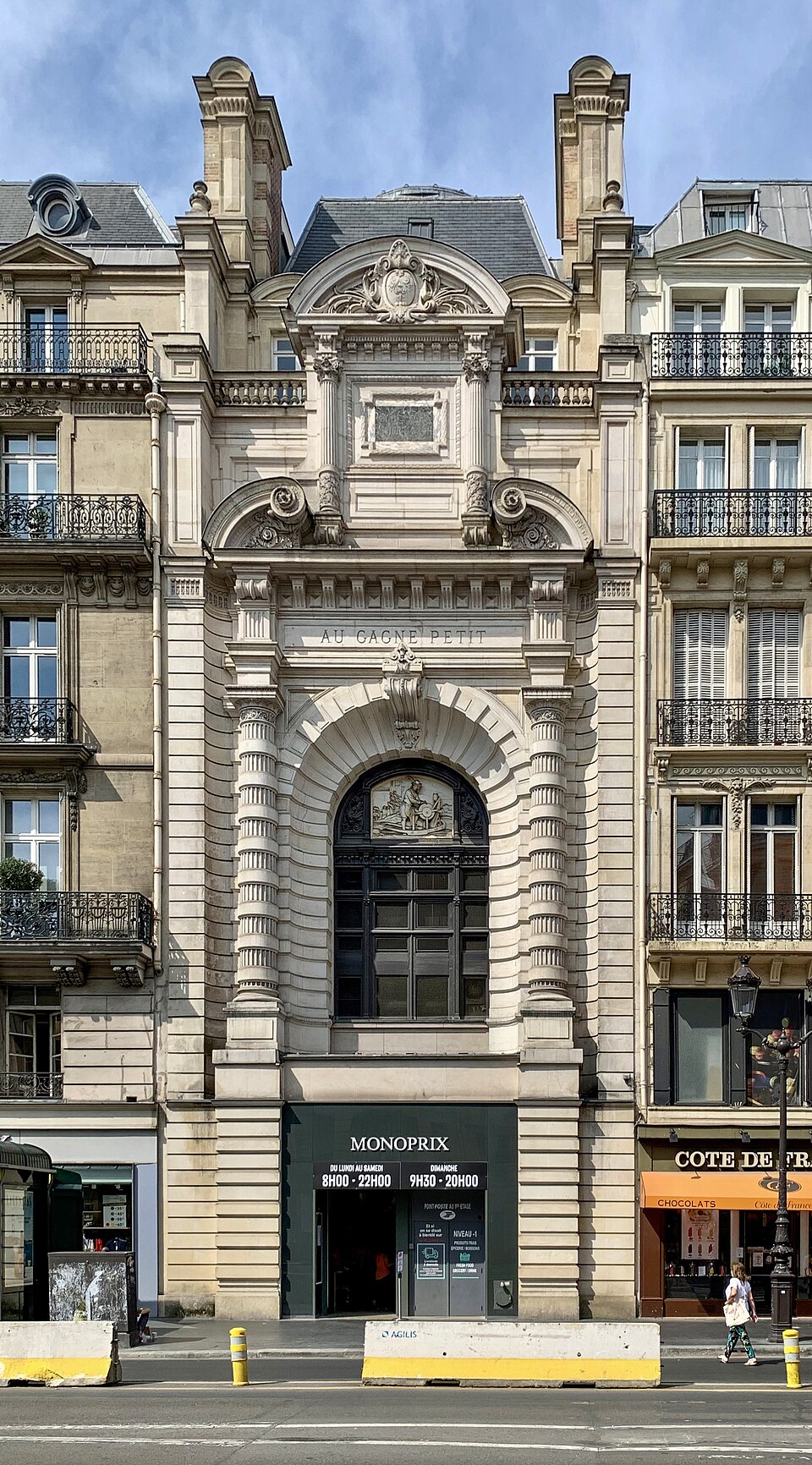
More obscure department stores include Au Gagne-Petit on the avenue de l’Opéra. The name seems odd, since the term “gagne-petit” means a low-income person, and this was a grand address in what is now a high-income neighbourhood. It started life, as so many department stores did, as a seller of fabrics, about the time the Avenue de l’Opéra was pushed through the neighbourhood in the 1840s. In the 1860s, the owner created a grand entrance, and over the door is a bas-relief of a knife-grinder. This is the gagne-petit after whom the store was named (rather as La Samaritaine was named for a fountain with a sculpture of the Samaritan woman who gave Jesus a drink of water in the Biblical story). The grand entrance façade and the bas-relief of Au Gagne-Petit remain today, but in behind is a Monoprix.
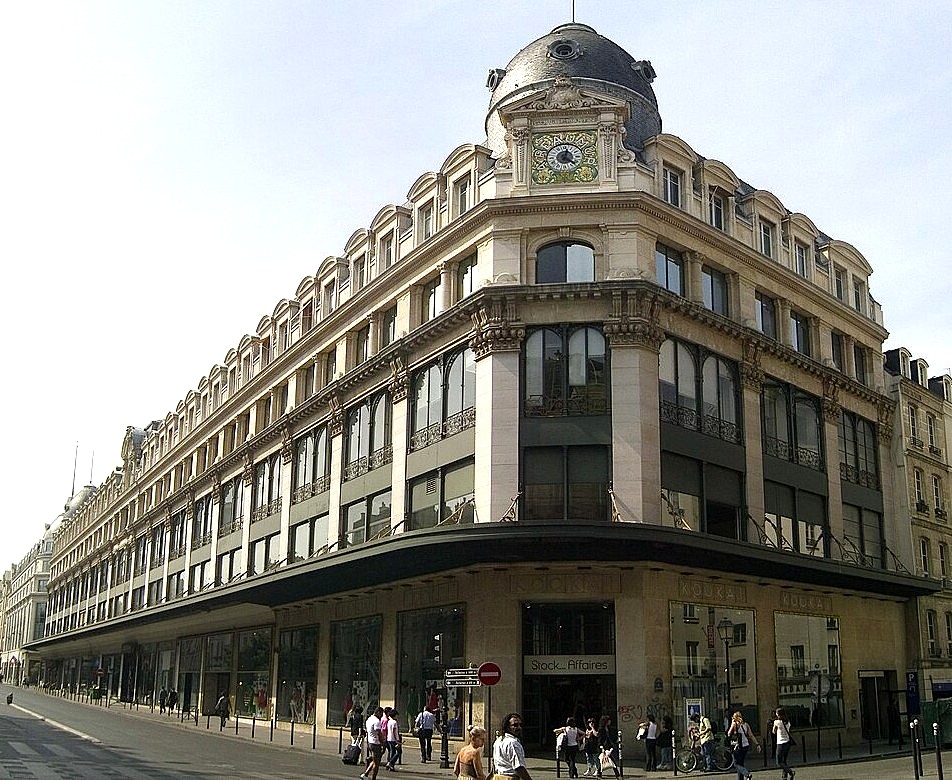
The building of A Réaumur also survives on the street of the same name, complete with dome and an ornate clock bearing the store name. Domes seem to be de rigueur for department stores of a certain era. It closed in the 1960s and is now a block of offices.
The department store was a Parisian invention, starting with the Bon Marché (the subject of Zola’s novel, Au Bonheur des Dames, 1883), which changed the face of retailing. In their day, the stores employed thousands upon thousands of people, not just as salespersons, but also behind the scenes, managing inventory and billing, making deliveries, feeding the staff in huge dining halls, keeping the place clean, creating eye-catching displays. The stores advertised in magazines and newspapers, which was good for journalism, and published catalogues, which brought city goods to country subscribers. They offered cafés and sitting rooms for women, who could spend a day there with friends without imposing on anyone else’s hospitality and without causing a scandal by being away from their own homes. That was important in the 19th century.
In the 21st century, the remaining department stores are still free museums showcasing modern life, with their displays of the latest fashions and furniture, their restaurants and viewing terraces, their well-informed staff, and their sometimes-over-the-top seasonal decorations. The exhibits change all the time, and we love to go for a wander, even if there is nothing we need to buy (we usually find something, though).
The topic is vast, and if you want to know more, I highly recommend The World of Department Stores by Jan Whitaker, a fellow blogger, published in 2011, an international survey of department stores’ innovations and social importance. And if you’re in Paris, you might enjoy the walking tour I created for VoiceMap, “Revolutionaries of Retail: Paris and the Invention of Shopping,” which includes not only department stores, but everything from arcades to bouquinistes to the technology behind window shopping (hint: it’s all about the plate glass).
Text by Philippa Campsie; photo taken in Franck & Fils by Philippa Campsie; images of Fnac (Ternes), Bazar Bonne Nouvelle, Au Gagne-Petit, and A Réaumur from Wikimedia; Fnac (Rennes) from Google Street View; image of Aux Trois Quartiers from Paris1970; all other images from the Campsie-Ball postcard collection.







This is great, Philippa! The photographs and other images are wonderful. I remember having a few lunches in the top floor cafeteria of the Samaritaine in 1977 -there was a lovely view from there! Jane
Thank you, Phillipa! I grew up
Very impressive number of stores that you have included! And thanks for mentioning my book.
Merci chère Philippa pour ce post très intéressant.
Amitiés parisiennes.
P
>
Fascinating bit of research, thankyou Philippa. How strange to see that church and the “coffin” market building hidden behind that facade.
Pingback: Links 10/5/2026 | naked capitalism
It’s sad what’s happened to La Samaritaine…