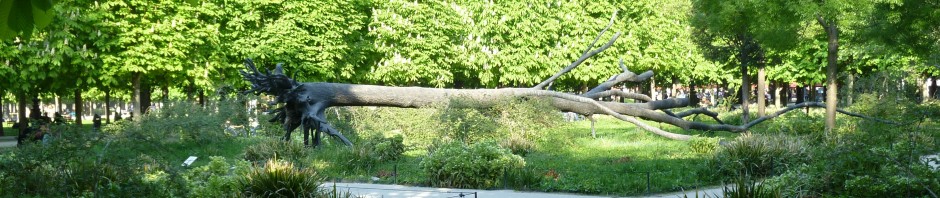
May is holiday time in France. This year, there were four long weekends in a row (May Day, Victory in Europe (VE) Day, Ascension Day, and Pentecost/Whitsunday), followed by the weekend of the soccer match between Paris St. Germain and Arsenal. When PSG won, some of the merrymakers needed time off to recover.
We had rented an apartment for the month in the 14th arrondissement, near the rue d’Alésia, a comfortable neighbourhood with lots of families, good everyday shops, and pleasant restaurants. The light-filled apartment on the fifth floor had a narrow terrace filled with greenery overlooking a quiet street. On the far side of the street was a private garden with a Tree of Heaven where birds nested.
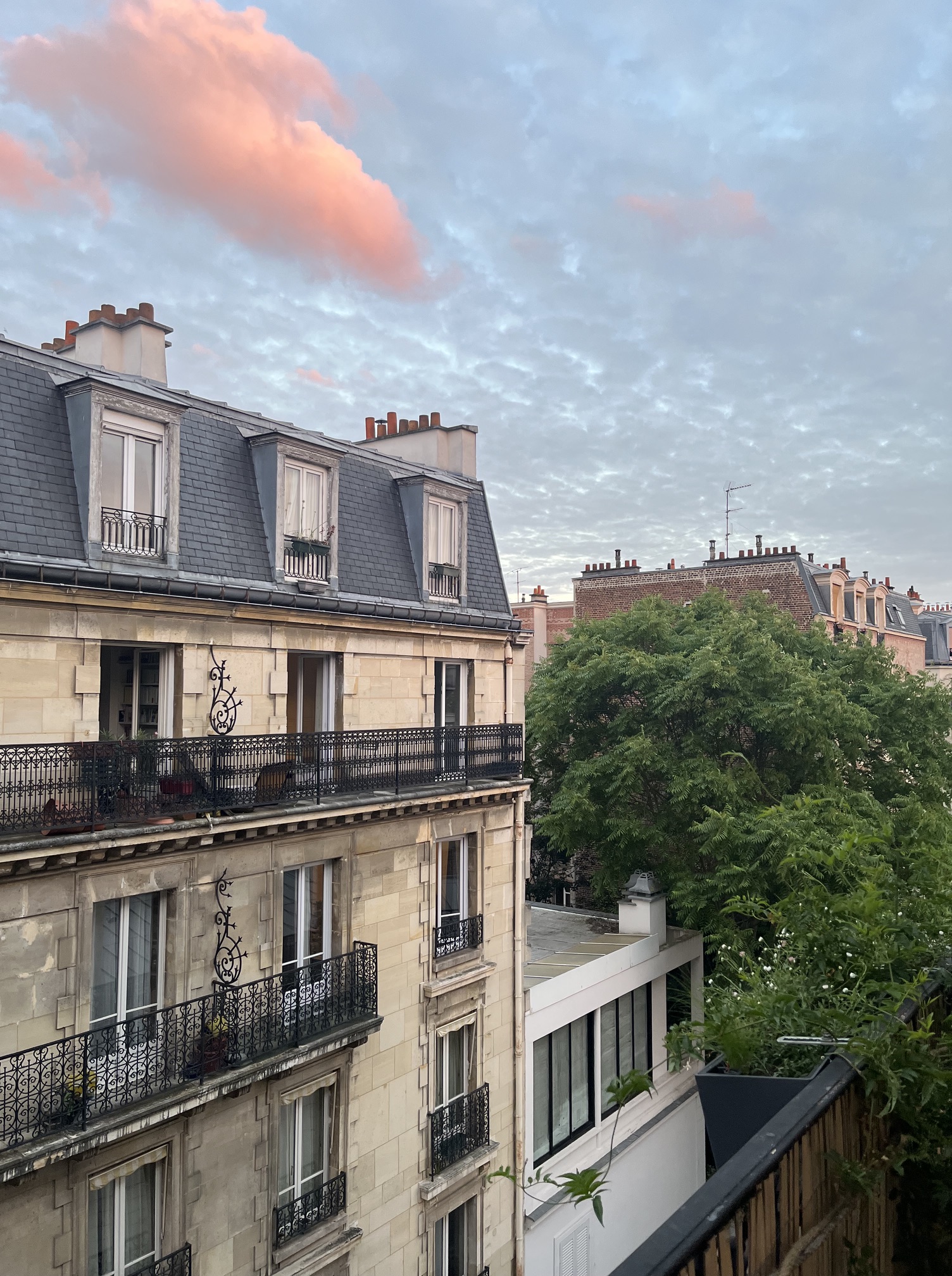
We had time to get to know some of the shopkeepers and to get familiar with the weekly rhythm of openings and closings and which places stayed open on the holidays.
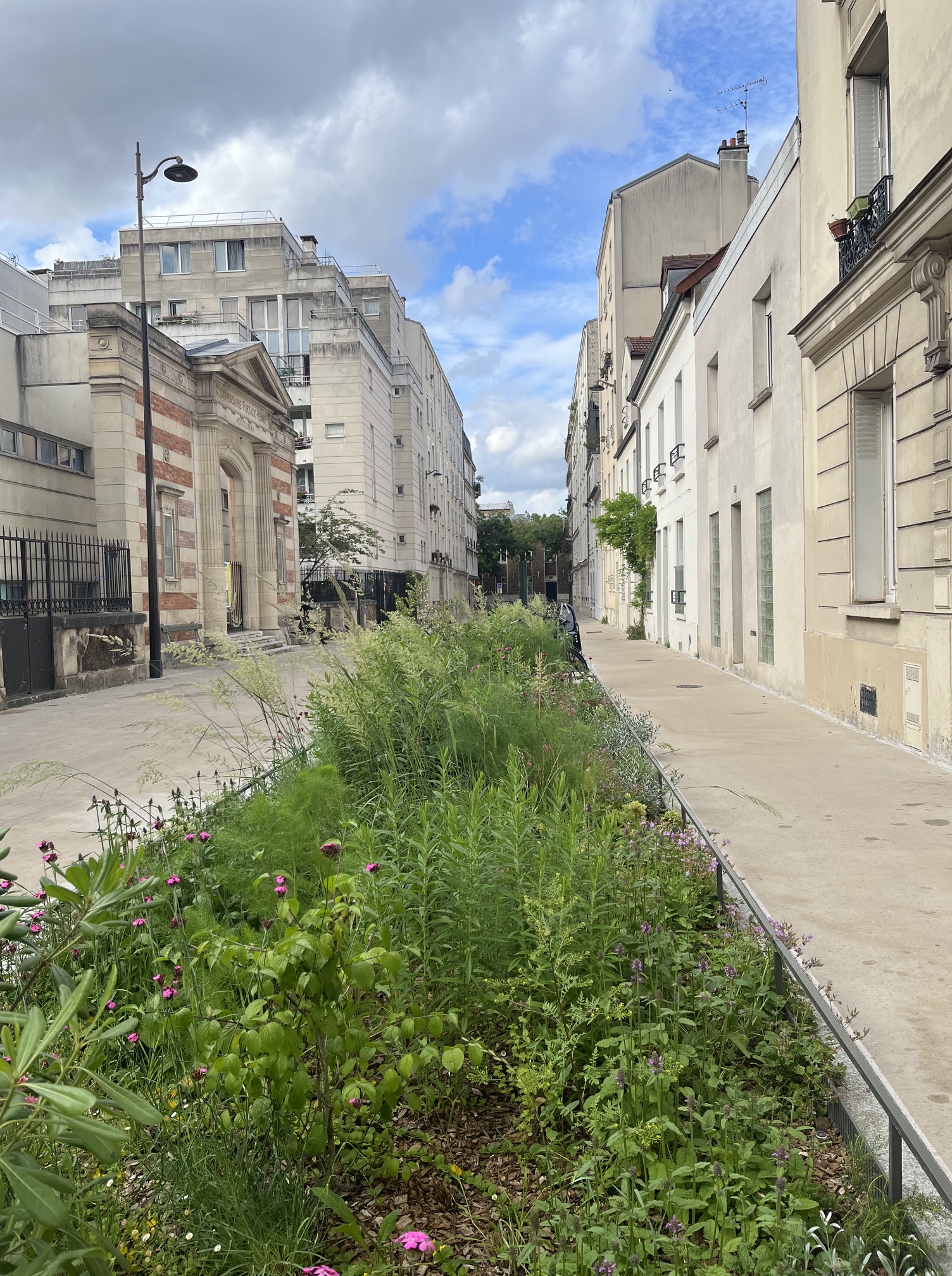
It had been more than a year since our last visit, and we noticed some changes. More trees and pedestrianized streets, more bicycles, more dazzlingly clean buildings that brighten up the spaces around them.
Not all changes were welcome. We were heart-broken at the state of the Bazar de l’Hôtel de Ville (BHV), where vast acres of floorspace were completely empty. When we went to buy something in the kitchenware department, we had the undivided attention of four employees, who told us that there had been no deliveries of new merchandise since November 2025.
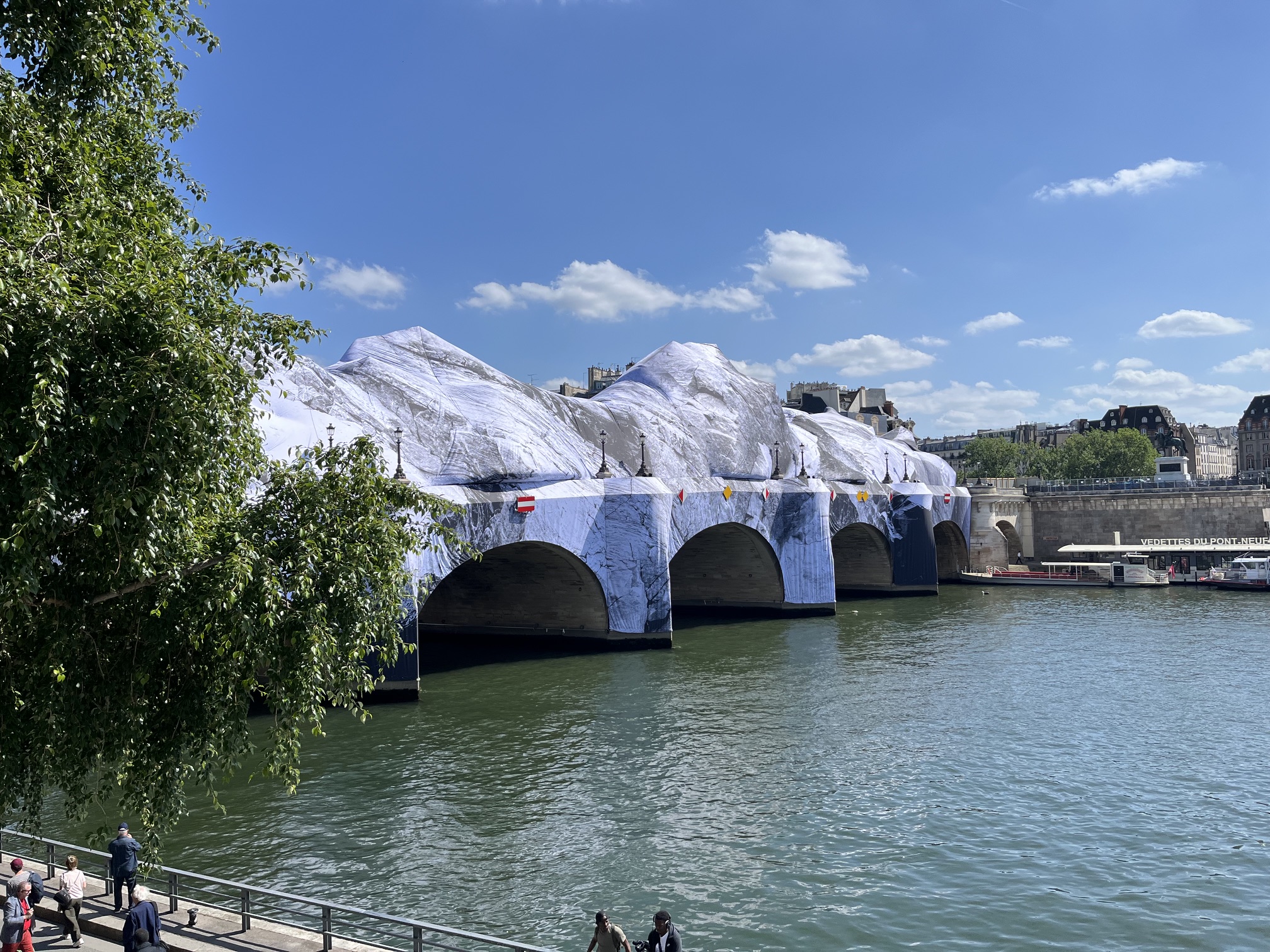
And we were not impressed by the installation at the Pont Neuf by the artist known as JR, not just because we thought it rather ugly and unnecessary, but it messed up the bus routes. We use buses more and more as time goes by (fewer stairs to climb and more opportunities to see the city).
Buses provide interesting insights into Parisian social behaviour. There is more camaraderie with fellow passengers than you find in the Metro. Indeed, a whole etiquette is visible. For example, it is customary to greet the driver with “Bonjour” when getting on the bus. Clearly this habit is impressed on children. On one bus, a mother and her little boy got on through one of the rear entrances; the boy marched up to the front of the bus, cheerfully greeted the driver, and then returned to sit with his mother.
Paper tickets are gone (along with the confetti of dropped tickets around Metro stations), and Navigo cards are used to pay. Most people carry them in a purse or wallet and tap the whole thing against the machine that validates them. Passengers often help each other in crowded buses, and it is common to see someone who cannot reach the machine hand a card to someone else who can. Once an elderly gentleman who had entered at the back entrance found that the machine there was out of order. He handed his entire wallet to a fellow nearby, who got the attention of a woman sitting in a seat closer to the front, who took it and handed it on to a young man, who gave it to another woman, who tapped it against the machine. The wallet then made the reverse journey back to its owner.
For a few days, Norman had a sore leg and used a cane. On most buses, younger people would leap to their feet to offer him a seat. Only a couple of times did we see oblivious young women (it always seemed to be young women), who were so furiously focused on their mobile phones that they failed to respond appropriately. I assumed they were tourists who hadn’t been trained in Parisian bus manners. Another older gentleman and I exchanged raised eyebrows and rolled eyes at their lack of consideration.
Buses inspire conversations. We chatted to a retired doctor who was writing a paper on the participation of medical professionals in the slave trade; she also pointed out sights on our way through the 20th arrondissement. A retired Vietnamese masseur showed us pressure points on our hands that we could massage when we had a headache. We discussed the different meanings of écharpe and foulard (two different types of scarf) with a French-speaking Spanish woman.
I was interested by the way in which no two buses seemed to have identical configurations of seats inside. There are buses with two entrances, and some with three (an extra one at the very back). Articulated buses usually have four. Some buses have groupings of four seats arranged to allow for conversation; in others most of the seats face forward. There are different arrangements of pull-down seats, and seats over the wheel wells that require one to climb up to sit down. Some have special places for luggage. Most have spaces for wheelchairs and baby buggies.
On one trip, a woman parked her baby’s pushchair in the space and sat down nearby. When the driver had to accelerate quickly at one point, the buggy fell over and the baby started to cry. The whole bus became concerned. When the driver was able to stop, he came to check, and was assured that the baby was unharmed. The entire bus expressed opinions on the event and kept asking the mother for an update on the child’s condition.
There are signs in the buses to indicate upcoming stops and the time to the bus’s final destination. They are helpful when they work, but they do not always work. The indicators at the bus stops that show the time of the next bus are also a bit hit-or-miss. However, the vagaries of the schedule are another excuse for conversations. And when it rains, squashing together to get under the bus shelter roof adds to the general sense of we’re-all-in-this-together. You just don’t get that feeling on the Metro.
The weather was so variable that we experienced all four seasons in the course of a month. It was cold and rainy when we arrived, then mild and rainy, then warm and sunny, and finally boiling hot (all of Europe experienced a heatwave towards the end of the month). On one of the hottest days, we went with a friend to the Picasso Museum. It was cool and uncrowded and we emerged feeling less frazzled.
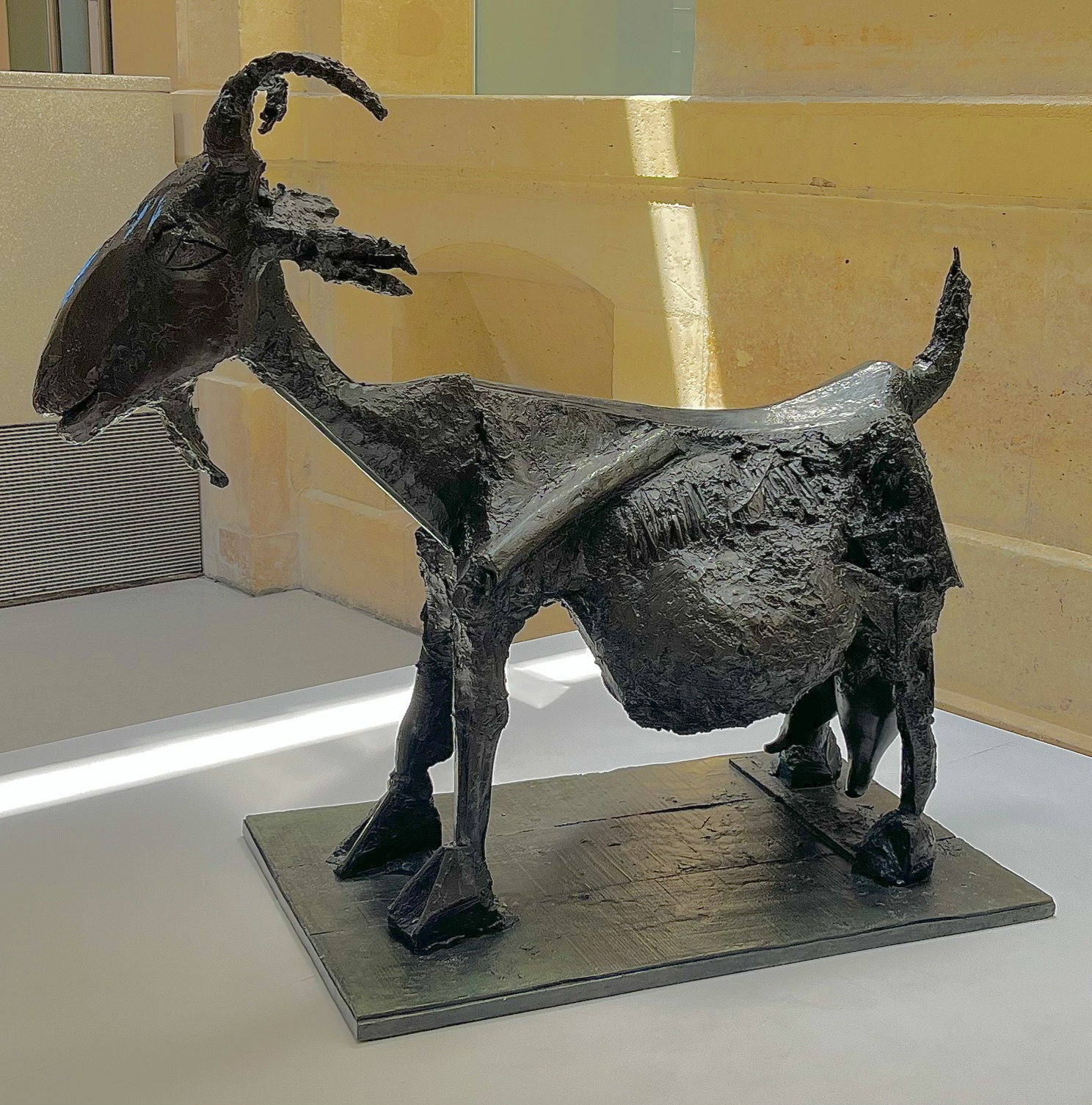
In the entrance way, I laughed at a sculpture of a goat that looked like one of the marionettes in The Sound of Music. Yodel ay hee ho.
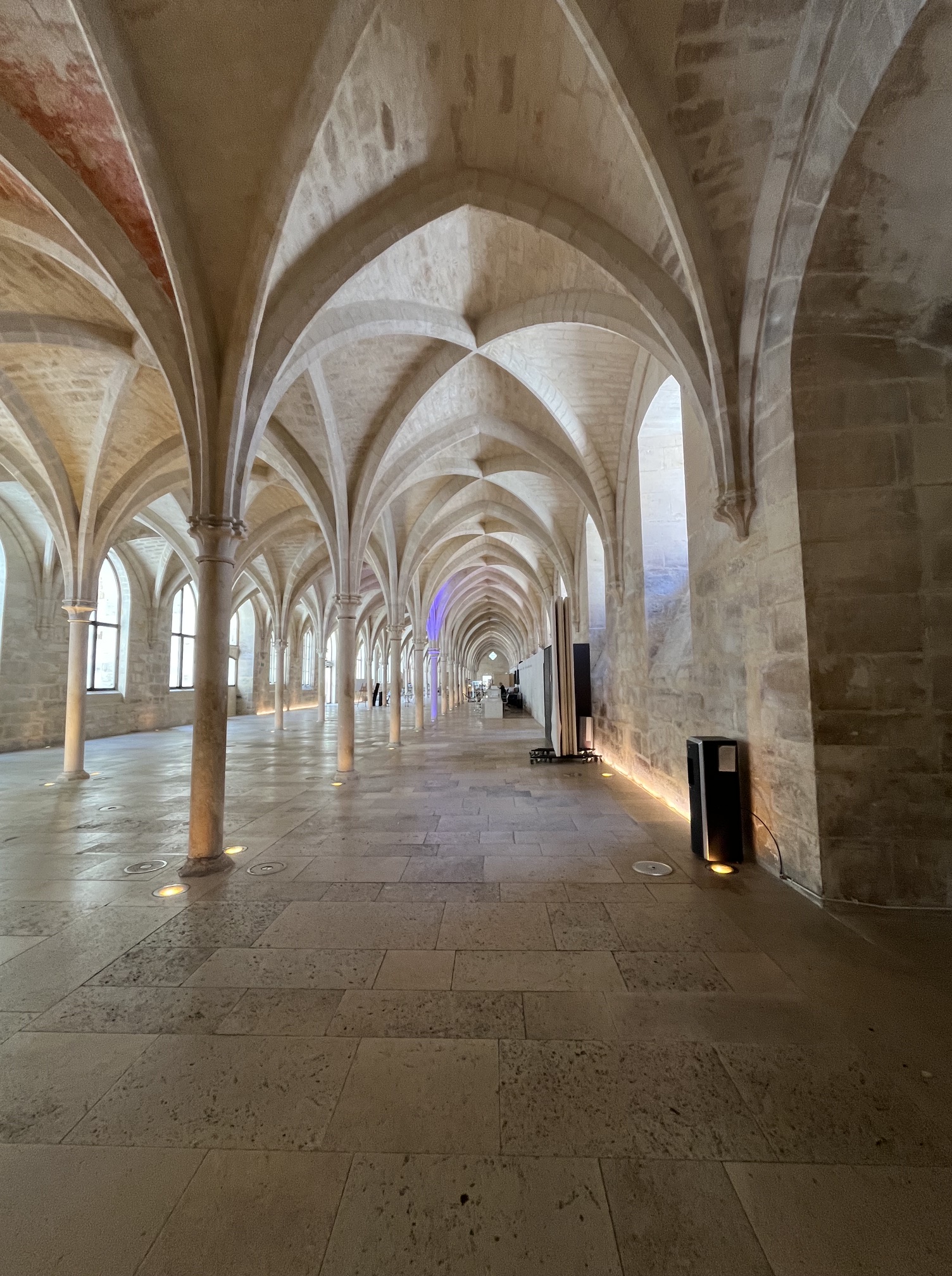
On another hot day, we went to lunch with a different friend at the Collège de Bernardins, which we can highly recommend as a good café in a calm, welcoming space on a hot day.
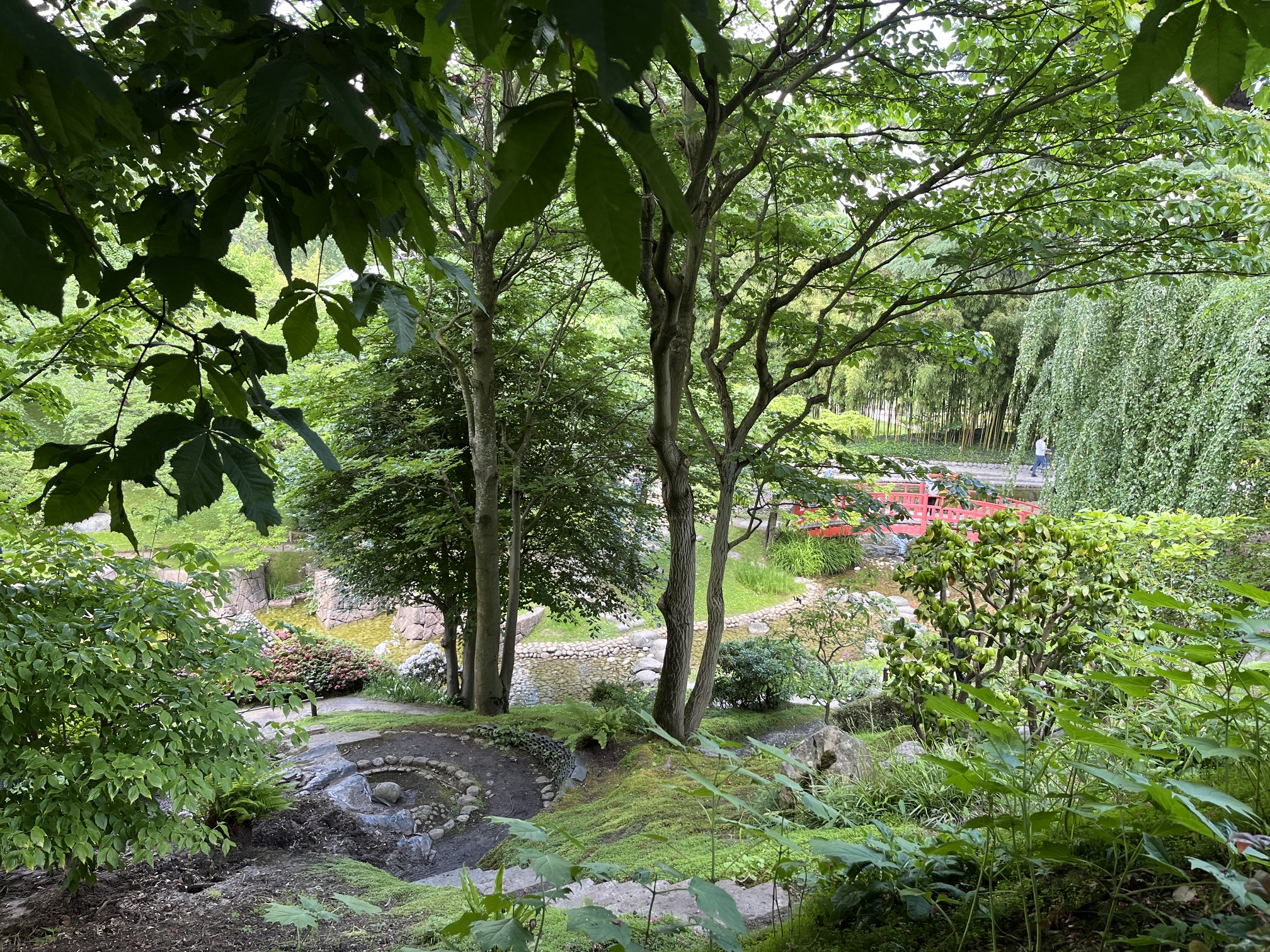
We explored non-French culture in various ways. We ate more than once at a newish restaurant near our apartment that served Creole food and, towards the end of our stay, dined at a Portuguese restaurant with tables set out on a pedestrianized street that was clearly popular with the locals; it was always full. We attended a concert of New Zealand music and another of East Indian music. A friend and I strolled through the Japanese garden created by Albert Kahn.
We went to the Saturday flea market at the Porte de Vanves, more than once. Norman bought a model dirigible (as one does); I bought several good-quality tea towels of durable linen. (I noticed that the owner of our flat had also stocked up on these items.) My niece, who was in Paris for a weekend, found a wineglass to replace one of hers that had broken and an antique mustard pot in a lovely green that she uses as a flower vase. We enjoyed looking at the variety of silver tableware and asking the stallholders about the original use of some very specialized items, from oyster forks to asparagus servers. Every visit is an education in 19th-century arts de la table.
The trite phrase “live like a local” is trotted out by short-term rental agencies to encourage visitors to avoid hotels and rent an apartment. We discovered that it is possible to do so, but there are conditions. 1. Stay at least a month. 2. Take the bus. 3. Spend time in the neighbourhood and get to know the local shops and shopkeepers. 4. Visit interesting places more than once. 5. Explore a few of the other cultures found throughout the city. 6. Strike up conversations (you’ll need to learn some French to make this feasible).
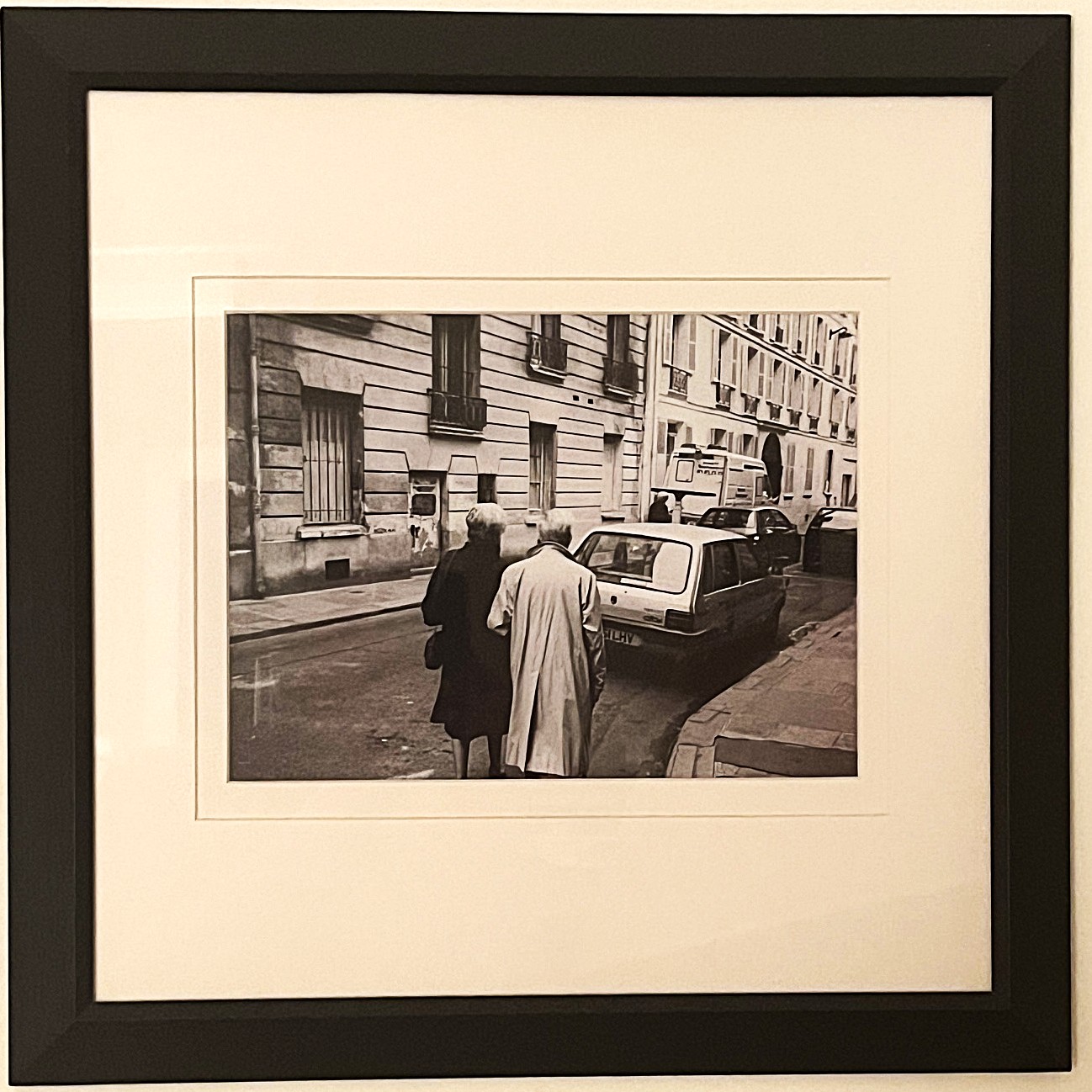
We are both retired now, and are rediscovering Paris at a slower pace, with a deeper appreciation for the way it allows us to take our time. Years ago, Norman found a photograph, which hangs in our bedroom as an inspiration. That will be us, as long as we are able to get there.
Text and photographs by Philippa Campsie.




Dear Philippa,
Always wonderful to read more of your writing about Paris. You are both so knowledgeable and appreciative of all that the city offers. It sounds like you really made the most of your month of May. You made me laugh with this: “Norman bought a model dirigible (as one does),” and about your take on Picasso’s goat!
In my experience, it does not hurt to nudge young people who are glued to their phones when you have someone obviously in need of a seat on the bus or metro. A simple gesture to them indicating an older person (especially one with a cane) and they will usually jump up and offer the seat, even if they were not inclined to do so earlier or were really so absorbed that they did not notice. Hope you will come back soon, and perhaps consider renting for a full year to do more research and writing for us about this magical city. All the best, Ellen
Dear Ellen, Thank you so much for your thoughts. You are right in that sometimes it just takes a nudge to get young people to do the right thing. We will come back as soon as we can. All the best, Philippa and Norman
Thanks for your blog and insights into Parisian life. When I was 19 I gave myself a “sabbatical” and interrupted my art studies to live in Paris for a year as an au pair which changed my life. I’ve since been back many times and each of my children went to the Sorbonne in a junior year abroad carrying on the tradition.
My advice to anyone going to Paris is not to have an itinerary and just set out on walks where one can become immersed in local life.
Of course in staying for a month one can best experience the rhythm of Parisian life with its social interconnectedness and its daily affirmations beginning with that first cafe.
Please may you both continue to enjoy and in good health!
Dear Karen, We could not agree more about not having an itinerary. Our best experiences in Paris have occurred when we wandered aimlessly and found all sorts of extraordinary places. Philippa and Norman
May into early June are a great time to be in Paris — the Nuit des musées (European Night of the Museums) on 23 May when hundreds of museums open late, mount special exhibitions or tours or open specially. The Rendez-vous aux jardins when thousands of public and private gardens open over a long weekend in early June, this year themed on the five senses. And the Nuit blanche (Saturday closest to the first full moon in June) when about a third of Paris takes to the streets for the free art-fest, and to picnic on the banks of the Seine, or in the Jardins des Tuileries …
The summer terrasses outside every bar, bistro, and restaurant are in full swing and the hum of conversation, clink of glasses line every street.
Dear Mike, We just missed the garden event by a few days. It sounds amazing. For years, we have wanted to be in Paris in September for the Jours de Patrimoine, when you can visit buildings that are usually closed to the public. One day, we will make it! Best, Philippa and Norman
Dear Philippa, Thank you for another lovely entry. I am happy for you that you had a great time in Paris this May. I agree with you that buses are the way to travel to really see the city. Even in Toronto, bus culture is different from subway culture. I have had some great conversations with people on Toronto, London and Athenian buses. Glad to know it applies to Paris buses too! Meg
Dear Meg, It’s true. There is a bus culture in Toronto that is very different from what one finds on the subway. We can imagine that Athenian bus culture is particularly interesting! Philippa and Norman
Thank you for so nicely sharing your Parisian experience!
From Switzerland,
Anne-Nelly
Dear Anne-Nelly, Thank you so much for your comment. We’re glad you enjoyed the post. Philippa and Norman
So good to hear from you again! Thank you! God bless!
It is always a joy getting to read about your adventures. Your writing transports me to France and I feel like I am there with you two, riding the bus, enjoying a coffee, and strolling through a museum. Thank you for sharing your trip! I look forward to catching up after you unpack and have caught your breath. Hello from California!
Dear Elizabeth, Thank you so much. We missed your presence and so did Mary Ann. We’ll all be there again together some day. Philippa and Norman
I look forward to it. I miss you too!
Merci! It was so enjoyable reading your update. I’ve not been to Paris for several years, but always enjoyed my visits. Now in my 80’s I stay close to home for medical reasons. Still,
“I will always have Paris”
Indeed. Even if we never go again, we have years’ worth of memories!
Thankyou for yet another interesting read about Paris Philippa. I love the photograph of the couple that you aspire to. Any idea who is the photographer?
The only information on the back is a title, “The Old Parisians,” and a date, 1995. It might be the work of Michel Sfez, but I am not sure.
So glad you’re back!
I hope I am. The last year was not good for blogging, but I’ll try to do a bit more this year.