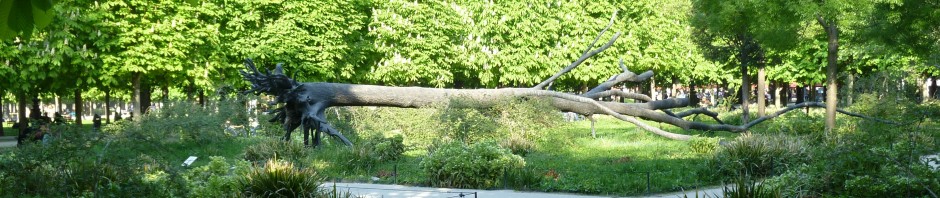
Two summers ago, I participated in a project to photograph our Toronto neighbourhood as it looked in 2024. I chose a stretch of our local commercial street and systematically photographed each shop façade. Then I went around to the laneways that run parallel to the main road and photographed the back of each shop. I did a bit of digital editing (straightening, brightening) before handing the photos over to our local historical society.
The City of Paris did something similar in 1970. It divided the city into a grid of 1,755 squares and invited amateur photographers to participate in a competition to record scenes within each square. The project produced 91,655 photos of varying quality – this was long before digital photography – of which 30,225 images by almost 7,000 photographers (some of them unidentified) have been digitized. A selection is now on display at la Bibliothèque historique de la Ville de Paris until October 2026. We missed the exhibit, which opened just as we were leaving Paris, but hundreds of photographs are now visible on line. (I love the way Paris offers so much digital content to those interested in its history.)
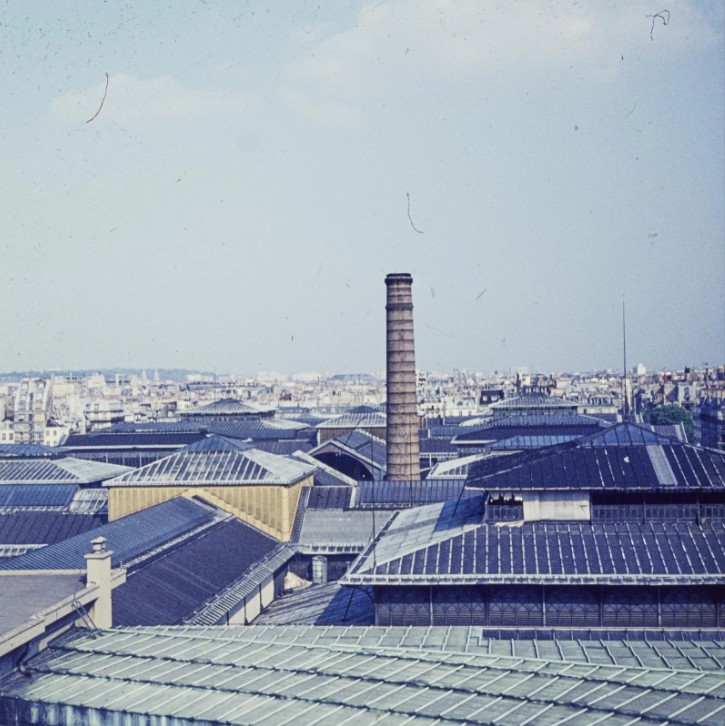
Here is one example, showing the roofs of Les Halles, which disappeared later that decade. Photograph by Jean-Claude Ratier.*
Now, 1970 is not all that far back. I am minded of the exchange in A Christmas Carol, when the Ghost of Christmas Past arrives and announces himself. “Long past?” asks Scrooge. “No. Your past,” the ghost replies. Well, I can remember visiting Paris in the 1970s, so I guess this is my past, in some ways.
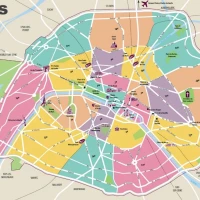
The website, simply named paris1970.fr, offers a map showing the grid. The darker the colour of the square, the more photographs available for that area. Those shown in white have no photographs (or at least none that have been digitized to date). One can zoom in to see the underlying map with street names to find an area of interest.
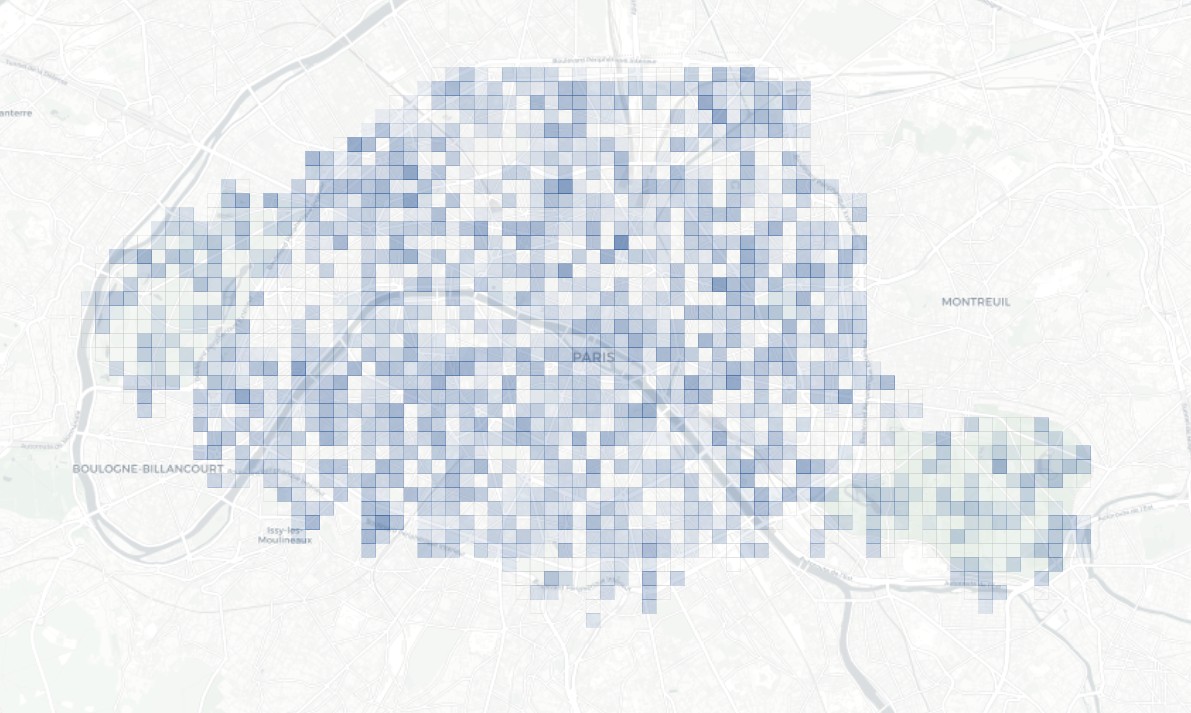
This link will take you to a map of Paris as it was in 1970. Hours of entertainment for map nerds like me. I began my exploration of the photographs with areas I knew well, starting with the Place de la Bastille. The old Bastille railway station was the first thing I saw.
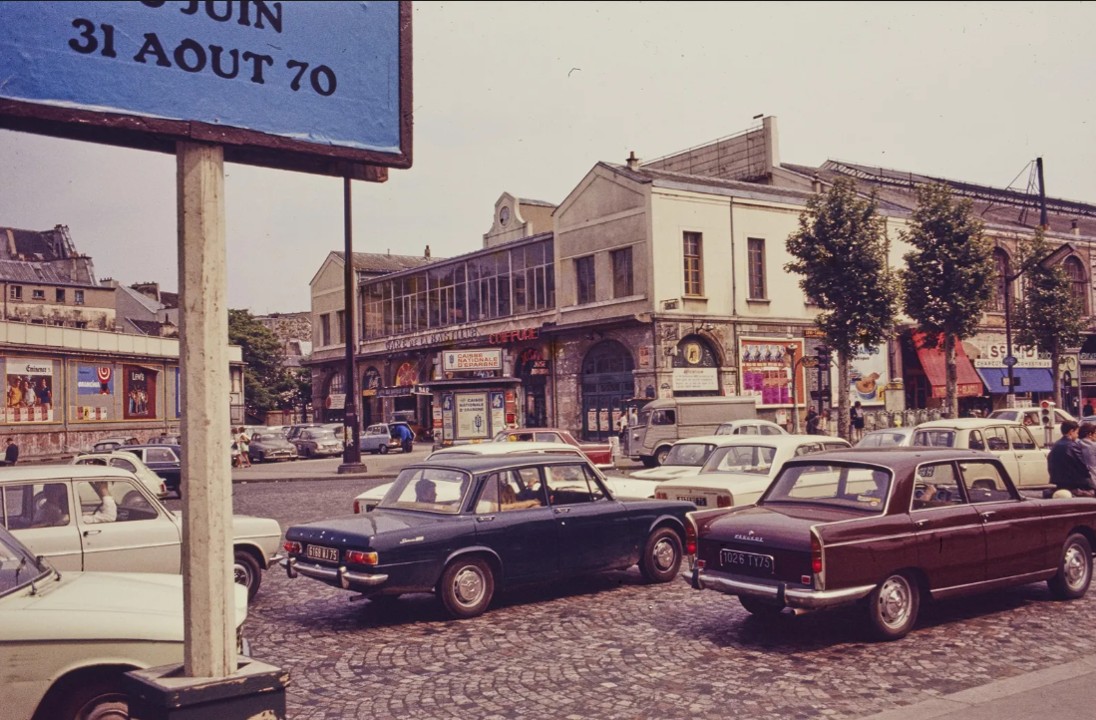
The photographer was not identified. Another view features a green bus and a Citroën DS. It also shows a surface car parking lot. These were once a prominent feature of the city; today, they have largely disappeared underground.

Oh, those green buses! Some had platforms on the back. Norman and I rode one of the last of them in the 1990s, before they were taken out of service. We were exhilarated by the experience. This shot was taken by Michel Legeard.

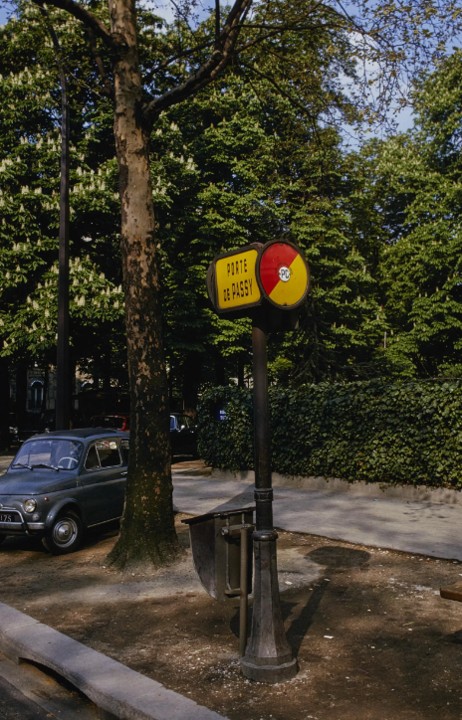
And this is what bus stops looked like. Photographer not identified.
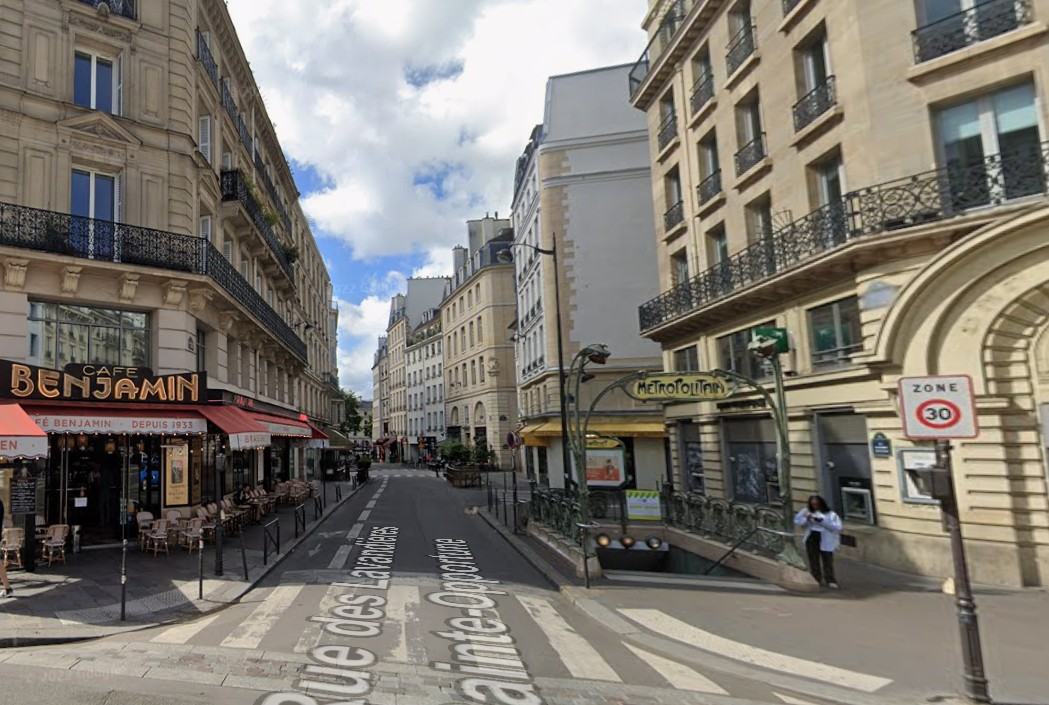
Not all the participants had a feel for street photography. Many snapped major monuments, which looked much as they do now and have little to say about the way the city’s texture has changed, but some, such as Michel Legeard, who took the shot of the green bus, had an eye for everyday scenes. Shopfronts, advertising, cars. And people. Here is another image he contributed.

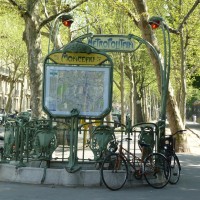
When I went looking for the current location of this Guimard Metro entrance to the Chatelet station, just off the rue de Rivoli, I got a surprise. It seems that the whole thing has been moved over, closer to the bank on the right. I didn’t know they could do that. I guess everything has been moved around at Les Halles. As for the Guimard details, I believe the current one is a replica of the original.
Another participant who seemed to understand the importance of catching the fleeting moment was Daniel Nicolas, who worked in the 11th arrondissement. I liked this one: a cinema showing that immortal spaghetti western, El Djurado, from 1966, starring the, um, unforgettable Scilla Gabel.
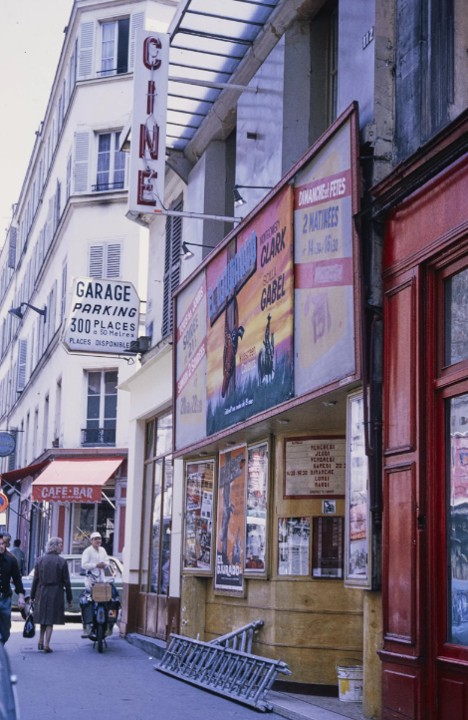
Finding the location was a bit tricky (the website provides only street names and general coordinates, and a few photographs I found were not in the squares I expected them to be in). But I spotted a street number, 112. According to a 1953 edition of the Ciné-Miroir magazine, there was a cinema called the Cithea at 112 rue Oberkampf. A look at Google Street view confirmed that the building with the café-bar on the corner in the background has changed relatively little; the cinema is long gone.
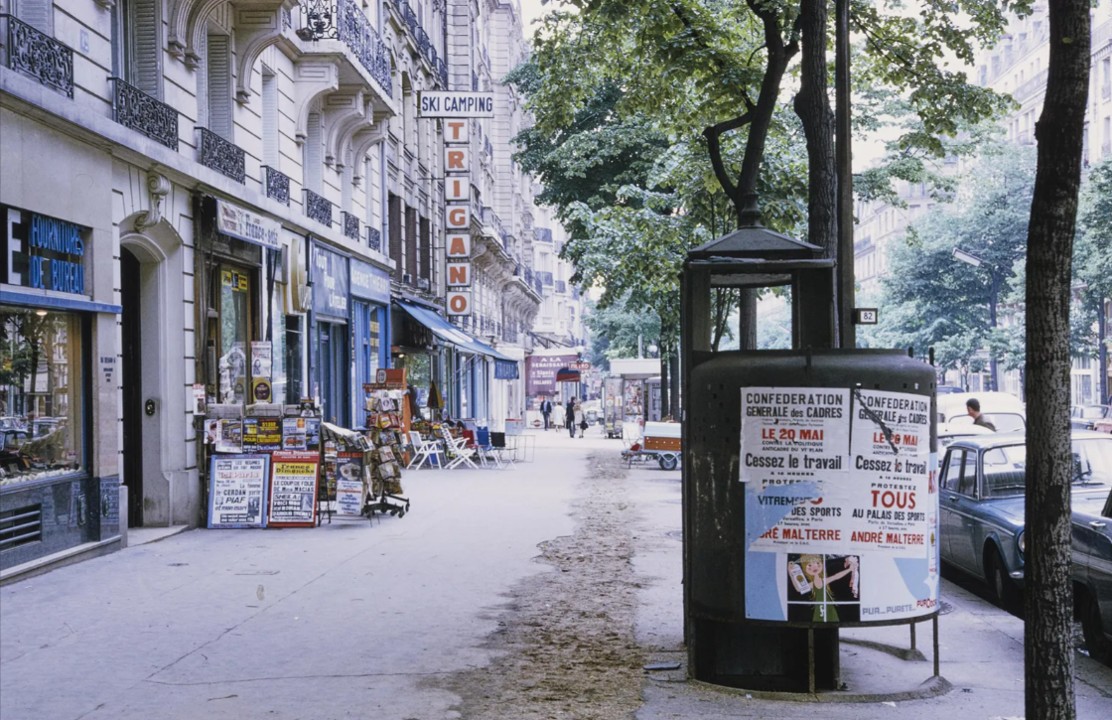
Daniel Nicolas also photographed a classic Vespasienne (pissoir) on the avenue de la République. The Trigano store has disappeared (although the name survives as a brand of camping gear), but I found its former building at number 78.
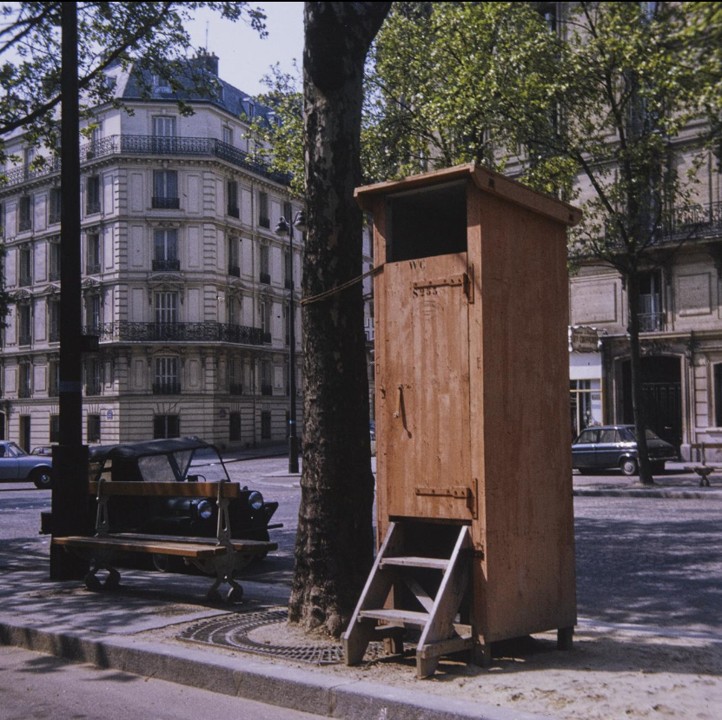
Here’s a less formal public convenience, captured by an unidentified photographer on the avenue Marceau where it intersects with the rue Bassano. I love the way it is tied to the tree. Perhaps attempts had been made to knock it over. The bench is still at this spot on the boulevard.
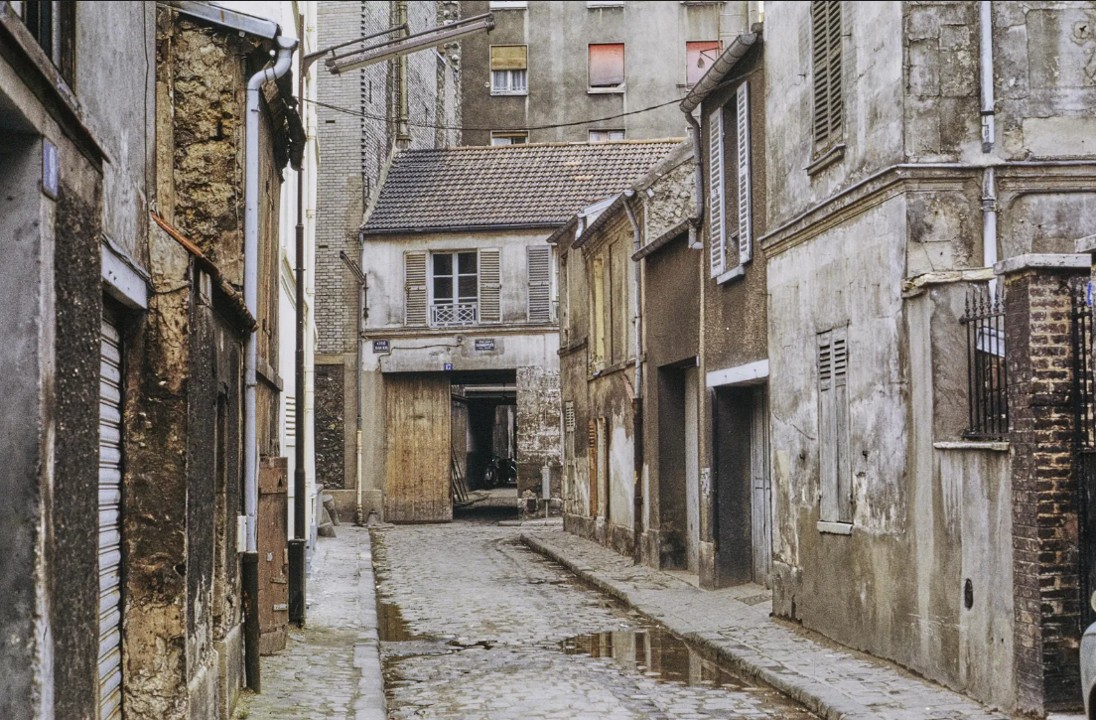
Some photographers preferred shiny, modern scenes, while others followed in the steps of Eugene Atget and Charles Marville, seeking out older, more dilapidated buildings and streets. Michel Dornet photographed the Cité Bauer in the 14th, picturesque in a rather shabby way.
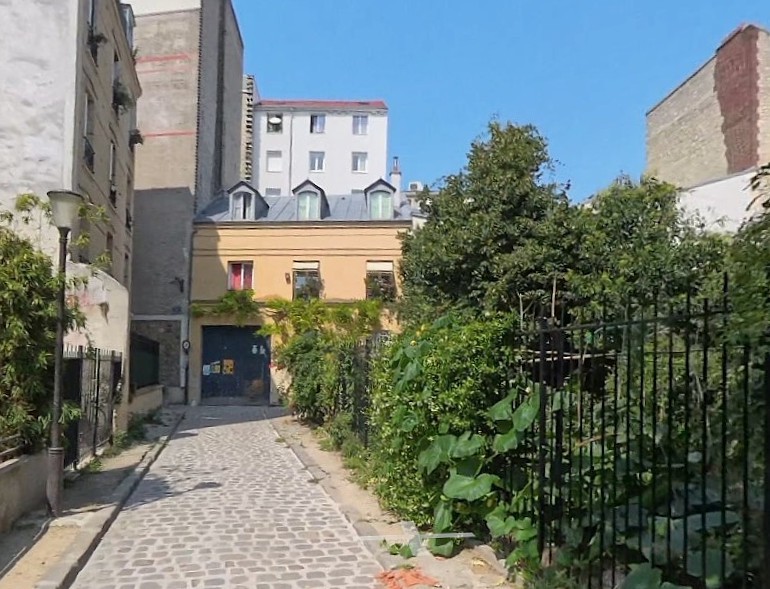
Today, it has been opened up with gardens and some newer buildings. This is how that view looked in 2025.
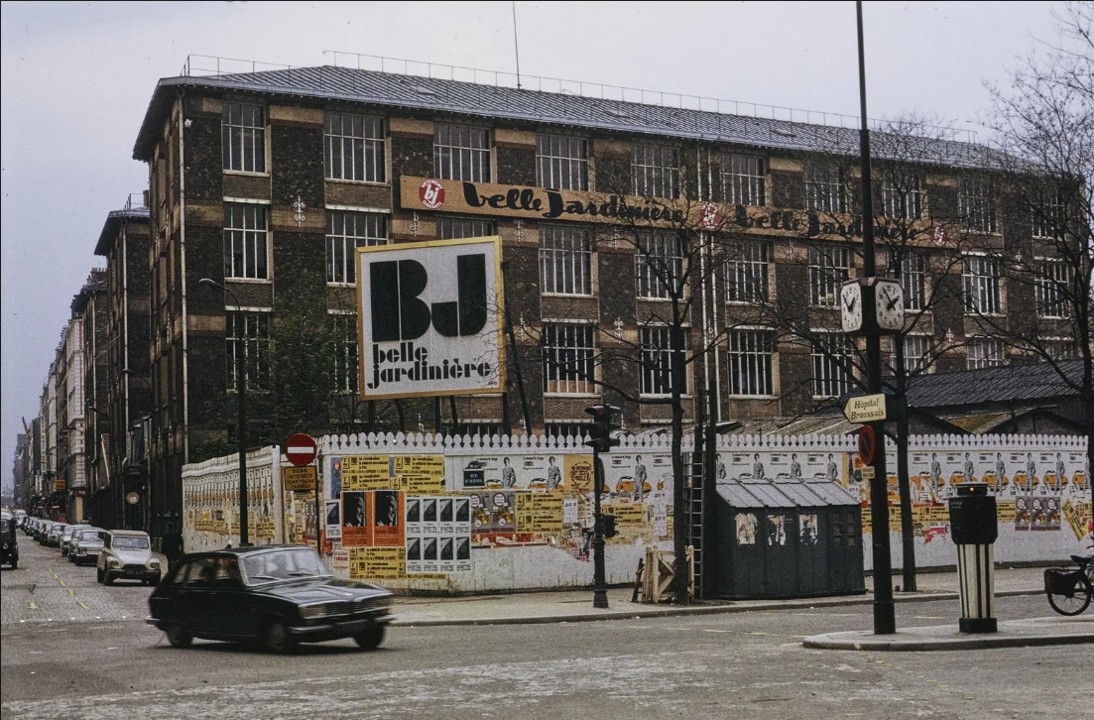
This is not far from the apartment we stayed in last May. In exploring that area as it looked in 1970, I found the ateliers of the Belle Jardinière on the rue d’Alésia at the corner of the rue Didot, photographed by Michel Dornet. The Belle Jardinière itself, near the Pont Neuf, disappeared in the early 1970s, and it looks as if the ateliers were closing down in 1970. I cannot identify the green structures on the corner with the ladder beside them. Norman notes that the car appears to be moving at considerable speed. But nobody is using the Avertisseur de Police (the object with the vertical stripes on the bottom) to notify the authorities.
Today, there is an apartment complex set in landscaped grounds on this site. The clock is still on the street at that intersection, though.
I also explored an area we had stayed in many times, just off the boulevard du Port Royal. On the rue du Faubourg St-Jacques, Brigitte Mouly captured a tiny shoe repair shop wedged into a corner outside the Port Royal Maternity Hospital.

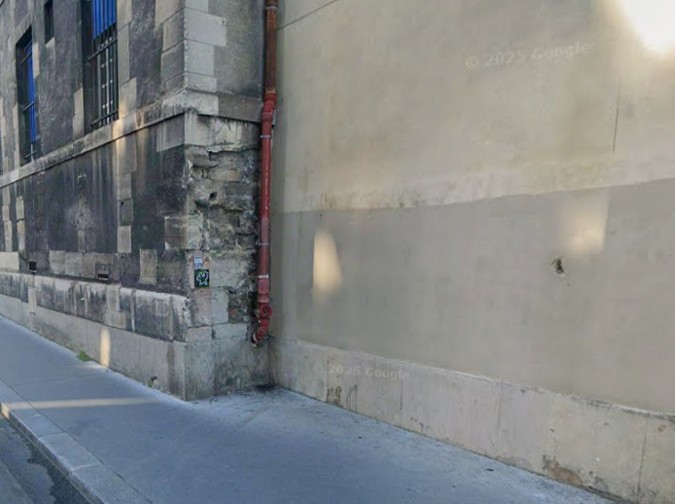
That corner today looks as if you could barely find room for a chair, let alone a shop.
Paris in 1970 was greyer and grittier. The facade-scrubbing program had started, but many grimy buildings remained. Here is a photo of the rue du Faubourg St-Denis, by Jacques Leblic, the most prolific of all the photographers (at least according to what is online), who took 221 photos in the 10th arrodissement, interiors as well as exteriors, streetscapes and small details, arcades. There is much to see here: the dented car, the cart for selling flowers, the golden horses heads (indicating a horse butcher), the varying hues of the buildings.

Paris was still an industrial city in 1970. The vast Citroën factory in the 15th arrondissement continued to produce cars until its closure in 1975. In this photo by Roger Havart, we see the facade, which faced the river. Behind it, the factory stretched over an enormous expanse. The site is now the Parc André Citroën.

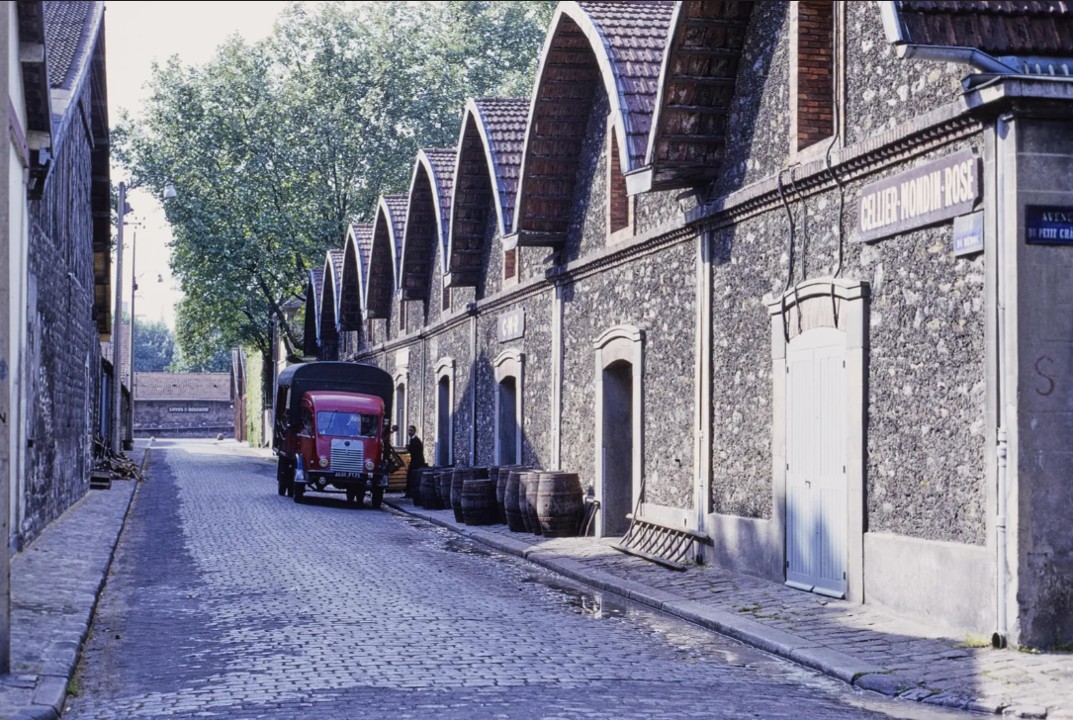
On the other side of the city, in the 12th arrondissement, was Bercy, a working site that was also turned into a vast park, but in the 1970s it was still filled with wine warehouses. They were demolished in the early 1990s. The unidentified photographer of the photograph below had the sense to include street signs (rue du Médoc, avenue du Petit Chateau) as well as commercial signs: Celliers Mondain Rosé (or CMR) on the right and Caves de la Roseraie in the far background. This is documentary photography at its most useful.
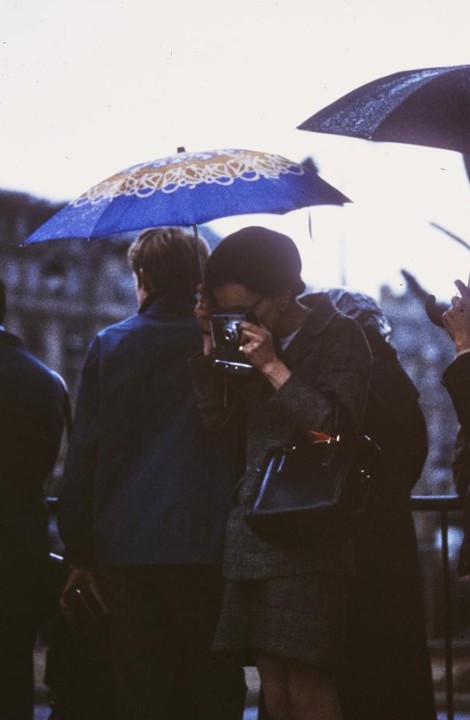
Not all the photographs are this good. Some are crooked, some are out of focus, some are overexposed. As photographs taken by amateurs used to be. The shot shown below, taken by J.C. Clavier on the Champs-Elysées, suggests the technology in use at the time. I love the way the photographer is holding her umbrella while taking the shot. I wonder what had caught her attention on the ground in front of her. I wonder if she was part of the project.
Text by Philippa Campsie, 1970 photographs from paris1970 (I have not cropped or changed them in any way), contemporary images from Google Street View.
*The photographers were amateurs, and I could not find information about individual names. If anyone can provide information about any of these dedicated volunteers, do get in touch.






Hello from France, Have you seen this video (23’55) ? Best regards, Sophie
PARIS EN 1970 : 140 photos d’une ville disparue
Thank you, Sophie. Those would be the photos in the exhibit. I shall watch it this evening. Best, Philippa
This is a fabulous story, thankyou!
It’s a fabulous collection. I had a hard time choosing photographs from such a wealth of material!
I found this interesting post about Guimard metro entrances. It says that the Chatelet entrance was “rebuilt.”https://www.sortiraparis.com/en/what-to-visit-in-paris/history-heritage/articles/290538-did-you-know-this-is-hector-guimard-s-last-original-type-b-metro-station-aedicule Thanks for another fascinating post.Marsha Huff
I am so glad that many Guimard aedicules survive, even if some are replicas. They are such beautiful and original entrances to the underworld!
That was fun. I ran through the square n.60 https://paris1970.fr/carre/60 and recognised about half.
The most striking was this one of rue St Isaure/ Place Michel Petrucciani – boulangerie on the left, pharmacie on the right. https://paris1970.fr/carre/60?photo=49
The buildings have been cleaned, but the building on the corner is still a boulangerie, and the building on the right was a pharmacie until recently, but the road in front of the pharmacie was pedestrianised, and one of the beautiful Wallace fountains was added. https://maps.app.goo.gl/CUJ6vLDsrcxbPQDy7
It is remarkable how much does survive after 56 years. And it’s lovely to hear that Wallace fountains are still being added. I think pedestrianized streets are an excellent innovation. The 1970s seem to have represented the height of car-centric design and planning. Do you remember when the courtyard of the Louvre was a carpark?
Hello from a fellow Torontonian and Paris lover. Very interesting post! Thank you for all your research and helpful information. I was able to get to the exhibit
Pingback: In search of lost department stores | Parisian Fields
Pingback: In search of lost department stores | Parisian Fields