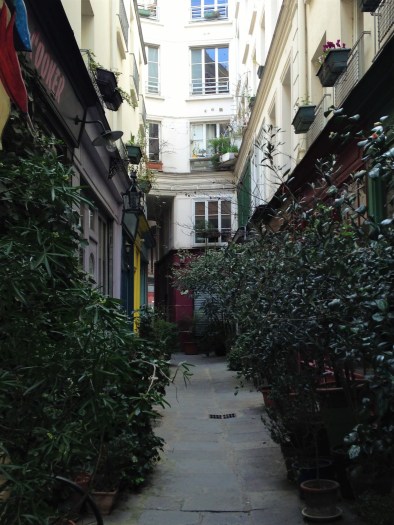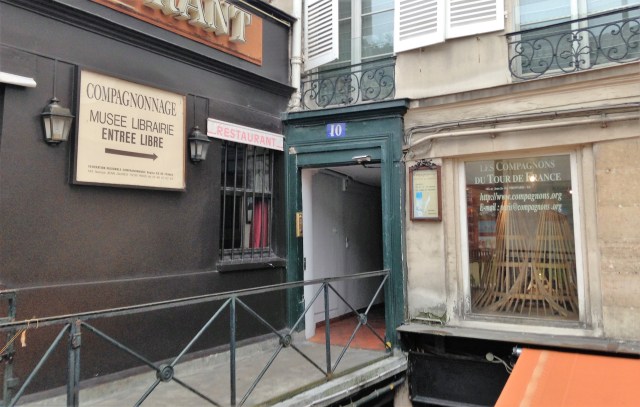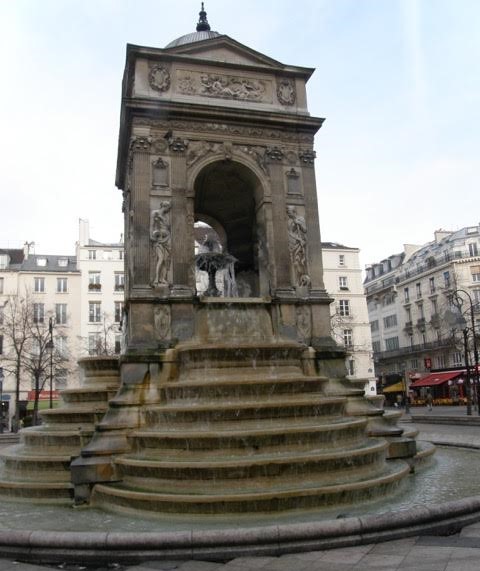
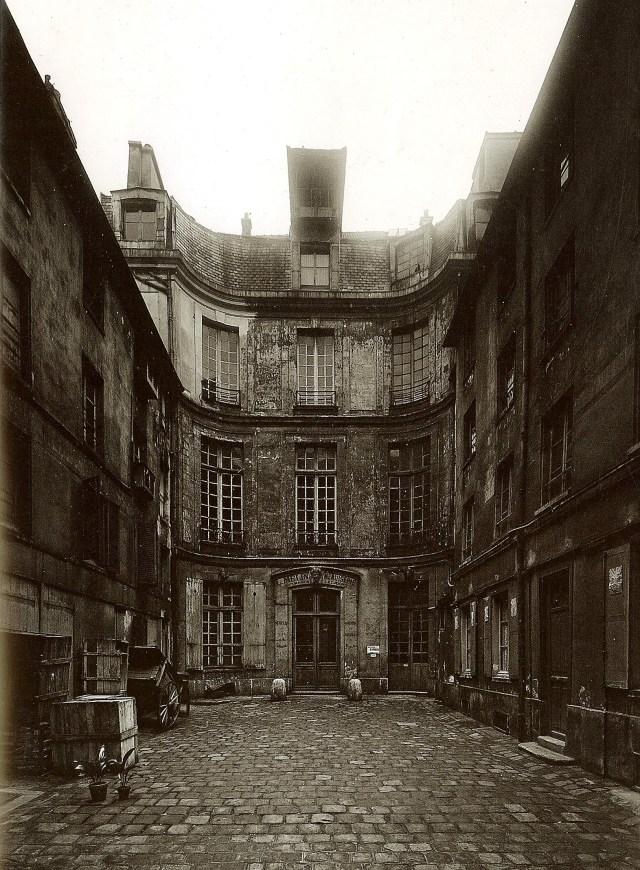
On the morning of April 12, 2016, three of us set out from this courtyard on an astounding walk through the Marais. But the story starts much earlier.

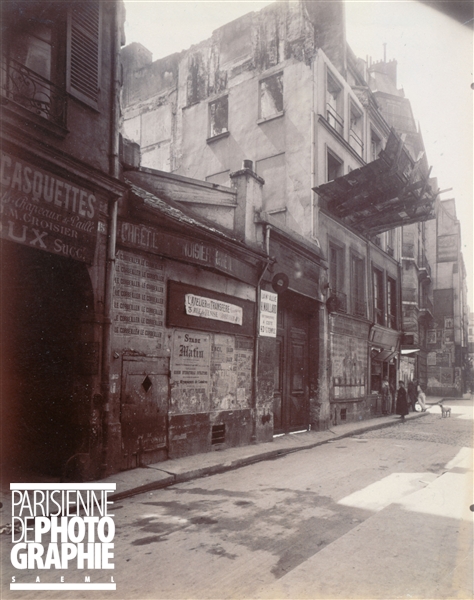
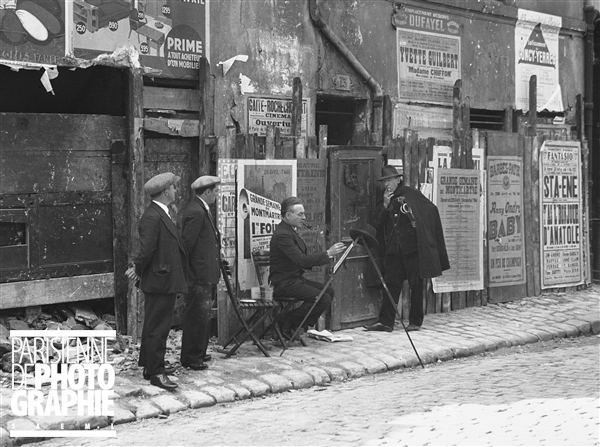
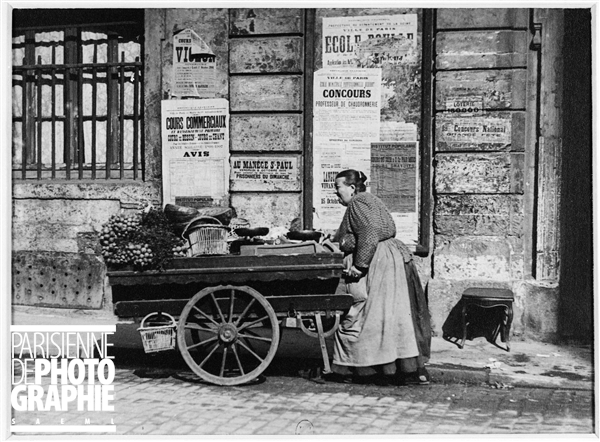
In 1980, a sharp-eyed passerby spotted some photographs in a Paris dumpster and scooped them up. He or she took them to a knowledgeable collector. One can imagine the collector’s jaw dropping at the sight. Dozens and dozens of black-and-white images of Paris, taken in the early 1940s – that is, during the German occupation of the city.
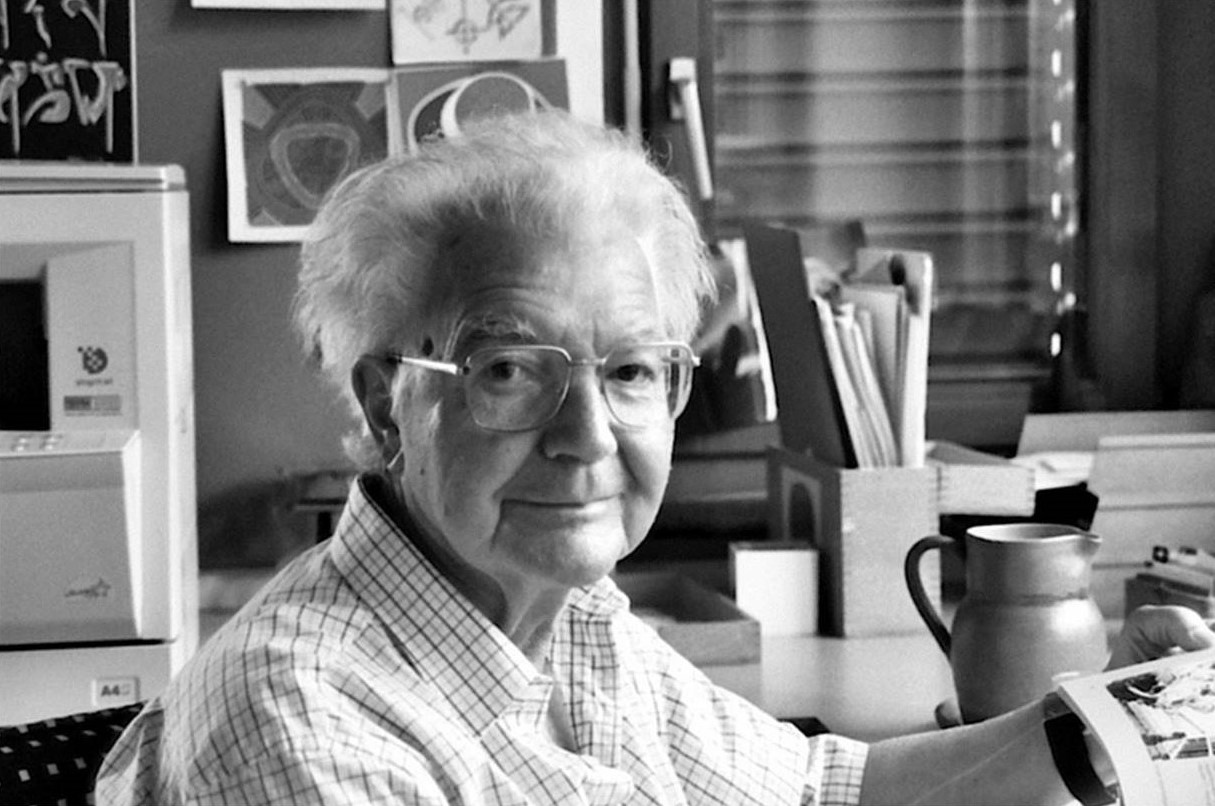
In 2005, the collector showed them to Patrice Roy, architect and graphic artist, who selected about a hundred, 58 of which had been taken in the third and fourth arrondissements, the Marais. Roy lived in the Marais, and recognized many of the buildings. He researched the images, and discovered that the photos had been commissioned by the city administration to document îlots insalubres – “slum blocks” slated for clearance and redevelopment.
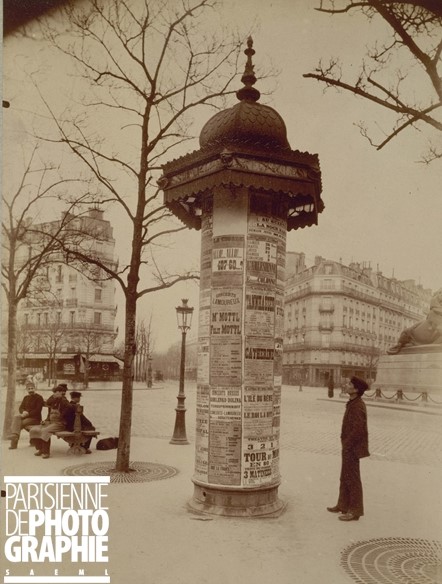
The images were the work of two commercial photographers – A. Cayeux and F. Nobécourt. Little is known about them, but they were following in the tradition of earlier photographers such as Eugene Atget and Charles Marville, who captured parts of the city that were destined to vanish.
Things turned out differently in this case.
At the time they were photographed, the Marais buildings were dilapidated. Former mansions of the nobility had become cheap lodgings and workshops for artisans and immigrants. The administration condemned the buildings and attempted to evict the tenants. Many did leave, but housing was scarce, and the city did not have the resources to tear down existing buildings and build new ones. So life went on in these old buildings.
As Patrice Roy looked at the haunting photos from the 1940s, he spoke of “testimony to a stoic melancholy” and buildings that looked “unreal, deserted, as if swept of inhabitants by the war.”* They had indeed been very dark times.
Attitudes changed after the war. In the early 1960s, the Minister of Cultural Affairs, André Malraux, mused on how “Paris noir était une ville triste” (the blackened Paris was a sad city). But the solution was not to demolish sorry-looking remnants of the past; rather, they could be saved as a fertile resource for city dwellers of the present. In his vision, “l’avenir ne s’oppose pas au passé, il le ressuscite” (the future does not oppose the past, it resuscitates it). This spirit and vision led to the Malraux law of 1962 that rescued so many old buildings from oblivion.
In 2015, Patrice Roy published the 58 photographs of the Marais from the 1940s with detailed descriptions of each image, as well as background information about the city’s plans for the area and the eventual fate of the buildings. The descriptions are thoughtful and reflective, making the reader slow down and gaze into the photographs. The result is Paris Marais 43: Arrondissements 4 & 3 photographiés durant l’Occupation par Cayeux et Nobécourt (Creaphis Editions).
We met Patrice in April of this year; he inscribed our copy of the book. When we told him we planned to search out some of the buildings in the photographs, he offered to give us a tour. We were delighted and honoured.
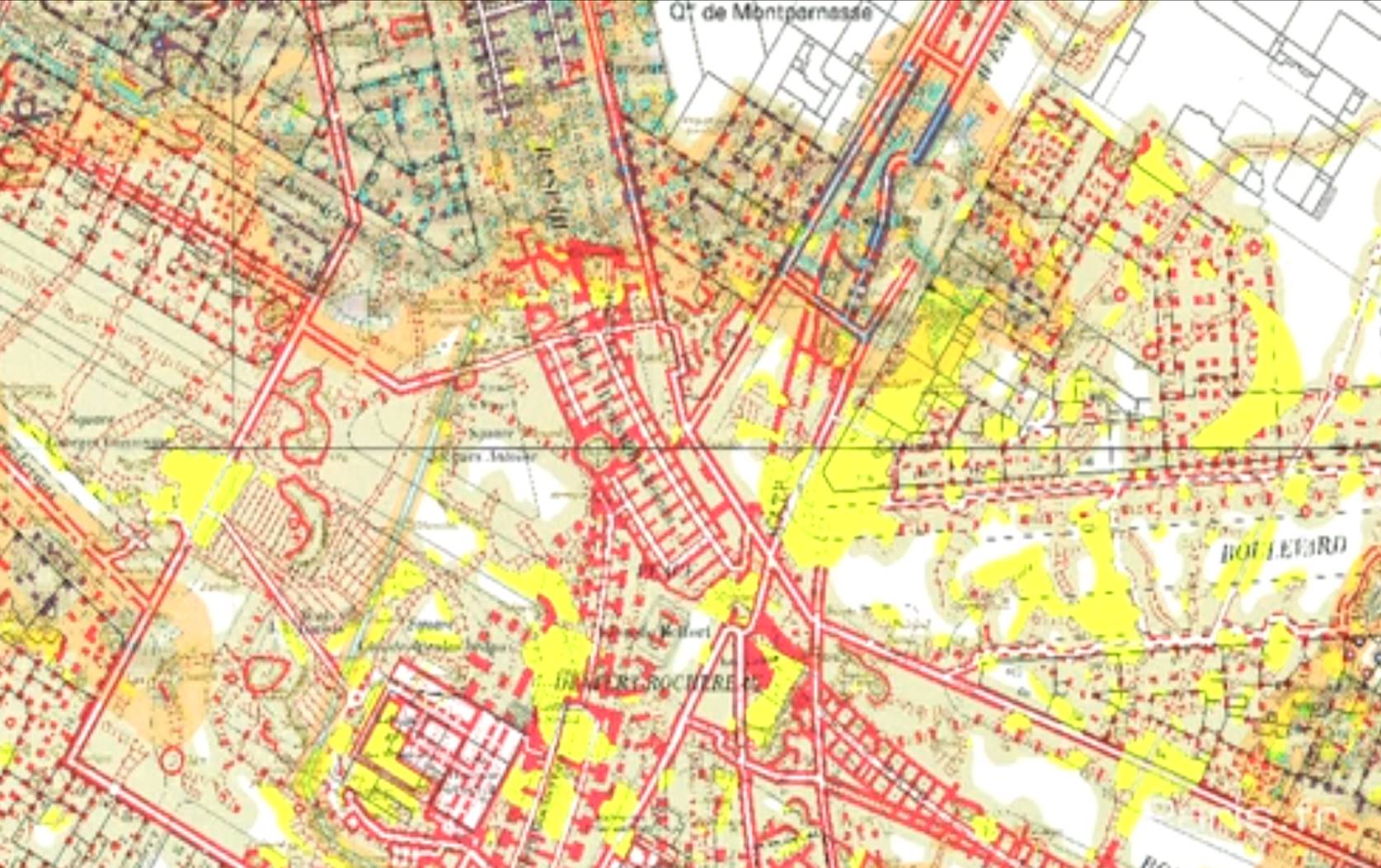
Patrice created a map for our walk. We more or less followed the route shown, with some detours. But it gives you a sense of the quartier we explored together, and some of the buildings we saw.
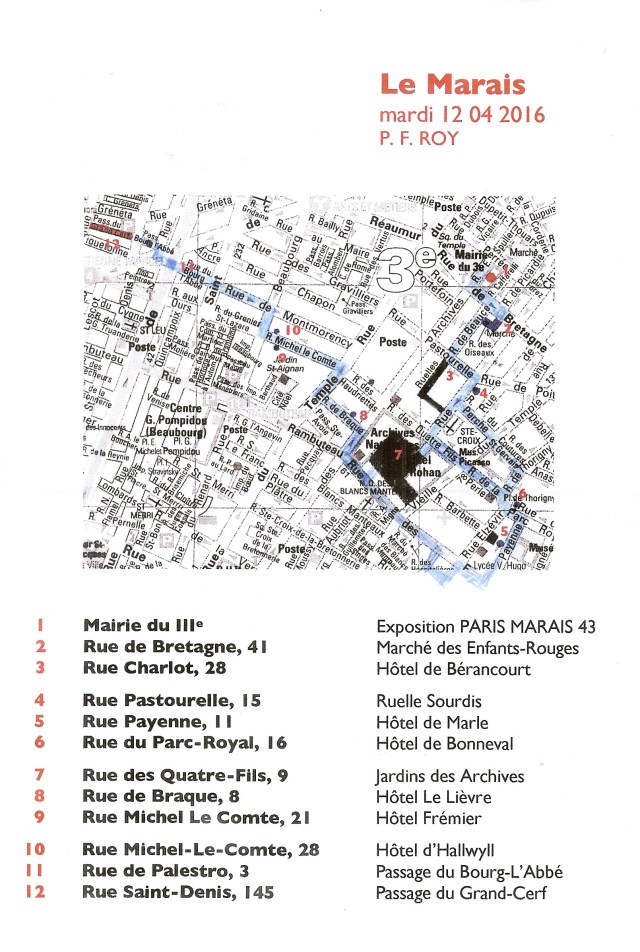
Our first destination was the Marché des Enfants Rouges. The market dates to the 1600s and is the oldest covered market in Paris. The name, which means Market of the Red Children, refers to the children from a nearby orphanage who wore red uniforms.

As we walked, we were astounded by Patrice’s intimate knowledge of the area. He had helped restore many of the buildings we saw and had anecdotes galore about such things as the sub-basement where crayfish were raised in tanks for a restaurant, or about disagreements within a dysfunctional committee of co-propriétaires that had led to blows. He led us through narrow lanes (ruelles) straight out of the Middle Ages and into hidden (but public) gardens along the way.
A few minutes into our tour, Patrice led us along a narrow laneway (ruelle) where numerous chasses roues stood as mute evidence of the days when delivery carts bumped along its length. The trickle of water down the sunken centre had been an open drain; we didn’t even try to imagine how it must once have smelled.

Today, most visitors, and perhaps Parisians, see the Marais as a destination of boutiques, galleries, restaurants and watering holes. However, as Patrice pointed to signs and opened doors, we could see many other types of businesses. But nothing we glimpsed prepared us for the wonders behind this sign.

Inside, people were packing and filling orders, but all was quiet. As our eyes adjusted to the subdued light, shiny objects demanded our attention.
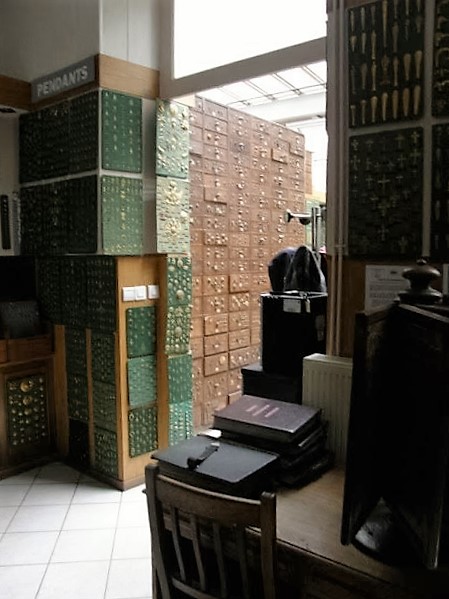
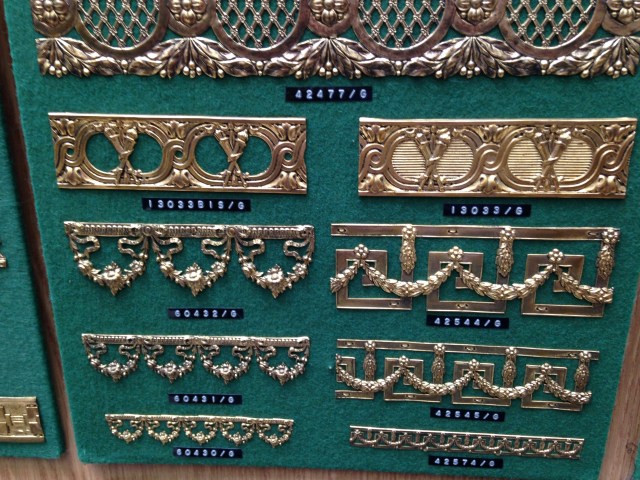
Alas, we left without souvenirs: the shop full of stamped metal decorations carried out wholesale transactions in bulk only.
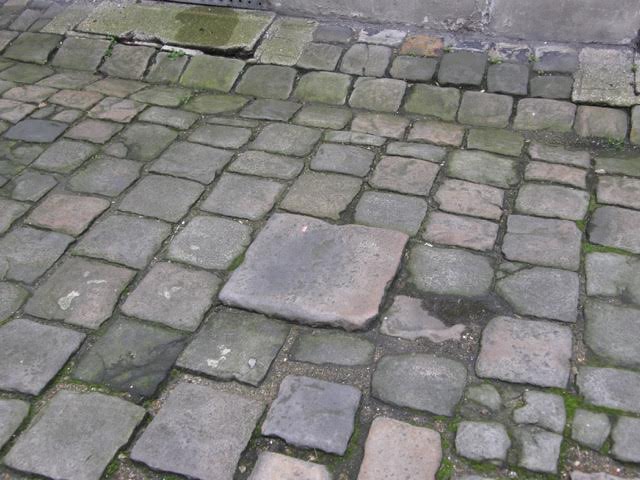
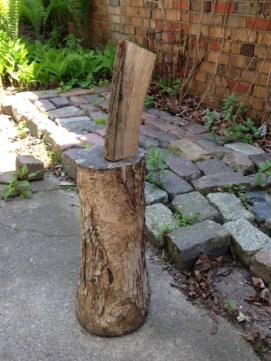
Another courtyard allowed Patrice to help us read more into what we saw. Why was one stone so much larger that the other cobblestones? It was a special workplace, he explained. Here a heavy section of a tree trunk would serve as the base for splitting firewood.
It reminded Norman of the section of tree trunk he uses to split wood for our fireplace in Toronto.
We have often seen pulleys suspended a storey or two above ground level to hoist goods up to a window or door. But we had never noticed anything like the curved metal wall hook to which Patrice drew our attention.
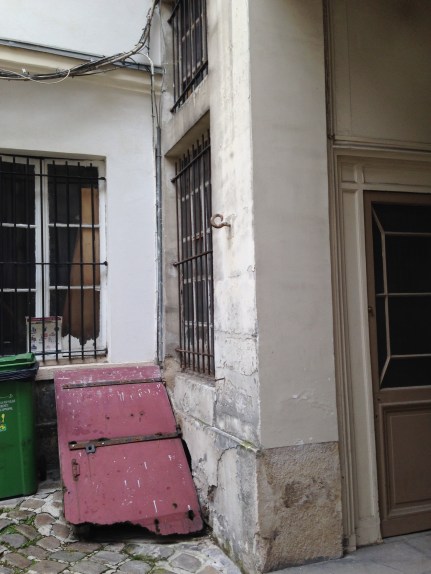
Getting wine barrels into the cellar safely would be a tricky job. If one raised the red door, one end of a rope could hold a barrel fast; the other end would go through the hook. The wine could be lowered safely by easing up on the rope, as one would do more elaborately with a capstan.
In the same courtyard it looked as if a basement window was missing. Not so. The unobstructed opening is an important part of a centuries-old ventilation system. Such openings allowed a free flow of air into and through the cellars.
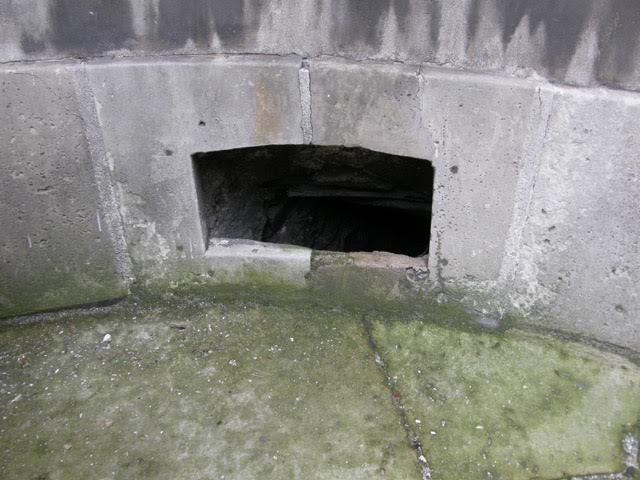
When closed up, the air in the cellar often becomes musty and unpleasant. (On another walk, our friend Mireille had pointed out blocked-up ventilation spaces at ground level and speculated on the problems they caused.)
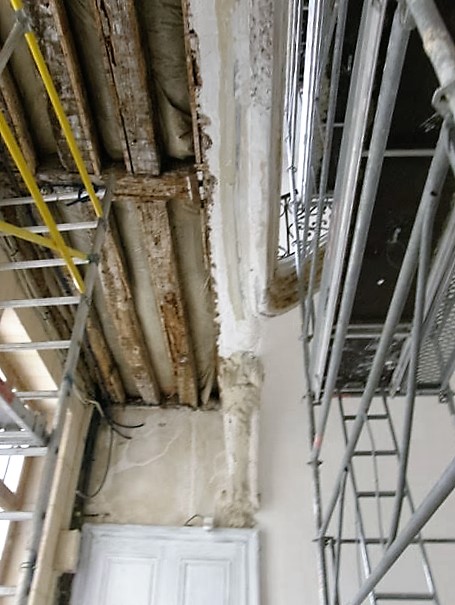
As Patrice guided us through areas he knew well, other buildings, other doors revealed continuing wonders. Here was a restoration in progress.
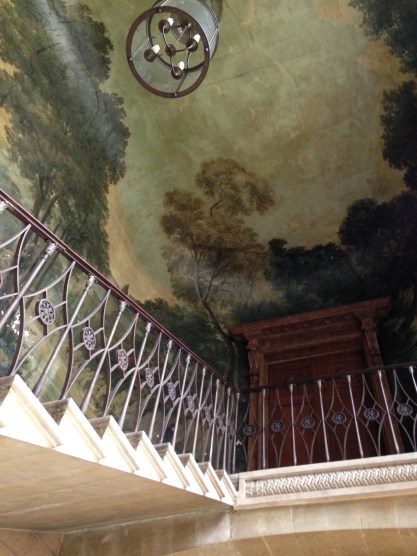
What is the story behind this mural? Will it survive the next restoration?
Despite the wealth that now characterizes much of the Marais, not all residents are wealthy. One of Norman’s favourite buildings included social housing. We passed street-level office windows as we entered a quiet cobblestoned courtyard with modern metal benches.

It was a peaceful scene with an unusual modern take on traditional privacy/security shutters at one end.
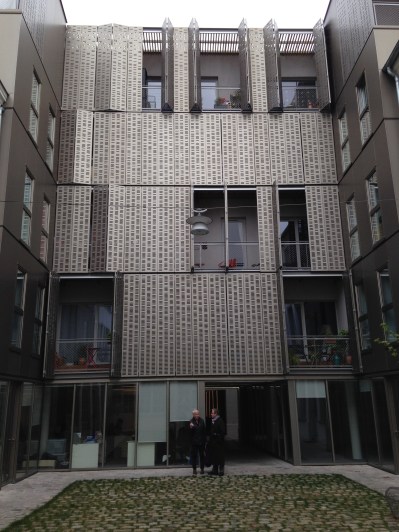
Patrice filled us in on the details. The original building dated from the 17th century, with additions in all the centuries since. In the latest renovation (2015), a restored 17th-century passageway reopened the block. In the end, 25 Rue Michel le Comte had more housing than before and the apartments were more comfortable than earlier ones. Nevertheless, mixed use had been preserved with space occupied by a variety of tenants, including an architect and an independent film producer.
However, food for the mind must also be supplemented by food for the body. And here, again, Patrice guided us very well.
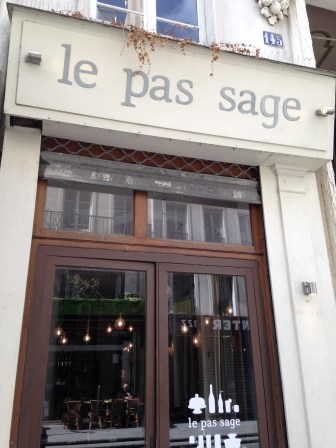
Lunch at Le Pas Sage was delightful (boudin noir burgers, highly recommended). We were ready to give our feet a rest while continuing the conversation.
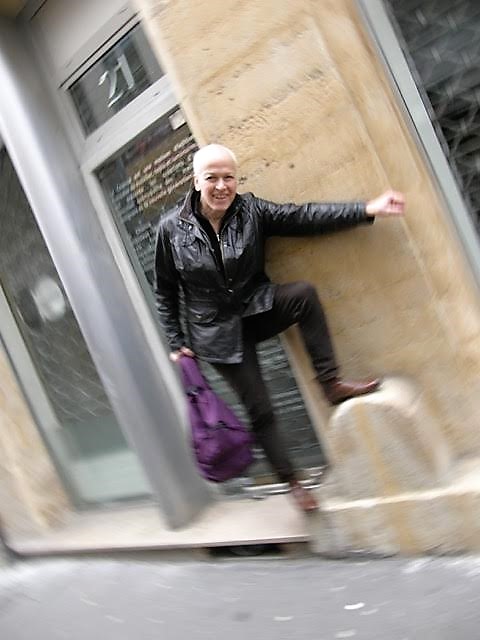
Patrice left us with many memories, more than we can relate here, but we particularly enjoyed his demonstration of how one would use this step at 23 rue Michel le Comte to mount one’s horse. It is the only remaining mounting block in Paris.
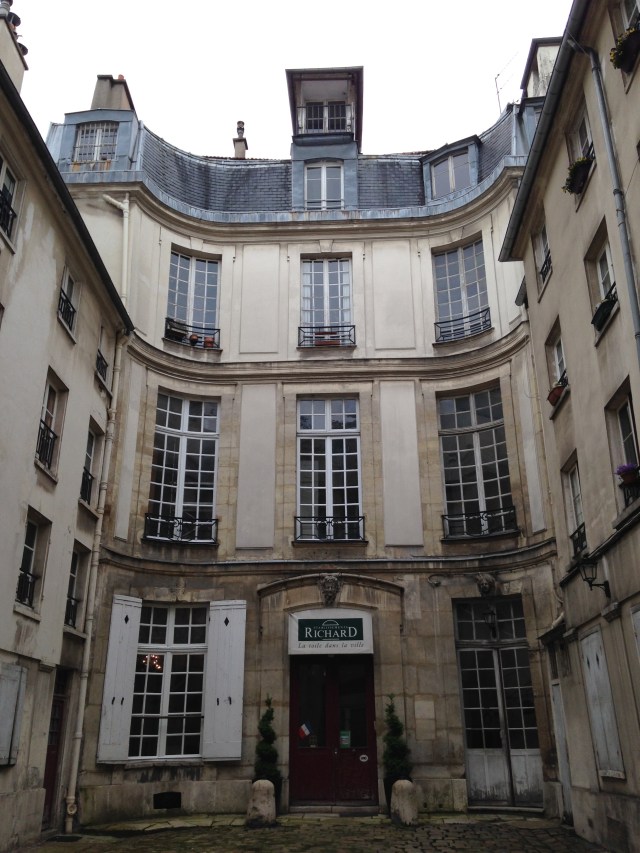
We hope that the book will soon be translated, so English readers can explore the Marais as we did. Here is the photo we took of the 1940s photograph shown above. Cleaned and restored, the present building has resuscitated the past.
Text and photographs by Norman Ball and Philippa Campsie.