We are fairly laid-back gardeners. Our Toronto garden is small and shady, and nearly all the plants are perennials that come up every year on their own so we do not have to “put in” the garden every spring. We have tried growing vegetables, but the raccoons and squirrels chew them as soon as they are edible. They don’t eat them exactly, they just sample them so that nobody else can eat them. At least they leave the kitchen herbs and the garlic alone.
But every year, without fail, Norman buys geraniums and plants them in pots. That way we can move them around so there will be colour in the garden wherever it is needed. Fire engine red and shocking pink. They do not survive Canadian winters, alas, so we buy new ones each year.

Which got me thinking about the geraniums we see in Paris window boxes. Actually, the correct name is pelargoniums, but only serious gardeners call them that.
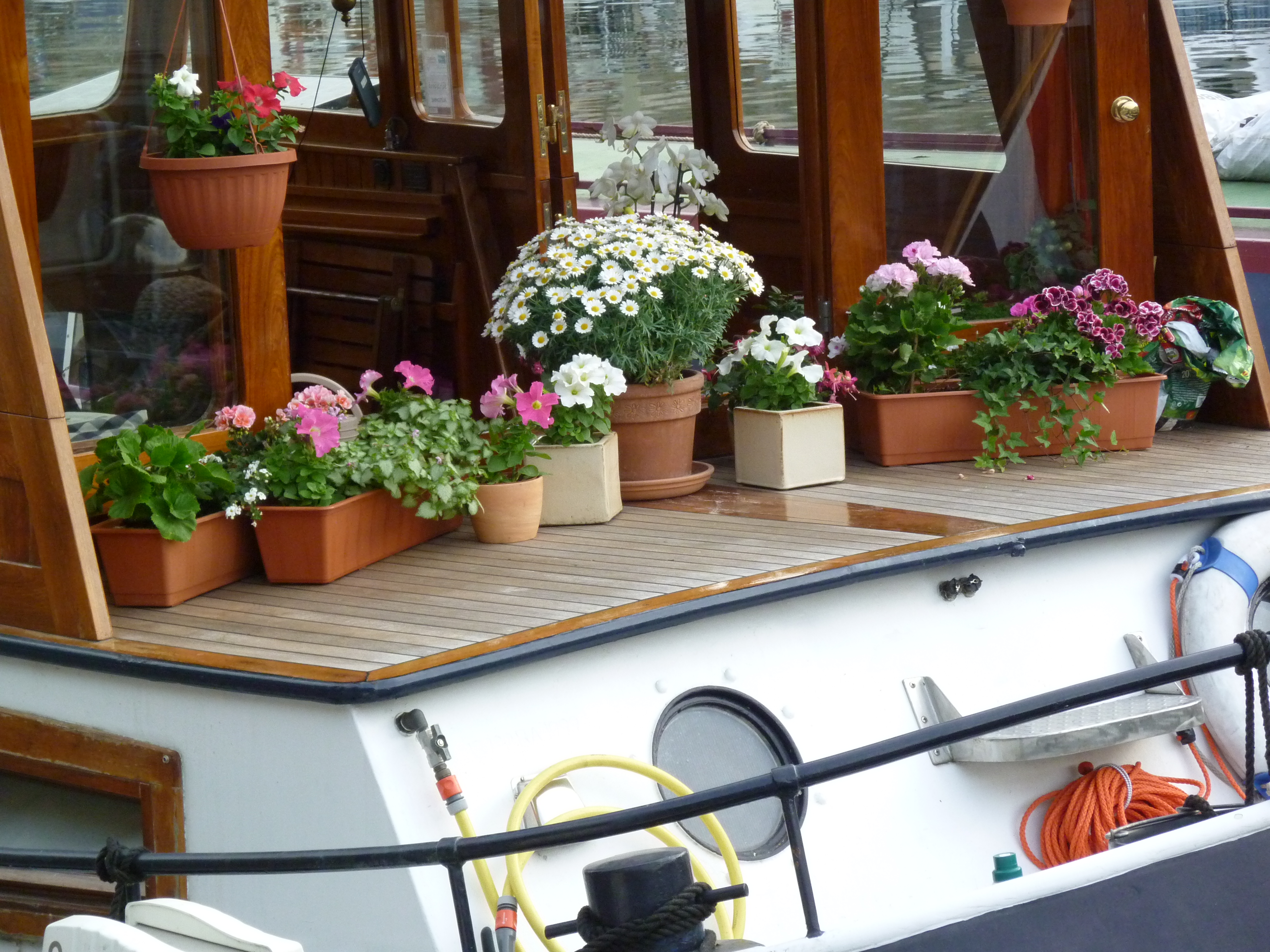
We’ve seen them on boats.
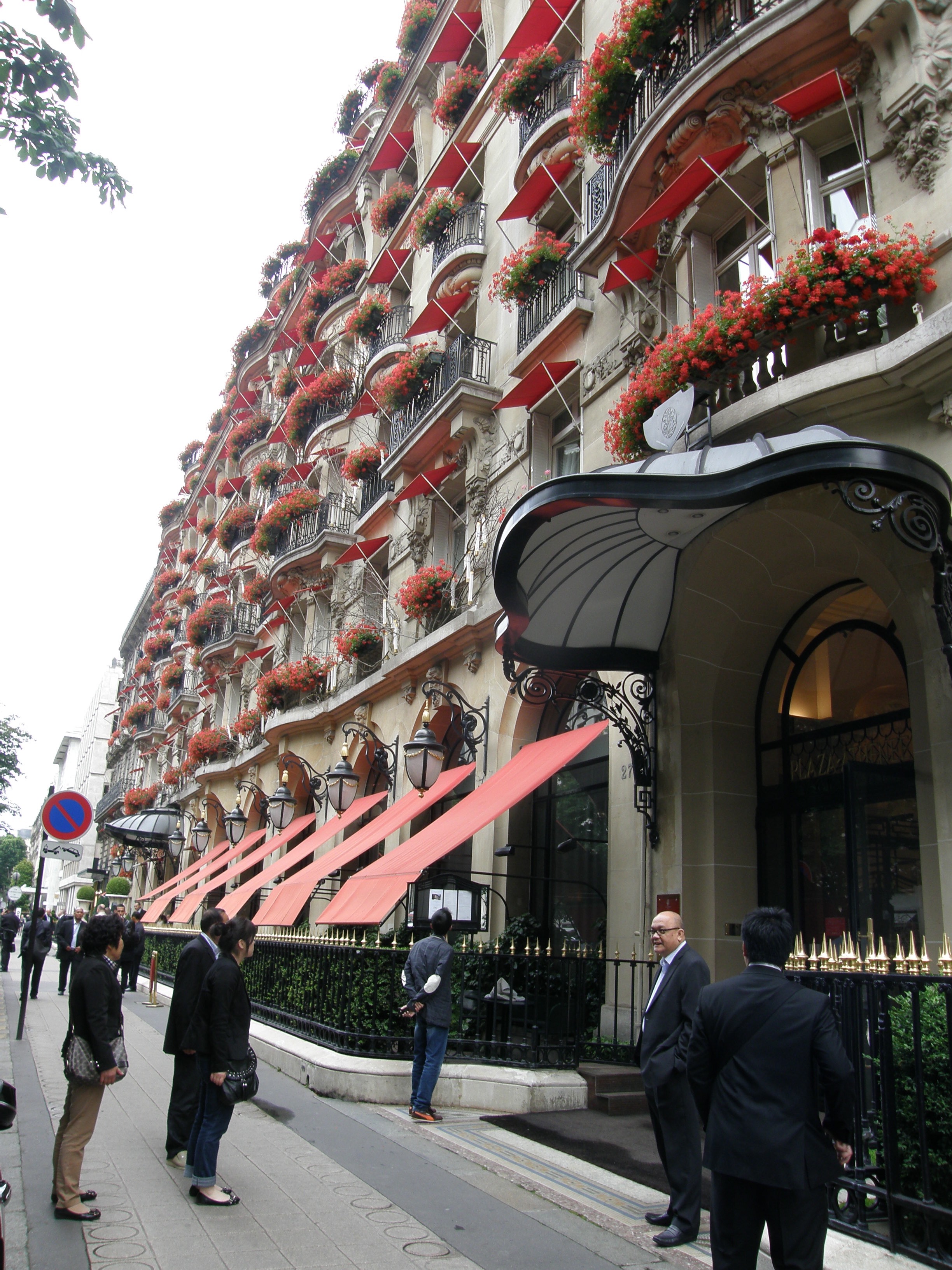
We’ve seen them on the façades of chic hotels.
We’ve seen double-decker arrangements of window boxes.

And charming little countrified arrangements in courtyards.
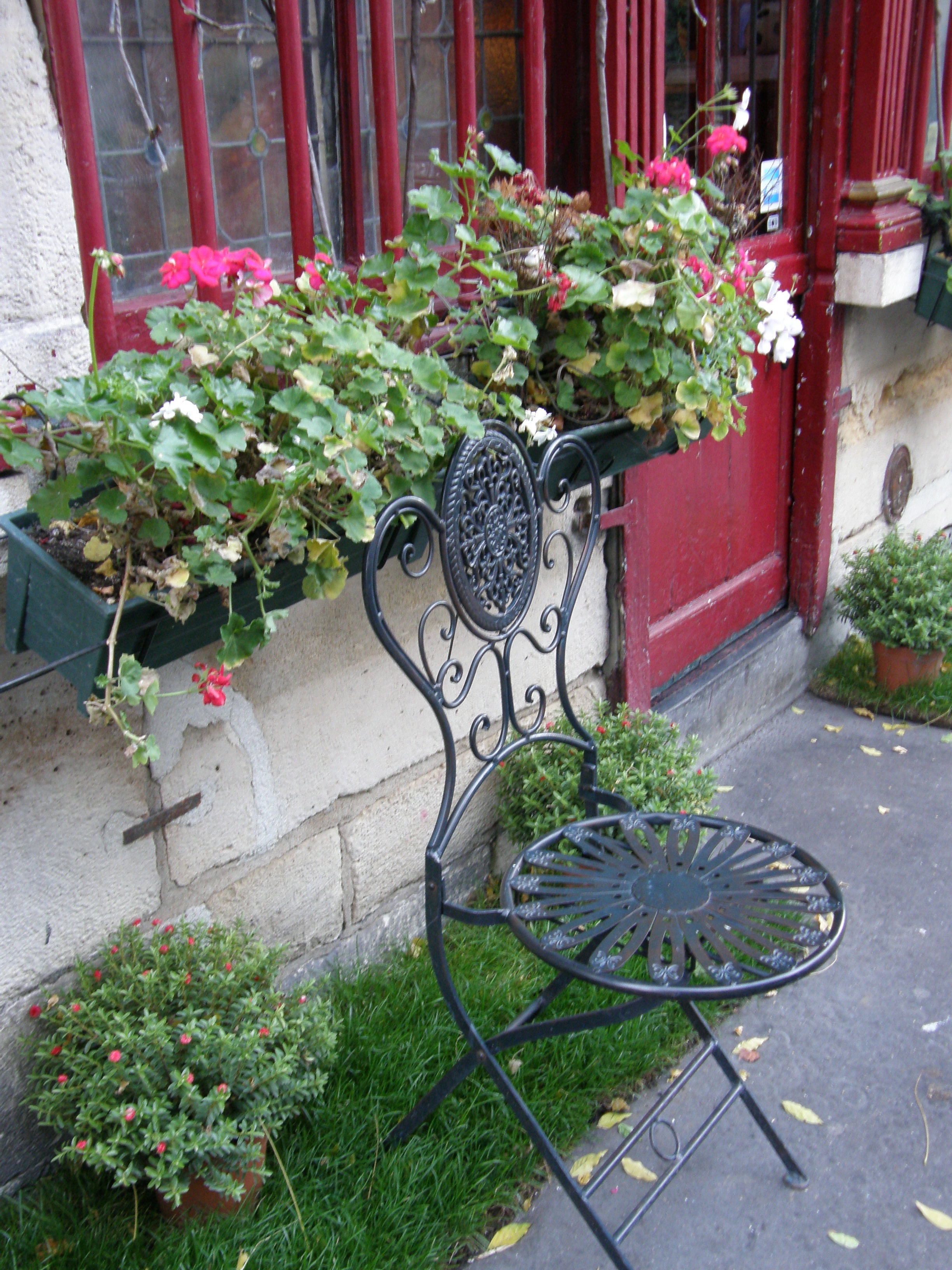
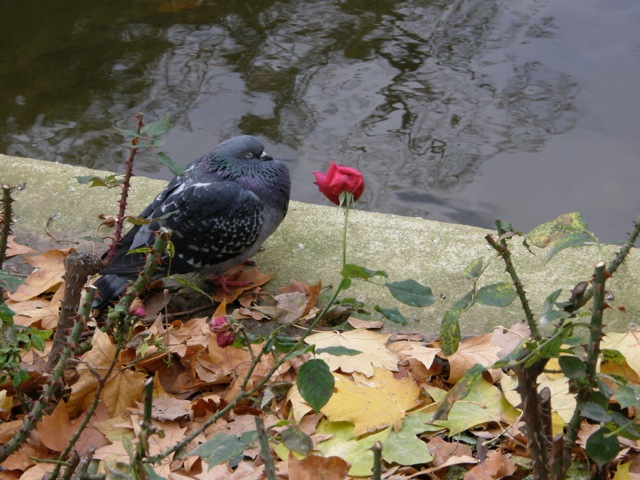
Why is the plant so popular? For one thing, as Anne Wilkinson points out in The Passion for Pelargoniums, it is “easy to grow, easily available, and stands up to a considerable amount of neglect.”* It also seems to tolerate city air and dust. And in Paris (unlike here) it apparently overwinters: here are some dried-out specimens at Christmastime, but they will probably bounce back in the spring.

Today, geraniums/pelargoniums are considered rather unremarkable plants, what Wilkinson calls “municipalized,” because they are often found in city parks and in front of public buildings. They are so common in Paris window boxes that they barely register unless you look for them. But there was a time when they were considered the last word in horticultural fashion.
Pelargoniums are a native of southern Africa, and the first ones were brought to Europe by travellers in the latter part of the 17th century. They proved easy to hybridize and horticulturalists produced hundreds of versions.
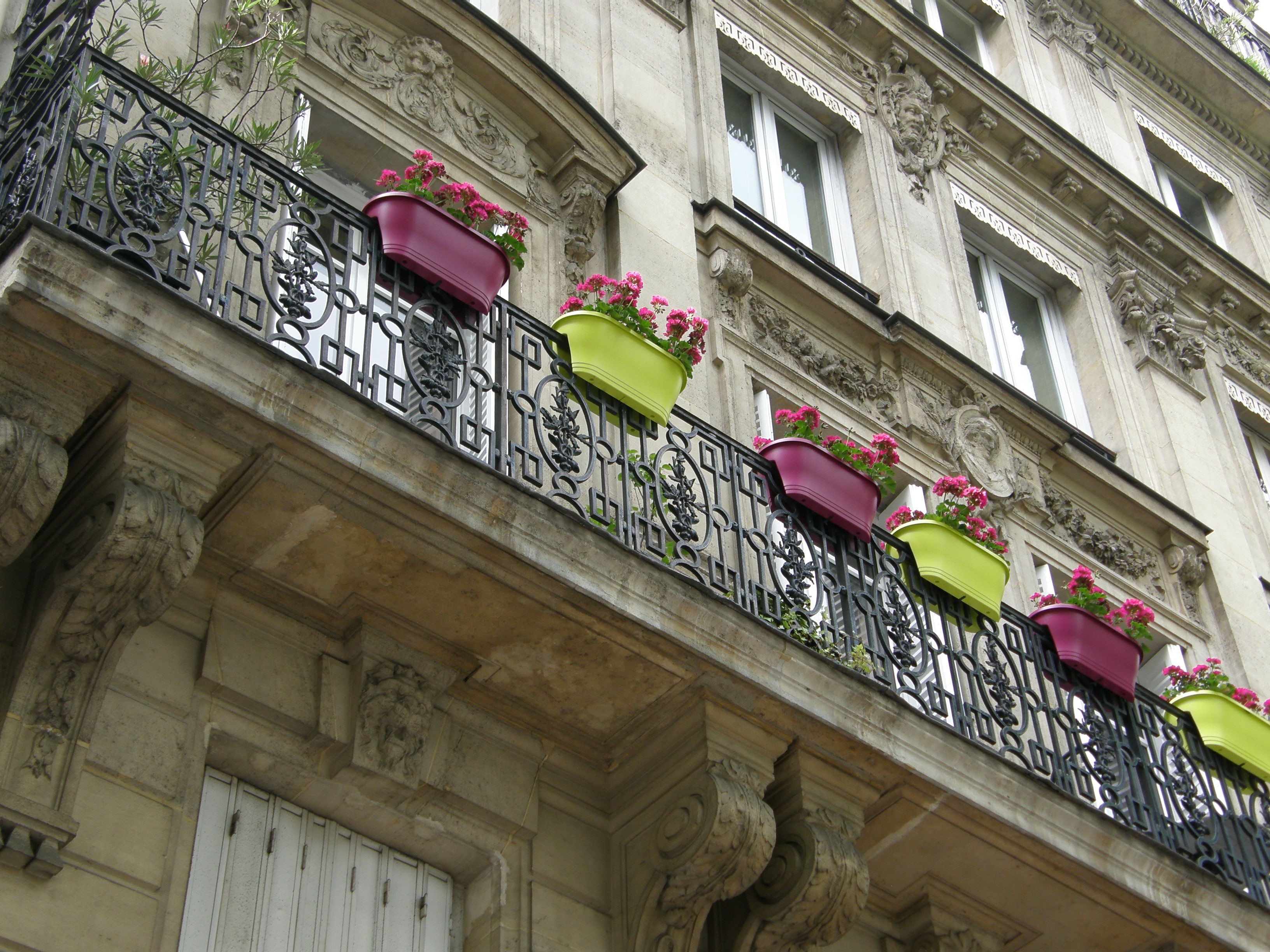
But the plant really came into its own in the 19th century. One early adopter was the first Empress of France, Joséphine Bonaparte. Joséphine was obsessed with gardens and plants.
It was said that the only books in the Empress’s apartments were botanical ones. She could name every plant in the greenhouse in Latin and give its country of origin; a botanical erudition that her courtiers found deeply tedious.**
You can bet she wouldn’t have called them “geraniums.” Joséphine contributed to the travel expenses of a plant collector, James Niven, who brought back pelargoniums from the Cape of Good Hope, along with varieties of heather and ixia (a brightly coloured relative of irises and crocuses). Joséphine wanted to make her garden at Malmaison into a spectacular display of rare and beautiful plants. And for a time, she succeeded, but the garden she created has long since disappeared.

Over the course of the 19th century, the popularity of pelargoniums increased as more and more people came to enjoy growing flowers, even in the cities – indeed, particularly in cities. As art historian Laura Anne Kalba notes:
No longer simply the affair of a few nurserymen catering to wealthy amateur plant collectors, the growing and selling of flowers became a specialized and increasingly sizeable industry in France starting in the mid-nineteenth century, as gardening became a fashionable hobby for the middle class and it became possible even for the working class to spend resources on such evanescent pleasures as flowers… Imported from all over the world; hybridized, grown and cared for in commercial nurseries; advertised in catalogs; and sold in open-air markets and boutiques, flowers were…designed for immediate and renewed consumption, very much like newspapers.***
The Marché aux Fleurs on the Ile de la Cité, established in 1808, was in the vanguard of this trend. Flower markets in the Place de la Madeleine and the Place des Ternes opened later in the century as the city expanded outwards.
(Now that I think about it, much has been made of the culinary contributions of chefs who had to find new outlets for their talents after the Revolution, when their aristocratic employers had fled or been imprisoned or guillotined – I have not seen an equivalent story about the fate of the gardeners who served the former aristocracy. What happened to them?)
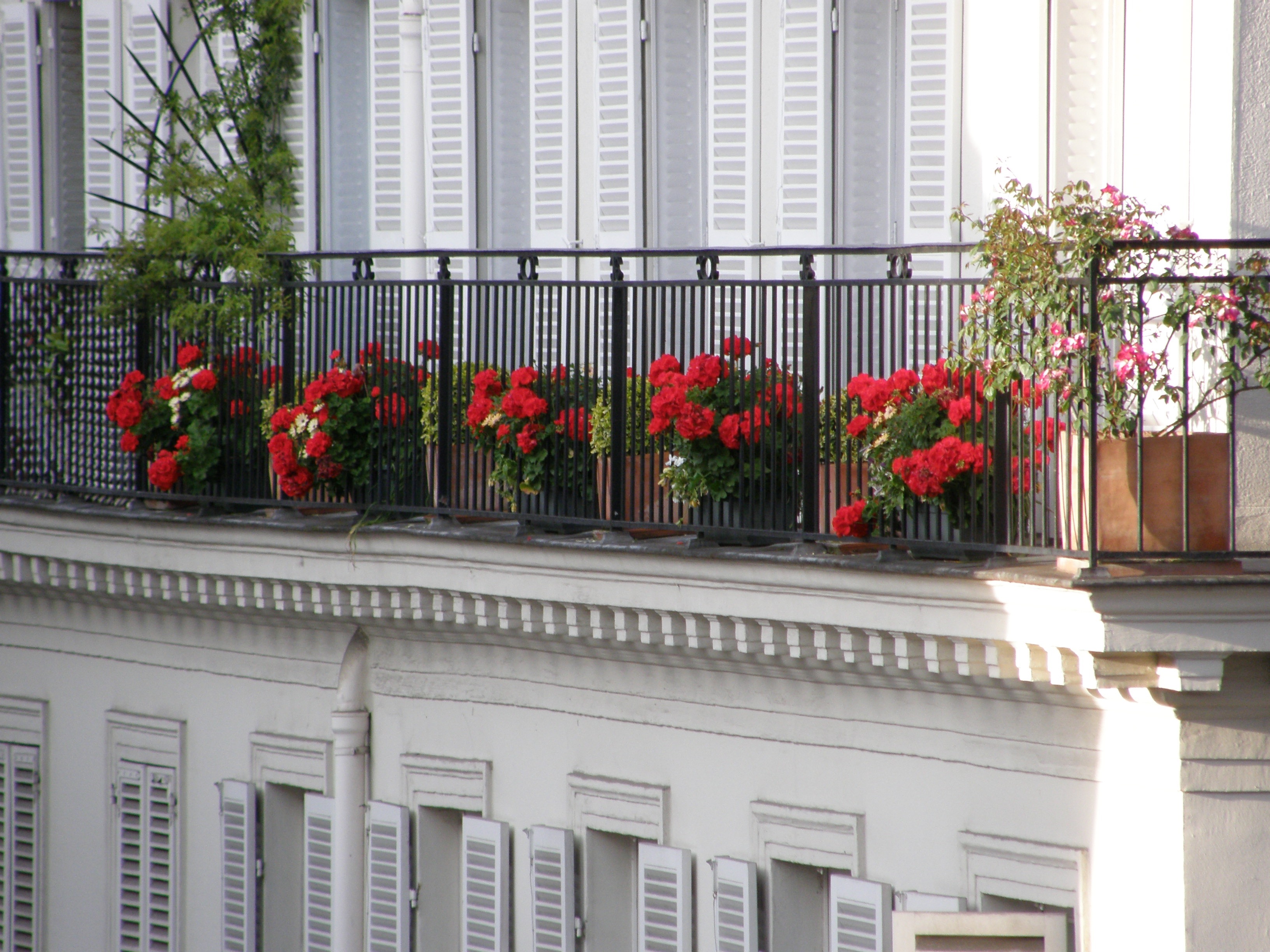
As city dwellers took up DIY gardening, easy-going pelargoniums became particularly popular. Part of the appeal was their bright colours. Intense colours were fashionable in the 19th century, helped along by the introduction of chemical dyes that produced fabrics and paints that were more vivid than those created with vegetable dyes. Kalba links this development to the rise of Impressionism:
Impressionism came forth in an already evolving visual field, in which the natural merged with the artificial and the real with the imaginary, and nurserymen, landscape artists, gardeners, florists, and artificial flower makers configured the urban landscape as an arrangement of vivid dabs of colour.
It’s an arresting image: the city itself as an Impressionist painting. I’ve mentioned before that Paris was a lot more colourful than people realize in the 19th century – not all buildings were unrelieved expanses of grey stone or dull stucco. And as more and more people took up window-box gardening, more colour was added.

Kalba goes on to describe the fashion for arranging brightly coloured flowers into “mosaïculture”:
…a style of gardening that used bedding flowers and colourful, leafy dwarf plants to create figures, words, or abstract ornamental patterns. Popularized in France at the Universal Expositions of 1867 and 1878 and the temporary exhibits of horticultural societies, the style enjoyed widespread appeal among members of the general public.
Horticultural critics at the time considered mosaïculture a sacrilege, since the flowers were not appreciated for their individual forms and qualities, but treated as pixels in a larger image. (One wonders what they would have thought of 20th-century floral clocks in places like Edinburgh and Niagara Falls.)
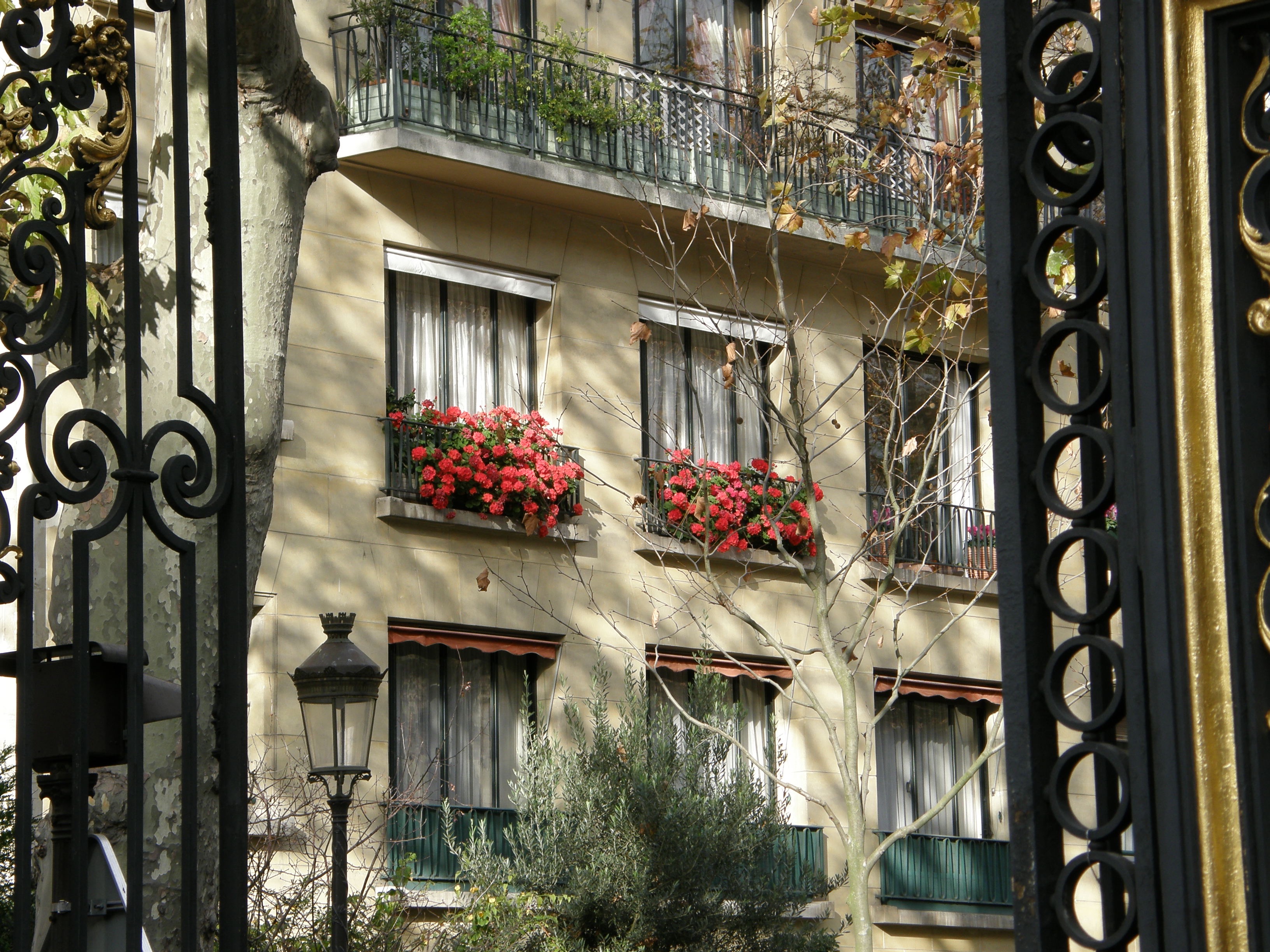
Still, through all the changes in horticultural fashion, cheerful pelargoniums retained their enduring appeal, surviving in pots and window boxes to brighten French streetscapes. And in our garden to remind us of Paris.

Text by Philippa Campsie, photographs by Norman Ball and Philippa Campsie
*Anne Wilkinson, The Passion for Pelargoniums: How They Found Their Place in the Garden, The History Press, 2007.
**Patricia Taylor, Thomas Blaikie: The Capability Brown of France 1751–1838, Tuckwell Press, 2001.
***Laura Anne Kalba, “Blue Roses and Yellow Violets: Flowers and the Cultivation of Color in Nineteenth-Century France,” Representations, Fall 2012, pp. 83–114.





 Today, if you Google “