The Technology of Compassion

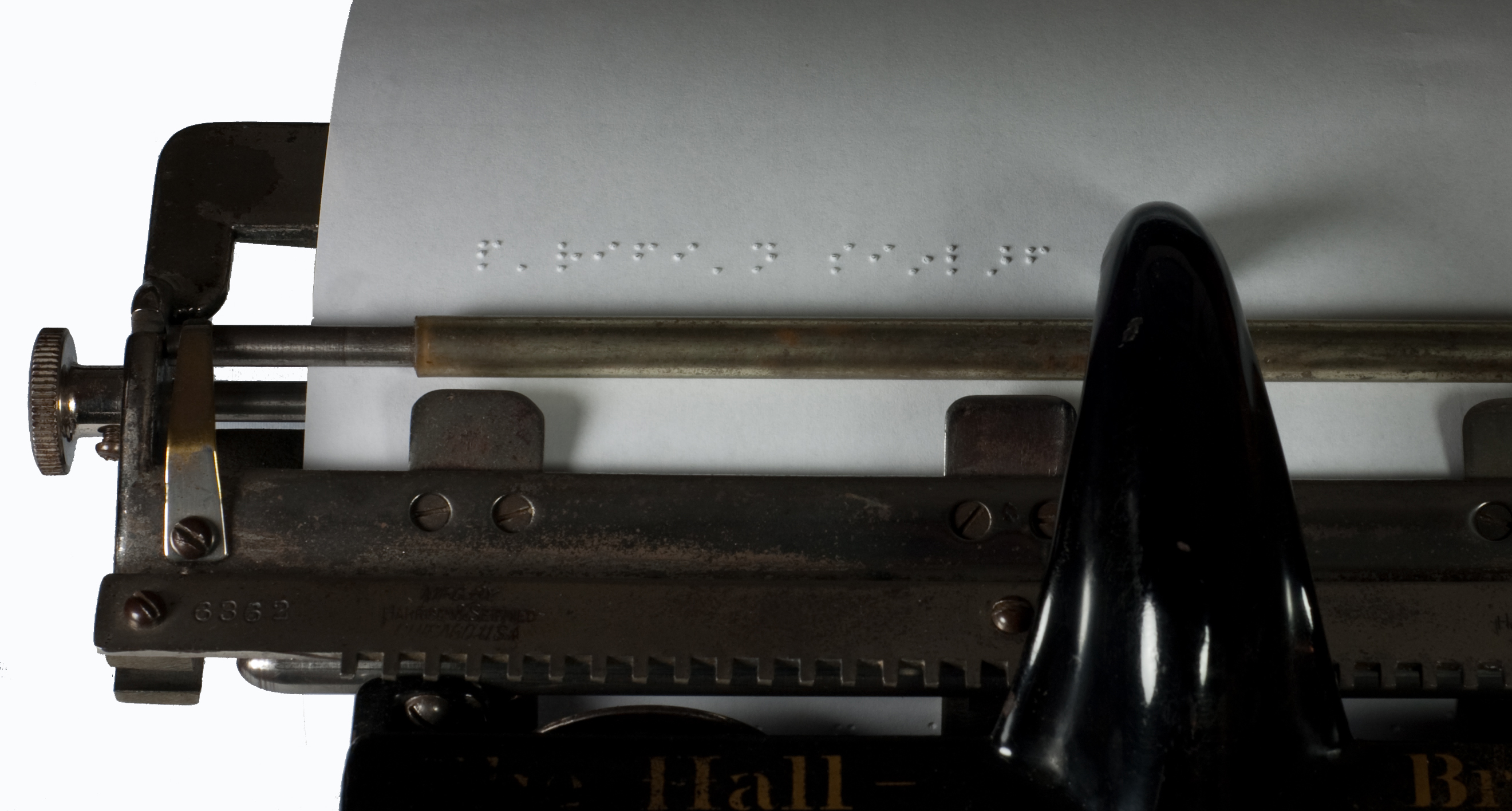
I had just finished typing when typewriter collector Martin Howard took the photo below. If you read Braille, you will see that it says “parisian fields.”
The Pantheon is the final resting place of France’s heroes: Voltaire, Victor Hugo, Émile Zola. In 1952 the remains of Louis Braille were placed there—well, most of him. They left one of his hands in his home town of Coupvray, where he was born on 4 January 1809. He died in 1852, having spent most of his life in Paris. (The picture shows the memorial in Coupvray.)

Louis was born sighted, but when he was three, he accidentally poked one eye with an awl in his father’s harness-making shop. It became infected and in that pre-antibiotic era, the painful infection spread to the other eye. At five, he was completely blind. In an age when the blind usually suffered a life of neglect and ridicule, Louis was fortunate. His parents, along with the local priest and schoolteacher, felt he should go to the local school and learn by listening.

He did well and by 1819, aged ten, he was in Paris as a scholarship student at the National Institute for Blind Youth (L’Institut National des Jeunes Aveugles). The Institute had been founded in 1784 by Valentin Haüy, a philanthropist and linguist who spoke ten languages. When Louis arrived, Haüy was no longer director, but his ideas were still respected.

In 1859 Haüy’s works were commemorated by a moving statue in the Institute’s courtyard, carved by sculptor Jacques Joseph Emile Badiou de la Tronchère.

Valentin Haüy was sighted, but the experience of seeing blind people being mocked during a religious street festival at the Place de la Concorde had reshaped his life. He wanted to open the world of the written word to the blind. In 1784 he developed a much-praised method of imprinting or embossing raised letters on heavy paper which the blind could be taught to read by touching the raised outline of the letters. Unfortunately, it was a cumbersome and expensive method of communicating.

Louis Braille learned Haüy’s method of recognizing the shapes of letters standing out from the page by touching them. But he was frustrated by the limited amount of material produced by this method. And how could he write to others, such as his family, without having others do it for him? Louis’s father made him a set of leather letters he could trace, but he wanted a better system.

Help came from an unusual direction. Years before, the Emperor Napoleon had demanded that his soldiers be able to compose and read messages at night without making a sound or using a light. One of his officers, Charles Barbier de la Serre, came up with a system of 12 raised dots for writing and reading messages.

This sonograph “night writing” was a limited system. For one thing, it was based on 36 different sounds, rather than normal spelling. Given regional accents and variations in pronunciation for any given word, the system could easily lead to confusion. For another, it was technically difficult to produce and read, because each “cell” representing a phonetic sound was composed of 12 positions to accommodate dots. Still, the system embodied two important principles. First, it was tactile. Second, the letters were represented by the position of the dots rather than the actual shape of each letter.

Braille learned the “night writing” system. But he still felt that the system needed to be simplified.

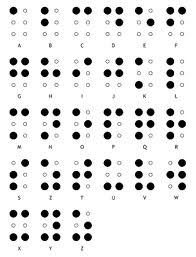
By the time he was 15, Louis had come up with a system based on actual spelling and a simplified 6-dot system. Each cell consisted of two vertical rows of three dots each. He even adapted the system to music notation. At the age of 20, in 1829, he was the published author of The Method of Writing Words, Music and Plain Song by Means of Dots, for the Use by the Blind and Arranged by Them.
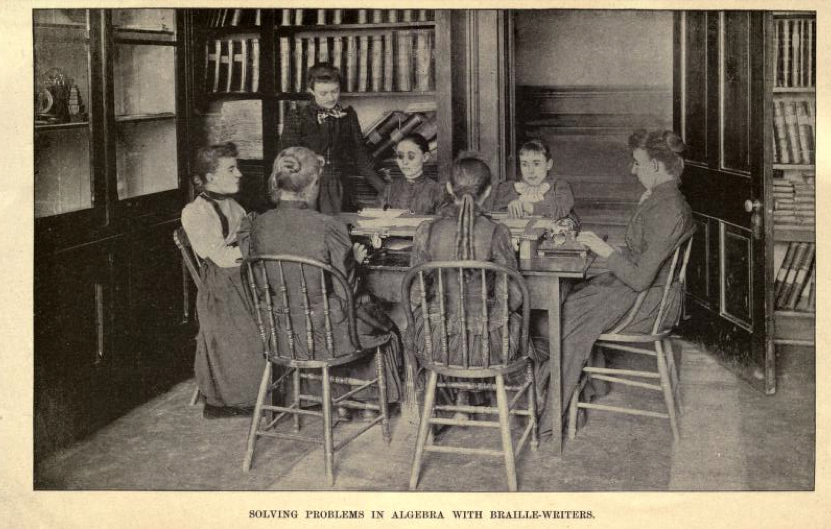
When he had finished his studies, the talented Louis was hired as a teaching assistant and made a professor at the school in 1833. He taught history, geometry, and algebra.

Now you’d think that the world would recognize the value of his breakthrough system and beat a path to his door. Alas, educational institutions tend to be conservative. Although at first his system of writing was popular with students and supported by successive directors, in 1840, a new director at the school banned the system and even had books burned as part of his campaign to adopt an inferior American system that was later abandoned. And when a history professor at the school had the nerve to have a book translated into braille, he was fired.

Students continued to push for change, but Louis had been dead for two years when the school finally adopted the Braille system in 1854.*

One problem remained. Writing in Braille still had to be done by hand with an awl and a tablet. How could one quickly create Braille letters on paper? In an era when so many things had been mechanized, why not find a mechanical means for the blind to create their Braille cells?

The typewriter is one of those devices that has been invented over and over again. The history of early typewriters is confusing and littered with dubious claims and counterclaims. However, I accept that the oldest surviving example of typewritten text comes from Italy in 1808 (it is shown below). It was typed by the blind Countess Carolina Fantoni da Fivizzano on a machine made for her by an Italian nobleman Pelligrino Turri. Turri was fond of the vivacious and charming young Countess and devastated when she lost her sight. The grief-stricken admirer vowed to create a machine to let her write to friends. And he did just that. His typewriter allowed the Countess to say what she wanted in private and do it in a way that could be easily understood by the intended sighted reader, one of whom was the inventor and, it seems, her lover.

More typewriters would follow, many driven by concern for the blind. Several, including one made by Foucauld in Paris, tried to satisfy both sighted and blind by simultaneously printing letters and embossing Braille dots. It was not a success. The effective mechanical production of Braille text by the blind was finally made possible by Frank H. Hall in Jacksonville, Illinois.

On 1 July 1890, following 25 years’ experience in the public schools of Illinois, Mr. Hall was appointed Superintendent of the Illinois Institution for the Education of the Blind. He set to work to create a better way for blind individuals to write in Braille. He completed his first machine in May 1892 (according to the school’s publication) and by 1893, there were 25 in use at his school and about 75 had been sold to other institutions and individuals. It was an astounding machine in terms of mechanical simplicity and its impact on the life of the blind.

This beautiful unrestored machine shows evidence of long use: six keys with beautiful wear patterns. How nice to see antiques which have not had evidence of their years torn away by overly enthusiastic restoration.

Each of the six keys activates a rod, which moves up to emboss a dot on the paper. To understand how this works, note the piece of metal rising gracefully from the metal above the keys and then arching gracefully towards the back of the machine. It looks to me like an elephant’s trunk.

At the back, we see six jointed vertical pieces of flat metal. Philippa thinks they look like insect’s legs. At one end, each is joined to a rod coming from one of the six black piano-like keys. When the key is depressed, one end of the horizontal piece to which it is attached will also fall and the other end will rise. Although they are of differing lengths, each of the rising ends of the horizontally pivoting arms has a stout piece of wire attached to it. This wire strikes the flattened portion of the elephant’s trunk, which is properly known as the “anvil.” Each wire hits the anvil at a slightly different place. Each wire has its own hole in the anvil which limits how far it travels. And if we have put a piece of paper around the cylinder (platen) so it comes between the bottom of the anvil and the pieces of wire, we will produce the raised embossed dot pattern of the Louis Braille system.

To my mind, the Hall Braille Writer is one of the most exciting and significant of the many nineteenth-century typewriters. It is a delight to use, with a nice touch, and whether the keys are struck singly or in chords, the system is impossible to jam. In the Hall Braille Writer, each wire hits a distinct point, whereas with conventional typewriters, each key hits at the same point, hence a propensity to jam. Hall’s machine successfully linked two important lines of history: the quest to find a mechanical means to allow the blind to write for the sighted, and the quest to allow the blind to write using a system that other blind people could read. Hall supplied the machine and Braille the system of writing.

Helen Keller used this machine, and extolled its virtues relative to a competing method called the New York Point System, which used eight dots instead of six. As she wrote, “in the great world of the blind New York Point is a provincialism. The machines for it are made only in New York, and write only New York Point. On the other hand, machines for Braille are made in Germany, France, England and America. I have owned American and German Braille writers which place me in communication with people all over the world.”

It was only in 1916 that schools for the blind in the United States officially adopted braille. Another 16 years passed before a universal English braille code was adopted. Let Helen Keller have the last word: “We the blind are as indebted to Louis Braille as mankind is to Gutenberg…Without a dot system, what a chaotic, inadequate affair our education would be.”
Text by Norman R. Ball, with typewriter photographs courtesy of Martin Howard. Other photographs from Wikimedia Commons. Norman and Martin are collaborating on a book on nineteenth-century typewriters.

* For more on the chequered history of the early years of the Braille system at the Institution, click here.
Posted in Paris history, Paris typewriters | Tagged , , , , , , , , , , , , , , , , | 11 Comments

On reaching 100 – blogs, that is

When we posted our first blog on July 27, 2010, called “The Sounds of Paris,” we had fairly simple objectives. We wanted to use our photographs of Paris, our shelf of books on the city, and our small collection of antique postcards. We wanted to share some of the things we had found (or found out) during our visits. And, finally, we wanted to answer some of the questions that nagged us. How does the Paris street cleaning system work? What is that long-lost building in a turn-of-the-century postcard? What is the human story behind this artwork or that memorial?

In the past 100 posts, we’ve covered everything from a clumsily executed murder to bouquinistes by the Seine to chimneypots and the finer points of parking. We sometimes set out to write about one thing and end up writing about another – rather like our wanders in Paris. We set out to see something and then one of us says, “I wonder what is down that street?” and one thing leads to another and our original destination is left for another day – or another trip.

Not much has changed after 100 blog posts, although we have more photographs than ever, more books, and a lot more antique postcards.

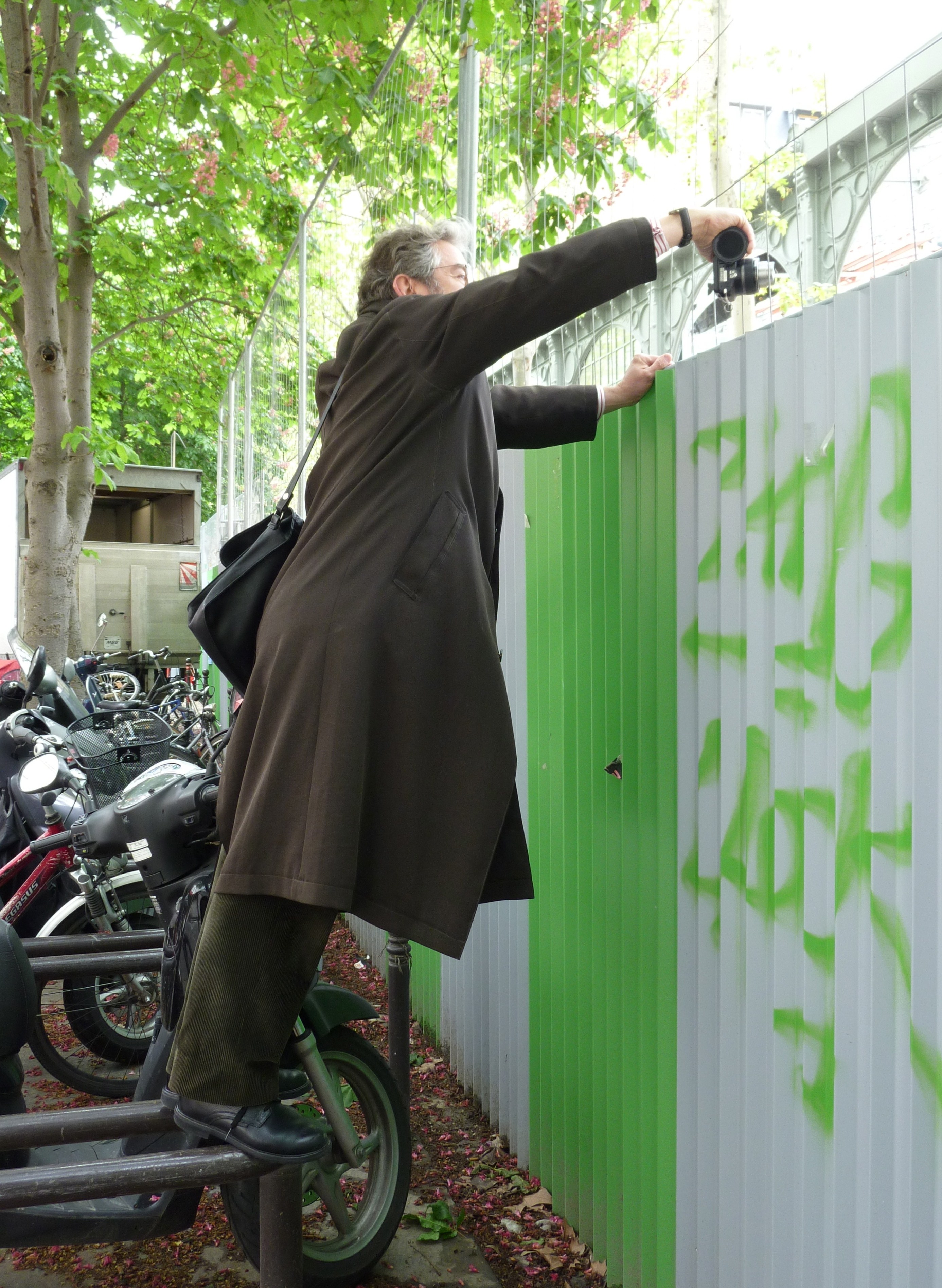
We both take photographs, although Norman has a better eye and a better camera. Here he is, aiming for the perfect shot, whatever it takes.

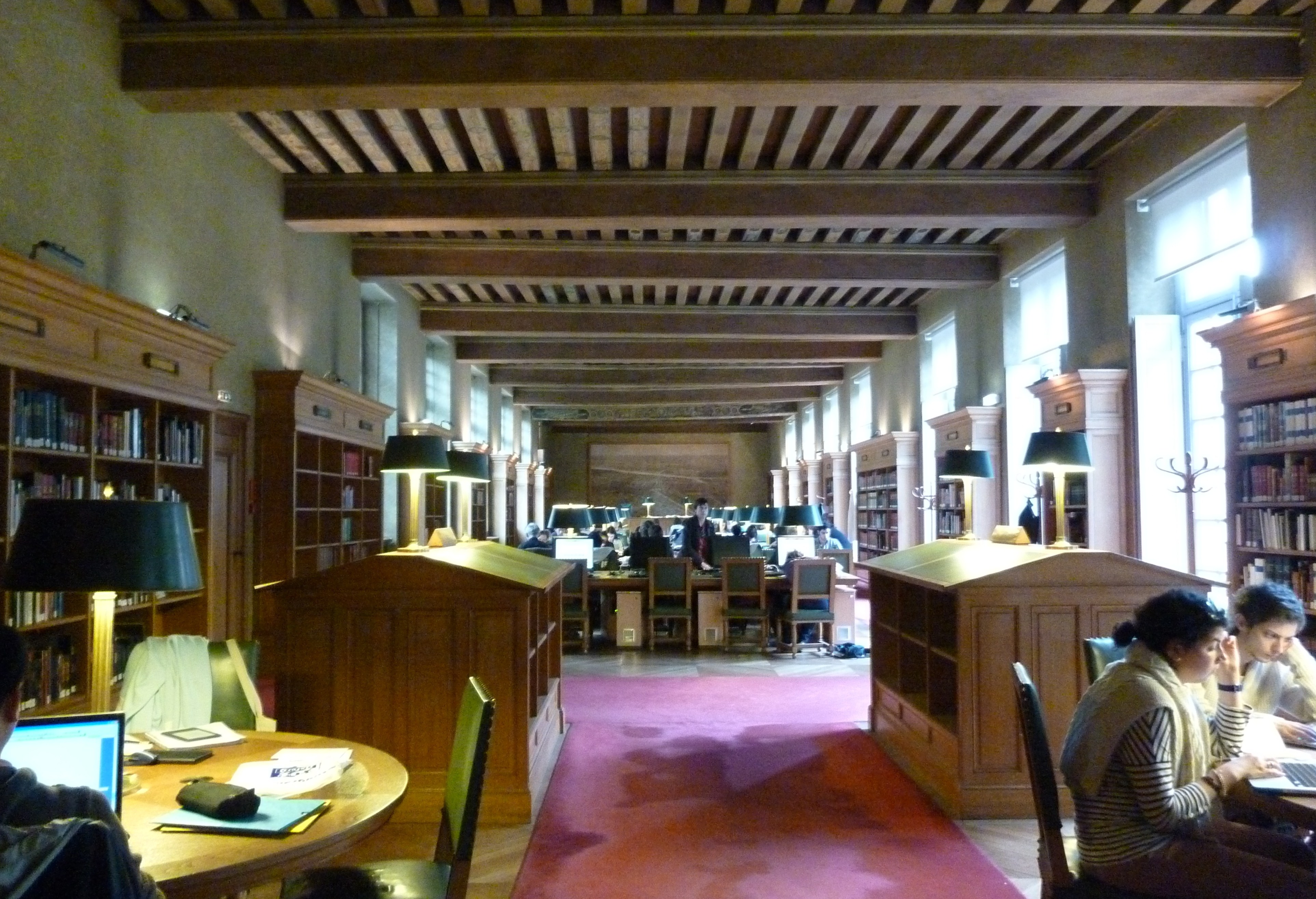
We both do research, although Philippa is more obsessive and is more comfortable reading French. Here is a photograph she took (a bit hurriedly) on her visit to the Bibliothèque Historique de la Ville de Paris in spring 2012.

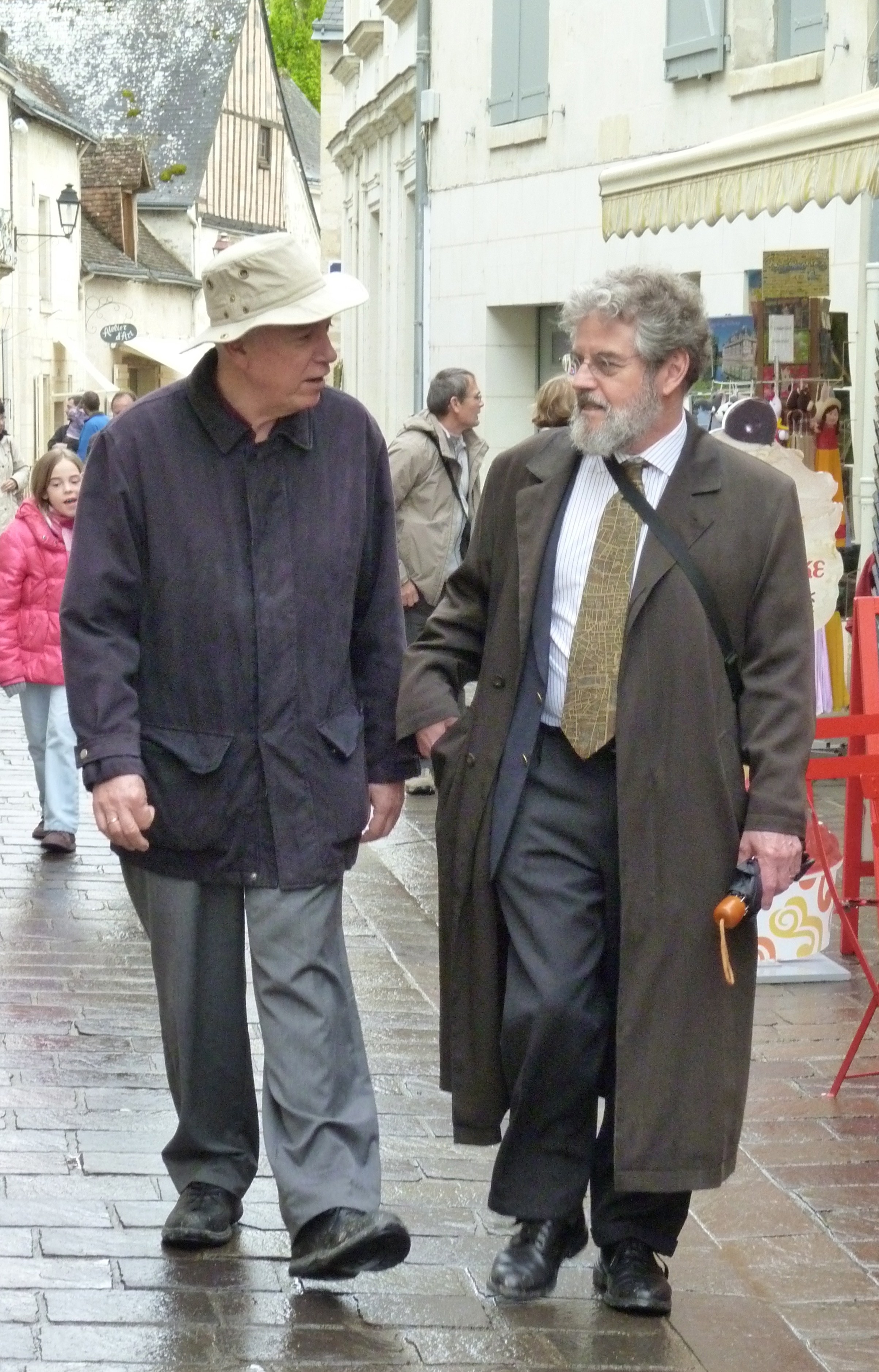
And we have friends, too many to acknowledge individually, who provide inspiration and support and hospitality. Here, for example, is Norman walking in Tours with Paul Davenport, an economic historian and former university president who teaches about Impressionist Art – we’ve signed up for his next course, which starts this coming week, at the University of Toronto.

And here is some art by Richard Ewen, our man in Texas, which formed the basis of a particularly popular blog post.

And we would be remiss if we did not acknowledge the support of two fellow bloggers: Adam Roberts of Invisible Paris, who never fails to inspire us with his on-the-ground knowledge and research skills, and Doni Belau of Girls’ Guide to Paris, who encouraged Philippa to create two walking tours as well as several articles for her site.

Of course, we are leaving out so many others who have cheered us on the way, from family members to complete strangers, who take the time to comment and to encourage our efforts. Please know that we read every word and appreciate every suggestion.

WordPress provides statistics on our progress. We know that the all-time most-visited posting on Parisian Fields is our “Guide for Visitors to Paris,” in which we offer the advice that we always give to friends who are about to visit the city. The next on the list is “Finding Paris in old postcards” followed by “Finding the world in Paris postcards.” Clearly we are on to something with antique postcards. People want to buy them, study them, learn about them, find new stories in them. Postcards are rich sources of information and stories.

We dramatically expanded our postcard collection on our last trip (April–May 2012) with a visit to the Old Paper Market at Saint-Mandé, just outside the Périphérique on the west side of the city. It was raining (it rained a lot that trip), but the stalls were covered and there were riches to be found.

While Philippa carefully searched for items on her wish list (she’ll buy anything showing the Dufayel Department Store or ads created by Dufayel), Norman wandered along the row of dealers. He was amazed to see a large box containing hundreds of assorted Paris postcards listed for 59 euros (the lot). He spoke to the man. Whatever he said was magic. The price came down to 50 euros. He bought it on the spot.

When we came home, it took many evenings to sort out the contents of that box, but we found some treasures. Some are earmarked for future stories, but here are two that caught our attention.

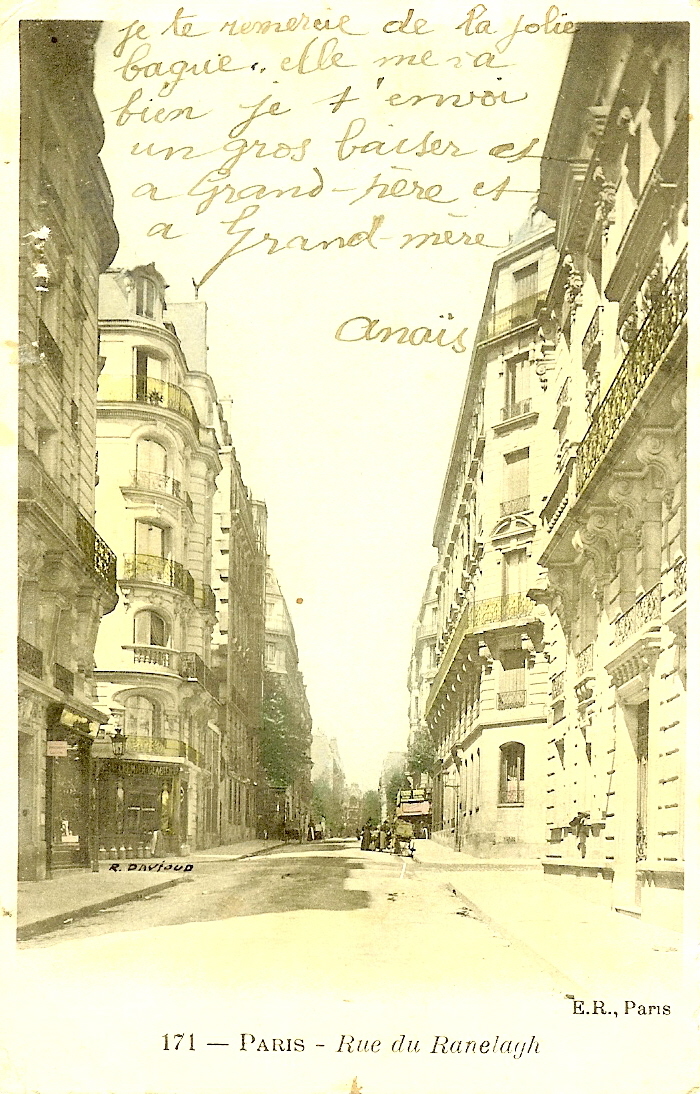
Postcards of Paris monuments are a dime a dozen, but postcards of ordinary Paris streets are more unusual and interesting. Here is one of the rue du Ranelagh in the 16th arrondissement. This was the street that Philippa lived on when she was a student and au pair to a French family. This shot shows the intersection with rue Davioud (someone has helpfully written it in), a few blocks west from the building she lived in (No. 28).

We particularly like the fact that this postcard has been used (pristine, unused postcards are less interesting). The text on the picture side, in childish handwriting, says, “Thank you for the pretty ring. It suits me. I send a big kiss to Grandfather and Grandmother. Anaïs.” It was posted in August 1905 in Auxon, in the department of Aube.

The address on the other side is written in a more adult hand. There is a name, but no street address, and it was going to Kemplich in Lorraine, a region that at the time was part of the German Empire, having been taken over in 1871 at the end of the Franco-Prussian War. The card had to go through Kedingen in Germany to reach its destination, and there is an extra postmark that indicates this step in the voyage. Little Anaïs’s family was divided by a border.

The St-Mandé box also yielded a postcard of one of Norman’s favourite haunts – the Hotel de Sens, home of the Bibliothèque Forney in the Marais, where he has spent many happy hours browsing collections related to the decorative arts, and their postcard files, which include cards written by French people visiting Niagara Falls in Canada.

Note that in this picture, this extraordinary 15th-century building is being used as a commercial premises – a glassworks (Verrerie Haroux).  It dates from about the same time as the Anaïs postcard. We know that, because in 1899 Eugene Atget photographed it looking as it does here. Back then, the Marais was the haunt of artisans and fabricators of all kinds. The trendy boutiques and respectfully restored historic houses came later.

Alas, nobody has used this postcard, so there is no story to tell about the sender or recipient.

There is something about holding a postcard that has been sent from one person to another more than 100 years ago that makes you feel close to history. Did Anaïs survive the First World War? Did her family? Were they around to celebrate the return of Lorraine to France? Or had they perished in those four ghastly years?

In the course of researching, writing, and choosing images for 100 blogs, we have stumbled across countless stories of long-vanished people and their friends and families. Traces of their lives and passions survive in these scraps of pasteboard. Will anyone ever trace us through our e-mails and text messages, or have we vanished more permanently than Anaïs and her grandparents in 1905?

Vive la carte postale! You who are reading this, if you crave immortality, send a postcard to a friend or family member this minute. Years from now, a blogger may find it and start an inquiry into your life and times. The descendants of Anaïs may be looking for her right now…

Send your postcard from a favourite place, a place where you like who you are when you are there. That is why we keep going to Paris as often as possible and why we write about what we find  in this magical city. We hope you enjoy our blogs, 100 of them and counting, as much as we enjoy putting them together.

Text and photographs by Norman Ball and Philippa Campsie

Posted in Paris markets, Paris postcards | Tagged , , , , , , , , , , , , , , , , , , , , | 11 Comments

Lost (and found) in translation

Among the pitfalls in learning French are what is known as “faux amis” (false friends) – that is, words that sound as if they ought to mean the same thing in English and French, but don’t. Like librairie, which is a bookstore, not a library. Or photographe, which is a photographer, not the camera image. Assister doesn’t mean to assist but to attend. Confection is garment making, not a bonbon. And so on.

However, if you have a sense of humour of a certain type, it is possible to exploit English-French confusions for a peculiar type of Franglais pun.

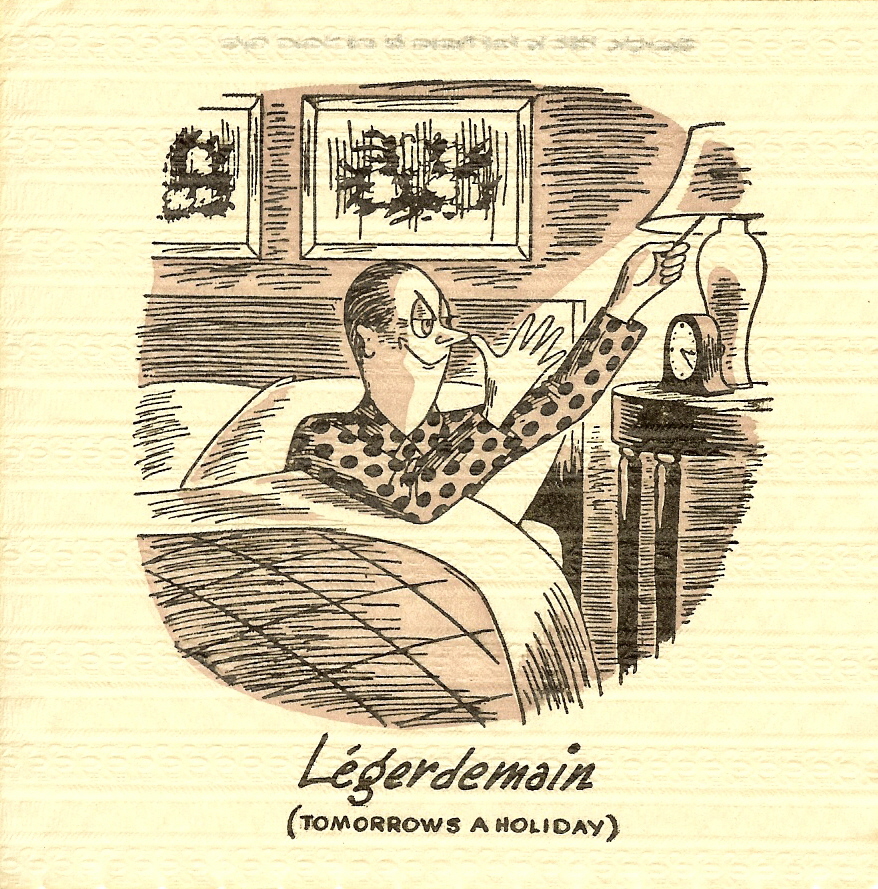
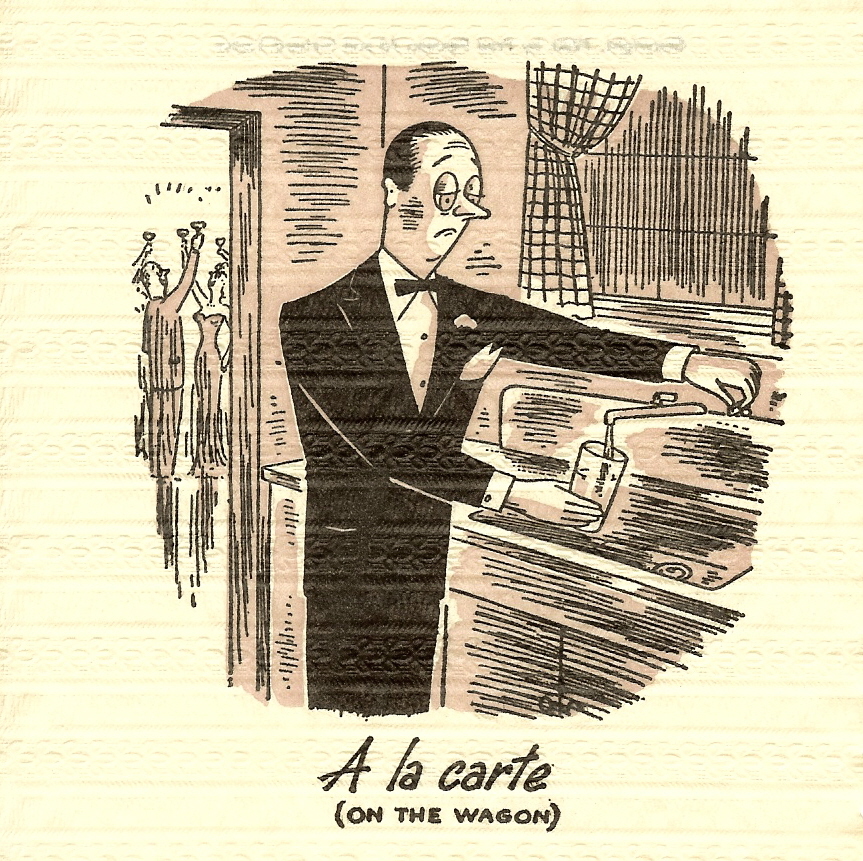
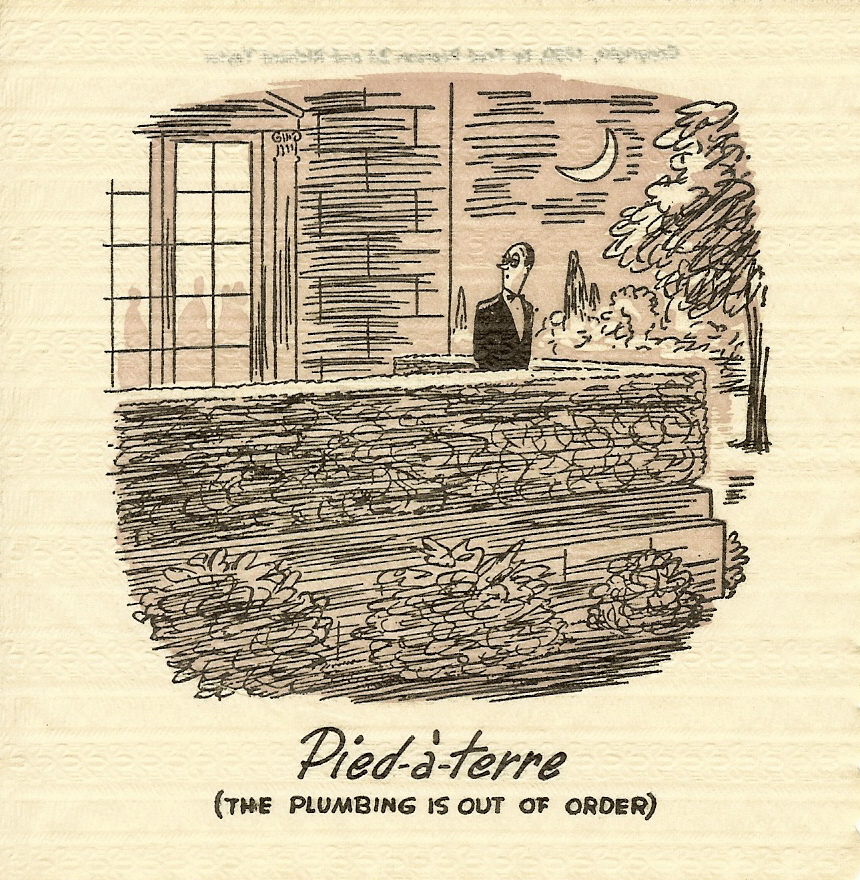
We found out about this when our friend Kim, a graphic designer and artist, snapped up a box of cocktail napkins at the Toronto Junction flea market (yes, we have flea markets in Toronto, too), labelled “Fractured French.” Each one shows a Franglais cartoon with a caption by Fred Pearson 2nd and an illustration by Richard Taylor.

The French captions sometimes require you to mispronounce the French words the way an English speaker might (so, for example, “S’il vous plaît” comes out like “silver plate”). Sometimes, you need a pronunciation somewhere between English and French (“Marseillaise” becomes “My mother says yes”). Sometimes the pun is not Franglais at all, but a joke involving two similarly pronounced French words and a certain amount of 1940s stereotyping (“Mal de mer” becomes a terrifying mother-in-law).

The illustrations are evocative of an upper-class postwar period. Dowagers in floral dresses and pearls; young women in strapless cocktail gowns. Men in tweeds or dinner jackets. Night clubs. Country houses. Seaside hotels. The Canadian-born Richard Taylor (1902–70) created many cartoons for the New Yorker, so the style and some of the characters may look familiar.

According to an article written in 1950,* Fred Pearson 2nd (1912–60) caught the French pun bug in the late 1930s. Soon he became known for his collection of puns and his friends started to volunteer their own ideas or jokes they had heard. In the late 1940s, Pearson and Taylor published a book of the illustrated jokes called Fractured French. It was so popular that they produced a sequel, called Compound Fractured French. Eventually, the collaboration expanded into merchandising. To this day on eBay you can find plates and ashtrays as well as cocktail napkins featuring the cartoons.

The original box of napkins that Kim found would have once had 36 different cartoons, but contained only 17 when she gave it to us. Mind you, that’s not bad for a set of throwaway items from the 1950s. I wonder how they survived all those years.

We have included a few of our favourites from this collection as illustrations.

Ruban bleu/Mamoulian scrammed” gave us pause, until we discovered that Rouben Mamoulian was a noted film director at the time.

Pearson died in 1960 and Taylor in 1970. The torch passed to a new generation of pun artists who enjoyed making French sound like English.

In 1967, a Hollywood actor called Luis d’Antin Van Rooten published Mots D’heures: Gousses, Rames. This was a different approach to transatlantic humour. If you say the French words aloud, they resolve themselves into familiar English expressions that sound like someone with a heavy French accent. The title eventually becomes “Mother Goose Rhymes” if you say it often enough.

Van Rooten’s forty French verses make a strange kind of sense (the title translates as “Words of the Hours: Pods, Oars”), helped along with creative punctuation and notes in the form of scholarly annotations. The book even comes with a complete (and bogus) provenance: Rooten claims it was found among the effects of an elderly relative – who had been a schoolteacher in Aix-en-Provence – and dates from the 18th century or earlier.

Any academic who sometimes finds traditional annotations and footnotes a little too precious at times will appreciate Rooten’s pseudo-scholarly comments on poems such as Un petit, d’un petit.

Say it ten times over. Eventually, it resolves itself into “Humpty Dumpty.” Rooten’s comment on the French text? “The inevitable result of a child marriage.”

Now try this: Lit-elle messe, moffette, Satan ne te fête…**

Van Rooten died in 1973, without producing a sequel. That task seems to have fallen to a writer called Ormonde de Kay, who had previously made a serious translation into French of Mother Goose verses. In 1980, he published a collection called N’Heures Souris Rames which is dedicated to Van Rooten. De Kay claims that these poems were given to him by a mysterious Hungarian and are of 16th-century origin.

Further, he asserts that the fact that the French verses sound like English rhymes when they are pronounced aloud can be traced to the likelihood that French Huguenot émigrés who fled the Wars of Religion would have sung them during their exile in England (at a time before nursery rhymes were common); the English enjoyed them without knowing their meaning, and turned them into English verses instead.

So, for example, when they heard the émigrés singing Hâte, carrosse bonzes, they heard “hot cross buns,” and the rest is history. Or history imagined by the fertile brain of Ormonde de Kay. Some of his contributions to this highly specialized genre include:

Heroïque Garonne de moule-bourrée bouche***

and

Tuie-nickel, tuie-nickel, le tel se tare****

Norman says he finds it rather like deciphering certain vanity licence plates. Keep saying it until it makes sense.

The technique is called homophonic translation. It takes a certain kind of mind and linguistic facility to pull this sort of thing off and a certain sense of humour to appreciate the results. You may not improve your conversational French with Un petit, d’un petit and the like, but you can impress non-French speakers with your accent. Of course, any real French person hearing you would think you had gone completely mad.

Text by Philippa Campsie; illustrations from Fractured French by Fred Pearson 2nd and Richard Taylor, © 1950.

*Pearson’s Windfall, by Geoffrey T. Hellman, New Yorker, December 30, 1950
**Little Miss Muffet, sat on a tuffet
***Here we go round the mulberry bush
****Twinkle, twinkle little star

Posted in Paris popular culture | Tagged , , , , , , , , , , , | 9 Comments

Everyday Hats of Paris

While there is a Paris of high fashion, there is also the Paris of everyday life. And what could be more everyday (quotidien) than dry cleaning or having a dress or pair of pants altered?

This little bellhop with his pillbox hat shows you where you can get your clothes dry cleaned (le pressing) or altered (la couture). It might not be haute couture, but it helps us meet our daily needs.

School is part of everyday life. So are crossing guards. We have them in Toronto, but they don’t at all measure up to this one in the Marais. The hat. The hat. You are supposed to be looking at the hat. Yes, nice stockings too. I wonder if the other side of the “Stop Ecole” sign says “Arrêt School”?

French children seem to have lots of time out of school and Paris is richly endowed with playgrounds and parks for them. This little guy and his friends were having a marvellous time. They climbed on colourful equipment, pushed empty strollers around, waddled about in warm clothes (including hats such as this), and above all embodied the magic of childhood.

On a late November day, I emerged from the subdued interior of the Centre Pompidou. Outside, the movement, the crowds, and the colours were dazzling. A flash of light caught my eye. For the next few minutes, the concrete slabs were a stage for the quiet, studied movements of a young scooter rider in a world all of his or hers alone. And yes there was a hat. It was a bicycle helmet (casque). I understand the Brits call them “crash hats” and I have also heard the term “skid lids.”

Perhaps in a few years the youngster will have a bigger two-wheeler and a more avant-garde safety helmet such as the one below. Did you notice the belt drive on this bicycle? It is a folding bike. I wonder who made it.

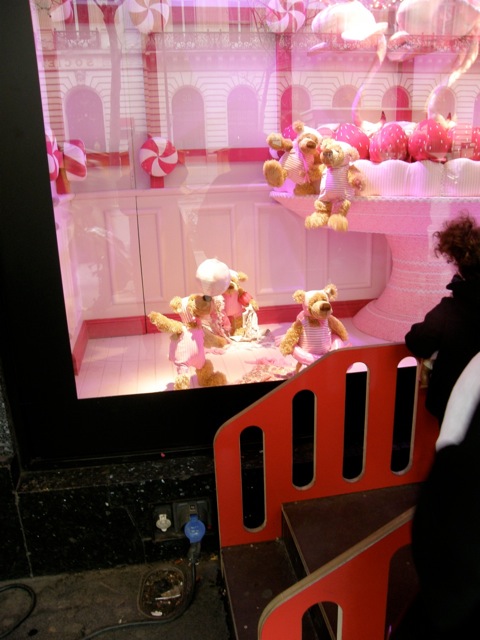
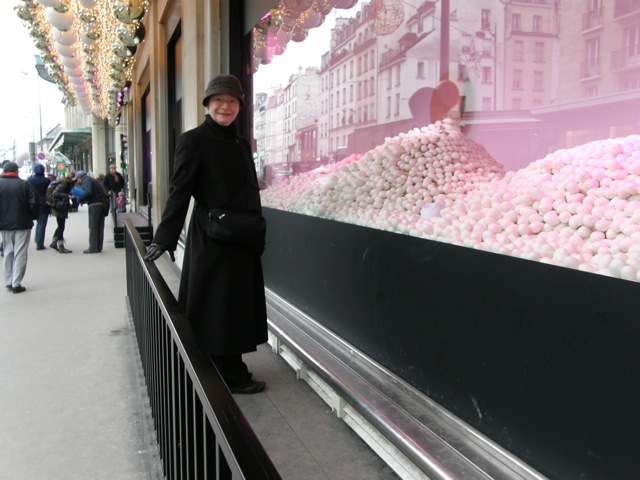
Maybe I could get a bicycle like that for Christmas. But all I really want for Christmas is to be in Paris and not in Toronto. There is so much less non-stop, force-fed, clichéd jolliness in Paris. It is less in-your-face, more meaningful and done so much more imaginatively. Look at the Galeries Lafayette window below.

I so much like this photo because it conveys the confusing magic I associate with Paris. I am also impressed by the red railing in the lower right.

As I look at this photo and those below, I think the world has much to learn from a country where a department store creates a special walk-up elevated viewing area for the children. It gives them their own front-row view of magic and possibility.

It is not just the children who adore the Christmas window displays. I keep coming back to the joyful animation in this Bon Marché Christmas window. And the lady beneath the hat? She is the one who introduced me to Paris. We both bought hats from the same hat maker at a craft market on the Boulevard Edgar Quinet.

And here is the one I bought for myself, taken at the hat stall in the market. I was just starting to grow a beard at the time, hence the stubble.

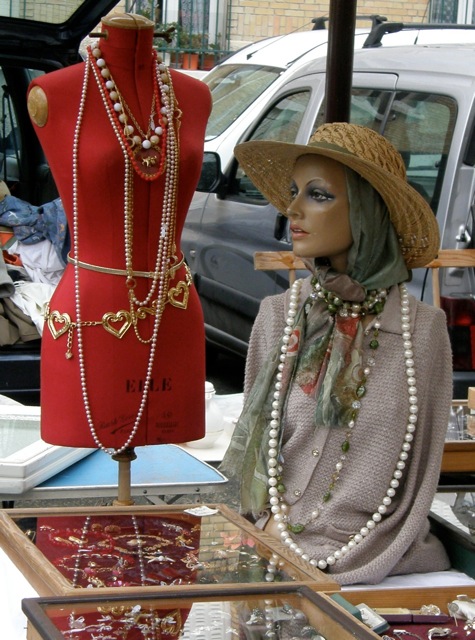
Pick up a travel or tourist article about Paris, and chances are you will find exhortations to visit the flea markets. They are worth going to. I met the lady shown below at the Porte de Vanves flea market at the very edge of the city. Cross over the Périphérique and you are in the suburban commune of Malakoff, not in Paris.

As with much that one finds in the Porte de Vanves flea market, the lady, her hat, and her pearls have a certain faded and dated elegance.

Back in the heart of the city, the hatted lady below stood out as if alone amongst the many, her eyes almost looked through me and her lips seemed alive. I waited for them to move.

One very rarely sees berets in Paris. It is not like in the old movies, where happy accordionists and stevedores all sport berets and smoke cigarettes that seem glued to their lower lips. This accordionist was very happy. Yes, as everyone should, we paid him for his joyful music. Bringing us joy is his job and he does it very well. And somehow the baseball cap seemed right. Paris has a rich historical heritage to which one returns and re-explores, but it is also a city of the present, a city that offers surprises. I want Paris to keep surprising me. A beret wouldn’t do the job.

Text and photographs by Norman Ball.

Posted in Paris flea markets, Paris popular culture, Paris streets | Tagged , , , , , , , , , | 4 Comments

Ticket to ride

Here’s a question for contestants in a game of “Connaissez-vous Paris?” How many railway stations are there in Paris?

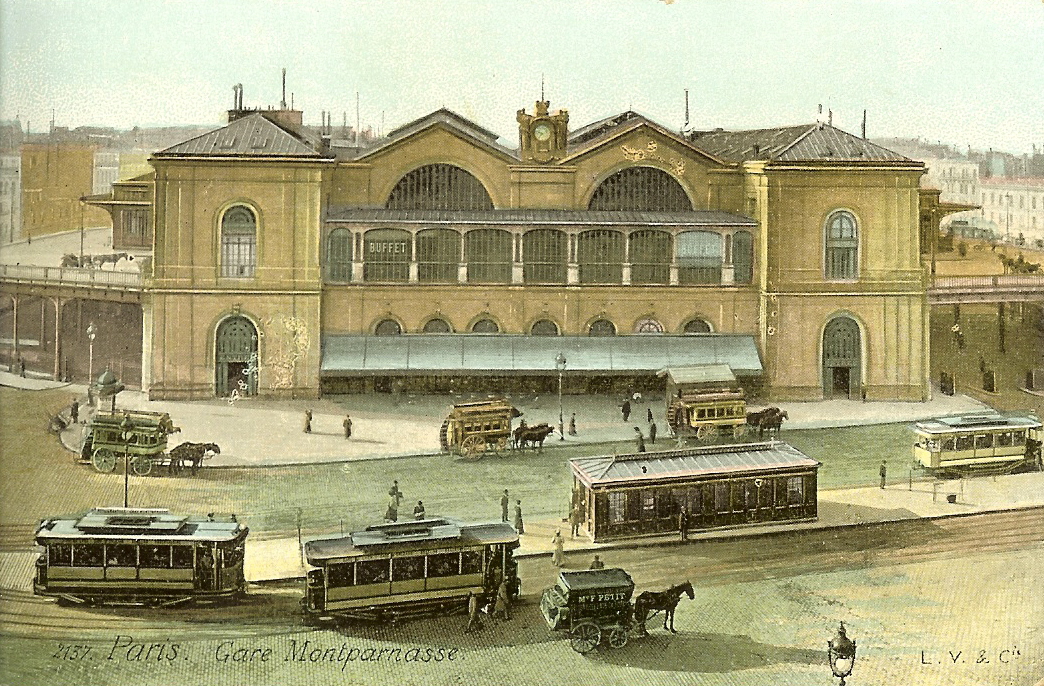
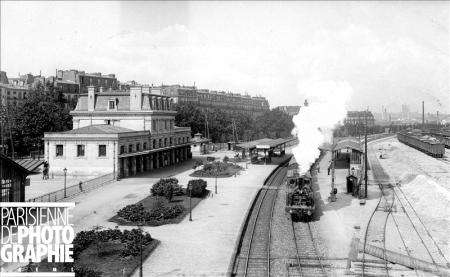
Most people would say six: St-Lazare, Nord, Est, Lyon, Austerlitz, and Montparnasse (the original version of this station is shown above). Some might add the station-turned-art-gallery of Orsay and call it seven. I might have given one of those answers myself, until I ran across a book called Paris et ses 50 Gares (Paris and its 50 stations).*

Fifty? Really?

Turns out Paris is littered with railway stations. There were ten big “gares” or termini: the seven I’ve mentioned, along with the the Gare de Vincennes on the Place de la Bastille (demolished and replaced by the Opera Bastille), a terminus at Invalides (a building now occupied by Air France), and the original terminus of the Sceaux line at Denfert-Rochereau.

Add to that a sprinkling of intermediate stops (which the the book calls “stations” rather than “gares“) between the edge of the city and the termini. And finally, add all the stations on the Petite Ceinture around the edge of the city. All told, more than 50 in the heyday of railway travel.

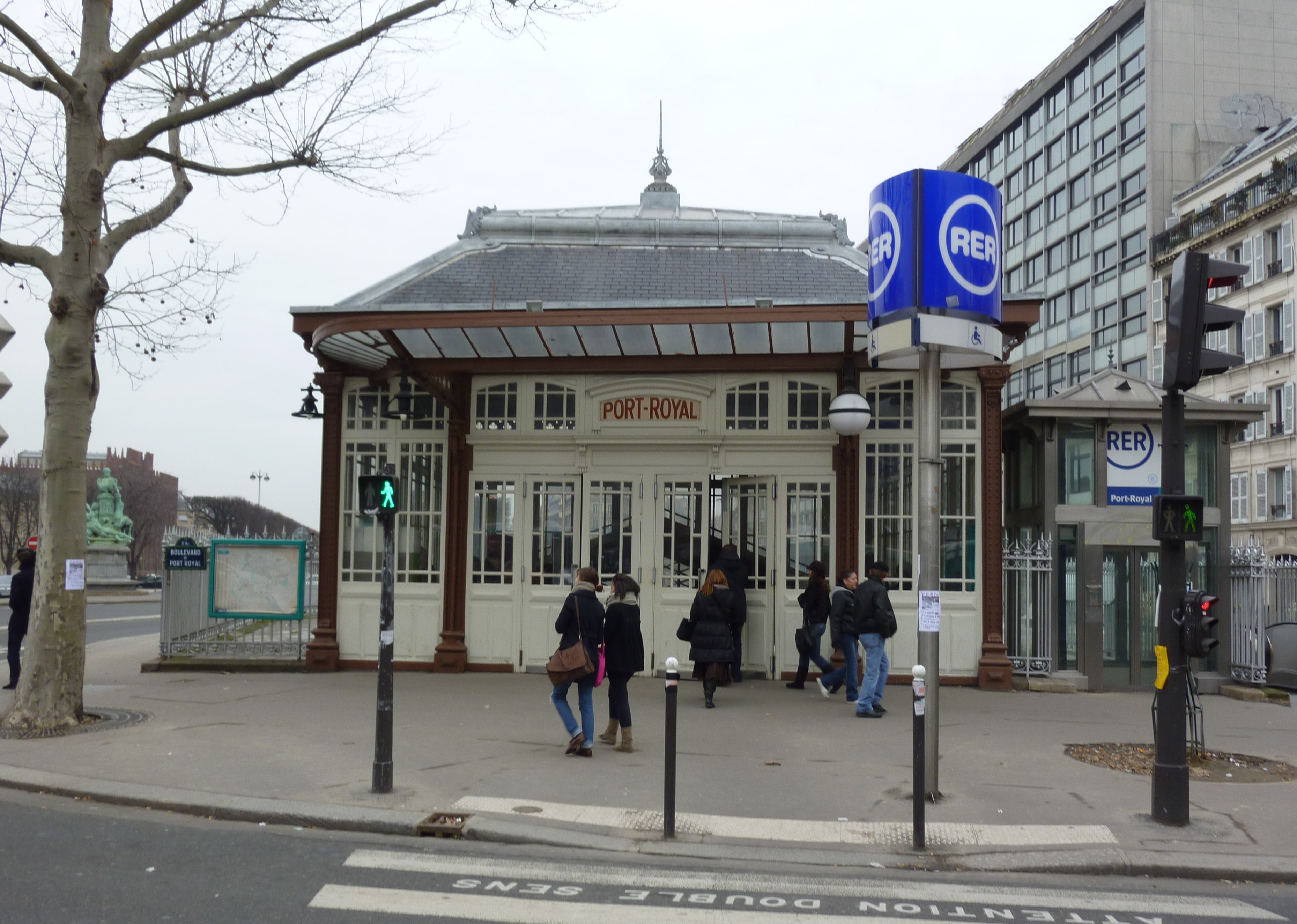
Some have disappeared, some have been altered beyond recognition, and some have been put to other uses. Quite a few, such as the Port Royal station, shown below, have become RER stations. (This is the Réseau Express Régional – the regional express network that is part of the Paris Métro system.)

A couple of years ago, when we were staying nearby, I enjoyed using this old-fashioned station, which has hardly changed since it was built in 1895. The book describes it as being in the “pagoda style,” much in vogue at the time for little stations like this.

Port Royal was on a short railway line that went to Sceaux, a suburb less than 10 km to the south of Paris. Originally, this line, which dates from the 1840s, stopped farther south at Denfert-Rochereau (another station that is still standing), but it was extended farther north into the city in 1890s with this stop at Port Royal and an underground terminus at Luxembourg. Today, all three stations are part of the RER B line.

Here’s another pagoda-style station. This stop on the RER C line is now called Javel, but it was once the Gare du Pont Mirabeau (which sounds so much more romantic).

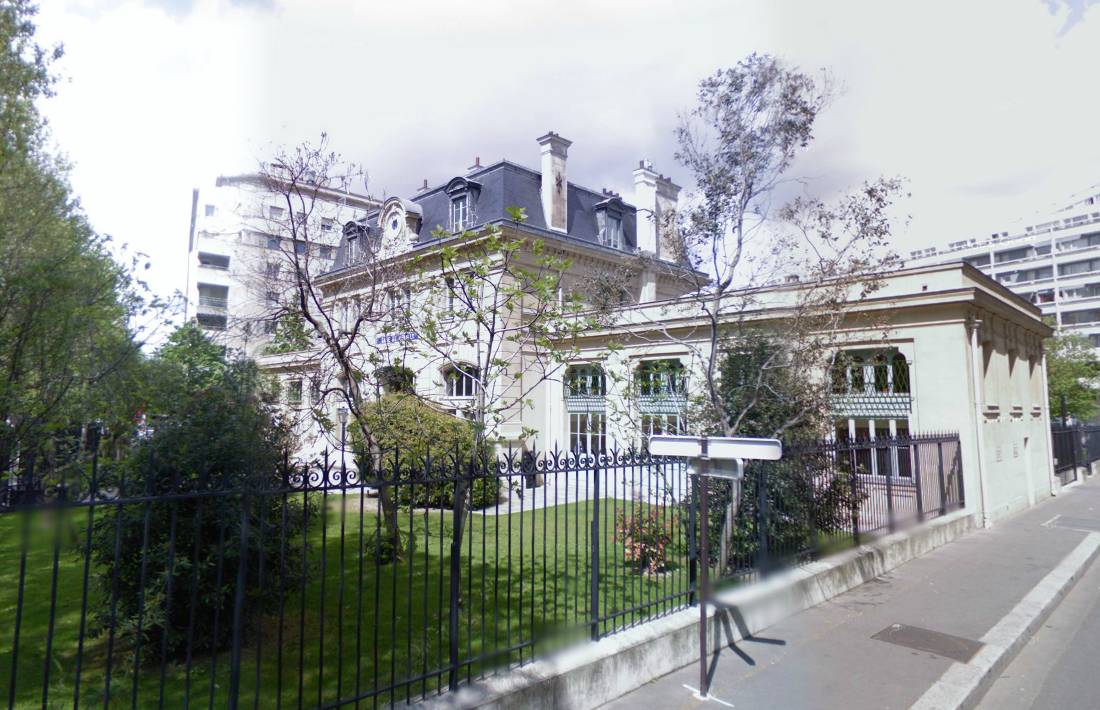
Not all of the stations are in the same whimsical style. Boulainvilliers, a squat, defensive-looking establishment built in 1899 in the 16th, looks as if the railway owners were expecting the place to be attacked.

On the same line, a little farther to the northeast, is the former Courcelles-Levallois Station, now the Pereire-Levallois station, still in service on a commuter rail line called Transilien. This is one of several stations characterized by large, round-topped entry doors. The modern inserts are not very graceful, but with the original panes of glass, these buildings looked a bit like garden pavilions or orangeries.

A similar style is evident at the Passy-La Muette station, now a restaurant in the 16th, not surprisingly named La Gare. It was once a stop on the line between the Gare St-Lazare and Auteuil. The building dates back to the 1850s.

This is how it looked when it was still in service.

On the other side of the city, in the 12th, is the former Gare de Reuilly, now an annex to the Mairie of the 12th arrondissement. This photo from the Roger-Viollet collection shows it in the late 19th century.

I went looking for it on Google and found it at 181 avenue Daumesnil, looking none the worse for wear, still bearing the blue sign identifying it as a station.

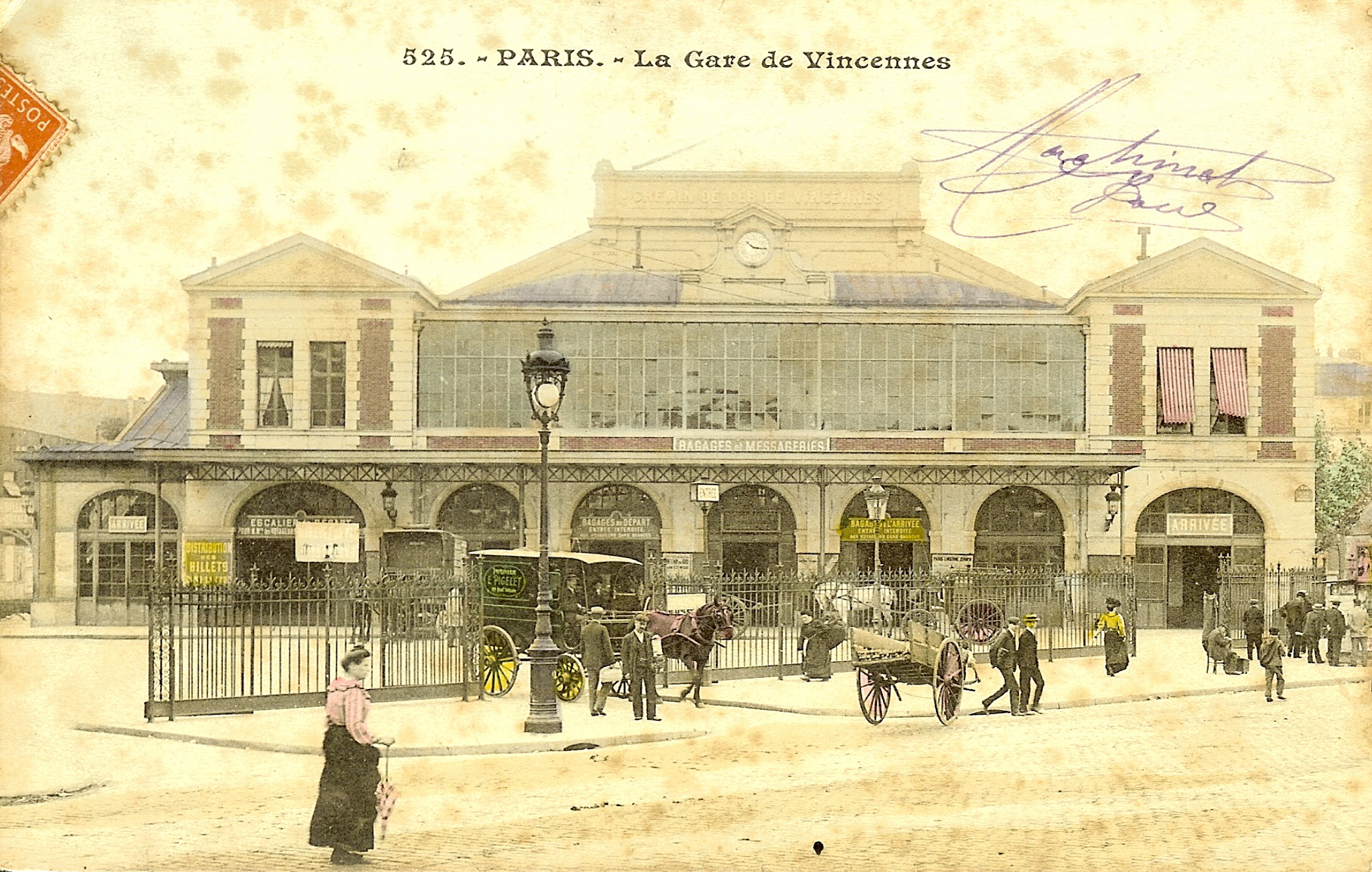
Reuilly was the last stop before the terminus, the Gare de Vincennes, on the Place de la Bastille. In between was a raised viaduct with huge brick arches.

I found two postcards of the vanished terminus in our collection. The first shows it in context, facing the Colonne de Juillet (it’s the large building just behind and to the right of the Colonne). This postcard is dated 1922, but the image is likely some years older than that.

The second shows a closer view; the postcard was sent in 1907. Across the top of the building is written “Chemin de Fer de Vincennes.” Arrivals on the right and far left, departures second on the left and up a staircase (Escalier du Départ), baggage and parcels in the middle.

What I find interesting is that this enormous building was the terminus of a line that was less than 50 km long, and ended in the small town of Verneuil l’Etang. It seems a great deal of infrastructure for a fairly minor route. (Similarly, the Sceaux line was very short, yet well endowed with prominent stations.)

The Opera Bastille, a gleaming modern building of glass and metal, now stands where the Gare de Vincennes once stood. Flowers and trees grow along the top of the viaduct, and chic boutiques and art studios occupy the spaces under the arches below, in a nice example of adaptive reuse known as the Viaduc des Arts.

On the whole, Paris has retained more than half of its more than 50 stations, most of them incorporated into the RER system, with a few put to other uses. It’s an enviable heritage.

Indeed, each time we arrive from the airport after hours spent in a cramped seat in a sealed capsule, followed by a long taxi ride in rush-hour traffic on the highway and Périphérique, I envy travellers who arrive in Paris by train. The Eurostar, the TGV, the Train Bleu, the Orient Express…now that is the stylish way to enter the city.

So how many railway stations does Paris have today? The book lists 24 historic stations still in use as SNCF (railway), RER, or Transilien (commuter) stations and 9 new stations added to the network (most of them underground), so the correct answer would be 33.

Text by Philippa Campsie; historic photographs from the Roger-Viollet collection, “Paris en images”; contemporary photographs from Google Street View or by Philippa Campsie.

*Pascal Lambérieux, Paris et ses 50 Gares (Saint-Cyr-sur-Loire: Alan Sutton, 2010).

Posted in Paris history, Paris metro, Paris travel | Tagged , , , , , , , , , , , , , , , , , , , , , , , , , , , , , | 5 Comments

The art and purpose of the colonne sèche

The Parisienne colonne sèche is not a medical condition or procedure. However, a colonne sèche could be very good for your health, particularly in the event of a fire. There is no need to look hang-dog about it.

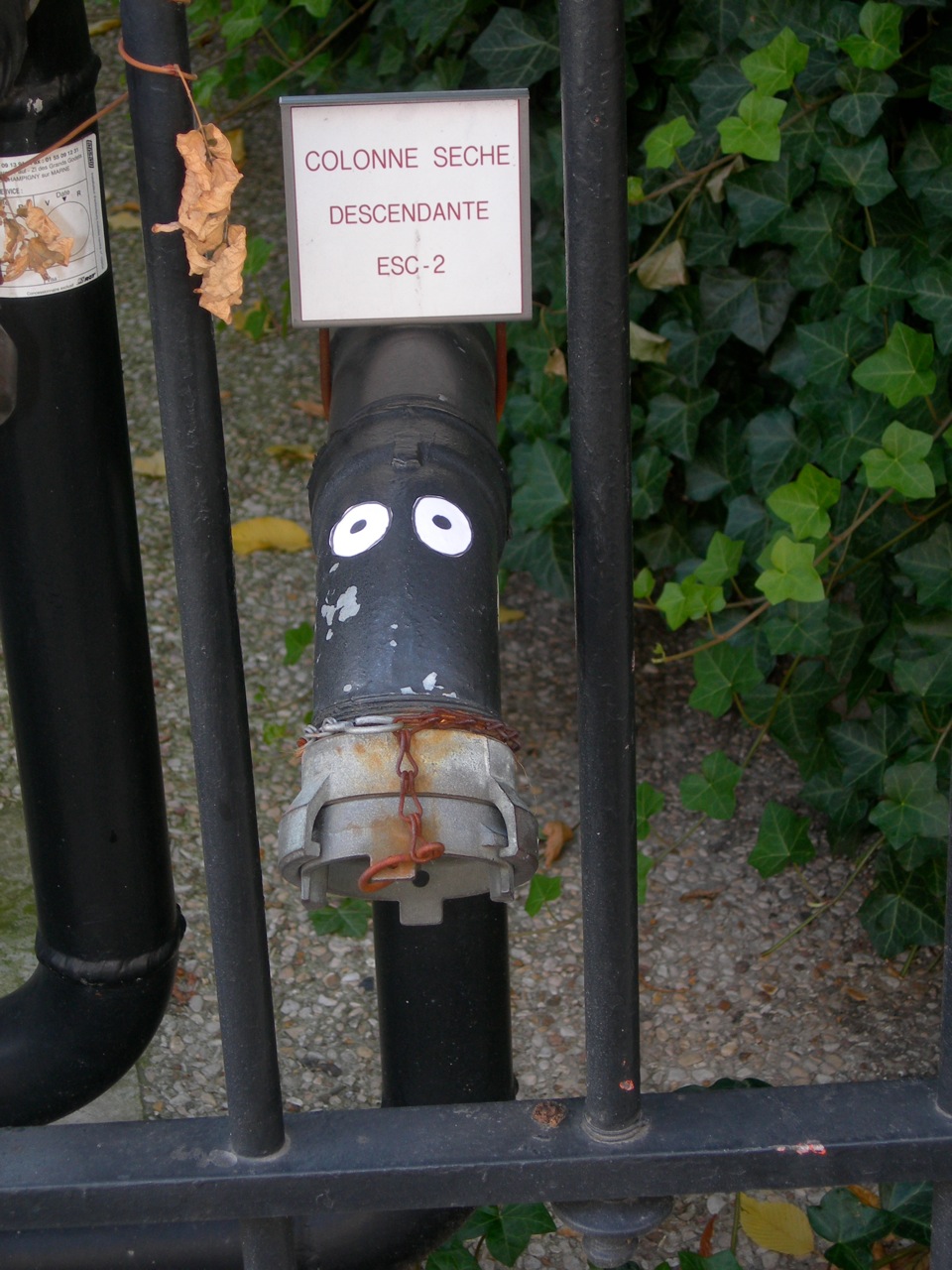
Paris is blessed with a richly imaginative design and artistic culture. In the image above, a few deft changes to an existing utilitarian object transformed a colonne sèche into an humorous bit of street art.

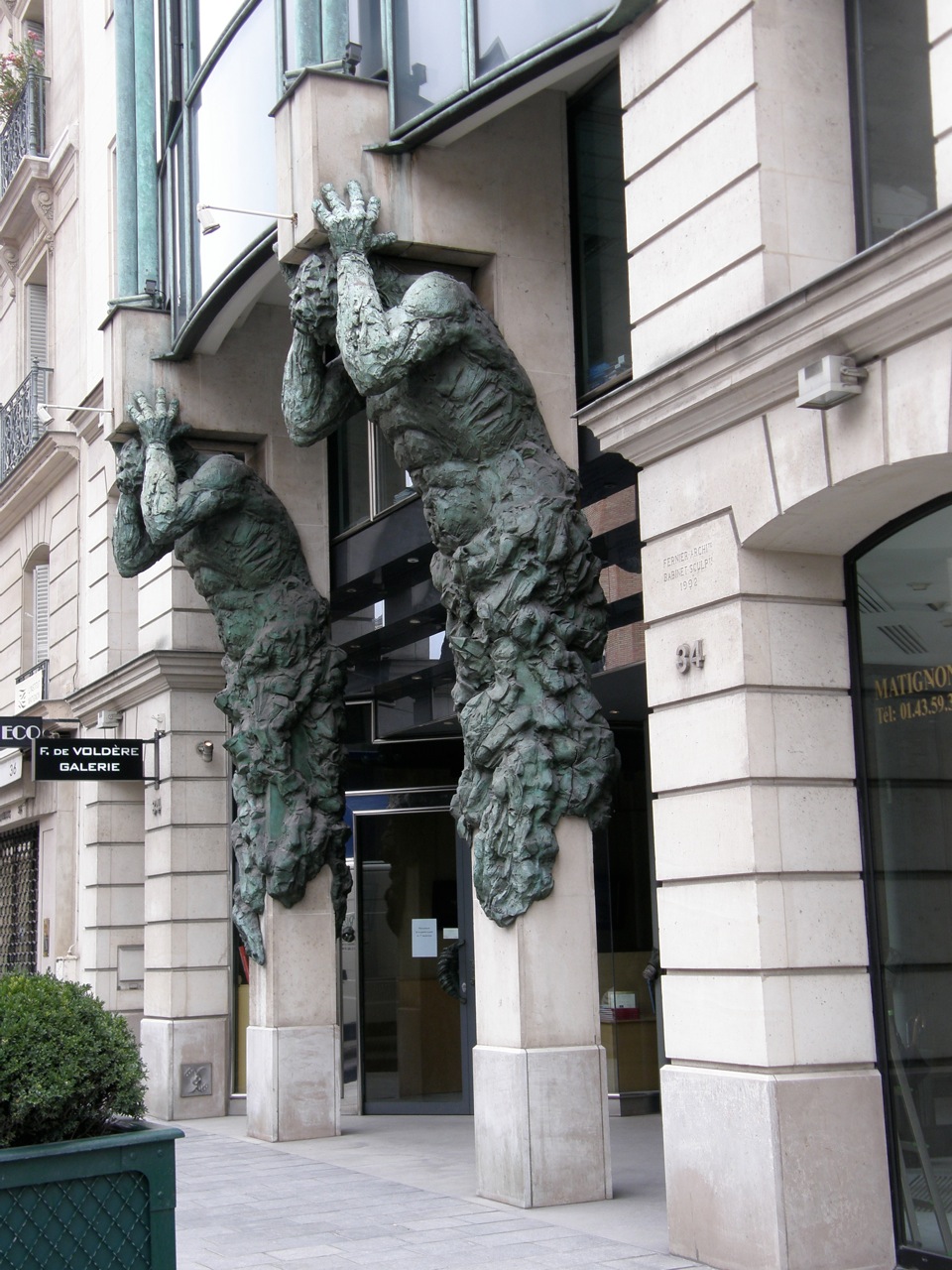
On a walk along the avenue Matignon, I noticed two muscular figures holding up a building on their shoulders.

They led me to this find: gorgeously sculptured door handles.

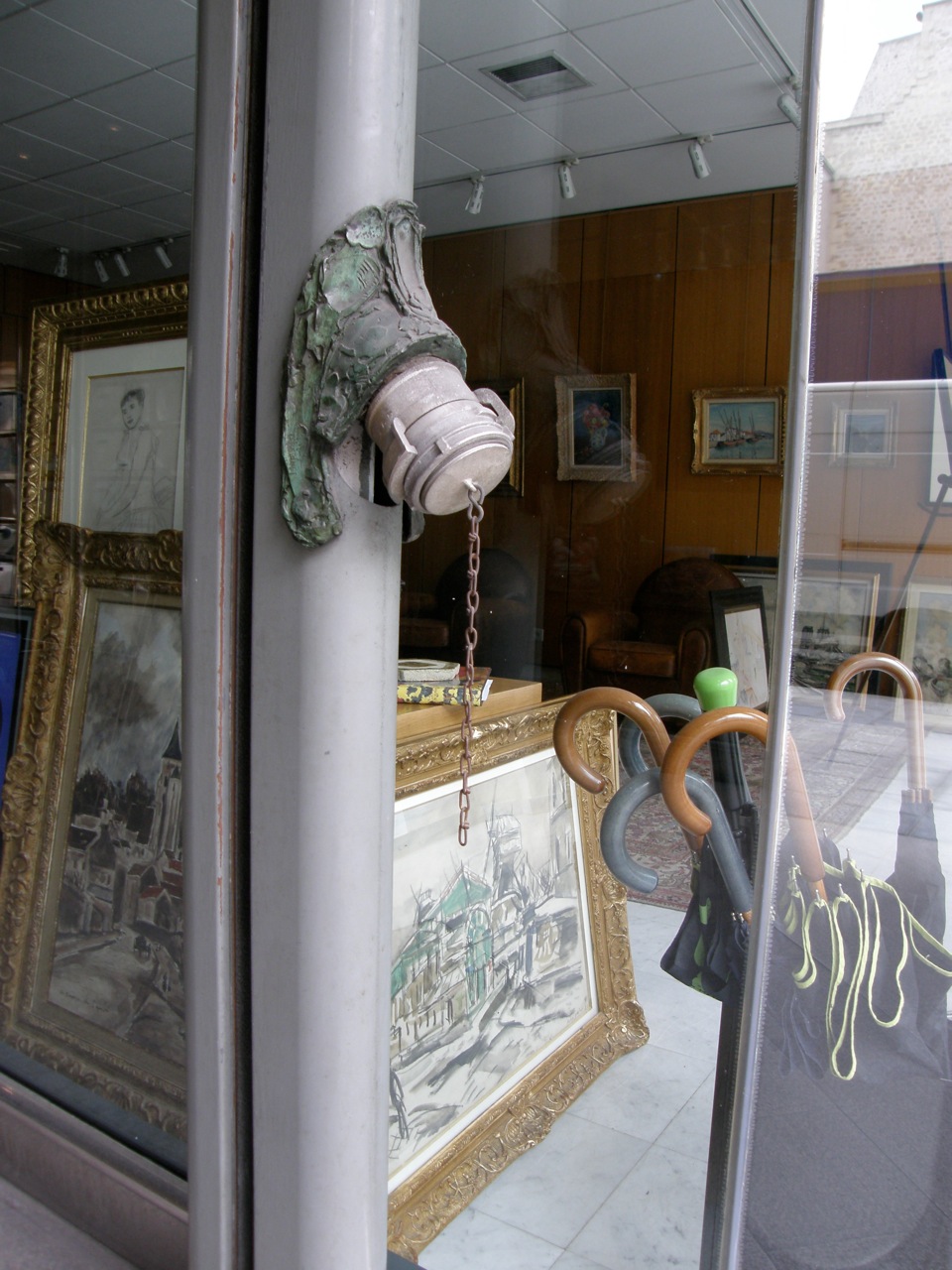
And to the most ornate colonne sèche I have ever seen.

So what is a colonne sèche and why might it be good for your health?

I had always known of them as standpipes. They are an essential part of fire fighting equipment for taller buildings. The water pressure from fire hydrants cannot raise the water beyond a few storeys. Moreover, fire hoses either have to spray on the fire from outside or be dragged up the stairs to the fire, and believe me, fire hoses are very heavy. Here is where the colonne sèche or standpipe saves the day when connected to another piece of equipment: the pumper truck.

The colonne sèche is a pipe to bring high-pressure fire-fighting water to locations inside a building. The water comes from a pumper truck which, when connected to the colonne sèche, pumps water to various parts of the building. Inside the building, one will find carefully folded fire hoses and nozzles already hooked up and ready to be pulled from a rack. Once turned on and connected to the pumper truck by the colonne sèche, the hoses are ready to go to work. The system is fast, reliable, and saves lives.

And as we shall see, most buildings have more than one.

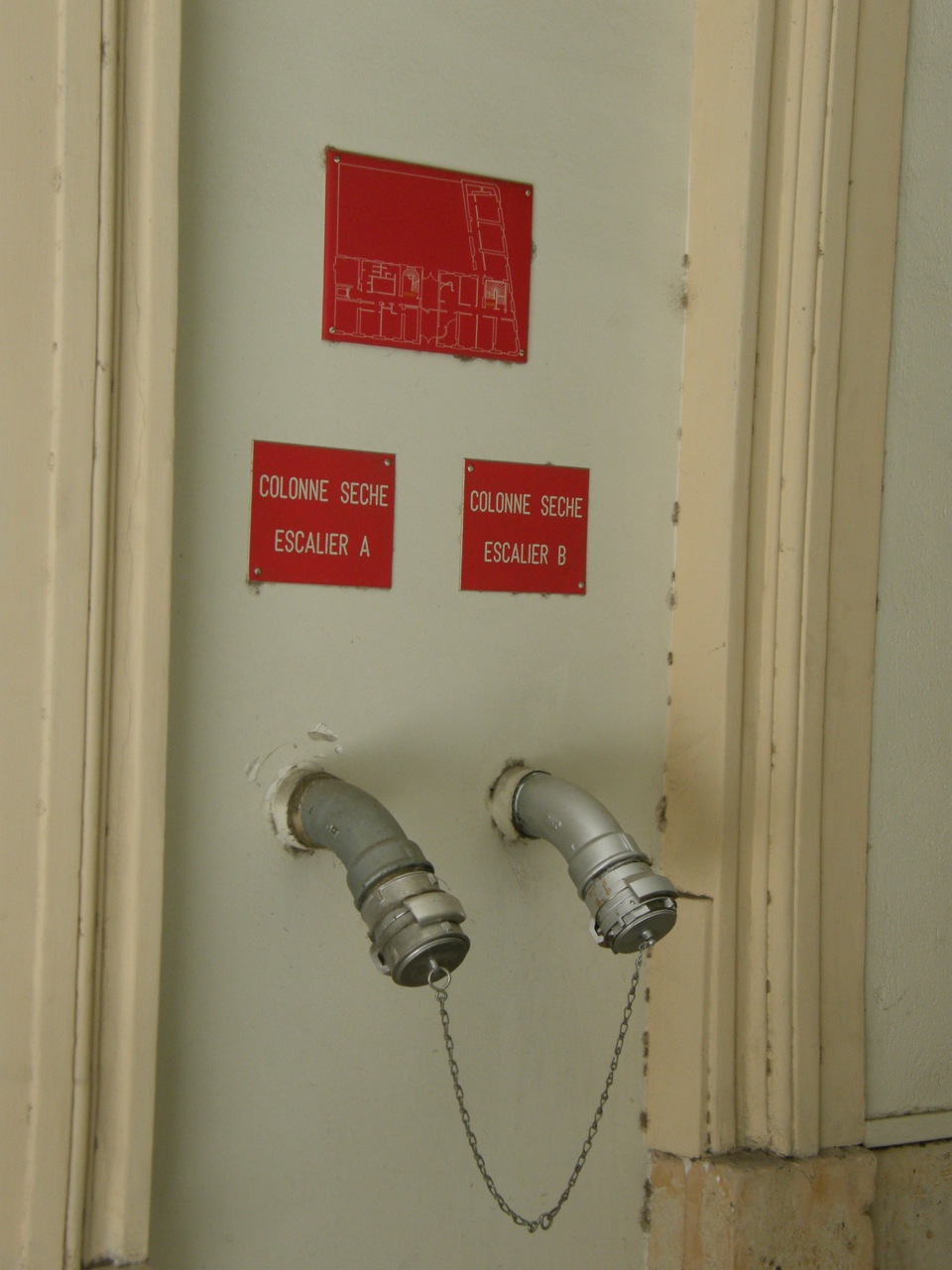
This image provides a good picture of what is involved at street level. At the bottom we see two colonnes sèches. On each one, the end cap may be unscrewed so the hose from the pumper truck can be attached to the either or both. Reading the text we see each colonne sèche goes to either stairway (Escalier) A or B. At the top, we find a map to aid firefighters in finding the other ends of the colonnes sèches in the building and understanding the layout.

Here, one colonne sèche supplies water to the Central Stairway and the Basement level or underground level (Escalier Central et Sous-Sol). The other is near the Left Stairway (Escalier Gauche) but we are not told at which level, probably all.

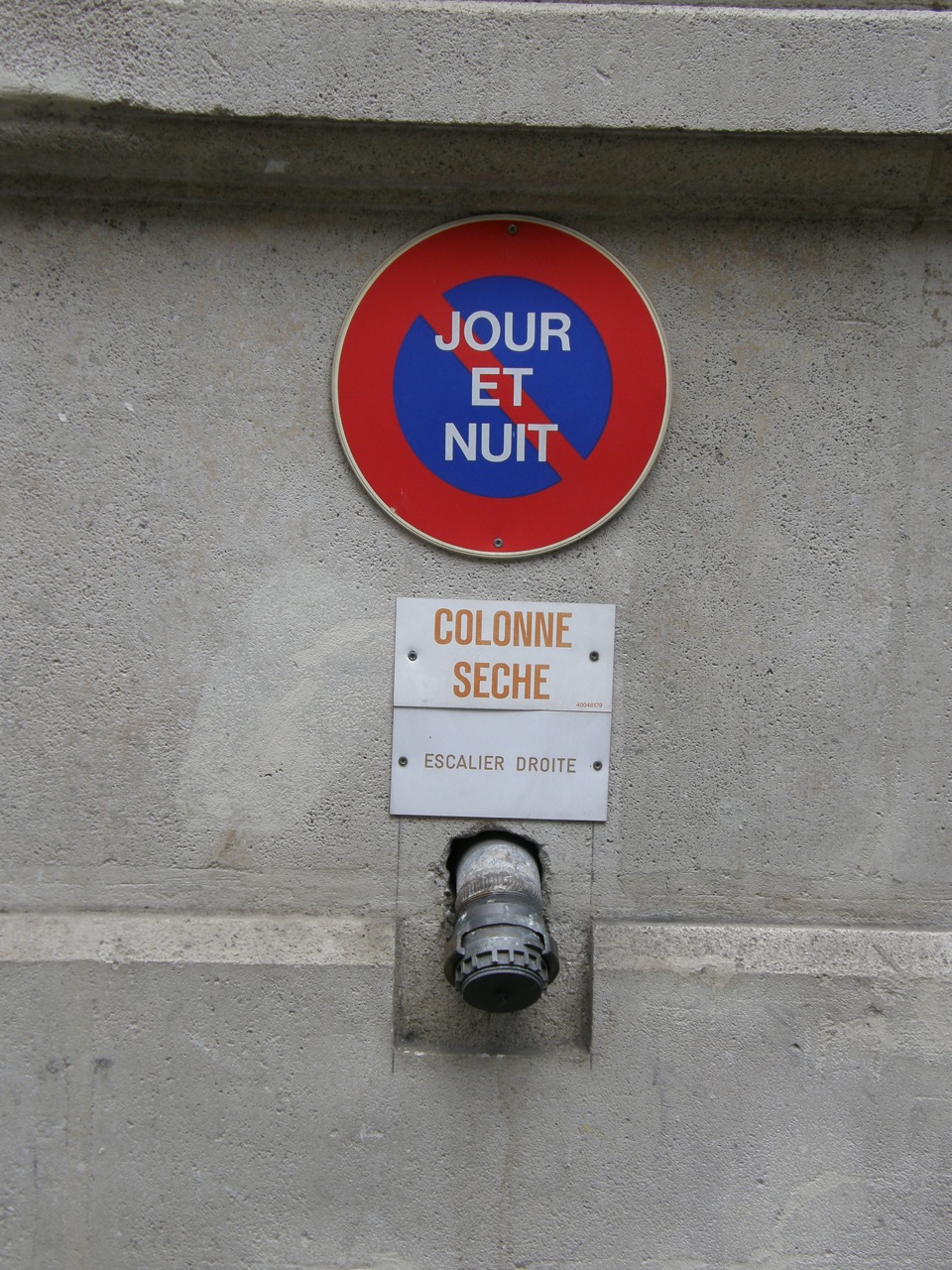
This combination of signs first warns drivers not to park any time, day or night (Jour et Nuit), and then indicates that the colonne sèche is for the right staircase area (Escalier Droit).

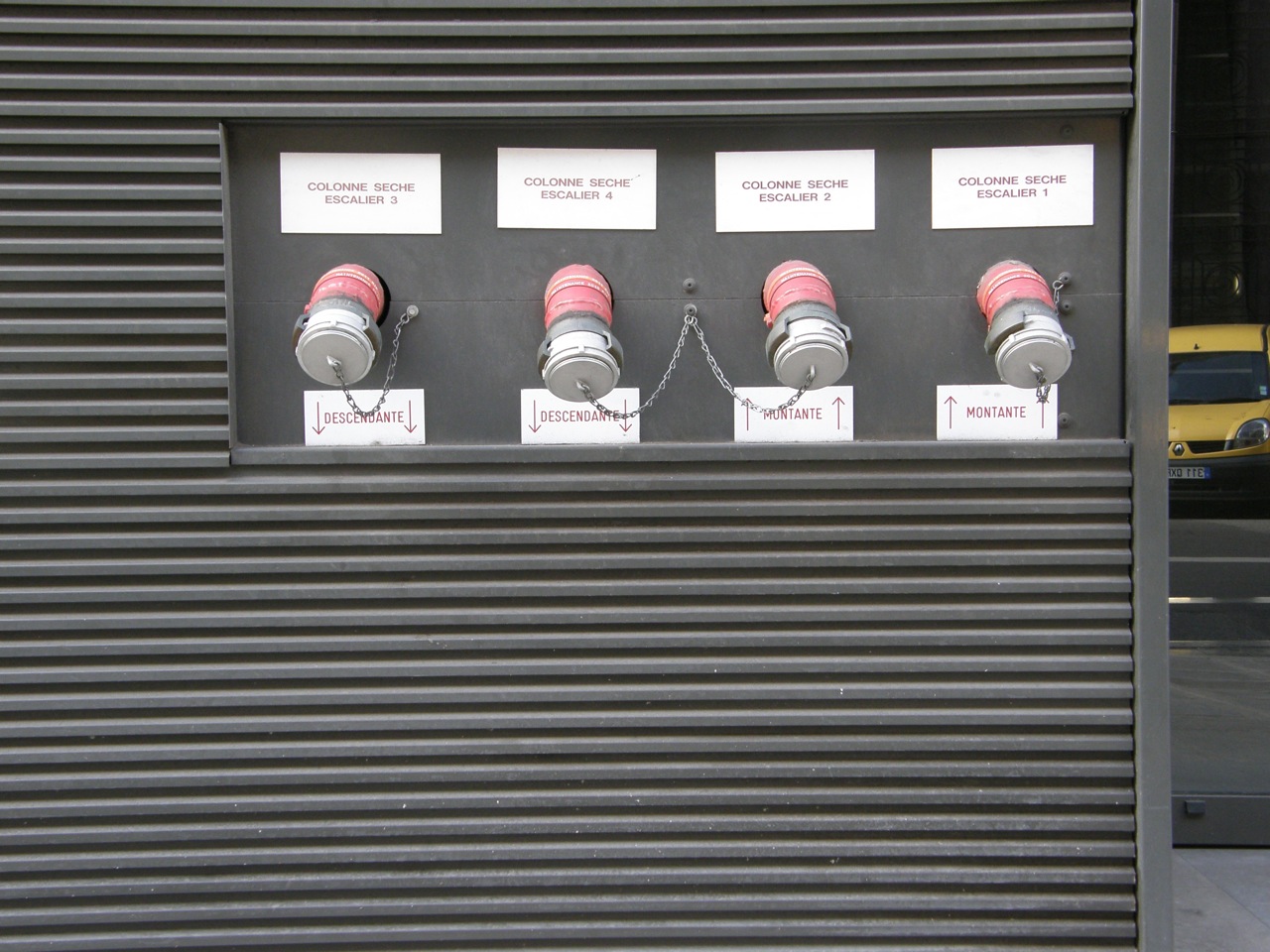
I photographed this bank of colonnes sèches outside a Bureau de Poste (post office). We can see that the colonnes sèches are located at four stairways. For the first and second, the word montante (rising or ascending) and the arrows pointing up leave no doubt that these send water upwards. For the third and fourth, the arrows are pointing down or descendante (descending or falling). Note that the end caps are attached to the wall by a chain.

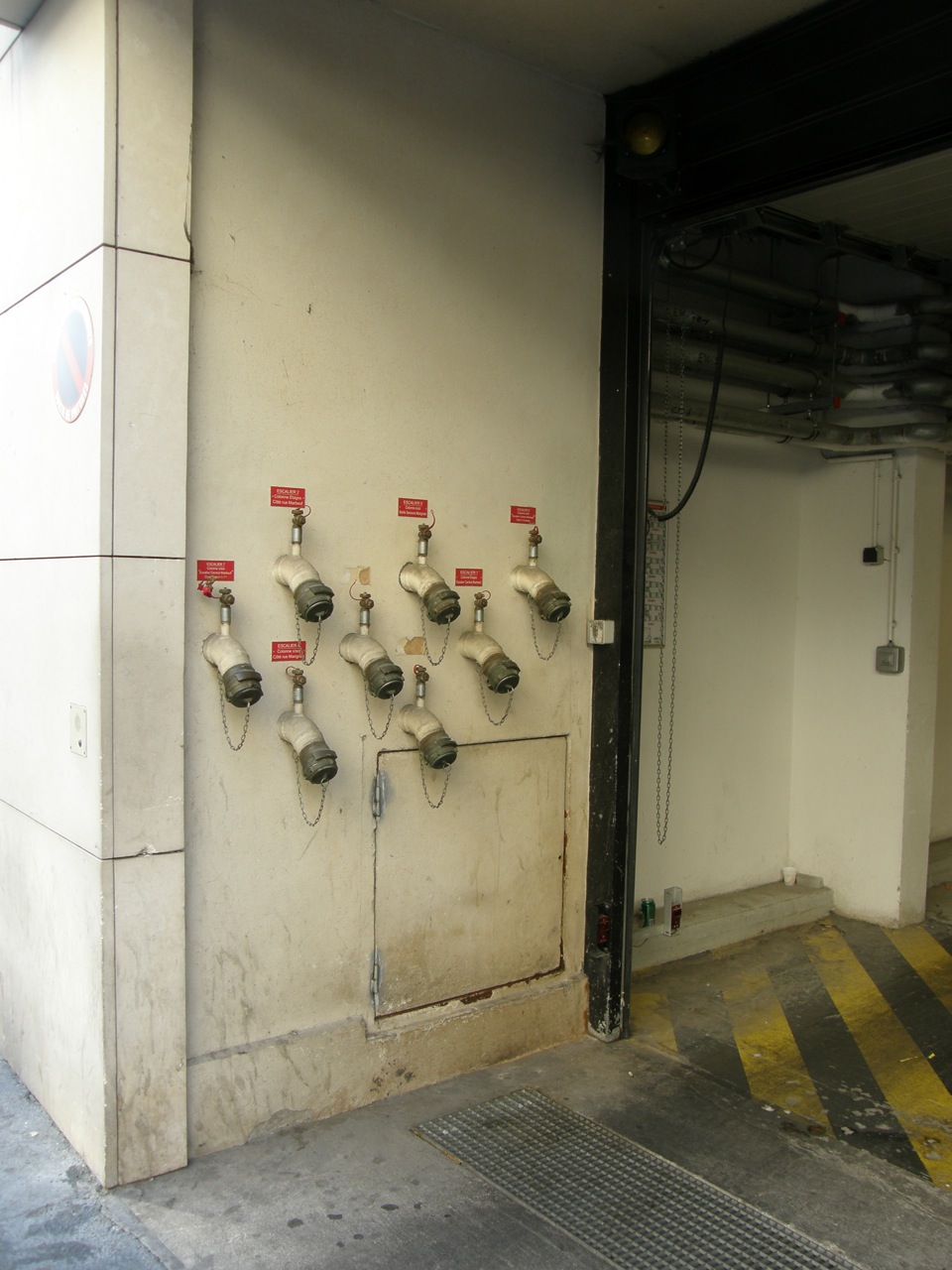
As Philippa and I walked along rue Marbeuf, she must have known I couldn’t pass this loading dock’s wonderful display without taking a photograph. Eight colonnes sèches (a personal best in this highly specialized category).

Look closer. Eight colonnes sèches but only six red labels. Each label has screw holes, but is actually held in place by double-sided tape. Numbers 3 and 8 are missing, leaving only the remains of double-sided tape. One suspects, and hopes, that at least in areas with a high concentration of workers, businesses, residents, and tourists, as well as valuable real estate, firefighters have digital data on interior layouts and colonnes sèches.

You now know more than you ever thought you would about something you have probably never stopped to consider. And why in a city as varied and gorgeous as Paris would I bother to look at such mundane things? Perhaps because the more you know, the more you see, and the more you see, the more you know.

And what we particularly want to know and see are the ways of reading Paris streets. This is why I muse about chimney pots and their trails they make on the sides of buildings. It’s why I take pictures of chasses-roues and read up on the the dual water system that keeps the streets of Paris so clean. I am endlessly fascinated by parking arrangements and delivery vehicles and anti-theft devices. It’s all about making sense of the city through its streets.

Text and photographs by Norman Ball

Posted in Paris civic functions, Paris streets | Tagged , , , , , , , , , | 7 Comments

In Search of Lost Time

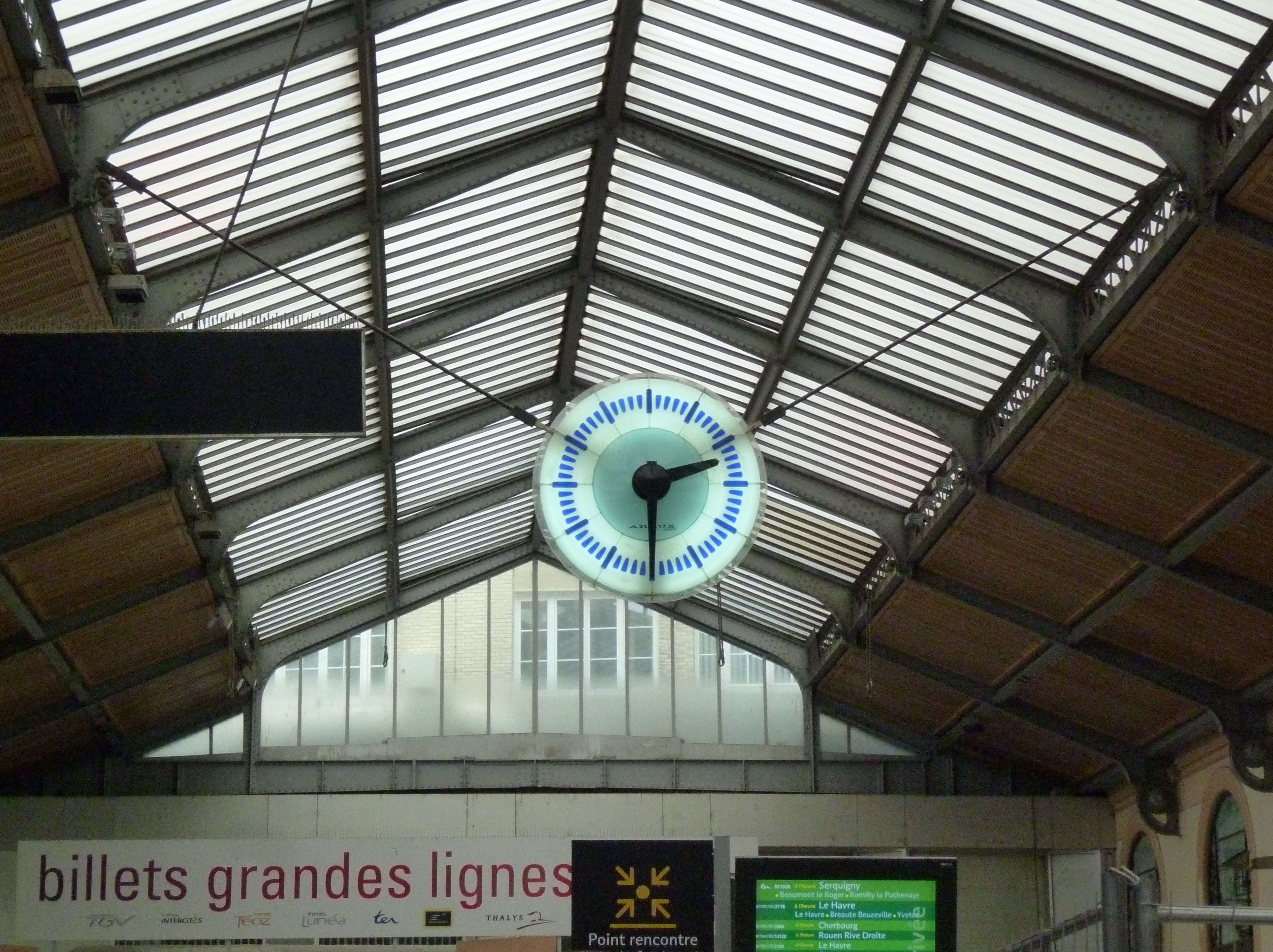
You don’t really need a wristwatch in Paris. For one thing, you are never far from a clock – on walls, towers, and in front of boutiques. Some are ornate.

Some are utilitarian.

Some are advertisements.

Some are art.

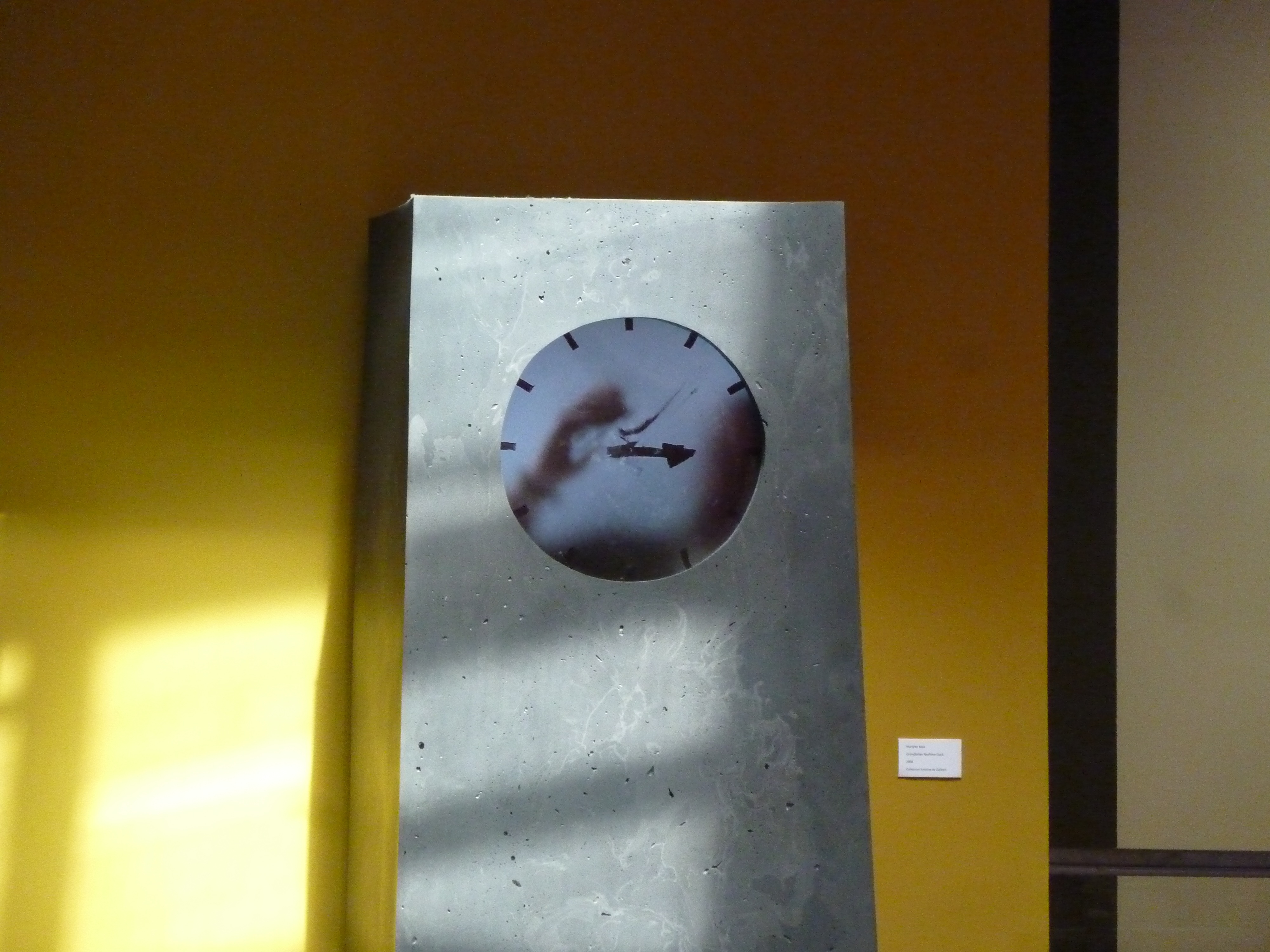
Of all the clocks in Paris, perhaps the most extraordinary can be found in the Maison Rouge, where we went to see an exhibit of neon art. In the café near the entrance to the toilets, there is a clock with what appears to be a man standing inside.

Every few minutes, he erases the hands and redraws them with a marker from the inside. I suppose it is some sort of film loop and projection system, but it is remarkably realistic.

There is another reason why you can leave your watch at home. You simply may not care what time it is, or even what day it is. Sometimes you just slip out of the present and into somewhere else. You turn a corner and you are no longer in the 21st century.

Woody Allen’s movie, Midnight in Paris, is all about time travel, but it’s about the people of the past, not the city itself – the hero gets to meet his literary and artistic idols, from Ernest Hemingway to Salvador Dali, as he prowls the city after midnight.

And of course, that film was shot in contemporary Paris, and the streets look much as they do now, but without cars, modern shopfronts, or advertisements.

If one really did go back, there would be more striking differences. The trees would be smaller, or absent. The buildings would be darkened with smoke. And, as Adam Roberts pointed out in a recent post on Invisible Paris, there would still be chaotic traffic, but it would be partly horse-drawn. And it would be smelly.

One night , I fell asleep after spending the evening sorting through some 100-year-old postcards of Paris. I dreamt I was sitting on a bench on Paris street, and I noticed among the crowds a few people dressed in what appeared to be period costume (women in long dresses, men in frock coats). I assumed they were animateurs for some historic re-creation.

But as I looked around, gradually I saw fewer and fewer people in modern dress, until they disappeared altogether, and I saw only people in old-fashioned clothes. At that point, I realized I had done it – I had gone back in time. Excited, I got up from the bench and walked to the end of the street. When I turned the corner I saw… construction. Several large buildings covered in old-style scaffolding. Ah yes, the past was also full of demolition and construction in Paris.

My next thought was: Where should I go, now that I am back in time? What should I see while I’m here? I went into a building and found what looked like a library. I suppose I was going to ask for a map or a guidebook of Paris as it then was.

The dream took an odd turn at that point, although I was still back in time,* but when I woke up, I pondered the question, and I’d like to ask readers their ideas, too.

If you found yourself in Paris 100 or more years ago, where would you go?

My first thought was: Les Halles. I’d want to see the markets when they were still working and filled with life.

I’d like to take a ride around the city on the Petite Ceinture and see all the little stations that have since disappeared.

And, of course, I would visit the Grands Magasins Dufayel in its glory days to see the magnificent staircase and the grand galleries and admire the tower topped with a searchlight that once beckoned customers. You can see the dome on the right in this postcard view.

What about you? Where would you go?

Back in May, when I was photographing clocks in Paris, I found one that seems to me to represent lost time. Behind the Musée Carnavalet, there is a little garden called Square Georges Cain, named for a former curator at the museum. On the wall of the museum are some odd architectural bits and pieces, salvaged from demolished buildings, including this fragment of a façade, with a clock that has stopped forever.

It is part of the long-gone Tuileries Palace. It was one of two clocks in the centre of the façade – one facing the Champs-Elysées, the other facing the Louvre. The building was torched in 1871 and stood as a burnt-out hulk for 11 more years before it was finally torn down. Somebody (Georges Cain?) saved this bit as part of the city’s history and installed it in this quiet corner of the Marais.

It’s a good place to sit and think, and to decide on one’s strategy, just in case time slips sideways and lands you in the past.

Text and photographs by Philippa Campsie

*So what happened in the dream? I found myself by the canal, but the banks were grassy and undeveloped and the huge trees were not there. A woman nearby fainted or collapsed and people called for help. A boat drew up and a man got off, saying he was a famous doctor and could help. Somehow, in the way that one “knows” things in dreams, I “knew” I was seeing a historic incident, but when I woke up, I have no idea what it might have been.

Posted in Paris history, Paris nostalgia, Paris postcards, Paris streets | Tagged , , , , , , , , , , , , , , | 13 Comments

Finding Typewriter History in Paris

My five-year-old grandson doesn’t know what they are. Actor Tom Hanks collects them. And I am so captivated by their beauty and their astounding variety that I am writing a book about them, in collaboration with Martin Howard, another well-known collector. What are they? Antique typewriters. Martin’s website conveys some of the extraordinary range in the machines created before 1900.

So when Philippa and I went to Paris recently, the search for typewriter history inevitably entered the picture.

For starters, I wanted to find 42, rue Vivienne. I was tracing the story of Frank Lambert of Brooklyn N.Y., formerly known as François Lambert of Lyon, France. François/Frank was an inventor who made most of his money with a water meter, but later became known for the typewriter design that bears his name. It is probably my favourite of all antique typewriters.
In France, the manufacture and sale of Lambert typewriters was controlled by one Sidney Hébert, who had a factory in Dieppe. Hébert listed himself as Lambert typewriter maker “for the entire world.” His Paris address was 42, rue Vivienne.

Number 42 has a central entry and two store fronts each with separate street level businesses. Each buys and sells gold ingots and coins, as do a number of other nearby businesses. Next door at 40 is the two-star Hotel Vivienne.

Another port of call (pardon the pun) was the Bassin de l’Arsenal near the Place de la Bastille. Twice a year, both sides of the basin are lined with about 350 dealers in the Antiquités Brocante Bastille presented by the Joel Garcia Organisation. Among the dealers in furniture, silver, and porcelain are a few who deal in paper and postcards. I asked one dealer if he had any postcards featuring typewriters. He looked in his boxes and pulled out a handful for me to look at.

This is one of the first I looked at. In addition to typewriters, the photo is about costume and social position. The wasp-waisted teacher is quite elegant, while two of the students appear to be wearing smocks over their clothes.

The students are using three different kinds of equipment, and I asked three typewriter collectors if they could help me identify them. Three experts, Martin Howard, Peter Weil, and Richard Polt, agreed that the typewriter shown on the left was a Yost, Model #10. Why are there so many rows of keys? There was one set of keys for upper case and another for lower case.

The woman next to the teacher is using a “court reporting stenographic machine” that Peter Weil suggested could be the French-made Stenophile. A court reporter might be expected to capture as many as 300 words per minute. The continuous paper roll meant that no time was wasted inserting new pieces of paper. Stenographic machines had fewer keys than the conventional typewriter and rather than typing single letters consecutively one typed a number of keys at the same time to produce what, to the knowledgeable, could be interpreted as syllables, words or phrases. This method of typing is called chording and allows speeds vastly superior to a conventional typewriter if one knew the appropriate shorthand method such as Pitman.

Finally, the woman in the centre is using a practice keyboard, where in addition to learning keyboard layout, one could practice smooth rhythmical typing.

The above postcard image from the same dealer shows a typewriting class or school in Pont-de-Beauvoisin. It offers a small clue as to how postcards were produced. Postcards were printed in sheets and then cut to make individual postcards. Part of the bottom line of text is missing because the machine was either not set up properly or the sheet had not been fed in straight. Even though the tops of the letters on the bottom line are largely cut off, you can make out the words “Salle de Dactylographie” (typewriting class).

It appears to be a rather spartan conventional classroom with four typewriting tables added at the back, along with the Underwood keyboard guide on the wall. Note that the keyboard guide is for the French “AZERTY” layout rather than the QWERTY. (Still a problem for English visitors to France who use Internet cafés!) Peter Weil examined the photo and concluded two of the machines were Underwoods and one was an LC Smith, probably about 1910 or later.

The dealer also had some typewriter ephemera from the Paris Exposition of 1900.

I love the design and the colour of this postcard. Peter later told me that the Smith Premier No. 4 had won the gold medal at the 1900 Exposition. A few days after Martin Howard saw the card, he suggested I might want the actual typewriter to go along with it. It just so happened that he had been approached by someone looking for a good home for a Smith Premier No. 4. I am now the proud owner of one of these machines.

Perhaps the most unusual item I bought from the dealer at the Bastille is the image below.

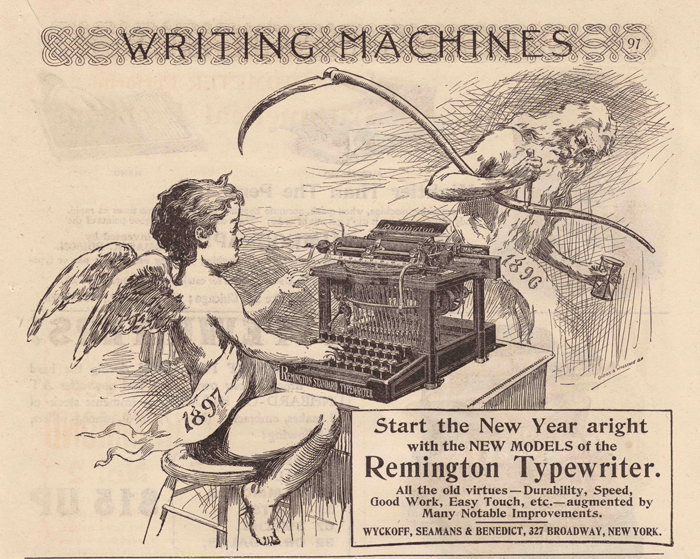
It invited the recipient or reader to try out the “perfected” new models for free, phone the Paris office, or visit at 8, boulevard des Capucines. But who got this invitation? The next image gives us the answer.

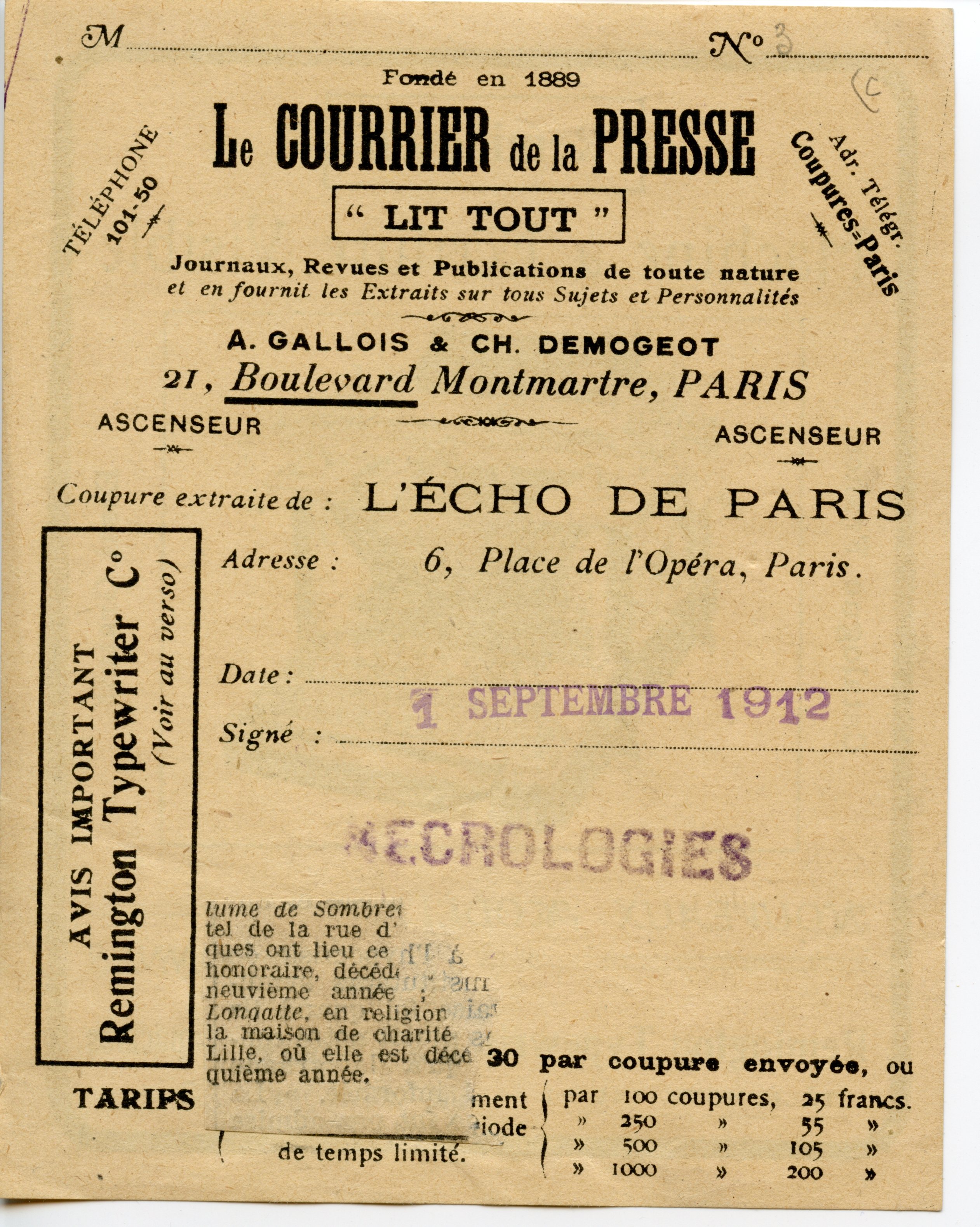
The Remington ad we looked at was on the back of a receipt, dated 1 September 1912. It documented payment of an announcement in the newspaper L’Écho de Paris. No ordinary announcement, an obituary. You can see a scrap of the tear-off sheet, which, Philippa discovered, refers to Comte Charles de Villelume de Sombreuil, who had died suddenly at the age of 51 in his home at Versailles a few days before.

Just in case one was not inclined to read the Remington ad, the lower left side of the receipt side had a message enclosed in funereal black outline, “Important Notice Remington Typewriter Co. (See other side).”

Perhaps whoever paid for the announcement took the receipt and stuffed it in a file. Perhaps he or she read the ad and marched off to 8, boulevard des Capucines and bought a typewriter. Who knows? But almost exactly 100 years later, I went to find the Remington offices myself.

Early on a holiday morning I walked up to the imposing doors.

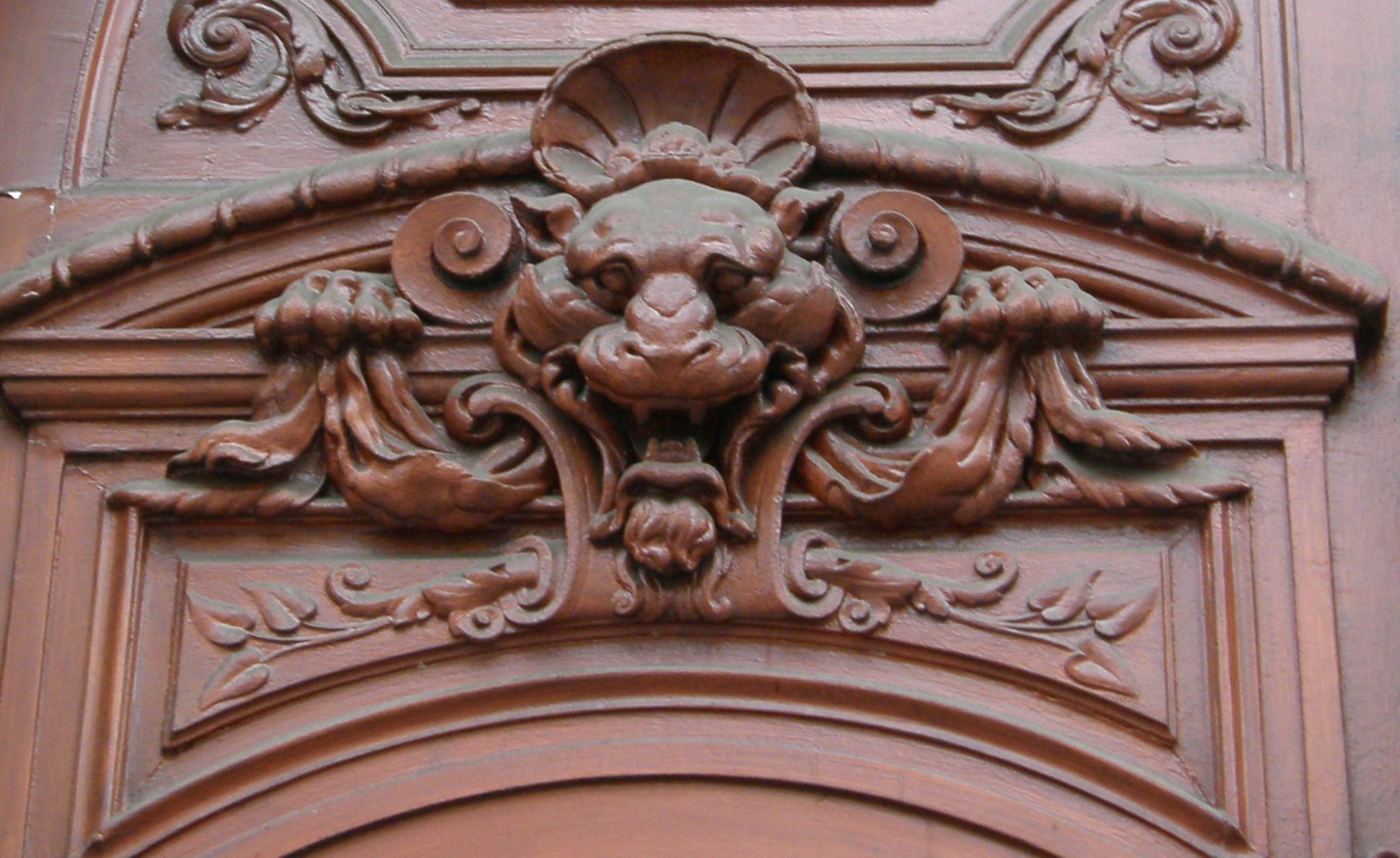
Perhaps the Remington office had been on the ground floor with plate glass windows looking out onto the passing scene. Perhaps they were in one of the upper floor offices. Clearly the building was in a good area. I noticed two medallions near the top of the door opening.

What is Sir Thomas Gresham (1518-1579), London merchant, one-time mayor of the City of London, financial agent for Henry VIII and Queen Elizabeth I, and founder of Gresham College, doing here? Turns out that this building once housed one of the Paris offices of a British life insurance company called The Gresham.

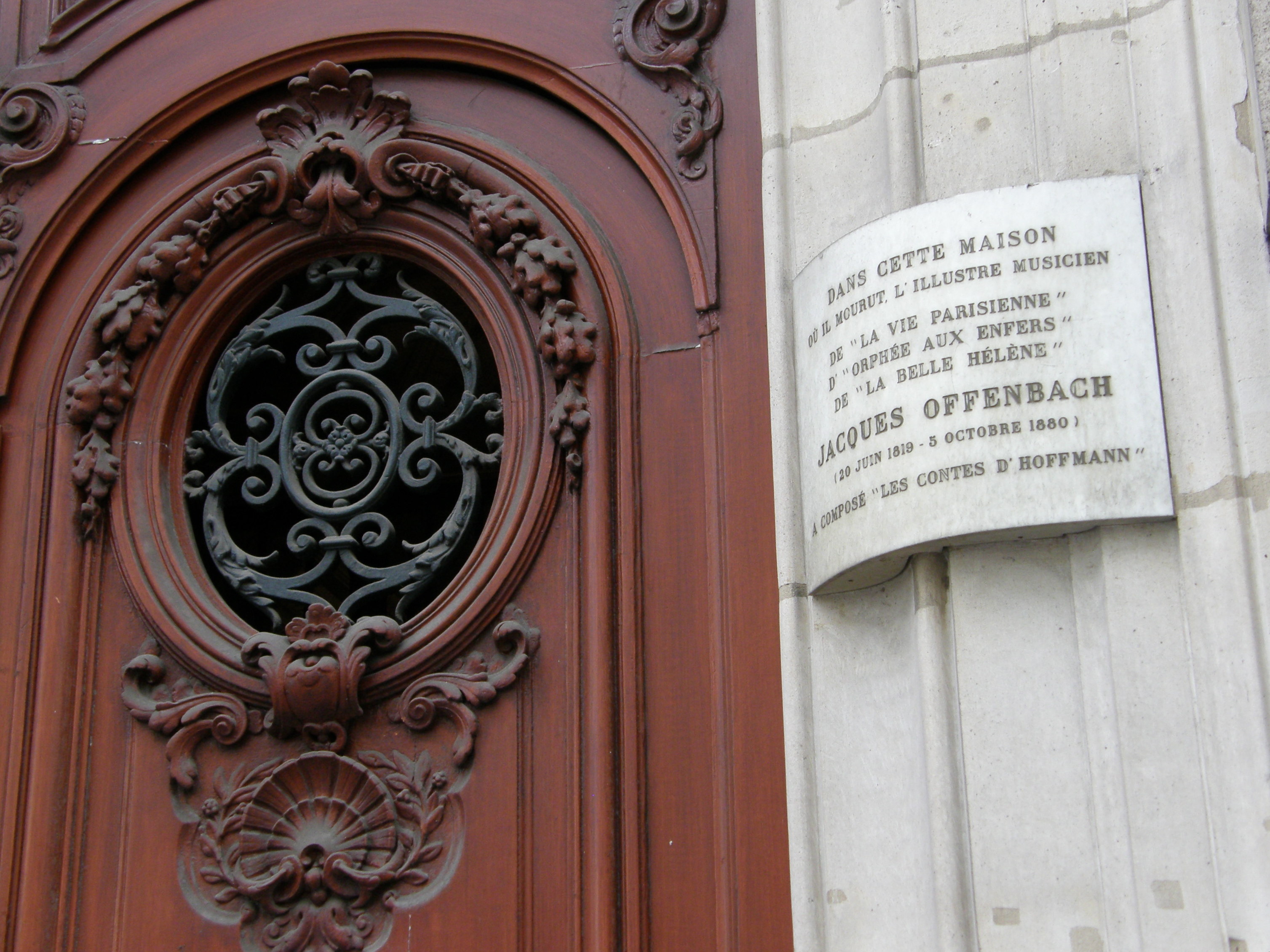
There is also a plaque beside the door.

In this house
Where he died, the illustrious musician
[composer] of “Parisian Life”
of “Orpheus in the Underworld”
of “The Beautiful Helene”
Jacques Offenbach
(20 June 1819 – 5 October 1880)
Composed “The Tales of Hoffman.”

So I bid au revoir to the imposing doors and the memory of Jacques Offenbach but I will be back in search of Remington.

Finally, our trip to Paris coincided with one of the great antiquarian book fairs of the world: The Paris International Antiquarian Book Fair.

The event was held at the Grand Palais, built for the 1900 Paris Exposition. The setting was perfect for the displays of rare, antiquarian books and artworks. Already, we are wondering if we can attend the fair in 2013.

To get a sense of both the fair and the building, click here for the Book Fair Video. The music you are hearing is from the periodic live concerts that took place throughout the fair.

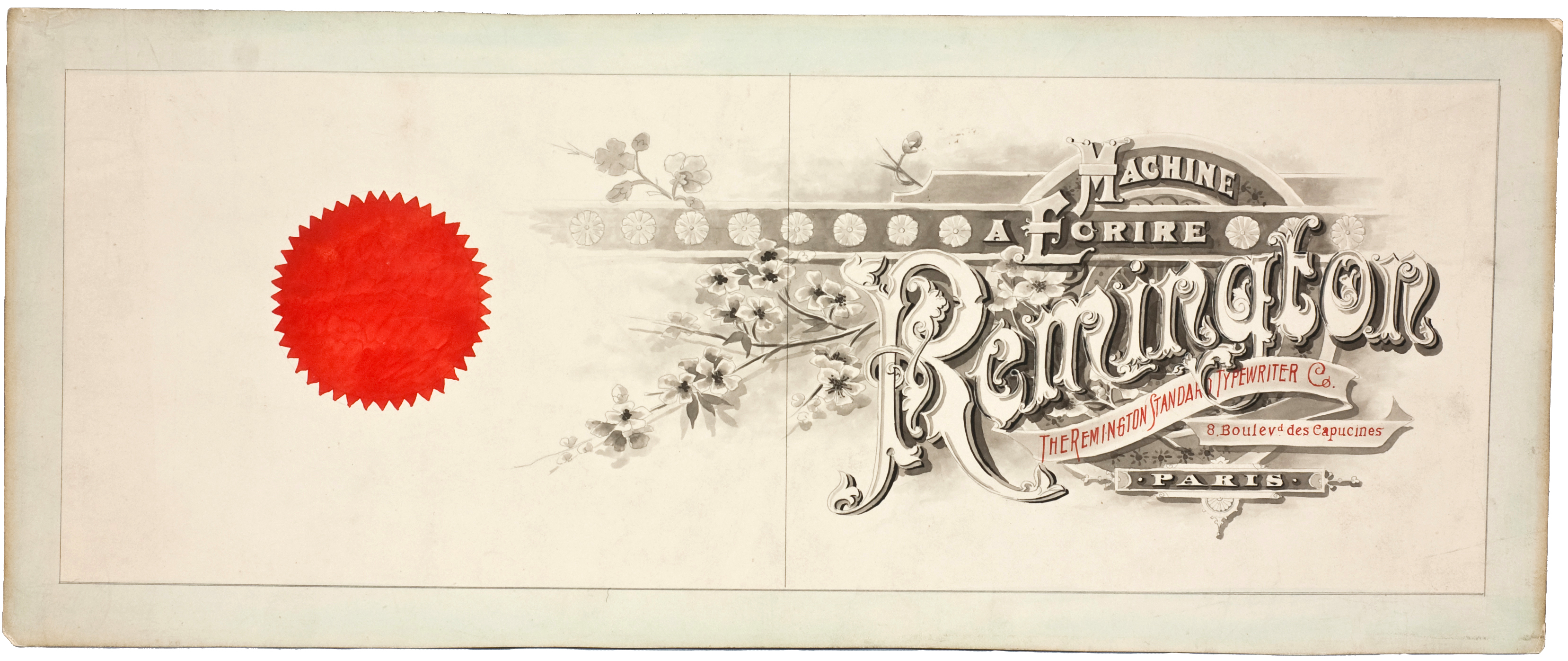
The selection of books, manuscripts, and art was overwhelming. After some pondering, I bought an original hand-painted piece of advertising artwork for Remington typewriters. The address was familiar–8, boulevard des Capucines–and I had already been there.

Elsewhere in the book fair, we could see other collectors finding their own treasures. Paris is made for people with passions who like to browse and sometimes buy. Part of the great joy of collecting is taking your interests with you wherever you go. You might be surprised by what you find. We recommend you do it in Paris.

Text and photographs by Norman Ball.

With special thanks to Martin Howard, Peter Weil and Richard Polt.

Lambert typewriter image and 1897 Remington ad courtesy antiquetypewriters.com

Posted in Paris expositions, Paris history, Paris postcards, Paris typewriters | Tagged , , , , , , , , , , , , , , , , , , , , , , , , , , , , , , , , , , , , , , , , , | 14 Comments

Le Bazar de l’Hôtel de Ville

Sooner or later, we know, we will end up having lunch at the Cantine in the BHV (Bazar de l’Hôtel de Ville). It’s central. It’s inexpensive. The food is good. The view from the big windows is magnificent. And of all the Paris department stores, it’s the most approachable. It’s not as big as Galeries Lafayette, nor as beautiful as Printemps, nor as trendy as Le Bon Marché. But it’s a reliable place to find what you want, from lunch to lightbulbs to luggage to lingerie.

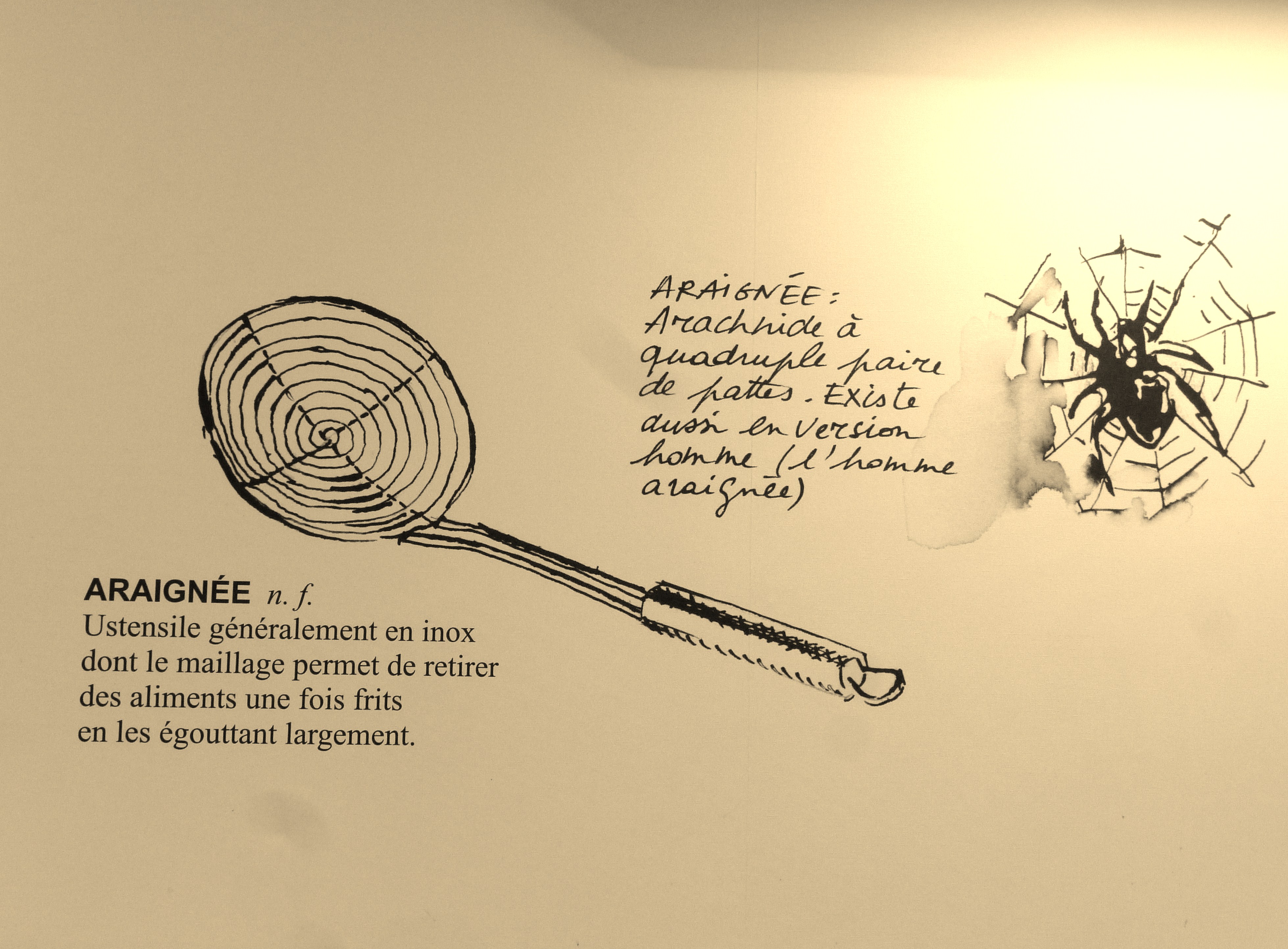
This time, we were entranced by the illustrations on the cafeteria walls. They were pictures of culinary tools, paired with the objects from which they took their names. A mandoline (for slicing) with the musical instrument. A chinois (cone-shaped sieve) and a Chinese hat. A diable (a small casserole dish) and a picture of the devil. An araignée (skimmer) and a spiderweb. About a dozen pairs in all.

The series had been created for BHV by Sabine Forget, a Paris artist who does delightful watercolours and pen-and-ink sketches. As we ate our poached salmon and salad, we studied her pictures, enjoyed the wordplay, and added some new terms to our French vocabulary.

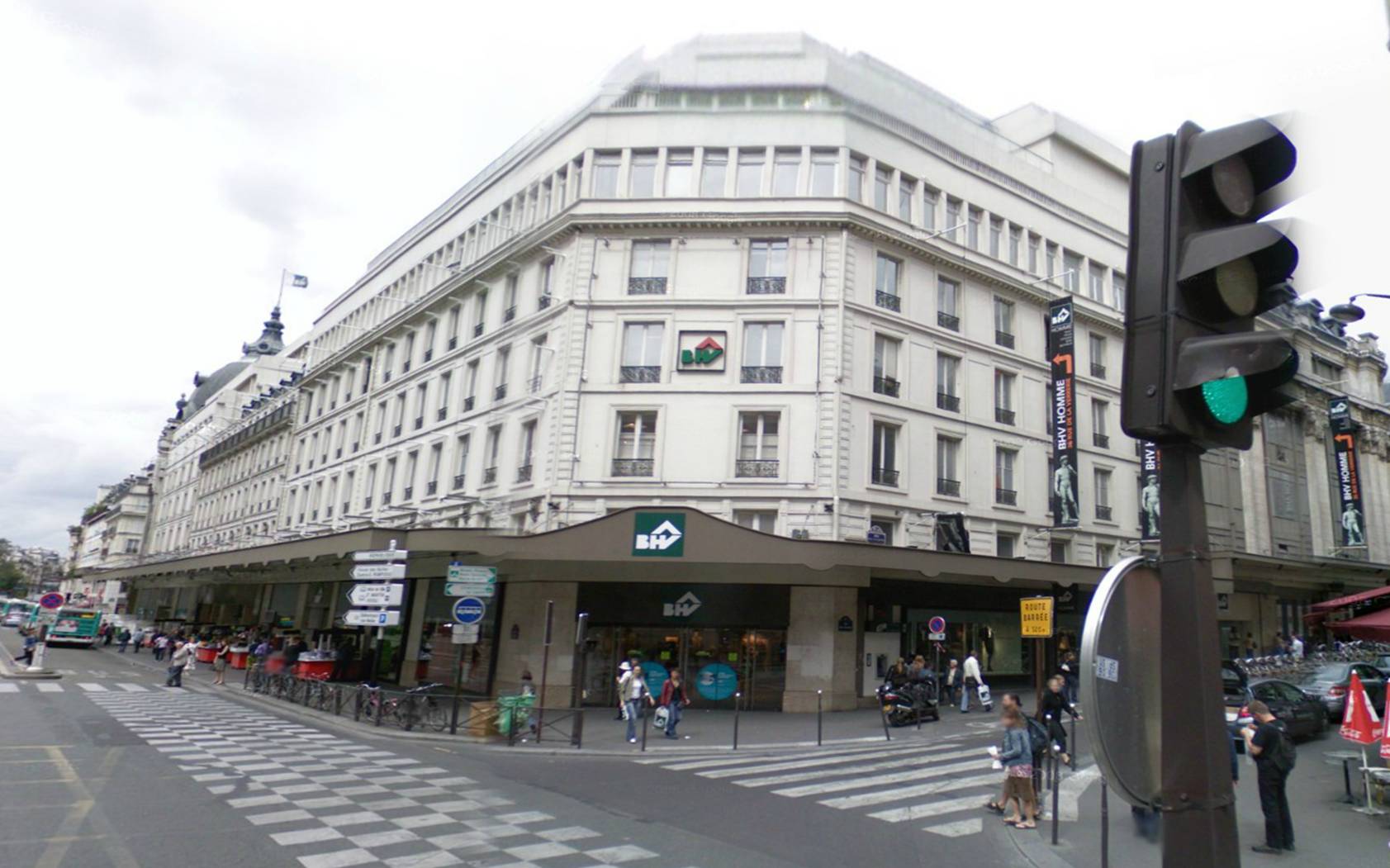
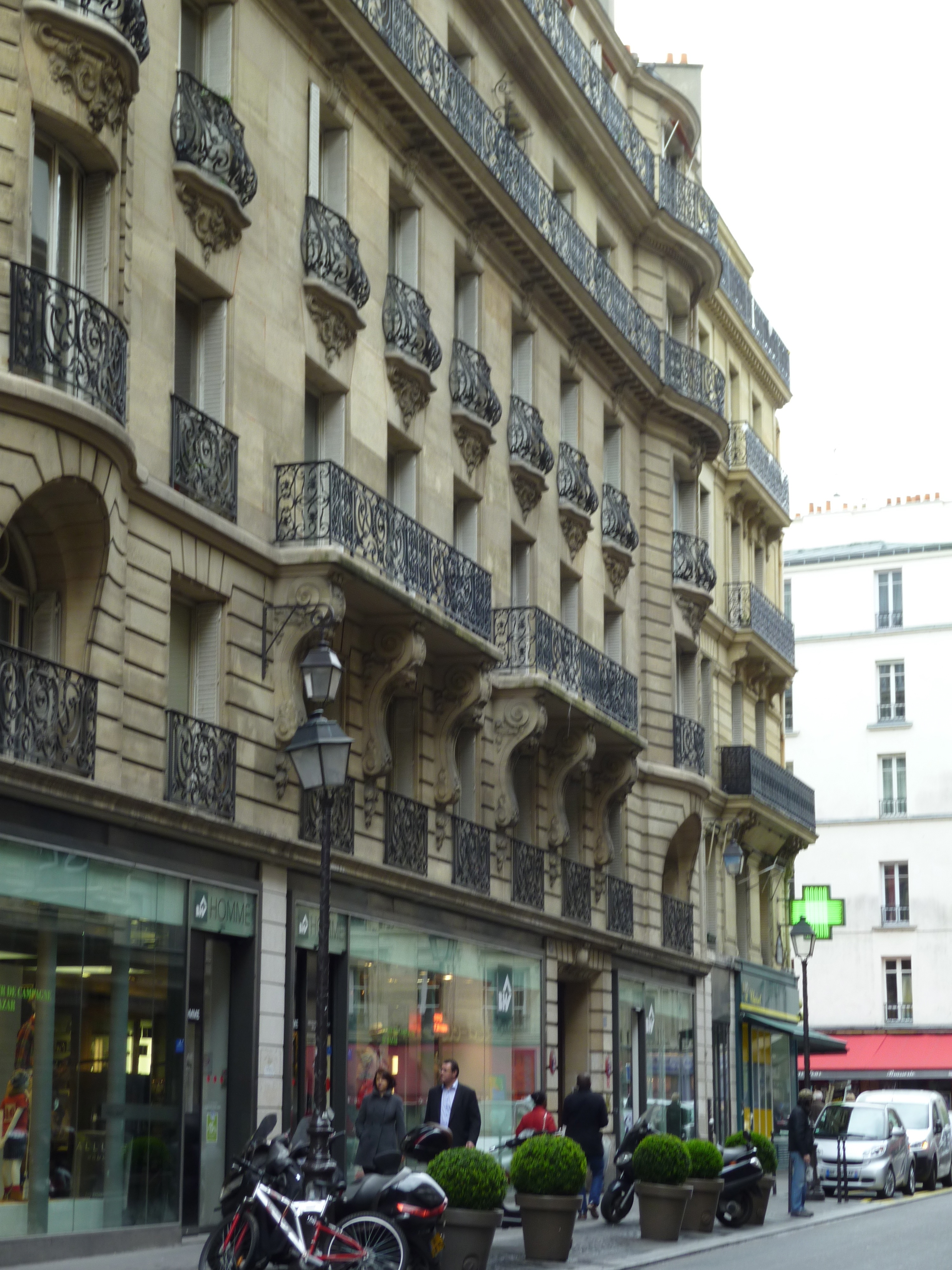
After lunch, we took the escalators back down to the ground floor and walked out to the street. I began to notice things about the BHV I hadn’t registered before.The back of the building doesn’t resemble the front, and the front doesn’t resemble, well, anything much. There’s a Belle Epoque dome at one end and a plain, squarish entry at the other end and in between is a series of traditional-looking buildings with more modern storeys on top of some of them.

The photograph I took at the time didn’t capture that very well, so here is a Google Street view, taken from the end away from the domed entry.

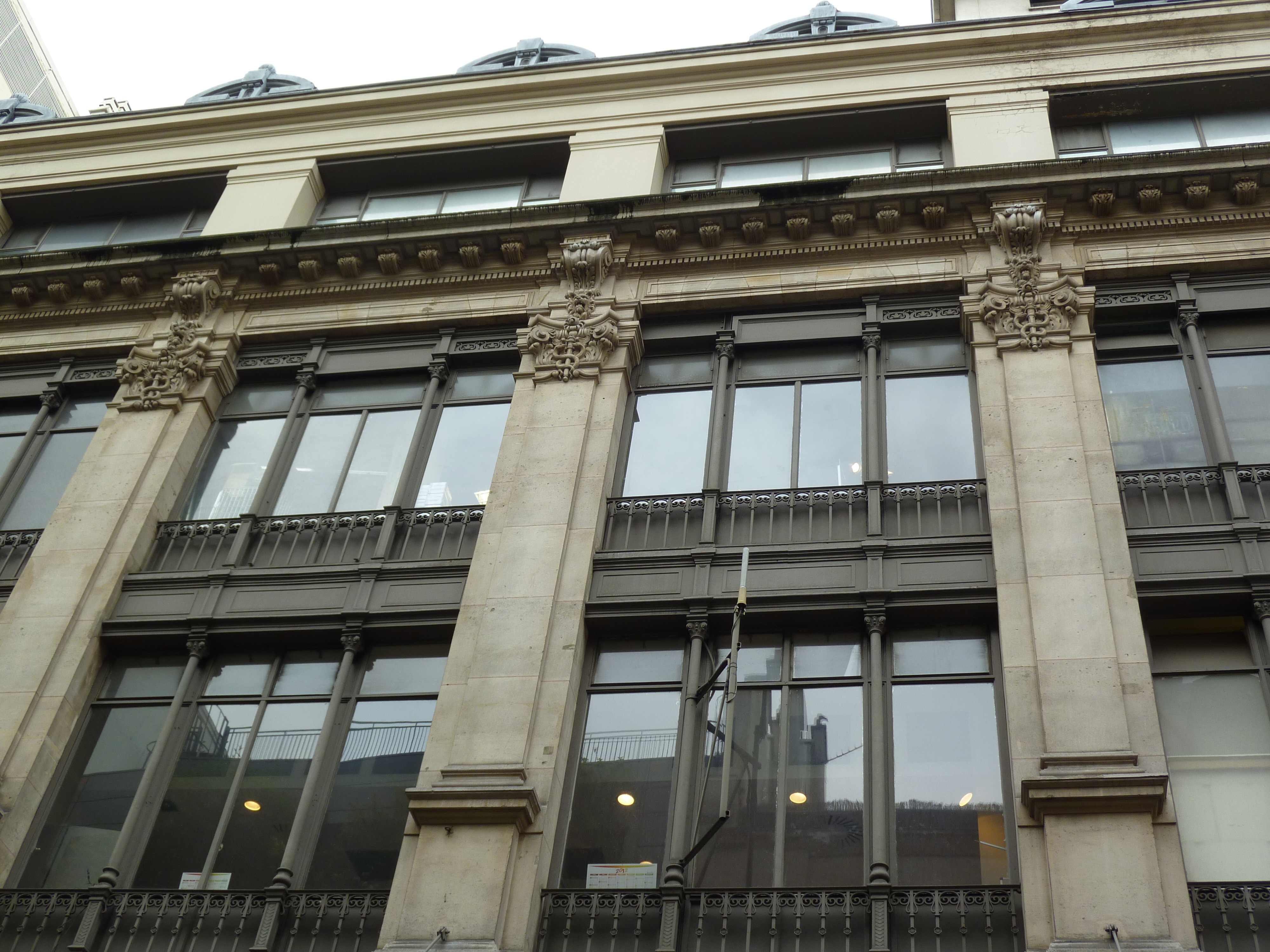
The other side of the store looks more like a purpose-built grand magasin, with big windows and imposing columns. Odd.

The satellite buildings nearby (the pet store, menswear, bicycles) offer unexpected treats – a growing green wall, for example, and a second café in a pleasant courtyard near menswear. But they are not connected to the store architecturally. The overall impression is that there is no overall impression. This is an architectural mishmash of a store.

It got me thinking about department stores in general. They are one of the distinct cultural institutions in Paris and they seem to be holding their own there, even as those in other countries struggle to survive. When I was a child growing up in Toronto, the two big department stores were the T. Eaton Company and Robert Simpson’s – imposing downtown buildings with brass-trimmed revolving doors (I got my arm caught in one when I was about six years old and caused quite a stir when I had to be extricated) as well as complicated elevators operated by smartly uniformed women in white gloves who handled the controls and announced the floors (“Third Floor: Shoes, Lingerie”). Both companies have long since been bought out by others (Sears, Hudson Bay) and both are losing ground to monotonous suburban big-box stores with fluorescent strip lighting, industrial-style shelving, and cheap merchandise.

French department stores seem to have fared somewhat better, although many have perished along the way. Who now remembers that Les Deux Magots was a department store before it became a café frequented by existentialist authors? Or that Pygmalion was the name of a Paris store before it was a play by George Bernard Shaw? Will La Samaritaine ever reopen in some semblance of its former glory? Do any traces remain of the Grand Bazar de la Rue de Rennes underneath the dreary exterior of the current Fnac outlet? And why does no one remember the flashiest of them all, the glorious Grands Magasins Dufayel, with its dome and searchlight, which was once a huge tourist draw and is now largely forgotten?

Somehow, as these have vanished over the years, the Bazar de l’Hotel de Ville has persisted.

The founder, Xavier Ruel, started small. He had a business selling small items and trinkets from carts, and his employees fanned out around the city, selling their wares on the sidewalks. During the disruptions of the Haussmann period, when half the city was being knocked down and new construction was everywhere, mobile carts made sense. But Ruel discovered that the salesman who parked his barrow opposite City Hall was earning many times what the other employees brought in. Location, location, location. Ruel decided to rent the ground floor of a building in that spot for a little boutique he called the Bazar Parisien.

In 1860 or so (accounts differ), his business got a boost from royalty. The story goes that Napoléon III’s wife, the Empress Eugénie, was passing in front of the sales carts on the rue de Rivoli when the horses pulling her carriage took fright and bolted. Ruel, who was standing nearby, had the presence of mind to catch the reins and calm the horses. The Empress later sent him a sizable sum of money to show her gratitude.

The reward allowed Ruel to expand his operations until eventually, his store occupied the entire block. He renamed it the Bazar Napoléon in honour of the Emperor (husband of his benefactress). But with the fall of the Empire in 1871, that name became politically incorrect. So Ruel again renamed his establishment, this time after the Hotel de Ville across the road – which itself burned down in the 1871 conflict and had to be rebuilt.

Ruel died in 1900, at the age of 78, by which time his department store was a going concern with 800 employees. The business passed to his nephew, since he had no sons.

At that point, the store still occupied the various buildings that Ruel had acquired piecemeal over time. The other grands magasins had flagship stores created by the “starchitects” of the time. Why not BHV?

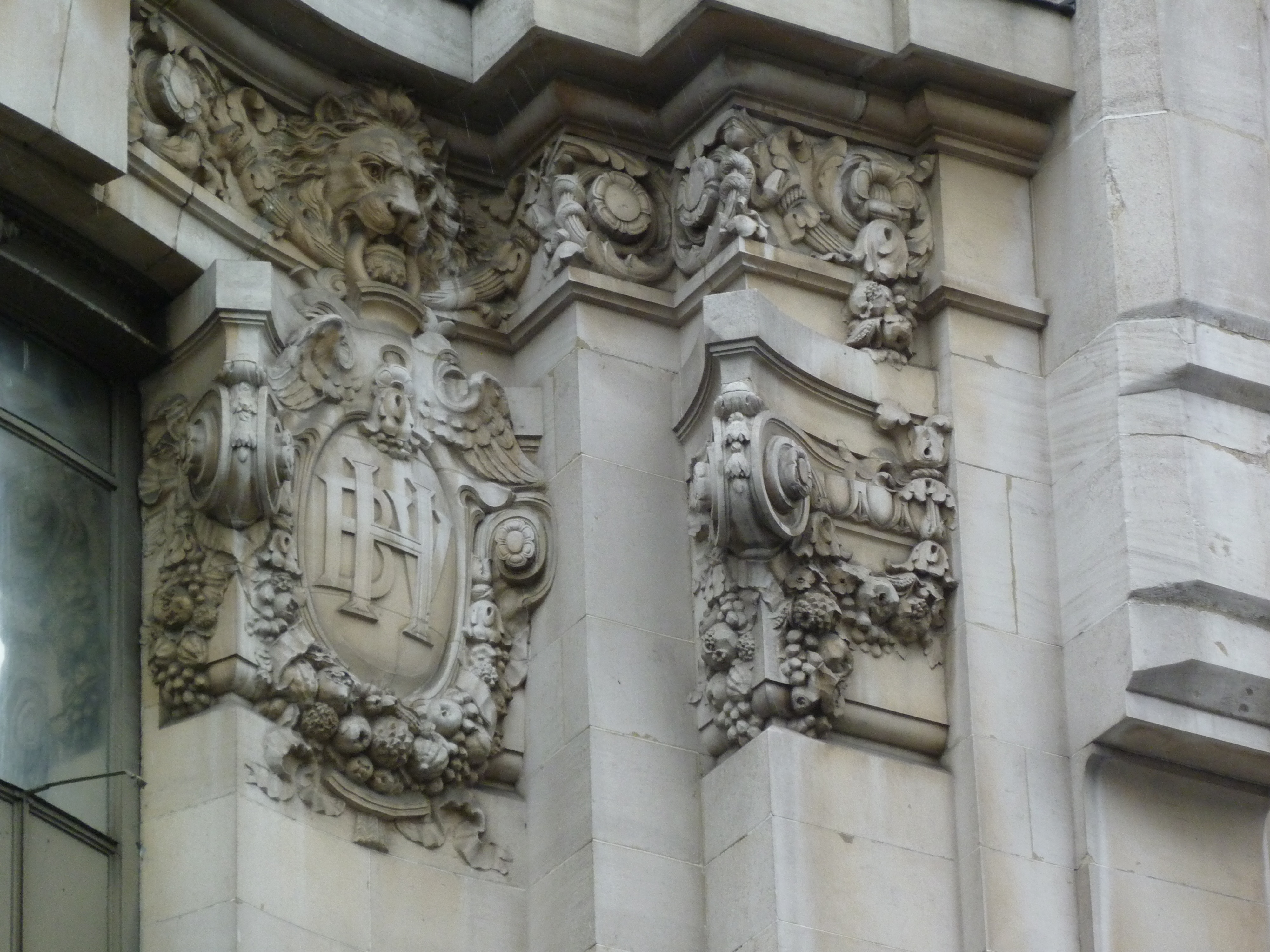
According to the architectural histories I have found, some improvements were made in 1903-04 and then a new building was created in 1912-13 by the architect Auguste Roy. But when you look at the building, it it hard to figure out who did what.

Was it Roy who designed the grand dome on the corner and the purpose-built section on the north side? Whatever happened in 1912-13, it seems to have been a retrofit, not a new building. This would explain why the place lacks a glorious atrium and glass roof, which characterize many of its competitors, and why the interior is often hard to navigate. The photo below shows the juxtaposition of two of the building styles that make up the BHV.


It also appears that Auguste Roy was far from being a “starchitect” of the calibre of Paul Sédille who created Printemps, or Gustave Rives, who made the Grands Magasins Dufayel into a glittering tourist draw. Roy and some colleagues had won first prize to design a primary school once. He’d done an apartment building or two. Hardly a sought-after name-brand architect.

Despite some belle époque flourishes, the BHV cannot really be considered an elegant venue. The interior ceilings are low and covered with acoustic tile, and the elevators can be hard to find. Nevertheless, it is the go-to place for hardware, kitchenware, toys, stationery, and art supplies. We’ve bought everything there from clothes to colanders to Sophie la Girafe (for a grandchild).

Today, thanks to consolidation, it is owned by the same folks who run the Galeries Lafayette and Monoprix, but it maintains its own personality.  And there are still carts out front, selling toys and trinkets – Xavier Ruel would approve.

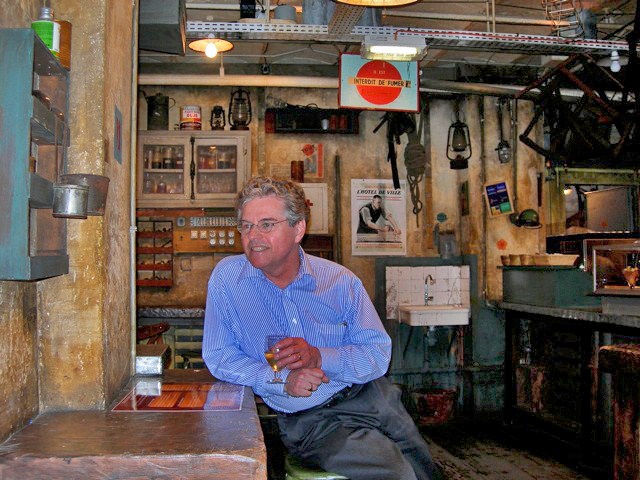
The basement hardware department is legendary, but alas, the little bar in the form of a handyman’s workshop, where we used to stop for a glass of wine after negotiating the maze of tools and DIY supplies, has gone.

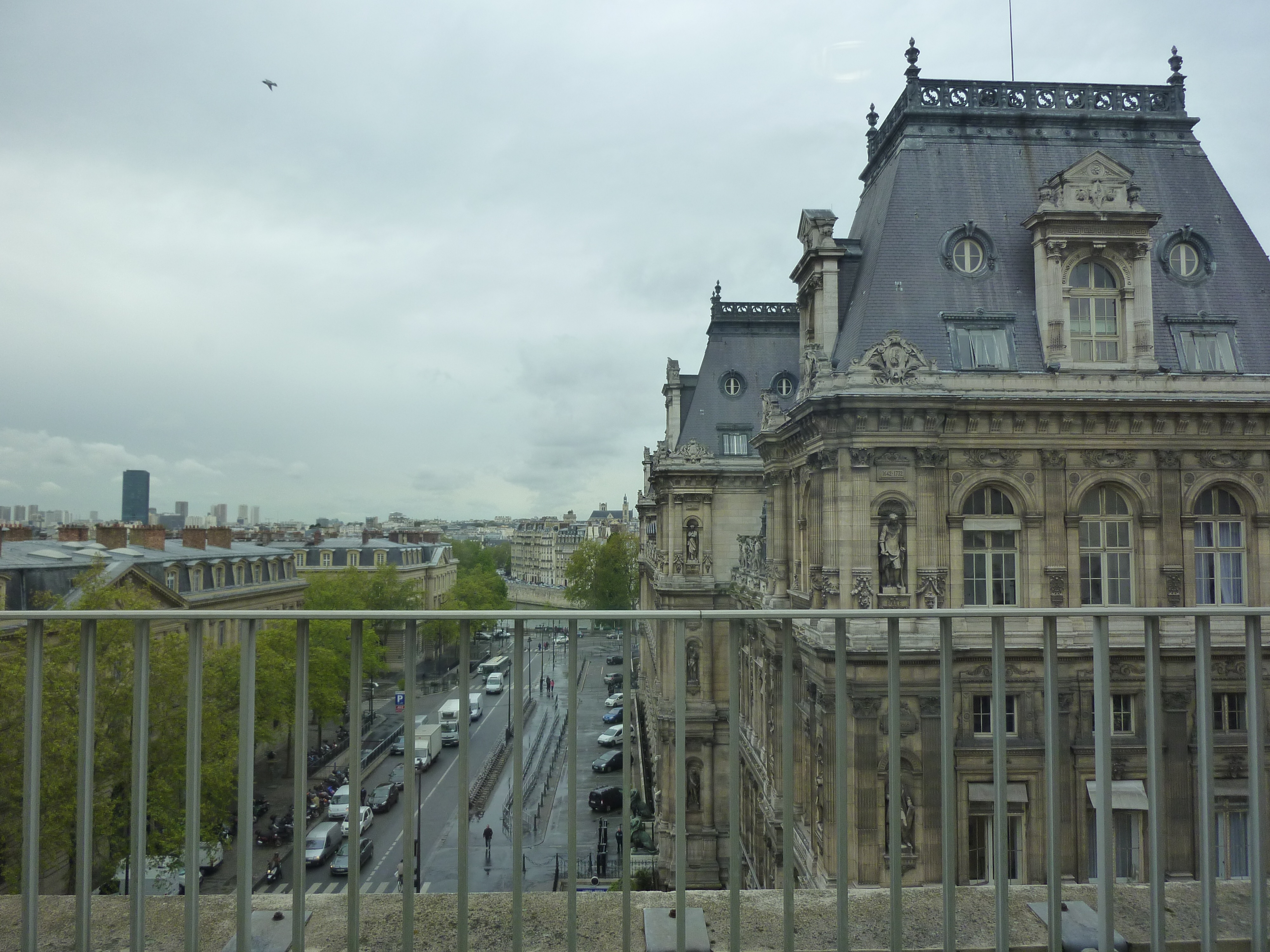
So now we head upstairs to the cafeteria with its big windows and affordable poached salmon, and look out over City Hall and the river.

Nineteenth-century department stores used to offer a home away from home for shoppers (with everything from lending libraries to writing rooms with monogrammed stationery to children’s playrooms). For us, the BHV is that welcoming space where we can alight temporarily in the middle of a bustling foreign city and feel at home.

Text and photographs by Philippa Campsie

Posted in Paris architecture, Paris shops | Tagged , , , , , , , , , , , , , , , , , , , , , , , , , | 9 Comments

Berthe Morisot, an artist ahead of her time

Dear Parisian Fields subscribers,

If you enjoy our postings about art, we hope you will enjoy an article on the Impressionist artist Berthe Morisot that Philippa wrote for the website Girls’ Guide to Paris.

The article begins: “It is said of Ginger Rogers that she did everything Fred Astaire did, but backward and in high heels. Similarly, Berthe Morisot did everything her fellow French Impressionist painters did, but in a corset and with a chaperone beside her.”

Read more >>>

Hope you enjoy it. We’ll have a new posting on our own blog this weekend.

Norman and Philippa

Posted in Paris art | 6 Comments