Tracing the tracks of Paris chimneys

As we walk past the restaurant Monsieur Lapin on the rue Raymond Losserand in the 14th, my eyes are drawn upwards to a ladder of iron steps embedded in the wall. We are looking at the other half of a story I started two weeks ago, when I wrote about Paris chimneypots. Stories like this help us “read” Paris through traces of the past on the walls and streets of today.
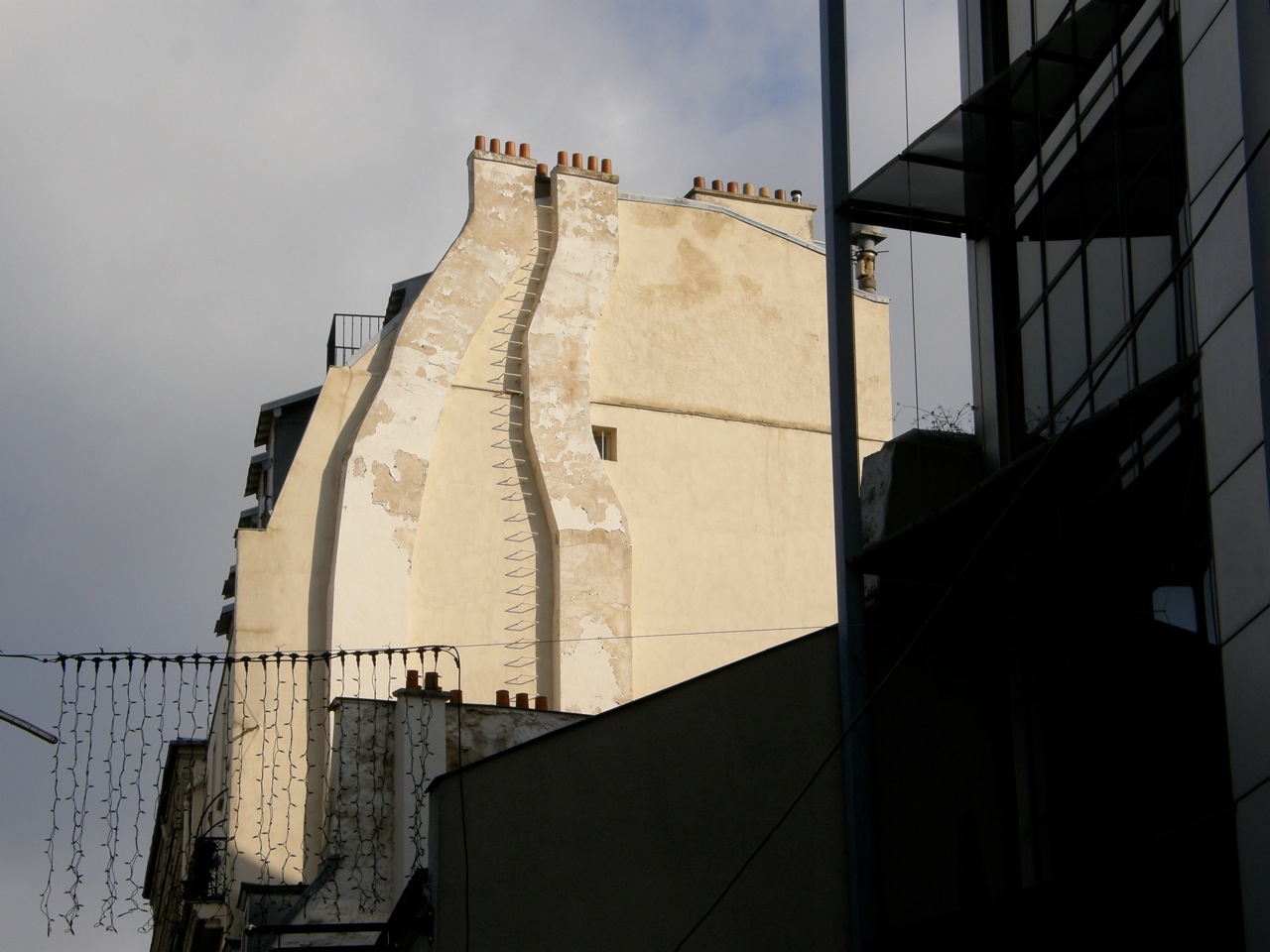
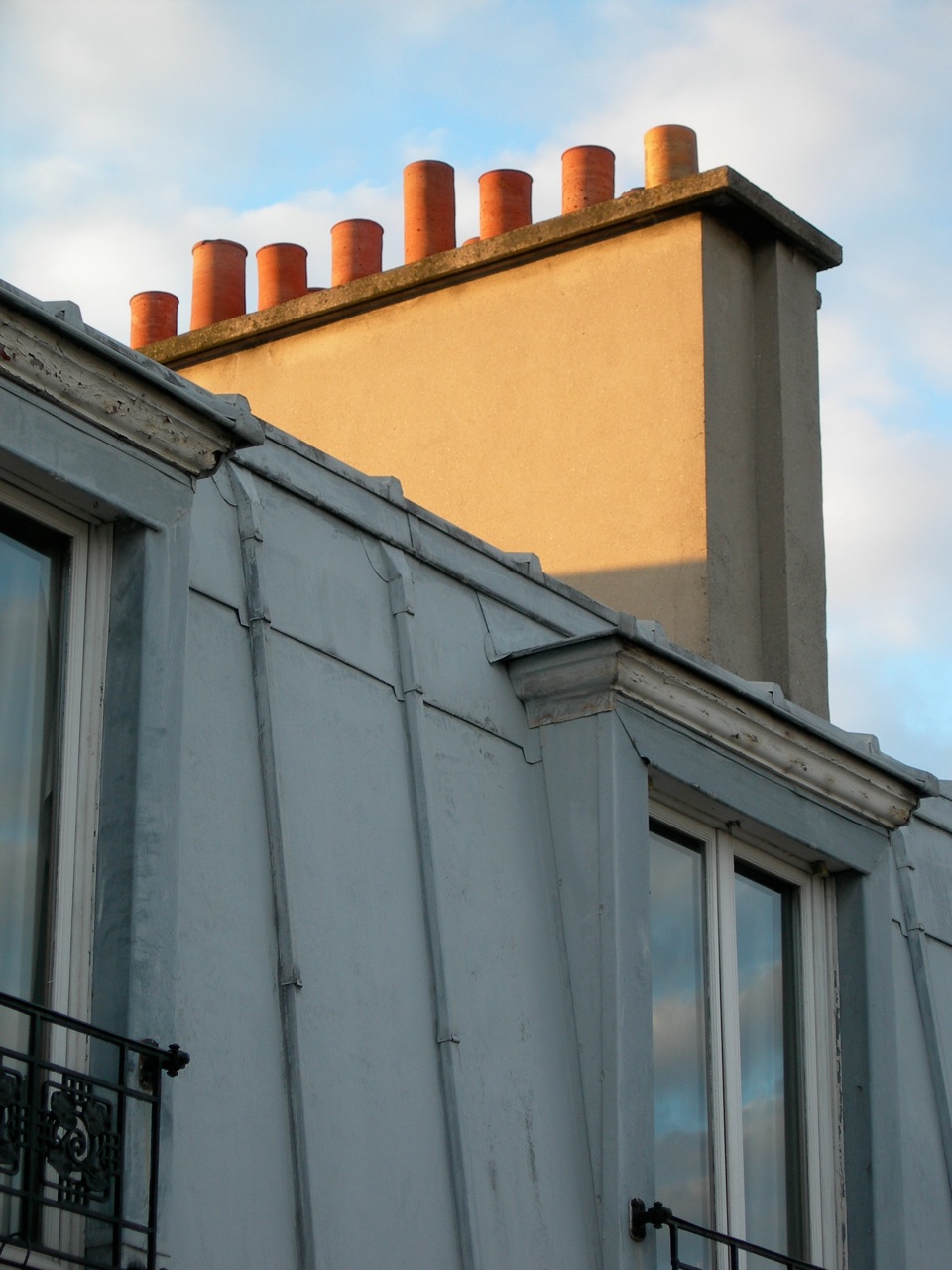
The building appears to be in fine shape, and the stone or brick of both wall and chimneys are carefully plastered over. Each chimney appears to have four fired clay flues, each leading to a chimneypot.

Chimneys should allow a free upward flow of air, so the fumes (including deadly carbon monoxide) can be dispersed in the outside air. Whether old or new, chimneys need to be cleaned. The ladder embedded in the wall allows chimneysweeps to climb to the top and then drop the linked brushes they use to clean accumulated soot and debris from the flues.

What does the chimney look like inside? We can’t peer inside this one. However, Paris has a rich collection of chimneys in various states of undress. And so let us peer, so to speak, at chimneys in various states of déshabille.
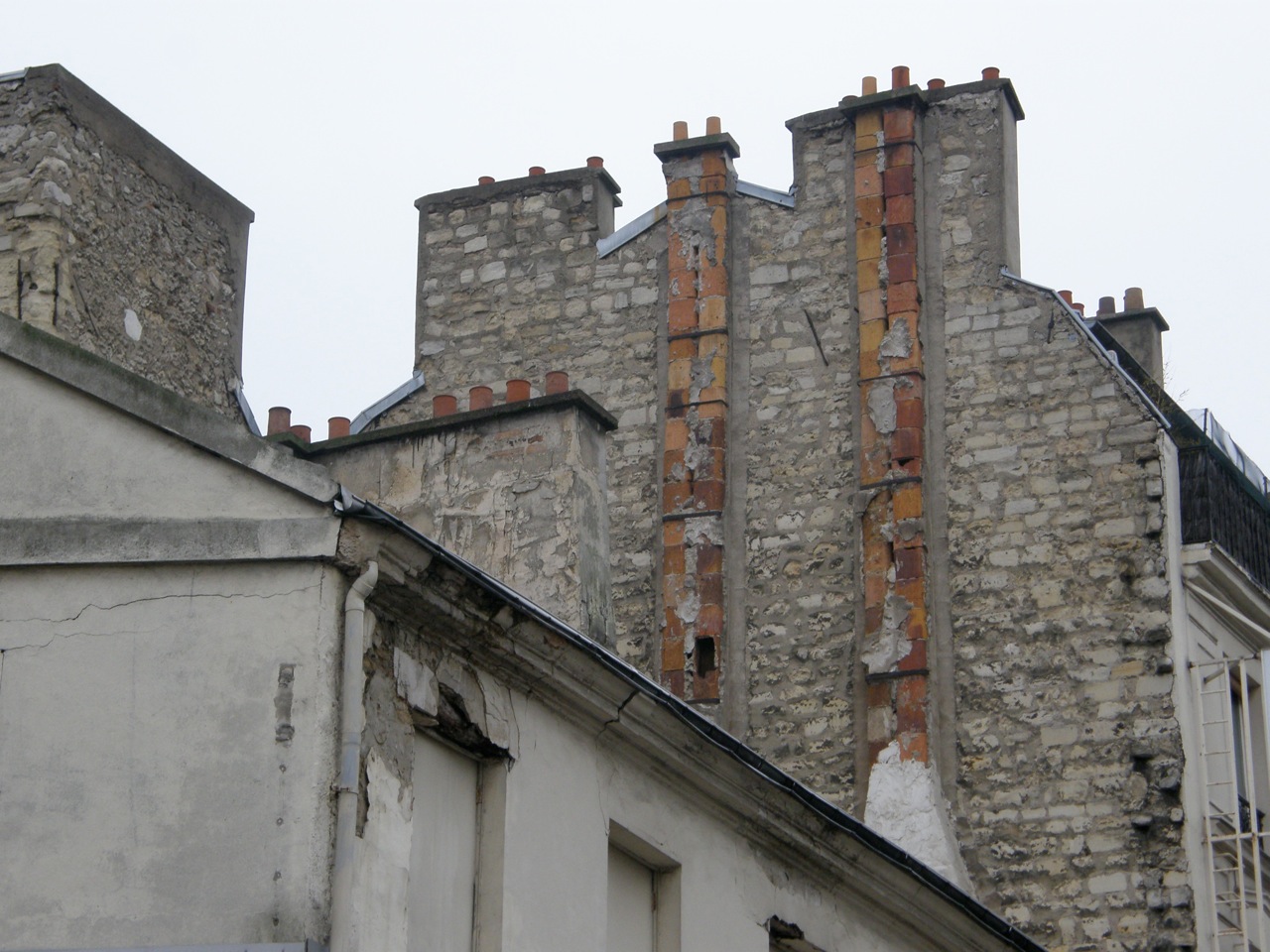
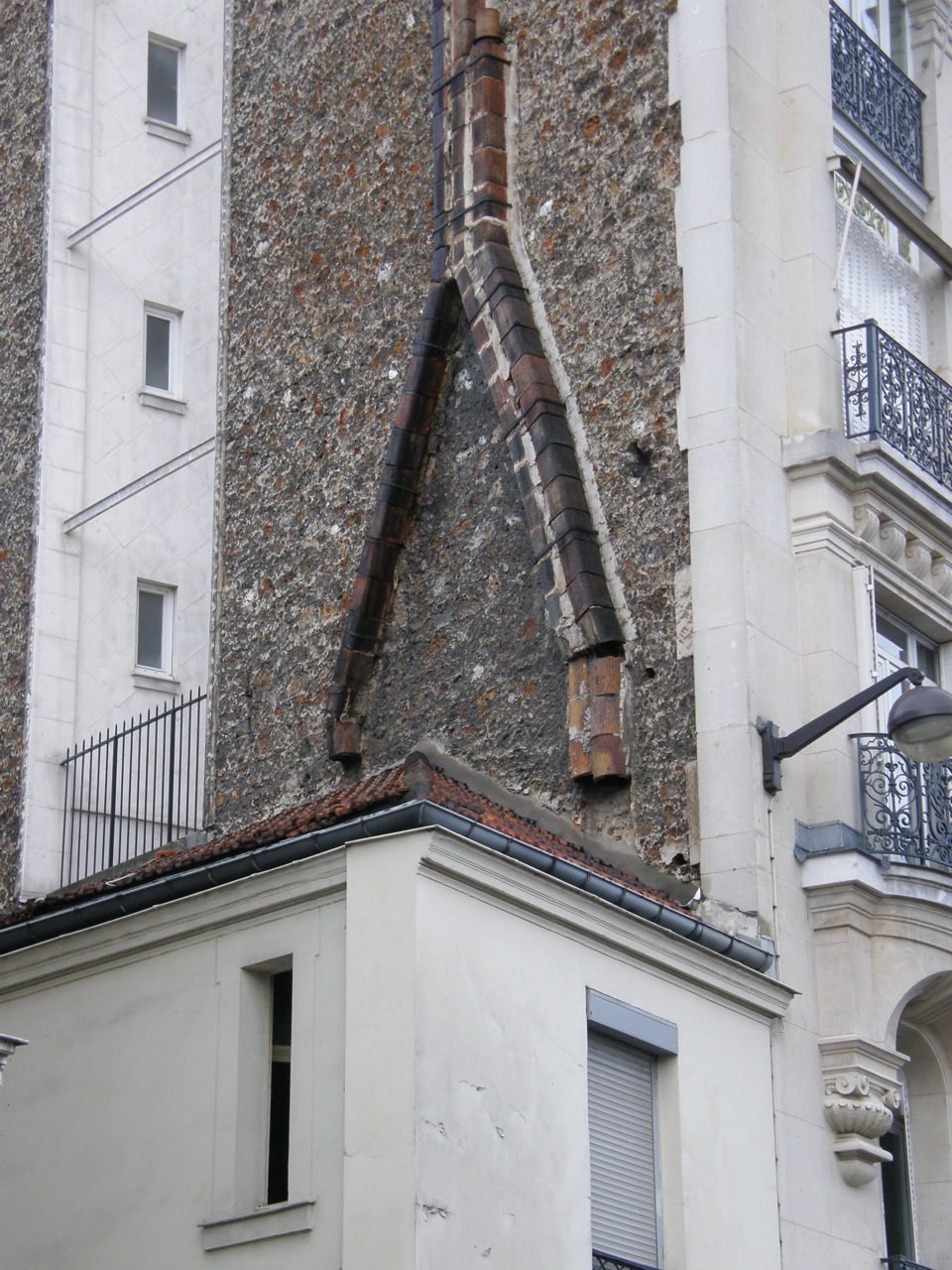
Here it is not just the chimney that is undressed. The stone wall looks coarse and crudely made. This type of stonework is often called rubble stone and normally, once a building was finished, this type of wall would not be seen. It is a thick barrier intended to prevent the spread of fire. Most likely another building abutted this firewall. However, the other building has been taken down, exposing the coarse stonework and two sets of chimney flues.

Each set consists of two parallel flues made of fired clay tiles. Each set is topped by two chimney pots. The flues are exposed to the elements and broken in places. Clearly these are not working flues, but they show the path once taken by smoke from a fireplace. The chimneypots for which we see no flues are probably for working fireplaces, stoves, or boilers.

Once one knows what to look for, one finds that Paris is filled with exposed chimney tracks. In the photo below, at first glance it appears two exposed flues once converged into one and climbed to the roofline.
However, when the telephoto lens moves in more closely, one can see three flues, since there are at least two chimney flues merged into one near the front of the building. The building they once served is no more, but the tracks are there to tell—or at least hint at—the tale.
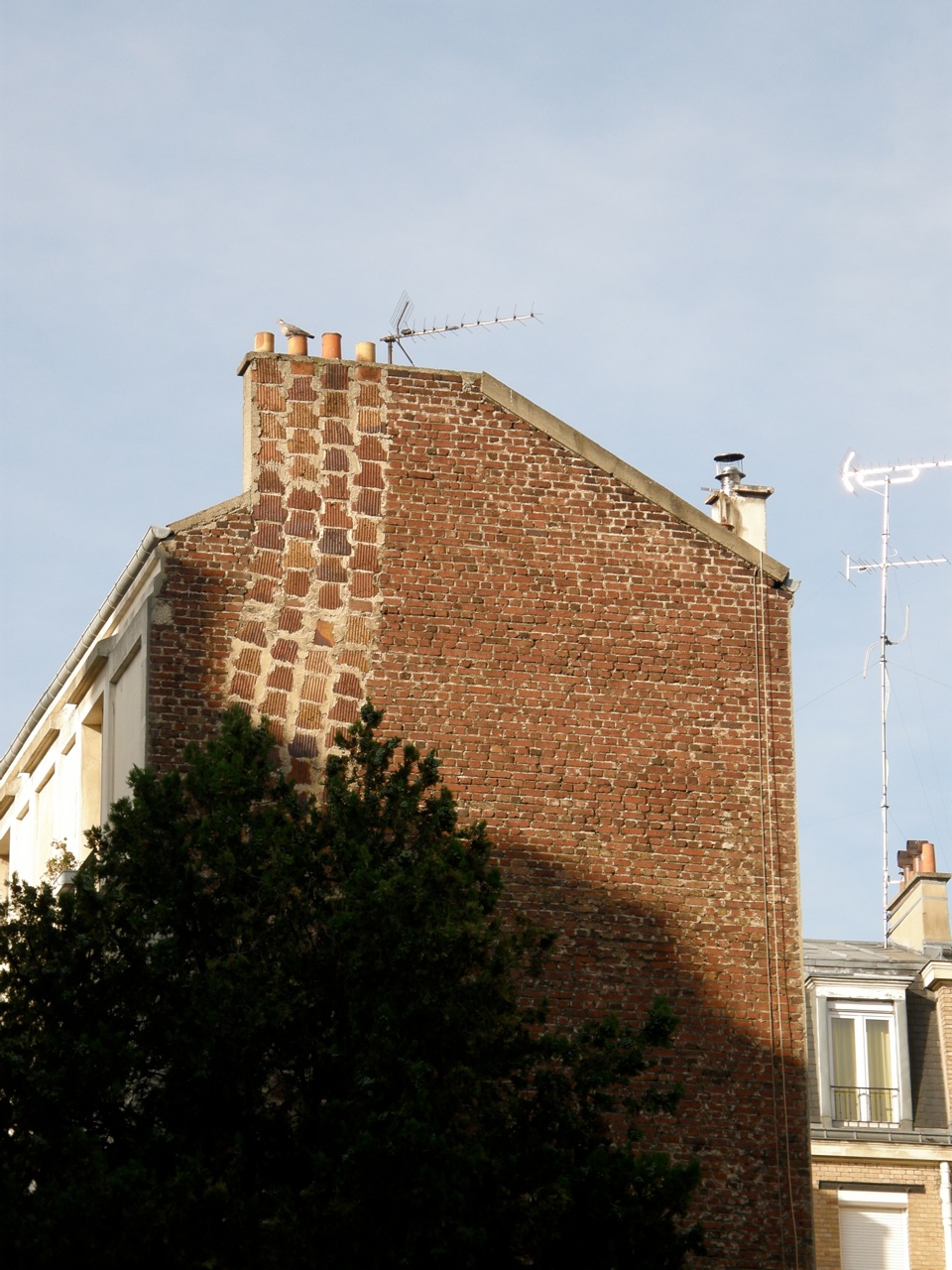
Working chimneys on end walls or firewalls need not look unpolished or unfinished. Here the flues are flush with an attractively finished brick wall. Moreover, it looks as if there are no gaps in the flues; they represent a complete system safely drawing smoke and fumes from at least four sources.
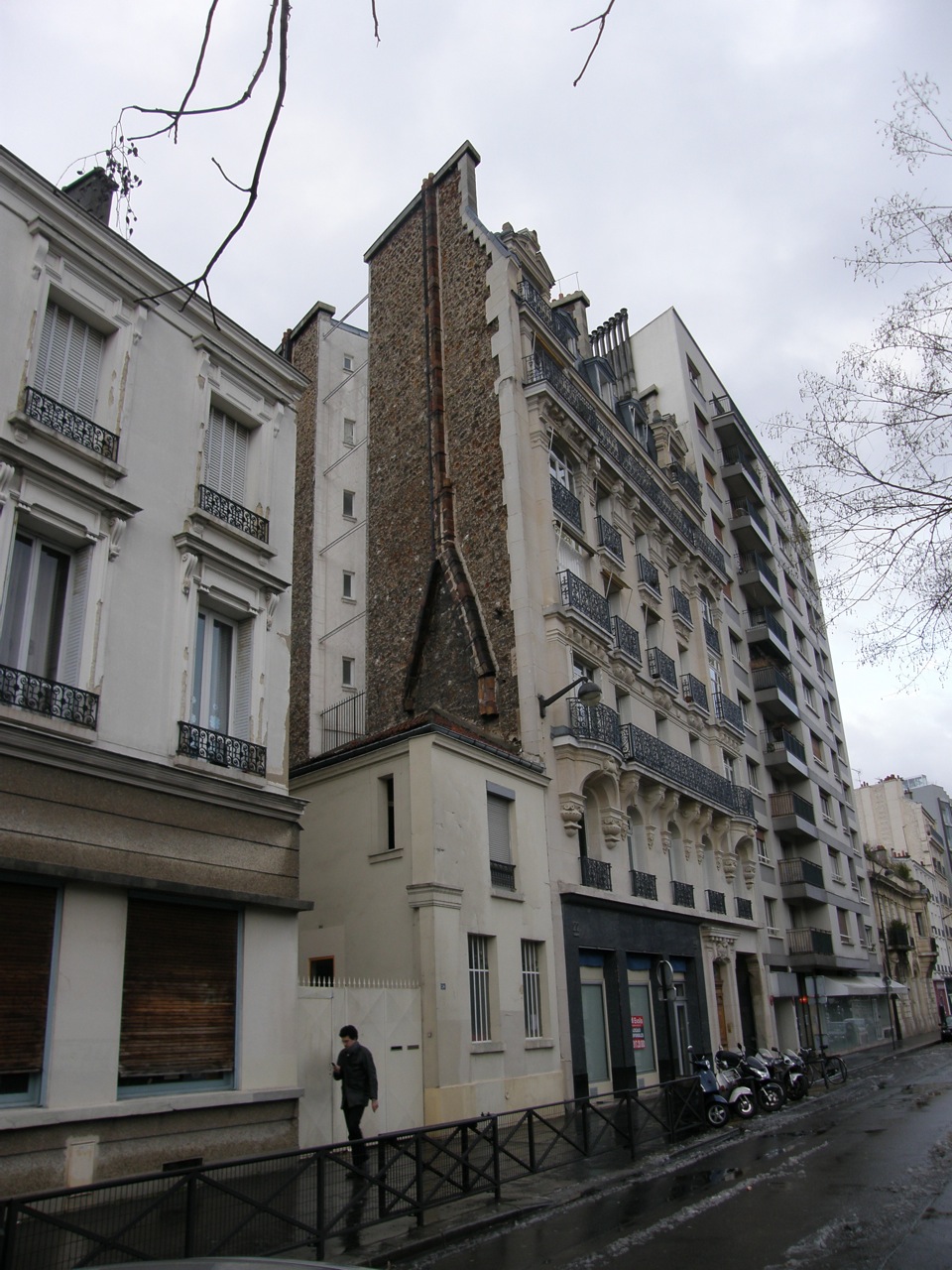
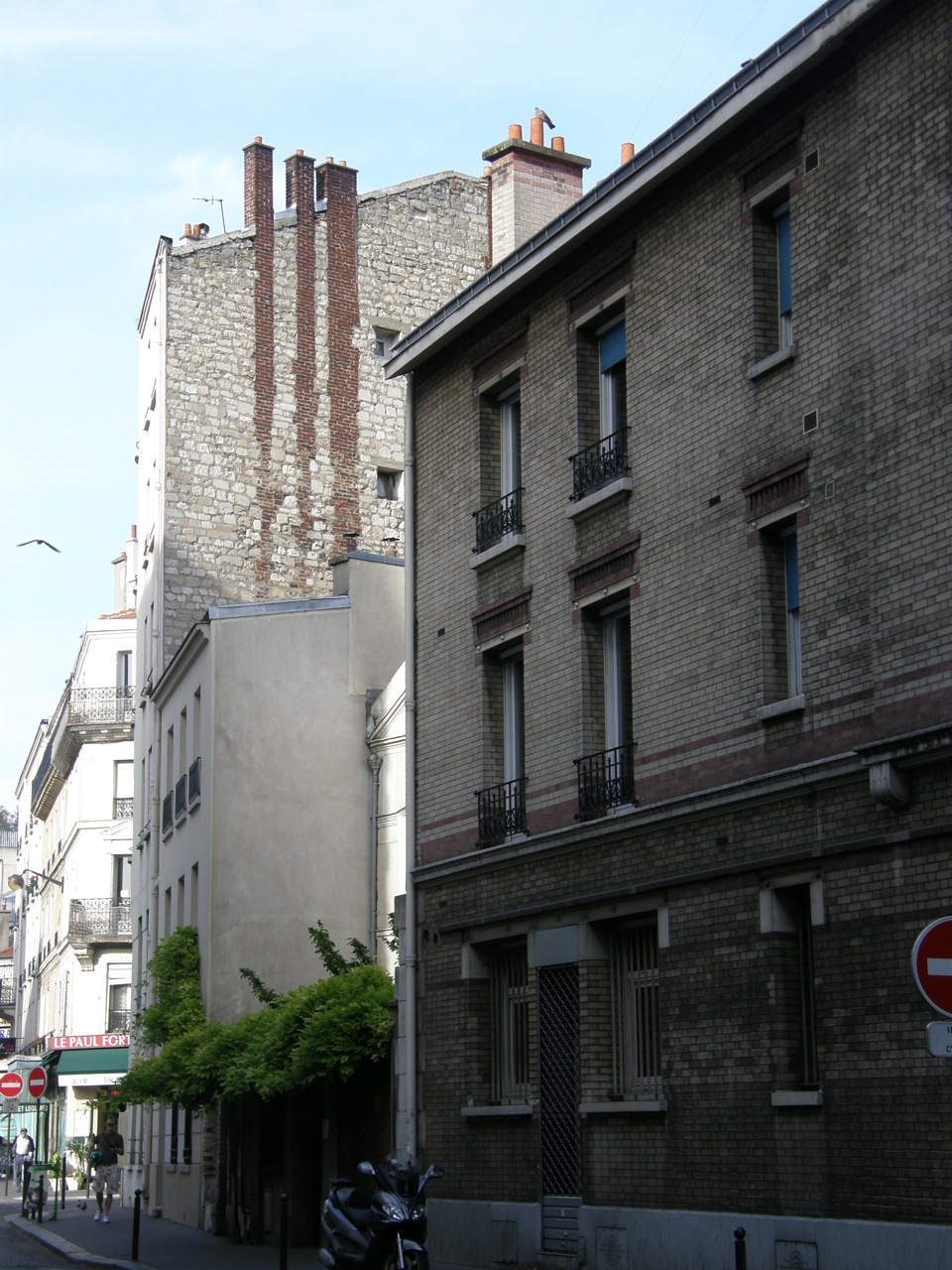
In the photo below, we see the brick cladding over three flues near the front of the building. This chimney has only one exposed side. Perhaps the lower building was originally intended to rise to the height of its taller attached neighbour, or perhaps the taller building was once lower, and a few storeys were added on later. However, no matter where they come from, chimneys must rise above the roof line of any attached building. That explains the sturdy chimney rising from the lower building to the top of the taller building. Chimneys must be taller than the adjacent buildings or downward-flowing winds will force the smoke back down the chimney—much to the chagrin of those near the fire, which then “draws poorly,” as they say.
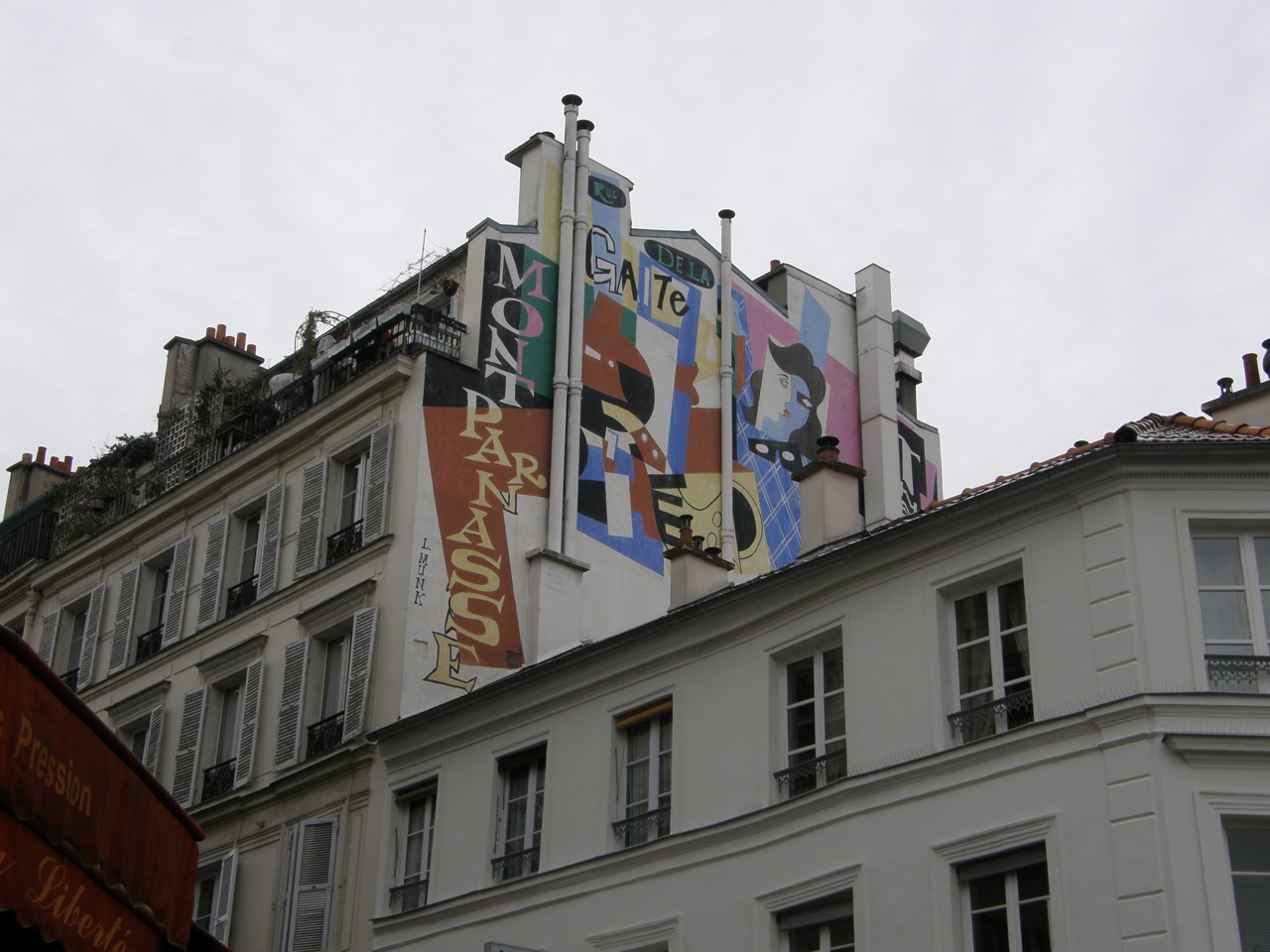
Below, we see a more modern version of how to get the chimney top from a lower building up to the height of a taller one.
Once one starts looking for chimney tracks, one sees interesting versions everywhere in Paris. This is what I found one morning as I stuck my head out of the skylight over the sleeping loft of a flat on the rue de Gergovie.
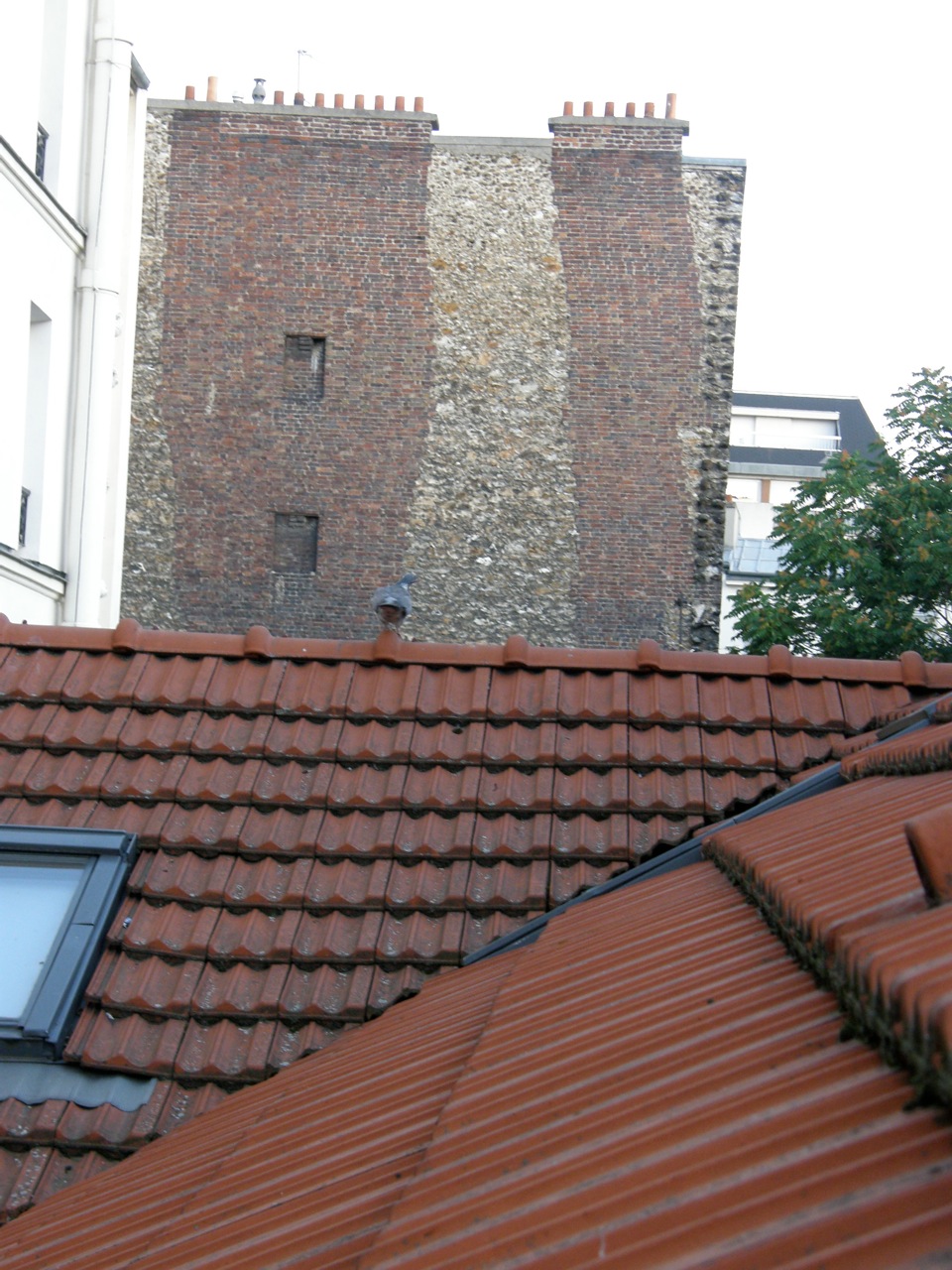
Or this one, not far away on the rue de la Sablière, where it is clear that a building has been taken down, leaving a wedge-shaped house that is too narrow even to call a flat-iron building.

Of all the chimney tracks I have photographed, the next one is my favourite. I call it the “swamp creature.”

Doesn’t this weird shape suggest a B-movie monster climbing the side of the house? However you wish to imagine it, this too is a set of chimney tracks. And the pattern reveals its function when we know how to read it.

The coarse exposed stonework suggests an earlier wall. When we zoom in more closely, we can see some important details.
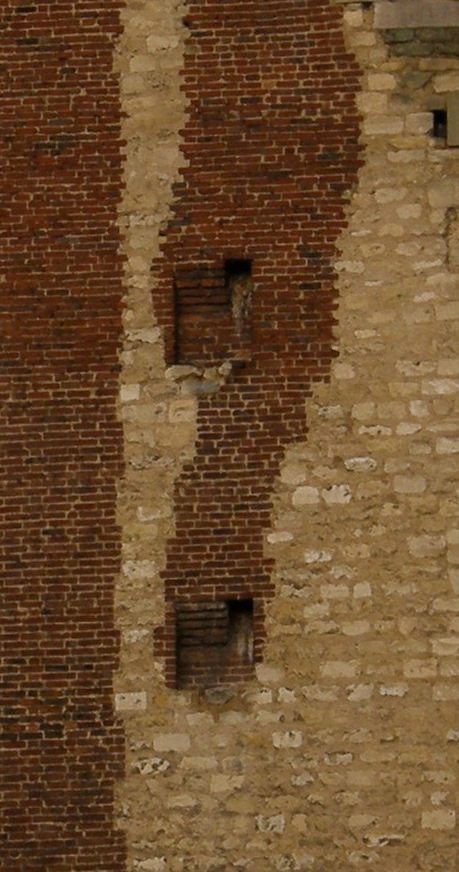
Note the two openings, each of which marks the point at which a chimney flue started its upwards journey to a chimneypot. While the brick hiding the flues and the stonework are flush with the rest of the wall, there are recesses going in further; we can see how the brickwork is stepped in. Beside these insets, we see openings where smoke could go up, or where the brushes of the chimney sweep could be drawn up and down to dislodge the collected soot, lest the flues and chimney become plugged.

And what is so bad about a plugged chimney? Émile Zola can’t talk to us about that subject. He died prematurely from carbon monoxide poisoning resulting from a blocked chimney in his Paris apartment. Some say it was an accident. Others say the chimney was blocked intentionally, a revenge murder for his leading role in exposing the institutional prejudices behind the Dreyfus affair that led to the exoneration of a wronged man. Zola too was deeply wronged for his courage and years later, he died from a blocked chimney. Murder? Negligence? Opinion is divided. But whatever you choose, don’t overlook the importance of chimney flues. Admire the chimney tops and scrutinize the flues.

Text and photographs by Norman Ball.

Posted in Paris history, Paris streets | Tagged , , , , , , , | 6 Comments

One thing leads to another

We both like to listen to Web radio while we work. We were particularly pleased to discover that Radio Classique, which we listen to in Paris (at call number 101.1) is available on the Internet. (Go to the site, click on “En direct” and then choose “Haut débit” or “Bas débit” and it will begin.) The music is enjoyable and you can practise your French comprehension by listening to the news broadcasts or the occasional interview.

We also have Apple computers, which offer umpteen different music streams from the radio available through iTunes. The other day, more or less at random, I chose AAA Classic, which makes up in its imaginative choice of music what it lacks in its pedestrian choice of name. It is a French station, and every so often I had to stop what I was doing to look at the little window that identified the music being played.

The first time, it turned out to be a piece called “Crime aux Champs-Elysées” by someone called Georges Delerue – a jazzy little number straight from a film noir. Later that day, I heard a quaint little accordion tune on the same channel. This one was called “Pissenlits par la Racine” and it was by the same fellow. Georges Delerue. Hm.

First of all, what did the song title mean? Le Petit Robert dictionary came to the rescue. I knew that pissenlits were dandelions, but I didn’t know that “manger les pissenlits par la racine” (to eat dandelion salad by the roots) is a colourful expression meaning to be dead and buried. The movie is a black comedy featuring a dead body.

Then I needed to find out more about the composer Delerue. Why had I never heard of him? Eventually I found an entire website devoted to the man and his music.

He was born in 1925 in the town of Roubaix, way in the north of France, close to the border with Belgium. His father was a factory foreman and he went to work in the factory in 1940 when he was in his mid teens, but studied music part-time. It took some time for his music teachers to realize that he had talent. In fact, at one point he was actively discouraged from continuing, and it was only the sudden death of an unsympathetic teacher that made it possible for him to carry on.

When the war ended in 1945, he went to Paris to study at the Conservatoire, and in time became amazingly prolific. He poured out works for ballet and theatre, concert pieces, musical scores for about 350 films, even music for commercials. He worked with François Truffaut (Jules et Jim, Shoot the Piano Player, Le Dernier Métro), Jean-Luc Godard (Le Mépris), and many other well-known French directors. Then he went to Hollywood.

At that point, I spotted something that sent my thoughts off in a new direction. In 1979 Delerue had won an Academy Award for the film A Little Romance directed by George Roy Hill. Goodness me. That took me back.

I remember the film well. It starred a seventysomething Laurence Olivier, a 13-year-old Diane Lane, and a young French boy with the extraordinary name of Thelonious Bernard. You can see the trailer on YouTube.

Oh, I loved that film. It was charming and touching and summed up all the romance of Paris for me – even though the most romantic part of all takes place in Venice. Two precociously bright teenagers fall in love and run away together, helped by a kindly if unreliable old gent (Olivier), while evading disapproving parents and others who don’t fully understand their intelligence and intellectual interests. She is the daughter of wealthy Americans; he comes from a working-class Paris suburb.

I found the film so delightful that when I went to France as a student, I hunted up a copy of the book on which the film was based: e = mc2, mon amour by Patrick Cauvin. I still have it.

The book was important to me, because it was the first one I read in French that was not something on a course syllabus, and because it was written from the point of view of the two teenagers, and the French is very colloquial. The very first line in the book is: “L’année scolaire se tire des pattes.” That sent me scurrying to Le Petit Robert. “Se tirer des pattes de quelqu’un” means to get out of someone’s clutches, so it’s a way of saying the school year is ending.

It took me weeks to get through that book. I had to look up something in every paragraph, if not every sentence. But I enjoyed it so much I that when I finished it, I bought another by Patrick Cauvin (Huit jours en été) and repeated the whole process.

Cauvin (whose real name was Claude Klotz) was as prolific as Delerue in his way, and churned out dozens of novels under both names. He wrote hard-boiled, violent thrillers as Klotz and tender romances as Cauvin. When he wasn’t teaching French in a lycée, that is. You can see a list of his books here. He even wrote a sequel to e = mc2, mon amour called Pythagore, je t’adore. At the time, though, I knew none of this.

Having rediscovered the movie, I wondered what had happened to that delightful young man called Thelonious Bernard from A Little Romance. Diane Lane went on to make many more films; what did he do?

Although he pretty much steals the film, he made one more movie, then decided that the life of an actor was not for him. He went back to his studies and became a dentist. According to the Internet Movie Database, he lives in Nantes with his wife and family.

What a delightful ending to the story. Unlike those former child stars who try and often fail to stay in the limelight, he firmly closed the door and went back to private life. How very sensible and, in some ways, how very French. Good for him.

I cannot forget the last frame in the film. As the young American girl drives off with her parents, on their way to the airport and back to the States, he runs after the car. When another car pulls in front, he hops up and down to get a last glimpse of her. The film freezes on this image of him in mid-hop.

The music playing behind this scene is not that of Georges Delerue, but a quiet bit of Vivaldi. There is a lot of Vivaldi in the film. Despite Delerue’s Academy Award, all I remember is the Vivaldi.

Georges Delerue died of a heart attack in Los Angeles in 1992, at the age of 67. He had just finished recording the music for a Bruce Beresford film. Patrick Cauvin/Claude Klotz died in 2010, aged 77. I wonder if they met during the filming of A Little Romance. And if so, whether they found they had anything in common.

How odd to be remembering books I read years ago and movies I loved, all because of a piece of music I heard on AAA Classic. But that’s the way the memory – or at least my memory – tends to work. One thing always leads to another.

Text by Philippa Campsie

Posted in Paris film, Paris music | Tagged , , , , , , , , , , , , | 19 Comments

Seduced by the chimneypots of Paris

Many a seduction starts by looking through a window. The allure of chimneypots started to seduce me as I gazed through the generous windows of a rented flat on rue Charlemagne in the Marais.

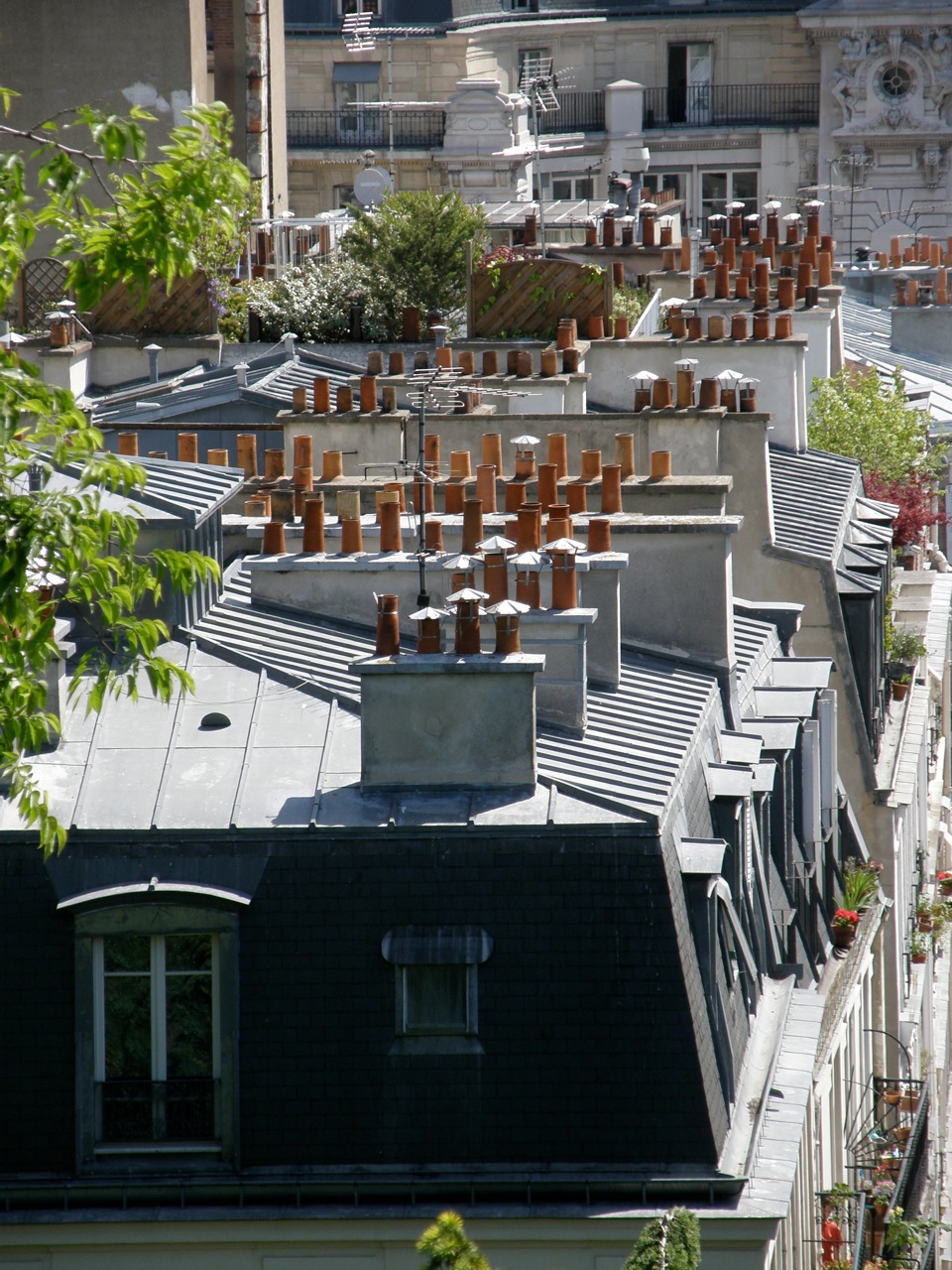
Okay, I liked les mitres de cheminée, but I could keep it under control. There was nothing wrong with one last look before going to bed. If I woke during the night, why not part the curtains for another look in the moonlight? And early in the day, morning coffee could wait for a few moments. Let’s be practical, the look of the sky held up by Paris chimneypots helped me see the weather for the coming day.

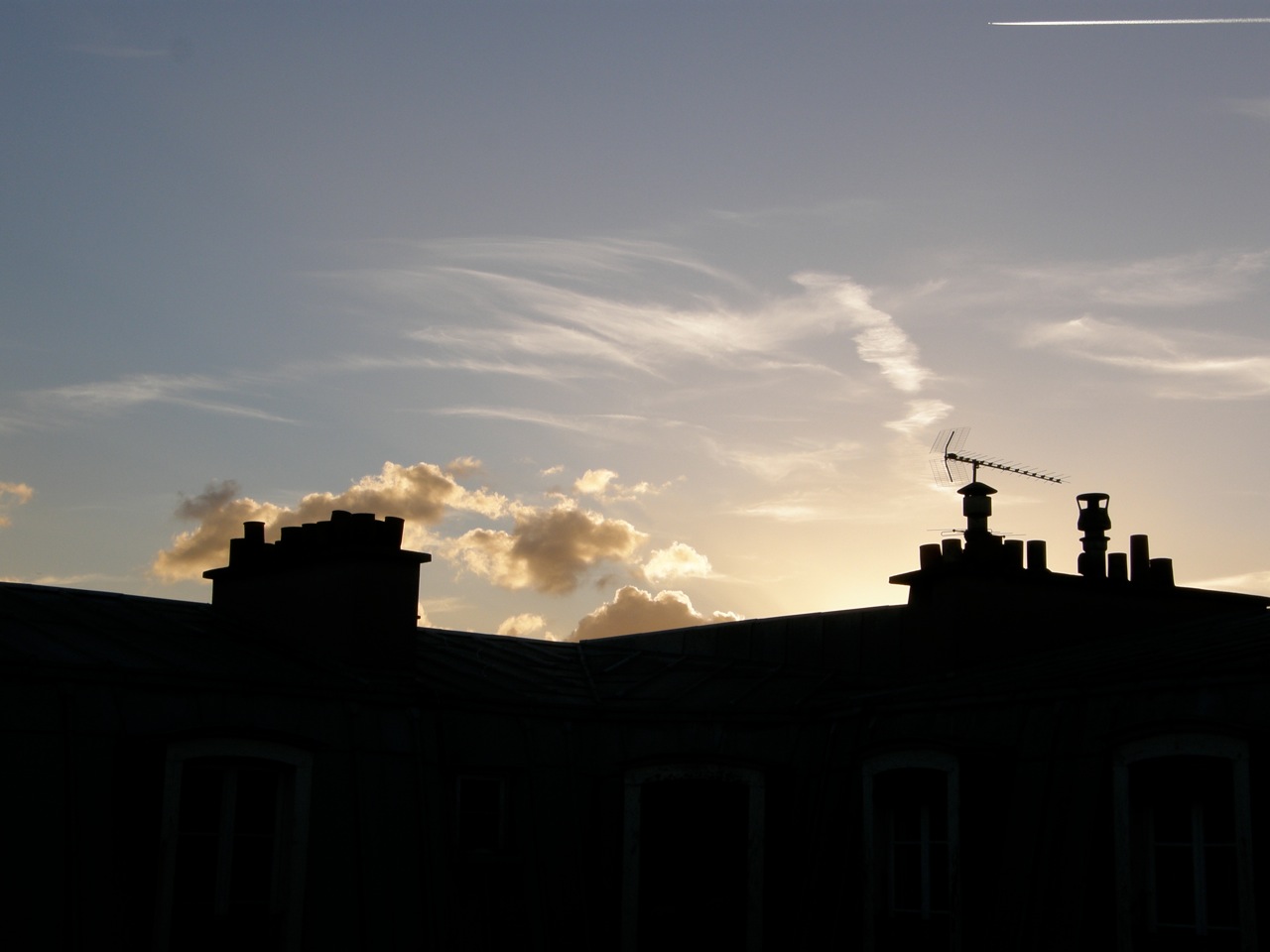
Soon I began to see the drama of the sky and weather simply as projections on and backdrops for chimneypots. I didn’t tell a lot of people about this; it was a private passion and pleasure, I guess.

Slowly, well actually rapidly, I began to question my interest in chimneypots. After all here I was Paris in all its glory, and I was thinking about chimneypots—well, lots of other things as well, such as in cars, motorcycles, galleries, old photographs, shops and museums—but chimneypots were right up there. So yes, I was normal, maybe a bit fringe, but still in the normal range.

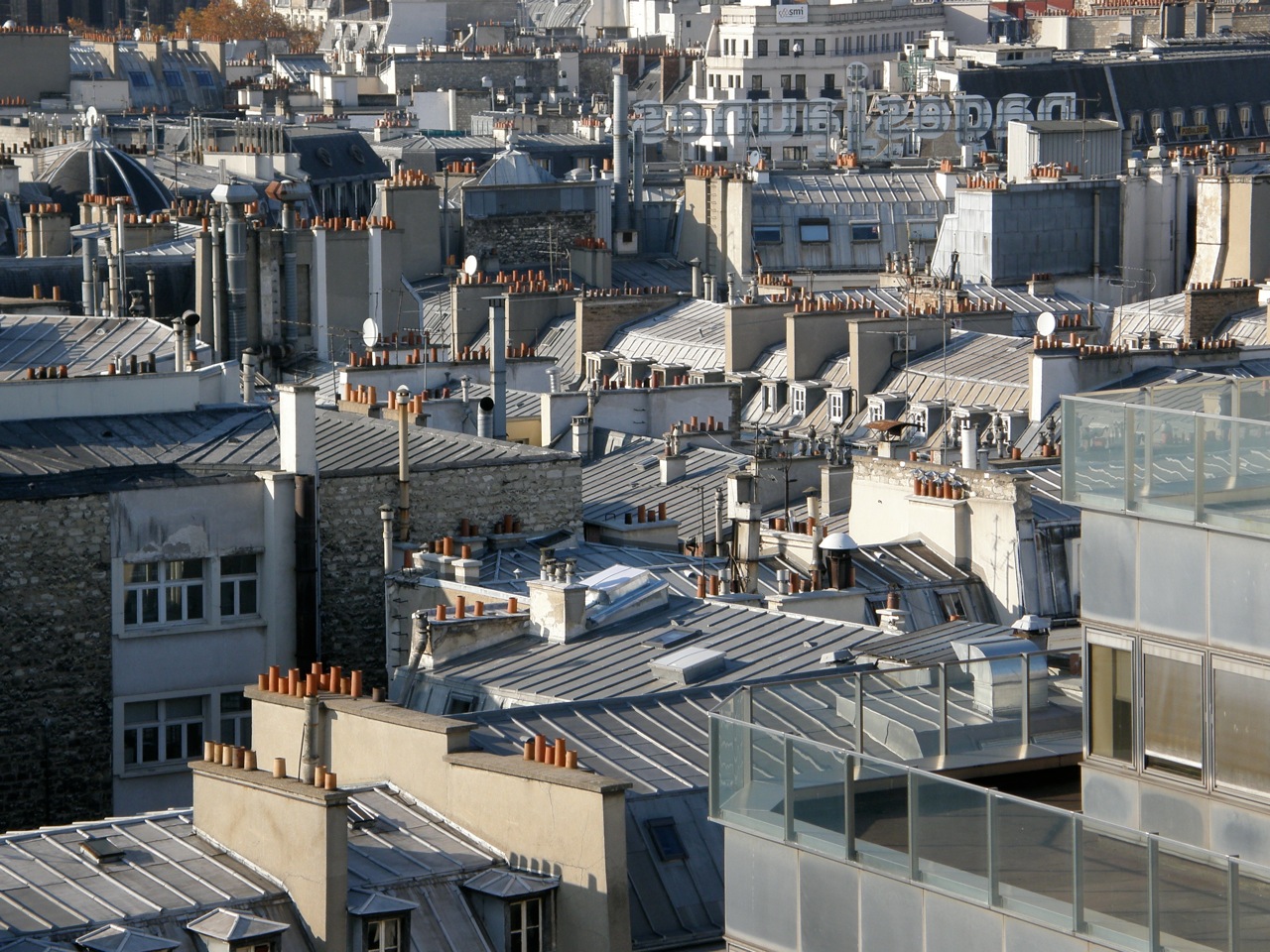
So what would a normal visitor do on a fine November day? Go shopping. But shopping can be hard work, so we took time for lunch on the rooftop of Printemps. And what would be more normal than to take a few photos of the view? After all, this is Paris.

But look. There they were. I had tried to stop looking for them. Now they were looking for me. Was I being stalked by chimneypots? Maybe I just had my eyes open, and slowly I was discovering one of the ubiquitous, albeit hidden-in-plain-sight wonders of Paris: a glorious profusion of chimneypots. Suddenly I had a whole new view of Paris. And I could look more carefully.

[Philippa wants me to add for those who are interested in other things that appear on rooftops that the backwards sign in the distance advertises Les Pages Jaunes (Yellow Pages); it sits atop a building on the Place Gabriel Péri near the Gare St-Lazare.]

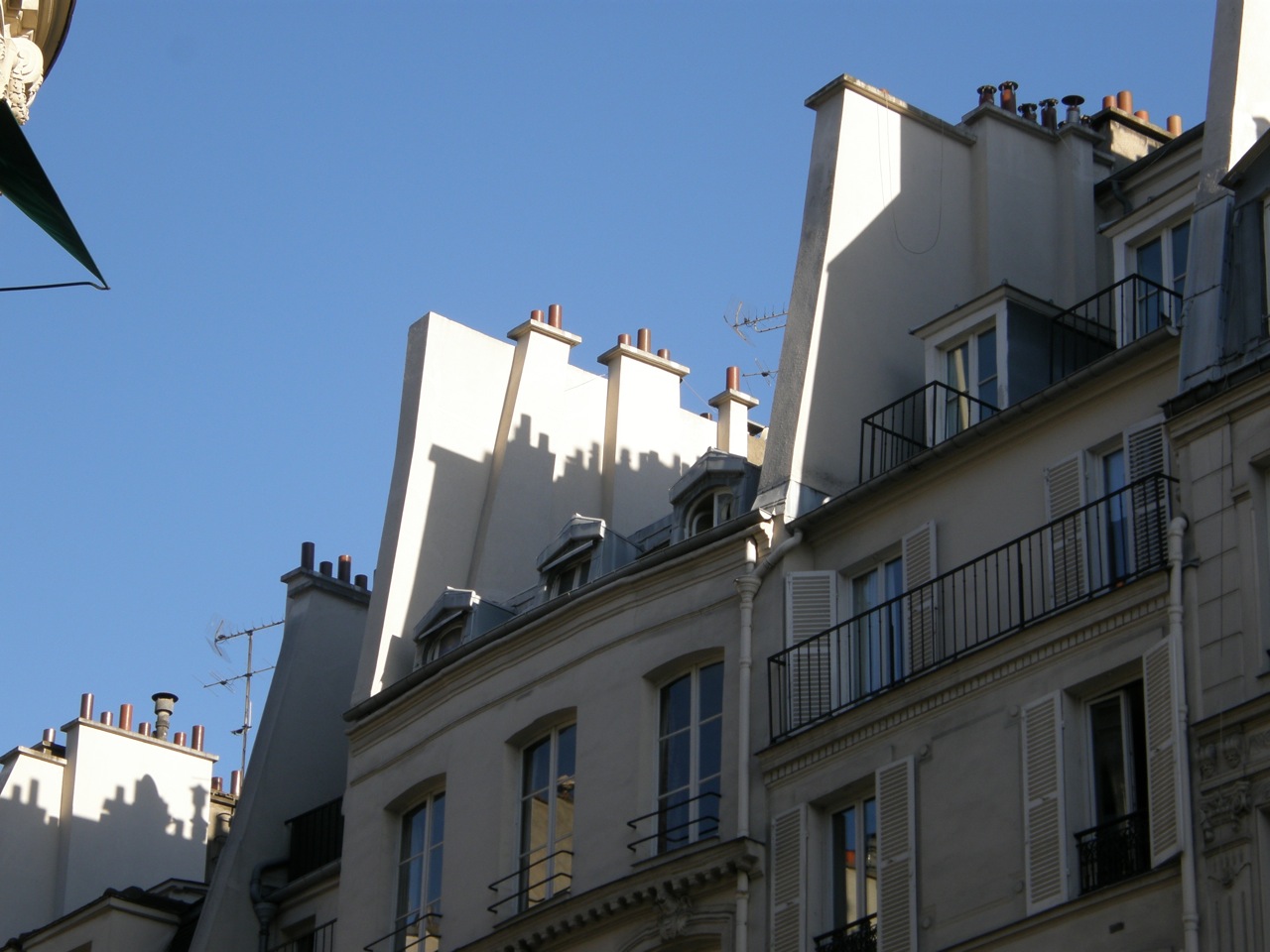
I had long been intrigued by the geometric purity and visual strength of some of the firewalls separating parts of the buildings of Paris. Now, with new eyes, I saw that as the sun moved across Paris, the firewalls of buildings became screens for chimneypot shadow plays.

The chance discovery of a postcard showing the now-defunct department store Dufayel eventually led three of us to scramble about Montmartre trying to get the matching shot. We succeeded and wrote about our explorations in an earlier blog. But I also found something else. There patiently waiting for me was another wonderful collection of chimneypots.

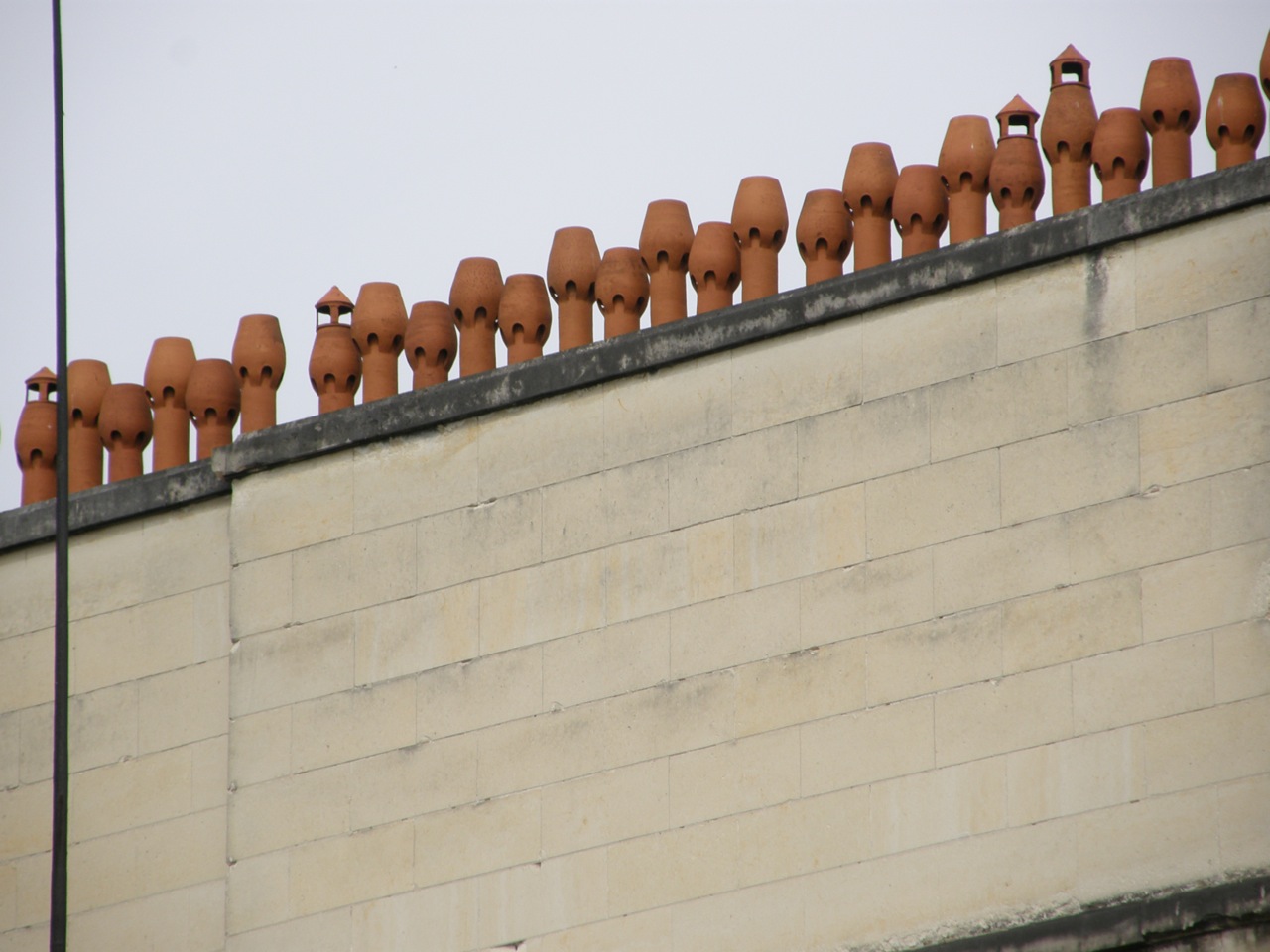
As you might imagine, there are no Paris days for me without chimneypots. I don’t search them out, we just find each other. As we walked through the 6th arrondissement to visit our friend Karen in what turned out to be the most glamorous Paris apartment I have ever been in, they were lined up with military precision and dressed to impress an admirer.

On closer examination, they looked sculptural, like an art installation or a Paris version of those clay funerary soldiers I once saw in China.

Karen, a delightful host, knew the view from the balcony was wonderful, but probably little suspected the fascination her neighbouring chimneypots would hold for one guest.

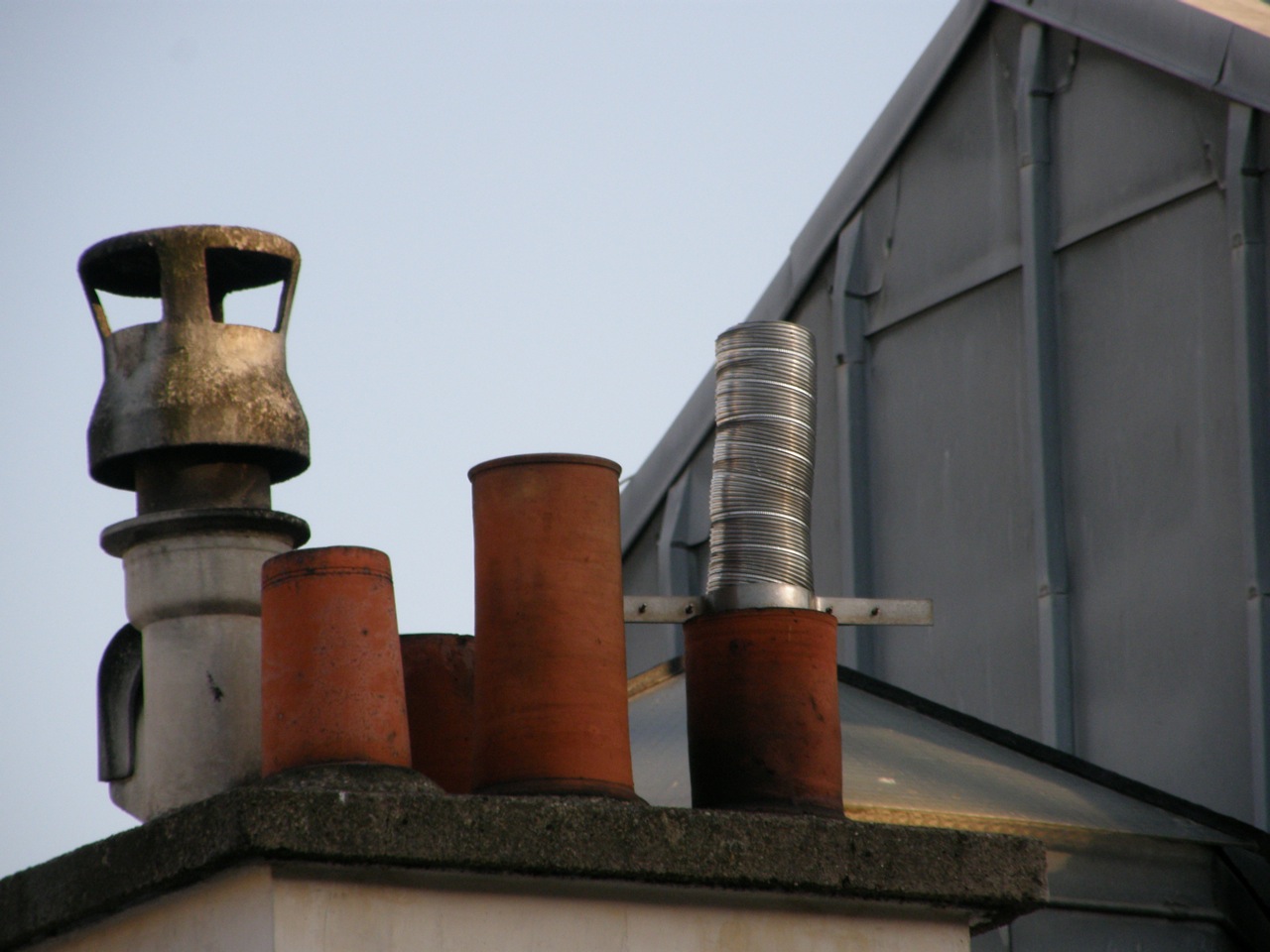
In the next shot, we can see a wonderful bit of bricolage or making-do. I love how the chimney has been reinforced with two metal bands. The clay chimneypot on the right has been given a covering to keep water and snow out. And what do we have on the left and the centre? Flexible stainless steel liners, which probably indicate that below lurk new higher-efficiency appliances of some sort. Above all, it is about how one keeps things going in a historic city as time passes. This is one of the things I find so intriguing about Paris.

Another view from Karen’s balcony gives the same message.

And as we bid adieu to Karen and walked down the stairs to the street, we were more floating than walking: a considerable quantity of bubbly and an equal amount of good company. And the chimneypots on the way to and then from Karen’s balcony helped me realize that I could keep on finding bits of my Paris in all kinds of unsuspected places.

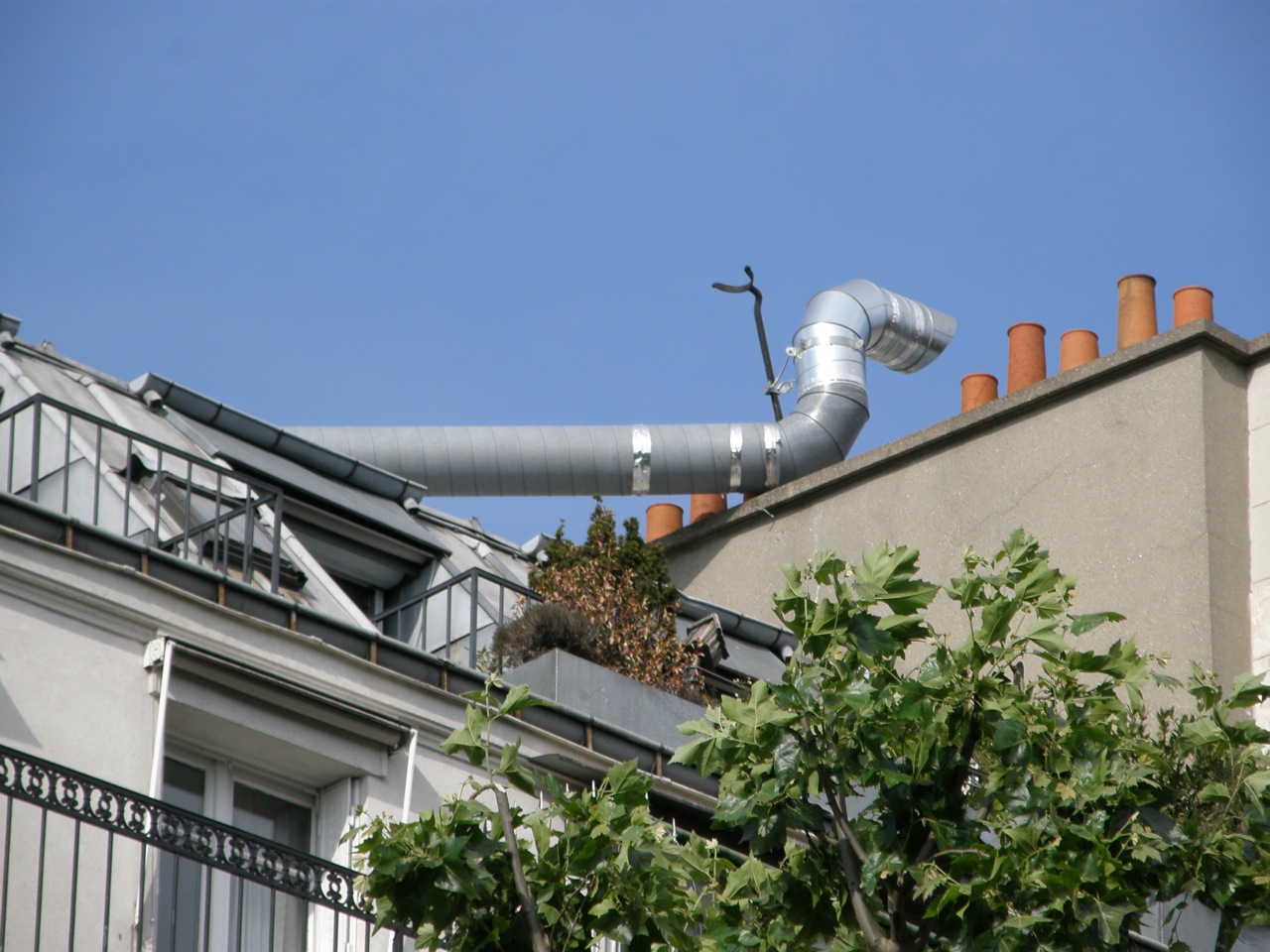
About a week later, I thought of the view from Karen’s balcony and the modernizations of an older chimney system. I had looked skyward about seven storeys and with a strong telephoto lens snapped something that might have been from a B horror movie about an outer-space invader that ate chimneypots. Actually, it’s just a very imaginative exhaust system for a restaurant. Not glamorous, but interesting.

Yes, chimneypots are part of my Paris. How could one fall in love with the city without falling in love with skyline? I have taken many photos where I have tried to capture reflections. Chimneypots are often there.

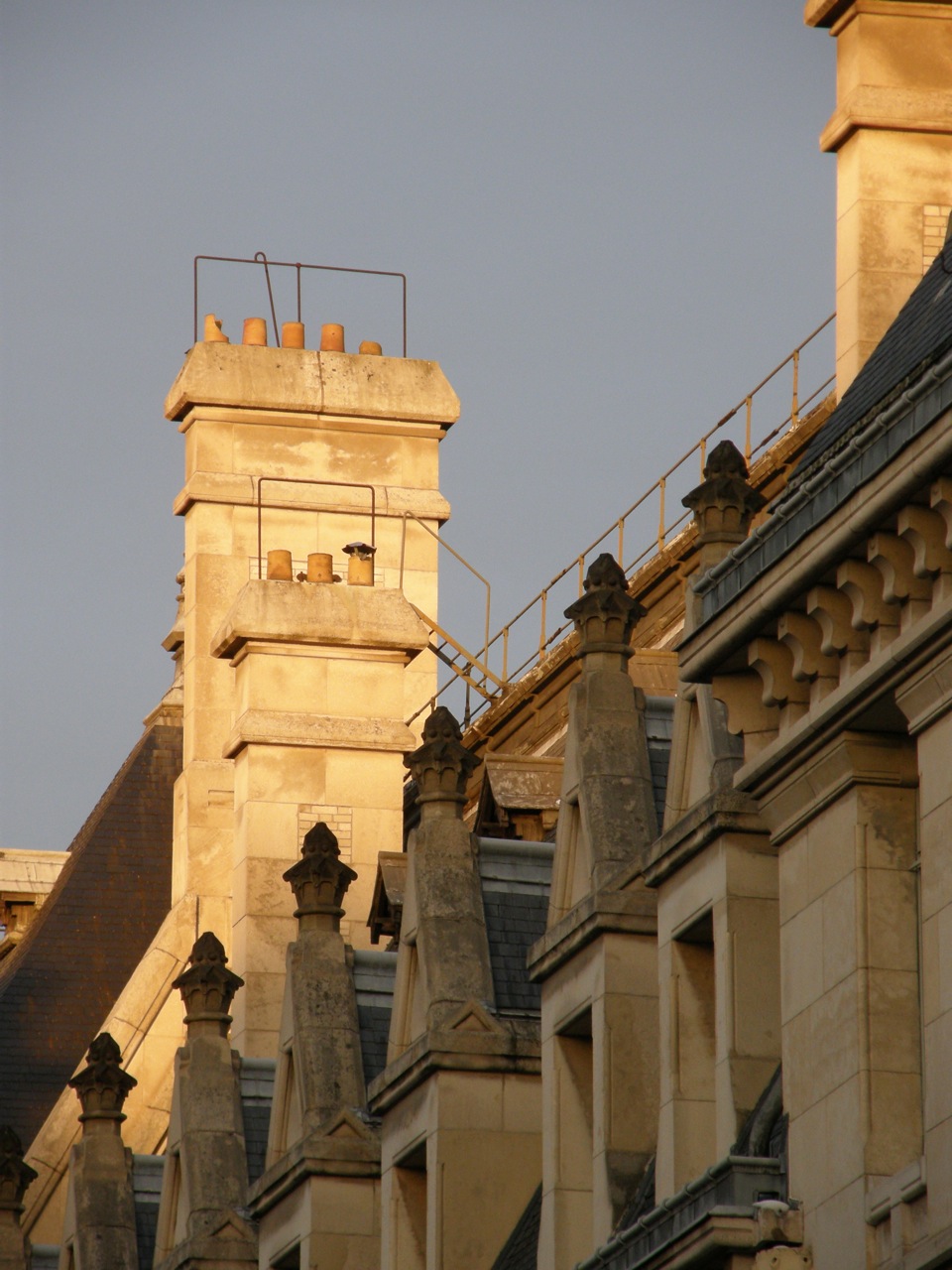
I think of the soft Parisian stone that turns into the warmest yellow in sunlight. How many see the chimneypots that belong with the glorious carvings?

I also think of a lovely afternoon near the Place des Vosges and the raven that would not stay still. Finally it did. Only later did I wonder if this should be called “Raven on lamp standard” or “Chimneypots with raven in foreground.”

Several times we have stayed in a flat in the 14th. I loved to peer through the tiny spaces into a minuscule courtyard. Surely this view existed solely to pay homage to the chimneypots of Paris. Near that apartment we saw signs advertising “ramonage.” We had to look that one up. But of course! It meant chimneysweeping.

In a future blog, I will write about another aspect of chimneys in Paris.

Text and photographs by Norman Ball

We’ve been asked by our friend Laurie at the Paris Blog to announce the opening of an exhibit of photography by Raul Vega. If you are in Paris, have a look and let us know what you think. We wish we could be there ourselves.

Posted in Paris streets | Tagged , , , , , , , , , | 8 Comments

The genius of the opera-ballet

On July 10, 2011, the world of dance lost Roland Petit, a brilliant and original French choreographer. His best-known works were not the pretty-pretty ballets of fairies and swans in white fluffy tutus, but human dramas of passion, violence, elation, despair, and sex.

If you want to see all five elements in one short sequence, just watch the six-minute YouTube video of Le Jeune Homme et la Mort (Death and the Young Man), based on a story by Jean Cocteau using music by J.S. Bach. The most accessible version (though not necessarily the best) is the opening scene of the film White Nights with Mikhail Baryishnikov.* Take a look.

I think of Roland Petit whenever I catch sight of the Paris Opéra, because the first performance I ever attended in that building was one of his ballets. Appropriately enough, it was his take on Le fantôme de l’Opéra. This was well before Andrew Lloyd Webber got his hands on Gaston Leroux’s story and turned it into a cliché. Roland Petit’s version, with music by Marcel Landowski, was darker and spookier, with no trace of sentimentality, and the staging was extraordinary.

I remember so many details, even after all these years. And I still have the programme.

The story unfolds in twelve scenes, for which the set designer recreated parts of the building on stage – from the domed roof with its statues and the grand foyer with its staircases to the backstage areas (coulisses) and the underground lake (la cuve).

For the scene in which the chandelier crashes into the orchestra pit in the middle of a performance, the stage was recreated back to front. That is, the back of the real stage showed the reverse side of a huge curtain, with an audience dimly suggested beyond it and a chandelier visible near the ceiling. The dancers performed facing this curtain, with their backs to the real audience. As the chandelier started to fall, the curtain swung shut, so one heard only the crash as it landed and saw the pandemonium among the frightened dancers on stage as they tried to figure out what had just happened.

In another scene, the Fantôme vanishes into a mirror. The mirror on stage had been created with vertical strips of reflective mylar in a huge gilt frame. The Fantôme simply threw himself towards the frame and disappeared between the strips, which shimmered briefly, and then were still.

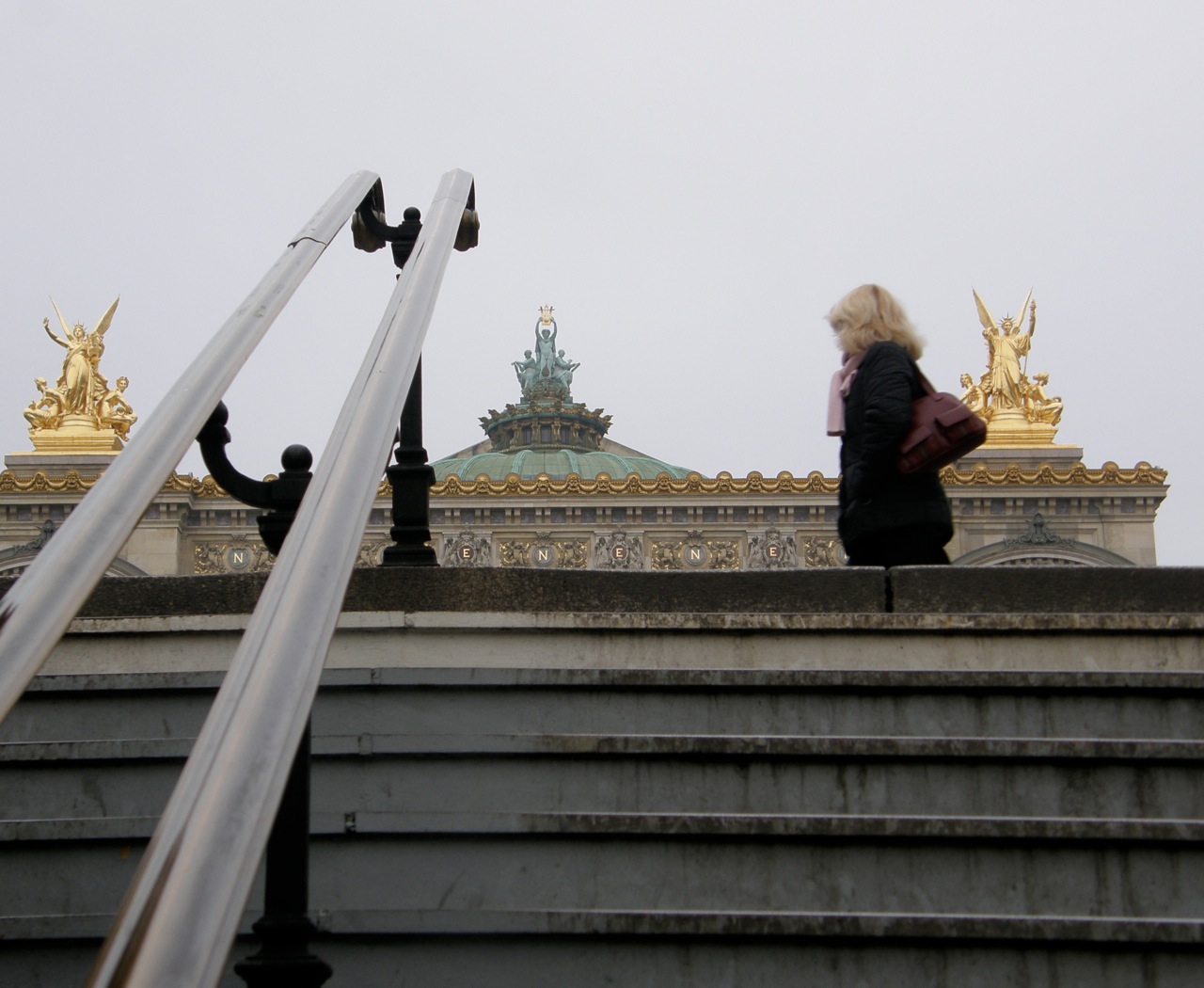
The Paris Opéra was the building in which Roland Petit trained as a young boy (he started ballet school there at the age of nine), and he must have known it at least as well as Gaston Leroux did. It is beautiful and creepy, full of grand public spaces and obscure backstage passages, gleaming gold statues and dusty disused corners, exciting and frightening and bewildering all at the same time. Norman’s photo below captures the view of the building from the roof of the Galeries Lafayette, rather than the customary tourist view from the front.

The programme I saved from the Fantôme performance devotes an entire page to the Opéra’s underground lake, which is the site of a crucial scene in the ballet (but without the corny gondola used in the Andrew Lloyd Webber version). This is a lake of ink, a lake of lead, a threatening space from which intruders do not return. There are rats. Big ones.

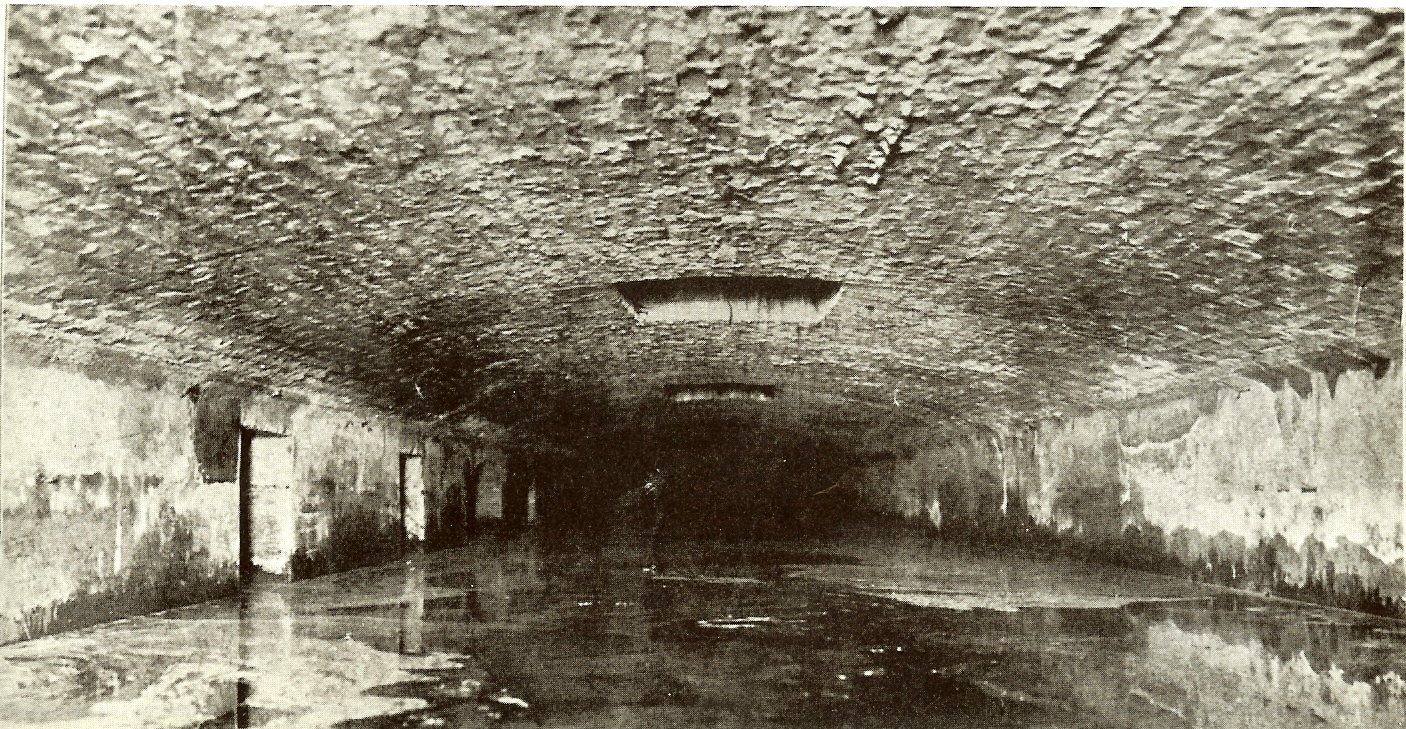
The programme explains that the purpose of the original lake was to stabilize the building. Just as one talks of fighting fire with fire, the builders of the Opéra fought water with water. The ground was sodden, and the water table too high. The only way to prevent water rushing into the foundations was to incorporate water into the foundations from the start, in the form of an artificial lake or reservoir (the French term la cuve means a tank).

In 1862, when construction began on the Opéra building, after the start of excavations, the ground had to be pumped out. It took a year. Eight pumps removed a quantity of water that (according to a contemporary writer quoted in the programme) would have filled an area the size of the courtyard of the Louvre to a depth one and a half times the height of Notre Dame. Then a foundation was built with concrete and cement, bricks and bitumen. Finally, the whole thing was flooded, so that every cranny was filled and more water could not enter. And on this watery foundation, the Opéra Garnier was built. Apparently Paris firemen now use the cuve for exercises in underwater rescue.

Other remarkable spaces under this massive building include stables for the horses that were once used in spectacular tableaux on stage, air raid shelters from the war, and vast elevators for raising and lowering pieces of scenery. The stage machinery is massive – in fact, the stage itself is massive. Another performance I attended there was an end-of-term concert by the Paris Opera “rats” (the ballet students), at the end of which, the layers of backdrops were raised one by one until the entire stage was visible all the way to the loading doors at the back. The space revealed was vast.

It remains an extraordinary place and an extraordinary ballet company. If you have not seen the 2009 Frederick Wiseman documentary, La Danse: Le ballet de l’Opéra de Paris, you have a treat in store for you. The photograph below captures the first view that most of us have of the building, as we emerge from the Metro.

Roland Petit spent many years working in that building with its ballet company, although he is also known as the founder of the Ballet National de Marseille and its director for 26 years. Over the course of his career, he created more than 150 ballets, of which perhaps Carmen (1949) is the best known. He choreographed it with Zizi Jeanmaire in mind – the vivacious ballerina who became his wife and muse. Click here to see the two of them in the love scene from Carmen that was considered shocking at the time.

His choreography for Notre Dame de Paris (The Hunchback of Notre Dame), with costumes by Yves St-Laurent, is another of his celebrated achievements. Petit even worked in Hollywood for a while. At various times, he collaborated with a range of performers from Margot Fonteyn to Serge Gainsbourg to Fred Astaire to Pink Floyd. Nothing was off-limits to him, it seems.

As for me, I will always associate him with the Paris Opéra and my first visit there.

Text by Philippa Campsie, original photographs by Norman Ball. Photograph of Roland Petit by F. Levieux.
*This version was modified from the 1946 original, and rather downplays the part of the woman. It is worth comparing with the version in which the woman’s part is played by Zizi Jeanmaire with Rudolf Nureyev as the young man.

Posted in Paris dance, Paris music | Tagged , , , , , , , , , , , , , | 4 Comments

Beauty and the bridge

I love bridges and cannot imagine Paris without them. In Paris I gaze at them, linger on them, and take photographs. At home I remember them fondly. But of them all is there one that I love the most? Oh yes. And although I am a historian of technology, my favourite is modern, very modern: la passerelle de Solférino (the Solférino pedestrian bridge, recently renamed the Léopold Sédar Senghor bridge), which opened in 1999.

This superb design by engineer-architect Marc Mimram (born in Paris in 1955) links the Jardin des Tuileries to the Musée d’Orsay. It is fitting that the bridge upon which pedestrians walk to and from a former tileworks (now a garden) and a former train station (now a museum) should itself be a superb work of industrial and engineering art. For this bridge Marc Mimram was awarded the coveted architectural award, Equerre d’Argent.

Mimram’s is the third bridge at the site. The first opened in 1861 to celebrate Napoleon III’s 1858 victory over the Austrians at the Battle of Solférino. It was a handsome three-arch cast-iron bridge, which carried vehicles and survived the ravages of the great flood of 1910.

But in a busy commercial river at a relatively narrow spot, the abutments for the bridge sometimes got in the way of heavily laden barges (péniches). After decades of collisions, the bridge had become dangerously weakened (fragilisé).

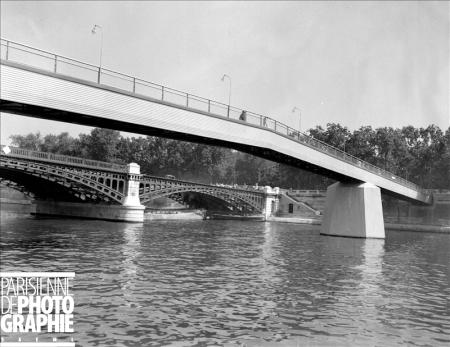
The photo below, taken on April 26, 1961, shows the about-to-be-demolished original bridge with the “temporary” replacement dominating the foreground.

“Temporary” is a relative term, not an absolute one. For three decades, this undistinguished structure allowed pedestrians to cross the Seine at one of its most beautiful points. It was finally demolished in 1992. What did the 30-year-old “temporary” bridge say about Paris?

We all read designs and our environments differently. I find the temporary bridge more than merely ugly and unimaginative. It reminds me of the countless pedestrian overpasses I have driven under on expressways that cut through neighbourhoods where the locals don’t count politically. Or where politicians and engineers have insisted that ugly = efficiency + value for money. In some places, people really believe that ugly means their tax dollars are being well spent.

Whatever the reason for its uninspired design, whatever the reason for its longevity, the second bridge seems alien in design-rich Paris. It looks neither Parisienne nor respectful of those who must look at it and cross it. To be fair, the bridge did do what it was designed to do: it allowed people to walk from one side of the Seine to the other. However, if you look carefully, you will notice that both the bridge of 1861 and that of 1961 only joined the tops of the embankments. To get to river level, one took the stairs.

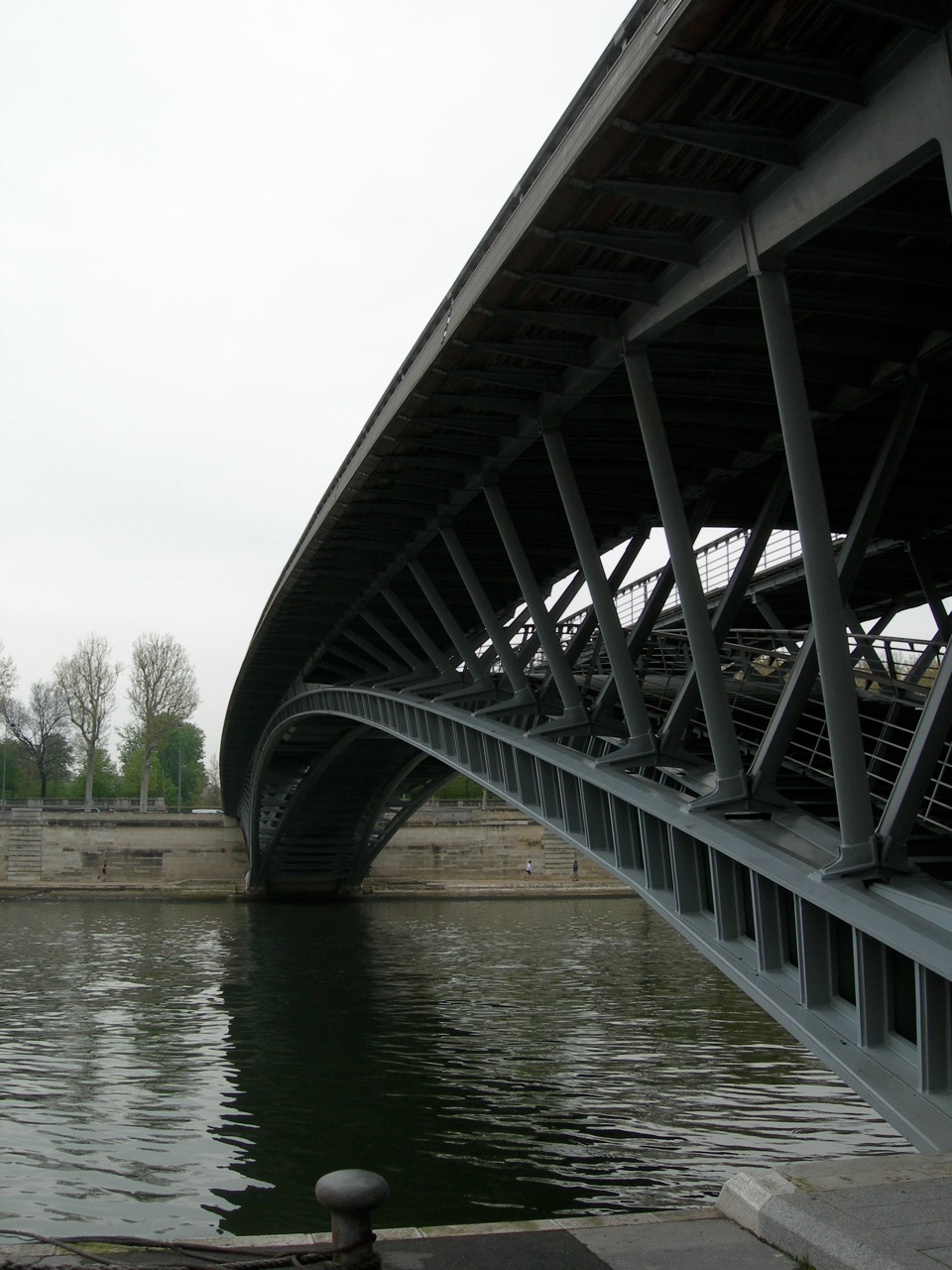
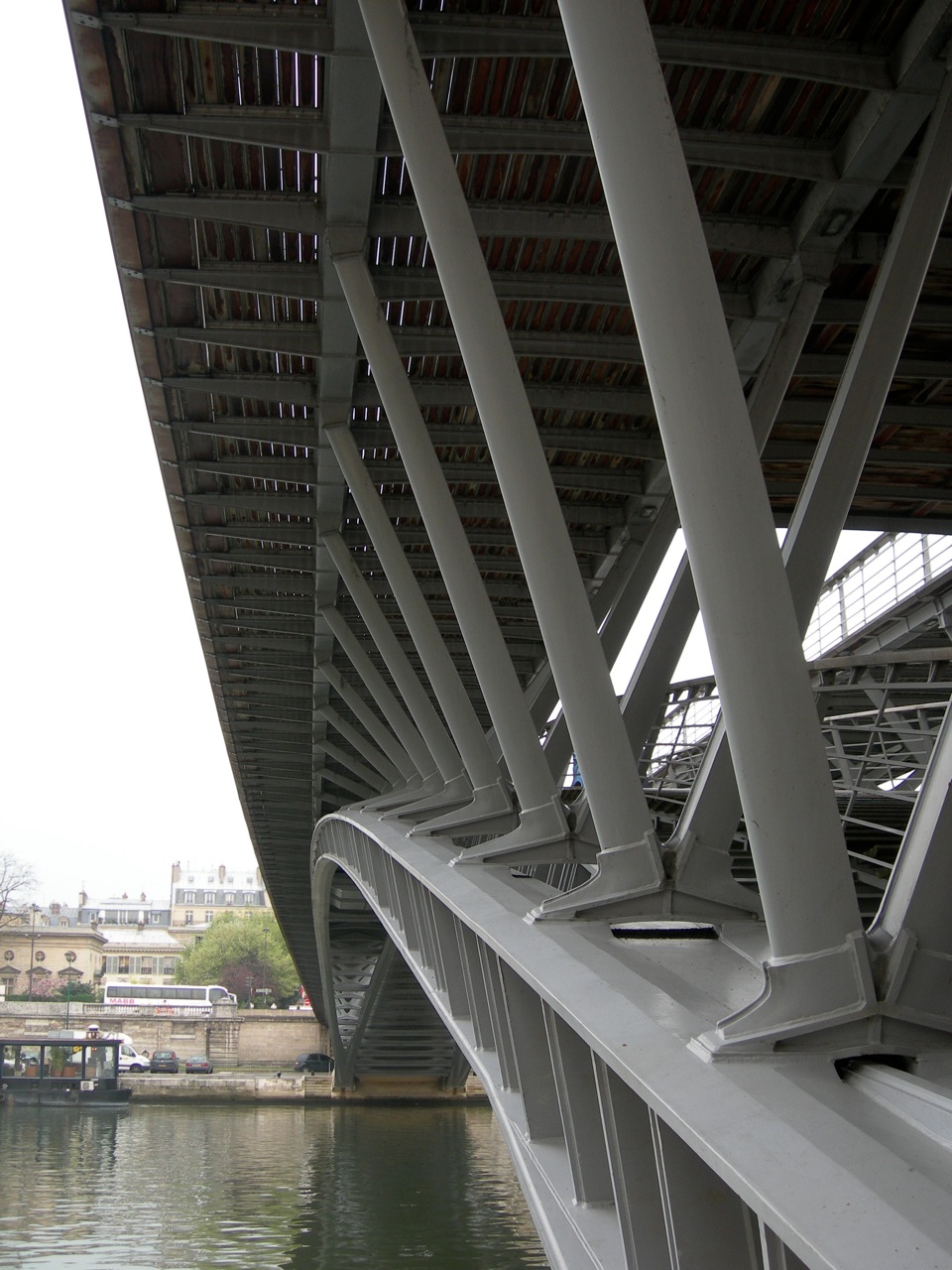
Mimran’s passerelle de Solférino changed many things. It crossed the Seine in one leap, so there are no abutments to bump into at river level. And it joins four points, not just two: water level on both sides of the river and the top of the embankment on both sides of the river. And it makes the journey visually interesting.

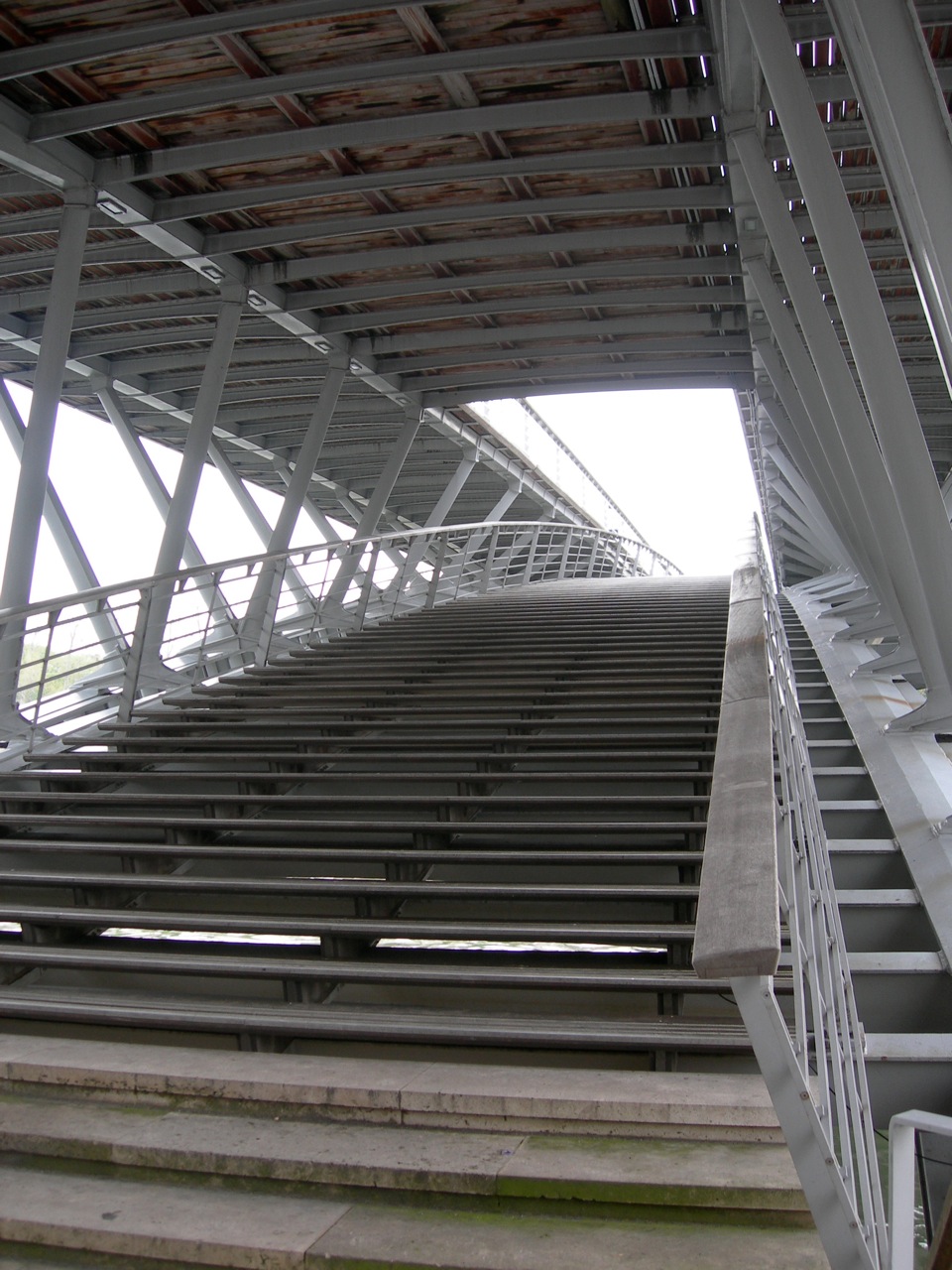
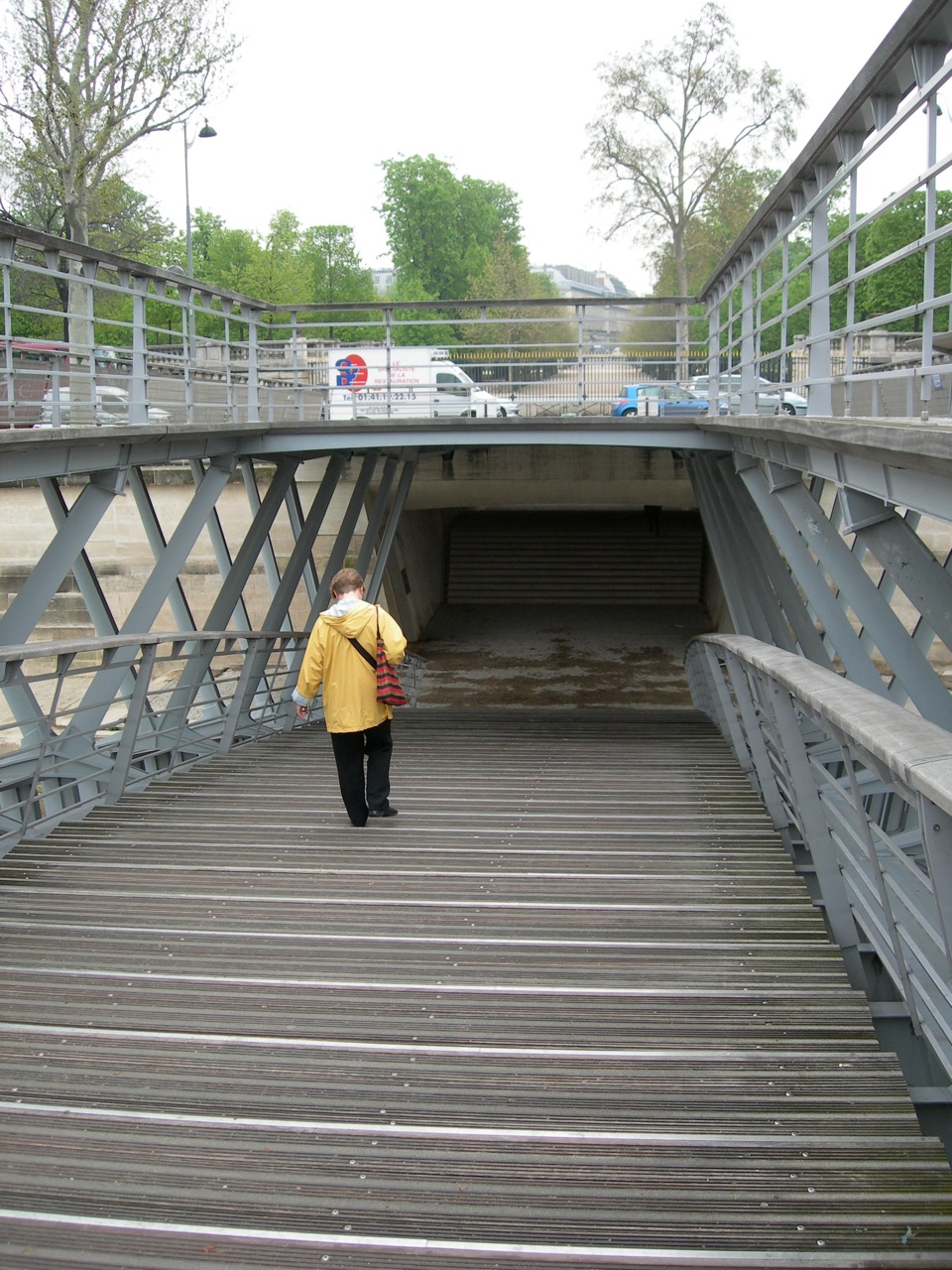
Here we are beginning to walk from water level to the top level as one prepares to cross the Seine.

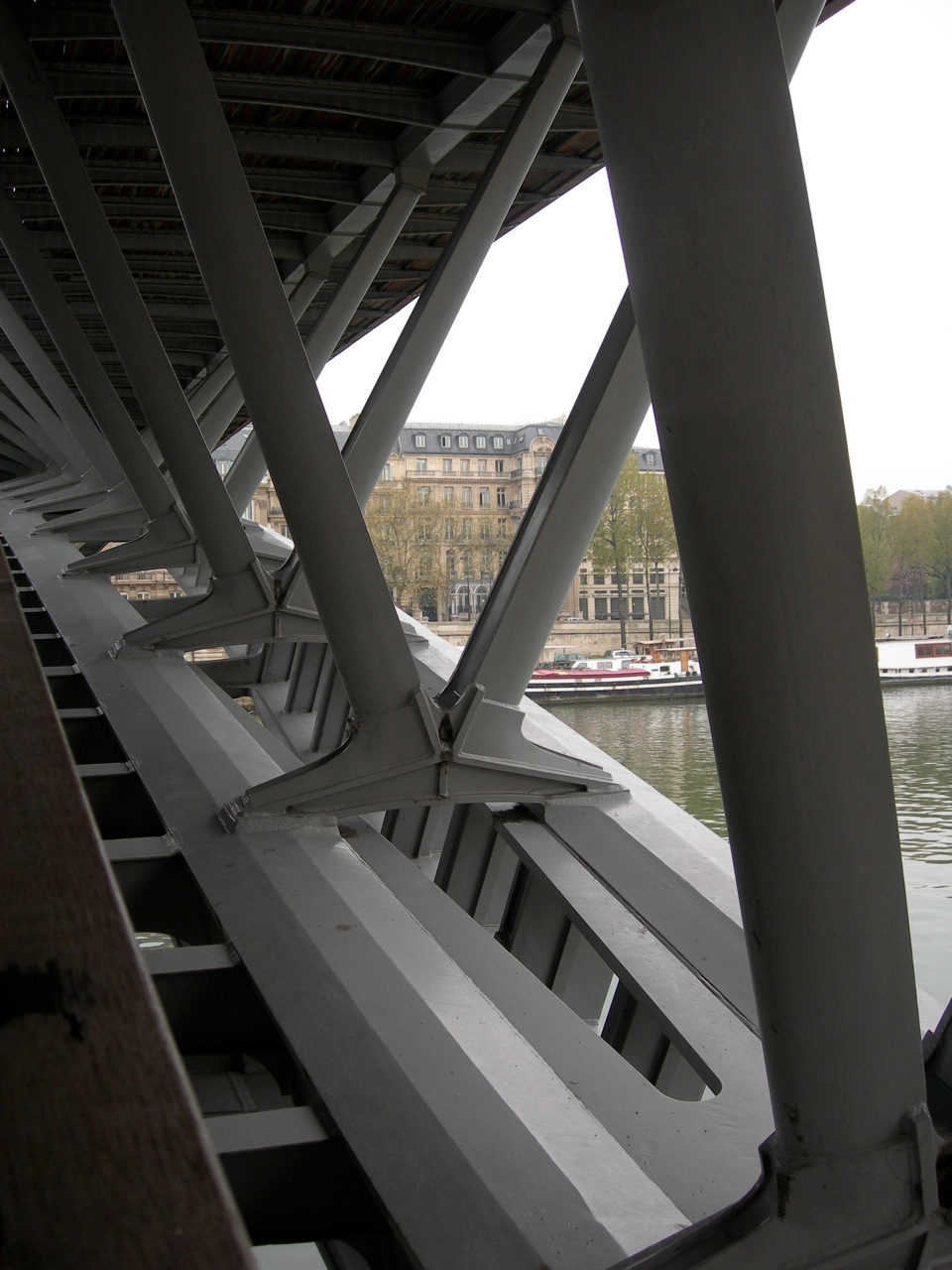
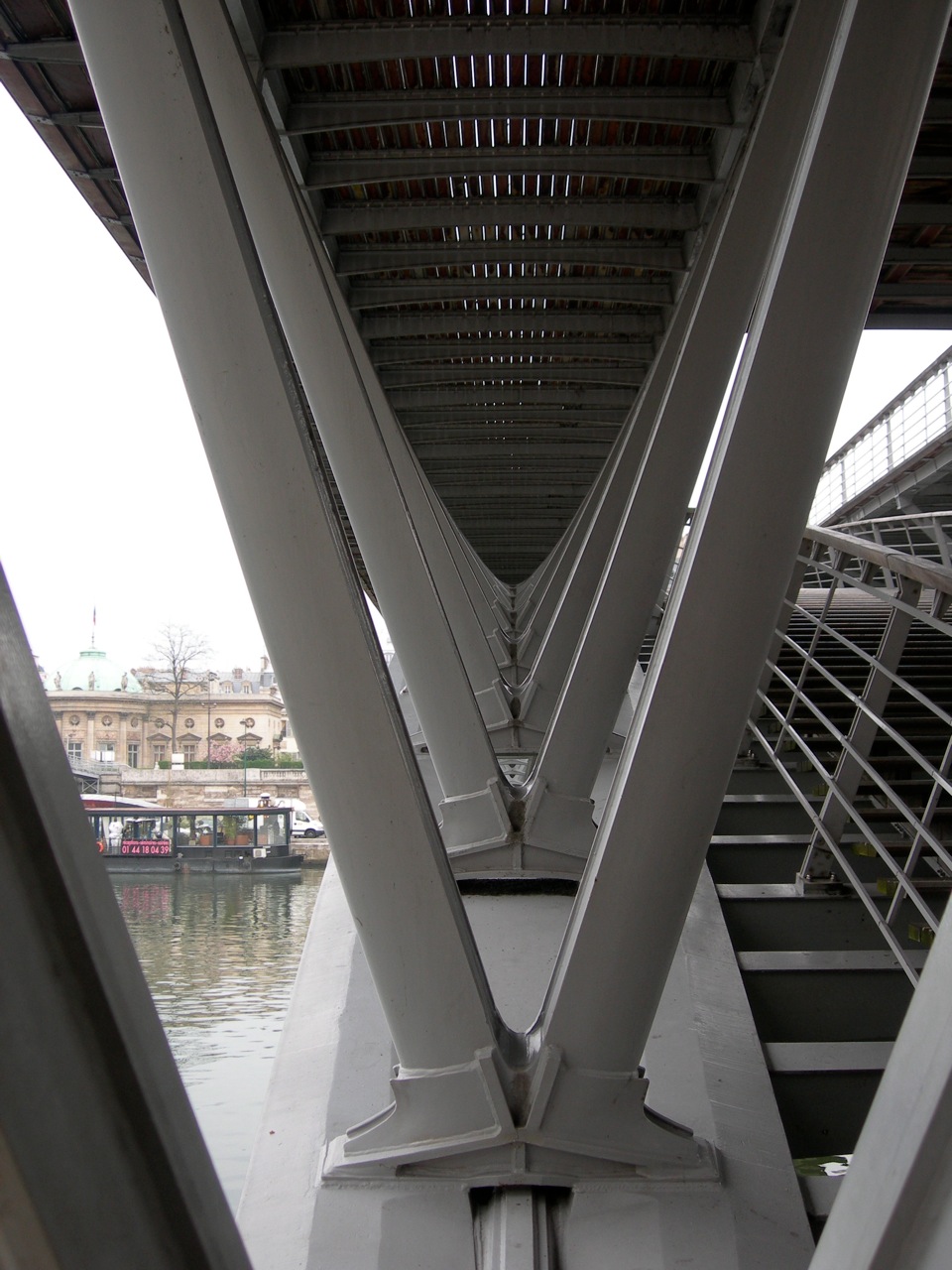
As one approaches the bridge, one is struck by the richness of detail. I saw other users of the bridge lingering to examine the details, just as I have on other bridges that have been designed to let us appreciate being alive rather than just letting us get on with the next job.

The details, precision, and lightness of material reminds me of aircraft engineering. As I walked across, I thought about airplane structures and the innards of a jet turbine engine I had recently seen and admired.

But as our pedestrian crosses (alas, the famous yellow raincoat is no more: it was later stolen – in Toronto), what awaits her?

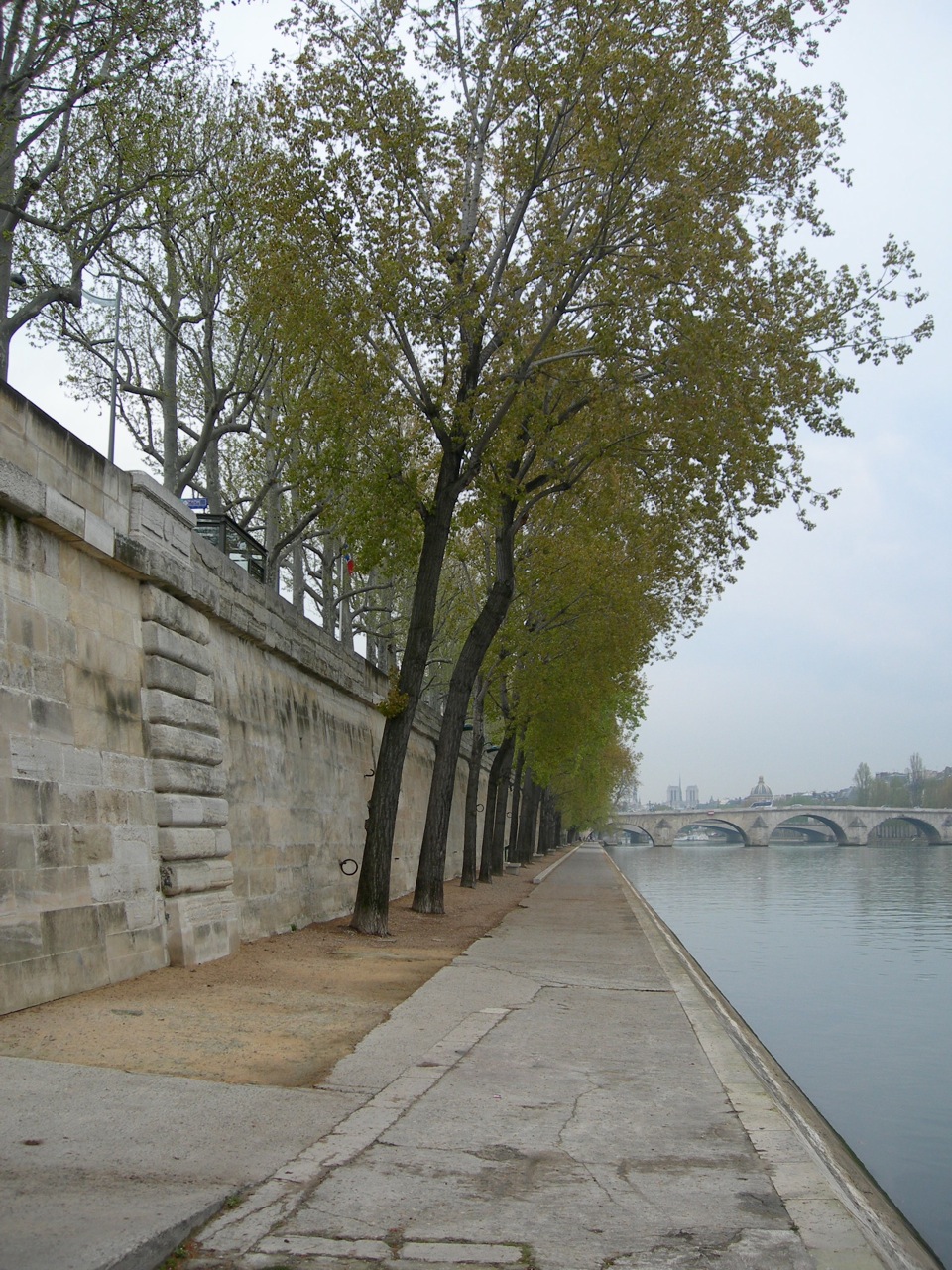
Having arrived at river level, she might take the stairs in front of her to cross under the traffic and emerge in the Tuileries gardens. Or she might choose to stroll along the bank.

Or our pedestrian could have done what this bridge was really designed to do. And to appreciate this fully, follow this link (view it full screen). It’s not just a bridge to look at, but a bridge to look from.

I regard this bridge as a reaffirmation of the long tradition of aesthetic excellence and sensitivity amongst French bridge engineers (the bridge designs of Gustave Eiffel are a good example). This tradition is deeply rooted in their best educational institutions and widely visible. Such sensibilities are absent in many countries.

But designs such as the passerelle Solférino could not have been done without computer-assisted design methods, linking the best of tradition with the best of technology. Furthermore, as if in rebuke to those who associate ugliness with efficiency, the bridge makes very economical use of materials (steel and wood).

Marc Mimram has a clearly expressed philosophy of design and aesthetic sensibility, along with the talent and good fortune to put it to use. For a quick introduction go to his website and click “Agency.”

The page is worth reading and rereading carefully. Note that he is described as both architect and engineer: this combination is exceedingly rare.

One reads that “We have always considered that architecture cannot remove itself from the field of construction and that the execution is equally a determinant for a project as it its conception.” In other words, don’t design it if you don’t know whether it can be built. (You’d be surprised how often this happens with professionals.)

More important, he is not talking about structures in isolation, or on a computer screen, but structures as part of our lives and the space we occupy. “A bridge is not just a connection, a road, not just an asphalt strip accommodating migratory traffic.” He adds that when one thinks of and works within “local scale” and “an informed historical geography,” then “the bridge becomes a balcony for a stroll on the river, the road a passage through the features of geography.”

Well isn’t that curious? Most of the bridges I experience as a pedestrian make me feel I am simply a legally required nuisance, and the roads on which I drive seem designed to feel and be the same, no matter what the local geography.

Mimram speaks of the sin of designing in which saving time takes precedence over all else. “To avoid the errors of yesterday, it is necessary that these major transformations not be reduced to their technical values; we have to find the qualities that are sensible to the consideration of the project’s landscape, the constructed qualities of structural works, and the qualities sharing the public forum.”

He warns that we lose much if we think of the city solely in terms of “mathematical imagery” and adds that “conversely, it is the attention to places, the value of light, and the pleasures of gravity and material that are put in place that assure the generosity of shared space.”

Ah, the “generosity of shared space.” That, I think, more than anything else, is what I find so intriguing and beguiling about Paris. There is privacy, but there is much shared space. And when I stand on the passerelle Solférino I am sharing space, views, and perhaps even conversations. This is not just city life, this is life.

Text and original photographs by Norman Ball

Further reading: Marc Mimram — Minimal Design: Solferino Bridge in Paris, by Francoise Fromonot

Click here to watch an interview with Marc Mimram (with English subtitles). In it, he discusses the use of new materials, such as a new form of concrete called Ductal.

Posted in Paris bridges | Tagged , , , , , , , , , | 8 Comments

Unreliable memories

Memory is a slippery thing. It depends a lot upon what you notice at the time. (Norman: I wonder who owns that yellow Lamborghini parked down the street. Me: There’s a Lamborghini parked on our street?) It also depends upon your interests and pre-existing knowledge. (Me: Don’t you think that Geoffrey Rush was wonderful in The King’s Speech? Norman: Was he the one who played the part of the king?)

The French have a special relationship with memory, and it figures importantly in their literature. There’s Proust, of course, but I think he got one important thing wrong. In that long passage about dipping his madeleine into a cup of tisane and recalling his childhood, he ends with the sonorous words, “l’édifice immense de la souvenir” (the immense edifice of memory). I beg to differ. Memory is not a large, stable, building-like structure. It’s more like…macramé. It’s hard to know where any particular strand will lead, and it’s full of holes.

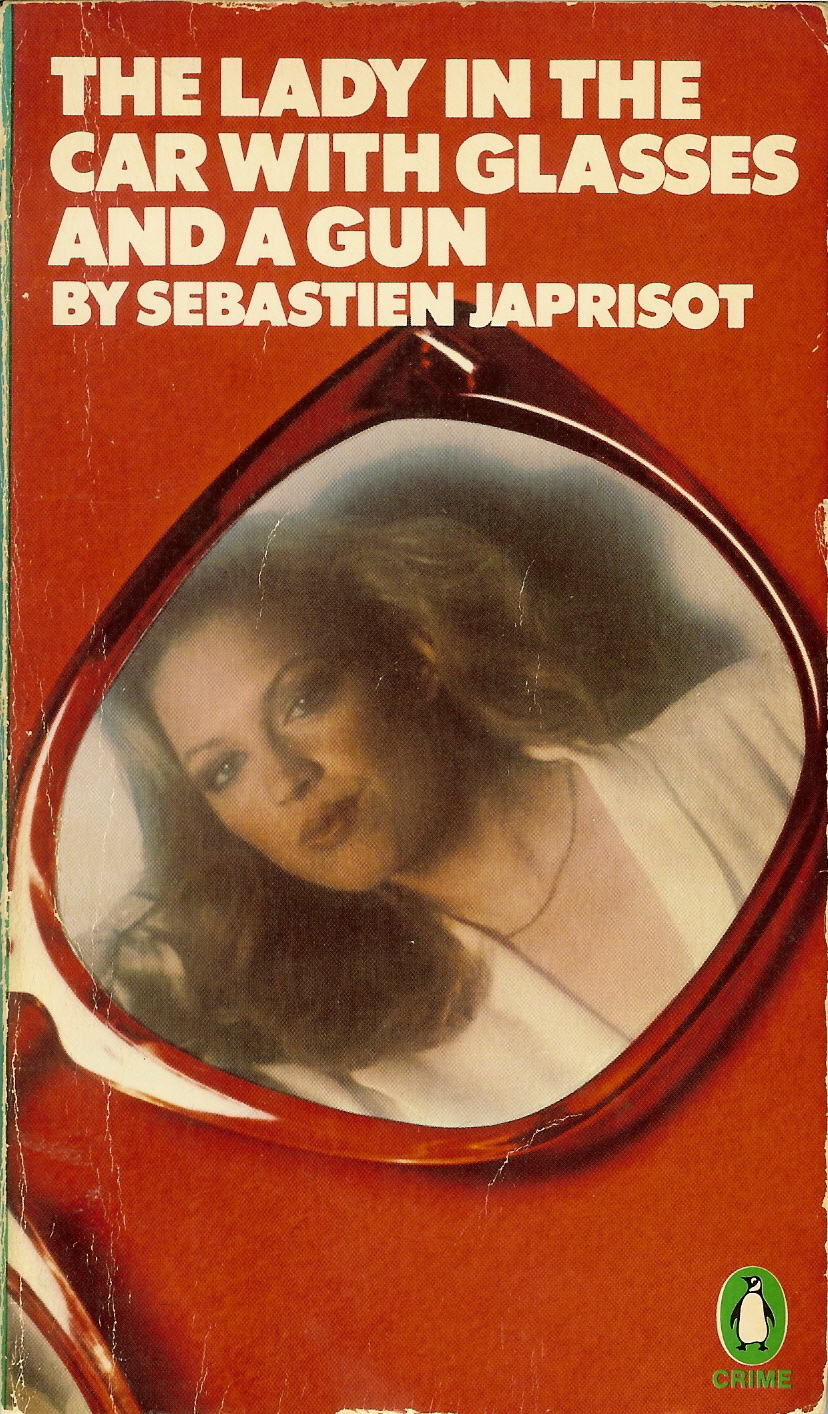
I think about this whenever I re-read a book that I enjoyed a decade or more ago. Especially one as unusual as The Lady in the Car with Glasses and a Gun, by Sébastien Japrisot (La dame dans l’auto avec des lunettes et un fusil), published in French in 1966 and in English translation in 1967. I must have read it some time during the 1980s. I thought I remembered what happened, but it took me by surprise all over again.

Appropriately, the book itself is about the slipperiness of memory, and the way in which one’s perspective influences one’s impressions, and ultimately, one’s memories. It starts off with the first-person story of the lady in question, shifts to the point of view of minor characters (a gas station owner, a policeman, a hitchhiker), then back to the woman, ending with the first-person story of another character altogether.

The Figaro Littéraire once said that Sebastien Japrisot wrote “like Simenon proof read by Robbe-Grillet,” but I think it was the other way around. Alain Robbe-Grillet was one of those postwar writers and film-makers who helped create what was known as Le Nouveau Roman (the New Novel), with books (and films) in which nothing is quite as it seems, and multiple perspectives make one unsure what is really going on. There is no omniscient narrator, only the views of various participants, and no clear “truth” or “reality.” In his famous film L’Année Dernière à Marienbad (Last Year in Marienbad), the characters have no proper names, one scene contradicts another, and people move through an enigmatic dreamscape in which people have shadows and objects do not.

Japrisot’s book is like that. It’s not so much a whodunnit (although there is a dead body to be accounted for), as a whatonearthjusthappenedhere.

I won’t spoil the story, but here is the situation. The lady in the car is Dany Longo, who works as a secretary in an advertising firm in Paris. Just before the Bastille Day long weekend, her boss asks her to take on some extra work, by going to his house to type up a long document he needs immediately. She works Friday night and Saturday morning, staying overnight in the house. Then he asks her to drive him and his wife to Orly airport and return the car (a white Thunderbird convertible) to his home.

Dany, with her huge prescription sunglasses, is a timid person, who has never ventured very far from her usual routines, but as she leaves the airport behind the wheel of the Thunderbird, she decides to strike out for the south because she has never seen the Mediterranean. She figures the boss will never know if she gets the car back by the end of the weekend.

That’s when things get strange. As she travels through small towns she has never seen before, people seem to recognize her and the car, and mention incidents that involved her. They insist that she left her coat in a certain restaurant, had her car serviced in a gas station, was stopped by a police officer who noticed her tail-light was broken. As the evidence mounts up, the reader starts to wonder who Dany really is and if her account of events can be trusted. This is all very Robbe-Grillet: in L’Année Dernière à Marienbad, a man keeps insisting to a woman that they had met the previous year, while she denies ever having seen him before. Who is speaking the “truth”?

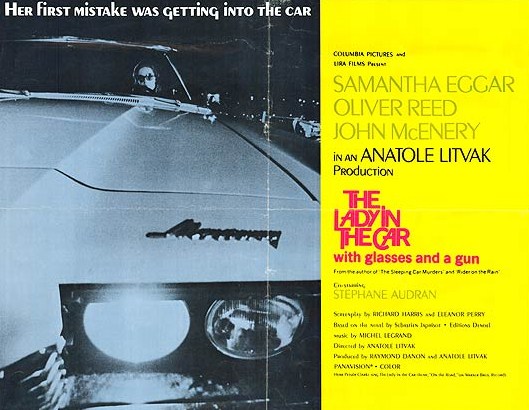
Japrisot’s book was made into an English-language film with English stars (Samantha Eggar as Dany, Oliver Reed as her boss, John McEnery as the hitchhiker) by the versatile director Anatole Litvak in 1970. It was the last film he ever made (he died in 1974). Interestingly, he also directed All This and Heaven Too, which I wrote about in a previous post.

I haven’t seen the film. I’m not sure I want to. I don’t think it would convey the same disorienting sense of multiple perspectives, from the interior dialogue of the neurotic, yet surprisingly resourceful Dany, to the people who see her only as a remote beauty, aloof and enigmatic behind those huge glasses.

The film even had a peppy little song performed by Petula Clark (!) about hitting the open road and leaving one’s troubles behind. Clearly the lyricist was not paying attention, since Dany’s troubles begin when she hits the road. You can hear the song on YouTube.

Sébastien Japrisot, 1931-2003, wrote several other crime thrillers, as well as the historical novel A Very Long Engagement, made into a movie in 2004 starring Audrey Tautou (I did see that one, and I think the book was much better). It, too, involves varying and conflicting accounts about a particular event that can be interpreted in several ways. Japrisot’s pen-name was an anagram of his real name, Jean-Baptiste Rossi. He knew the advertising world well, having worked in publicity. He wrote eight novels, three of them crime novels, as well as a dozen screenplays, and translated J.D. Salinger and various westerns about Hopalong Cassidy into French.

I have three more of his novels, which I intend to reread over the next while: 10:30 from Marseille (Compartiment Tueurs, 1962), Trap for Cinderella (Piège pour Cendrillon, 1963), and One Deadly Summer (L’Eté Meurtrier, 1978). I may not read them all at once, however. Doing so might destroy my faith in memory forever.

Text by Philippa Campsie

Posted in Paris film | Tagged , , , , , , , , , , | 2 Comments

Tall tales and some Paris-Marseille rivalry

Tall tales abound in every culture. When Philippa and I set out to explore our new neighbourhood in May, we never suspected that we would learn more about tall tales in France.

On the nearby Rond-Point des Champs Elysées, a small sign announced a familiar name: Artcurial. We crossed the forecourt and entered. What appeared to be crowded bookshelves at the end of the hall turned out to be a wallpaper that only looked like that, and directed us to one of the finest bookstores we have seen in Paris.

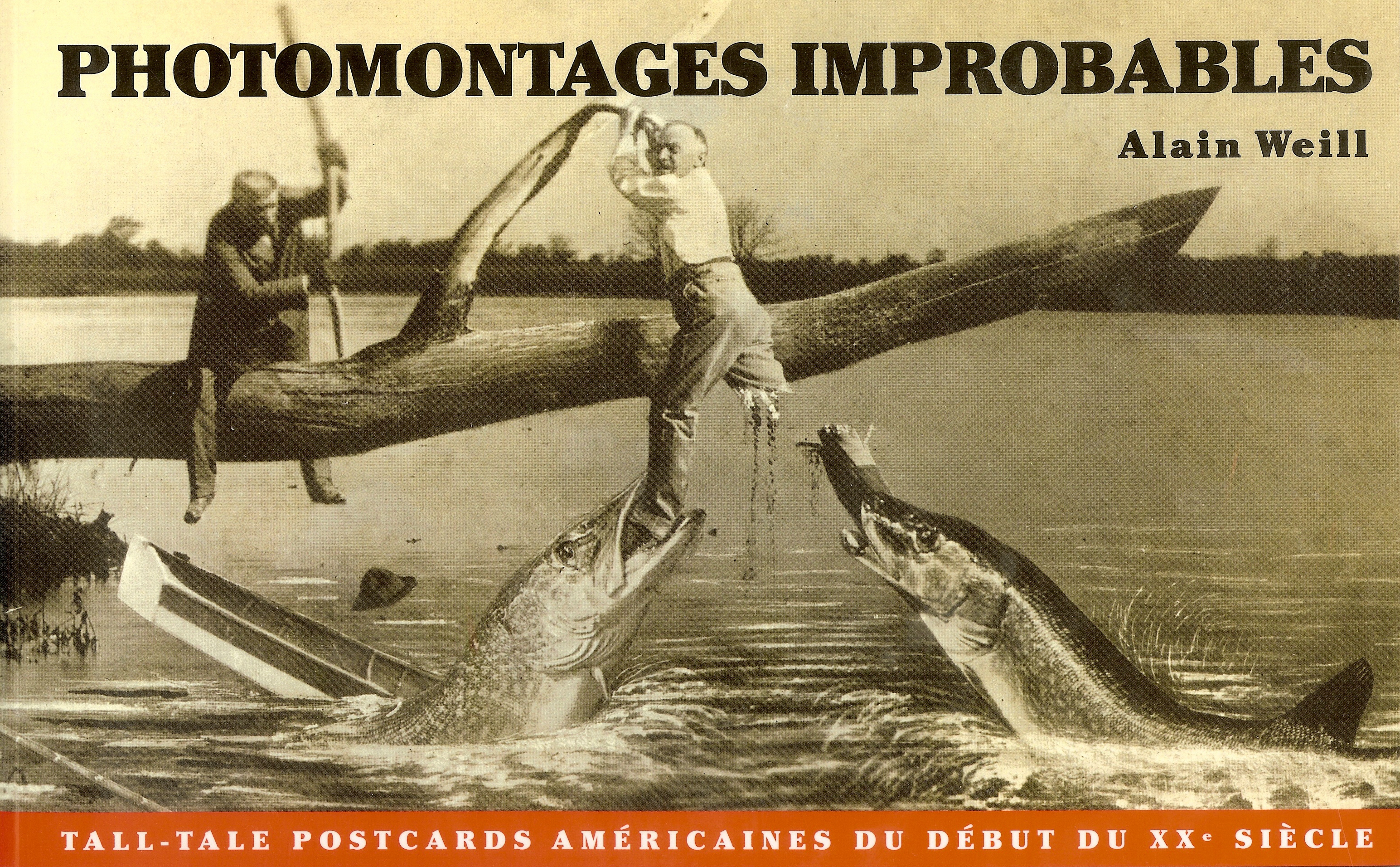
It was expertly stocked and exquisitely laid out with the sophistication we associate with the name Artcurial. Amidst the wealth of books on the history of painting, sculpture, photography, fashion, architecture, and industrial design, there was a single copy of a bilingual book with a rather lurid cover: Photomontages Improbables (Improbable Photomontages) by Alain Weill.

I knew about the work of 19th-century photographers such as William Notman, who merged many single photos into massive groups shots. And we had seen an exhibit at the Art Gallery of Ontario that featured the work of aristocratic women of 1860s and 1870s, who cut photo portraits from the ubiquitous cartes-de-visite of the day and embellished them with their own paintings. Posing as amusing works of art, these photocollages often provided incisive, even cutting, social and political commentary.

The images on the postcards in Photomontages Improbables were quite different. Their impact depended on having at least one element per image that was wildly out of scale. The oversized images recalled the tall tales genre in which the familiar – or the somewhat plausible – is exaggerated, often to show the superiority or distinctiveness of a region, individual, group, or activity.

Weill’s book is primarily about the work of two American photographer/publishers (William H. Martin and Alfred Stanley Johnson) who, starting in 1908, used photomontages to create absurd, fantastic, and exaggerated postcard images and messages. They created images such as an ear of corn so big that it had to be hauled on a wagon by a team of horses, or cut with a lumberjack’s saw, tomatoes so large a wheelbarrow could hold only one, two onions that took up an entire railway flatbed car. This genre lasted many decades, but holds little interest for me.

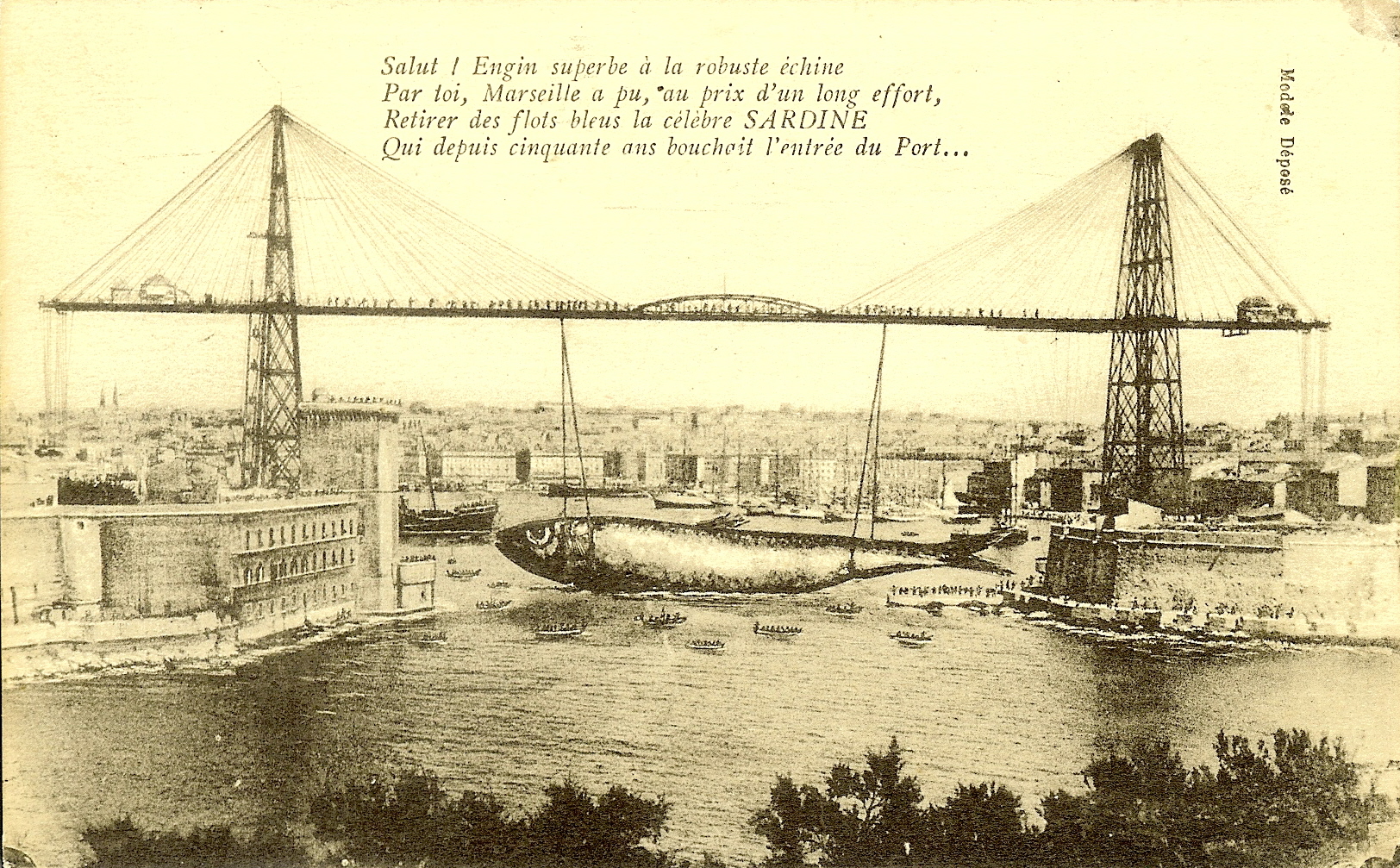
However, I spotted an altered image of an unusual French bridge, of a type that I had written about it in a previous blog. This bridge was in Marseille, and the photo had a curious addition. Slung beneath the bridge, covering the entire width of the waterway, was a fish, to be precise a Very Large Sardine.

This was the only French photograph in the book. The author implied that this was a specifically American genre and that there were very few French postcards of this type. I didn’t believe him. I was sure there were more French fantastic or tall-tale postcards. So began a new quest.

With my electronic dictionary on standby, I asked a few postcard dealers at the stamp and card market off the Champs Elysées about les cartes postales fantastiques (fantastic postcards) with images such as ponts et poissons (bridges and fish). They assured me such things were quite common. One dealer said he would bring some for me if I came back on Thursday.

I duly returned on Thursday. The dealer had brought quite a few, including the one above.* Except for the publisher, it was identical to the one shown by Weill in Photomontages Improbables. The dealer proudly proclaimed he himself was from the Marseille region and that people there liked to exaggerate as a way of showing their pride and letting the world know that theirs was a region worth visiting.

The bridge is the famous transporteur built to carry a section of movable roadway slung beneath it, complete with passengers and vehicles. The verse is a hymn of praise to the bridge and a reminder of how big the sardines are in Marseilles, a famous fishing port.

Greetings! Superb machine with sturdy spine
Through you, Marseille has, at the cost of a long effort, been able
To remove from the blue waves the famous SARDINE
Which for 50 years blocked the entrance to the Port.

Another card, which represents the sequel to the story, bears the title, Char Funèbre de la Célébre [sic] Sardine Marseillaise (Funeral wagon of the celebrated Sardine of Marseille).

The verse reads:

On this funeral wagon lies the celebrated SARDINE
Who for 60 years blocked the entrance to the Port
With his dry and tranquil eye
He scorns Parisien and Gascon [the people of the Marseille region].

Marseille might not have the Eiffel Tower, but it has its Enormous Sardine.

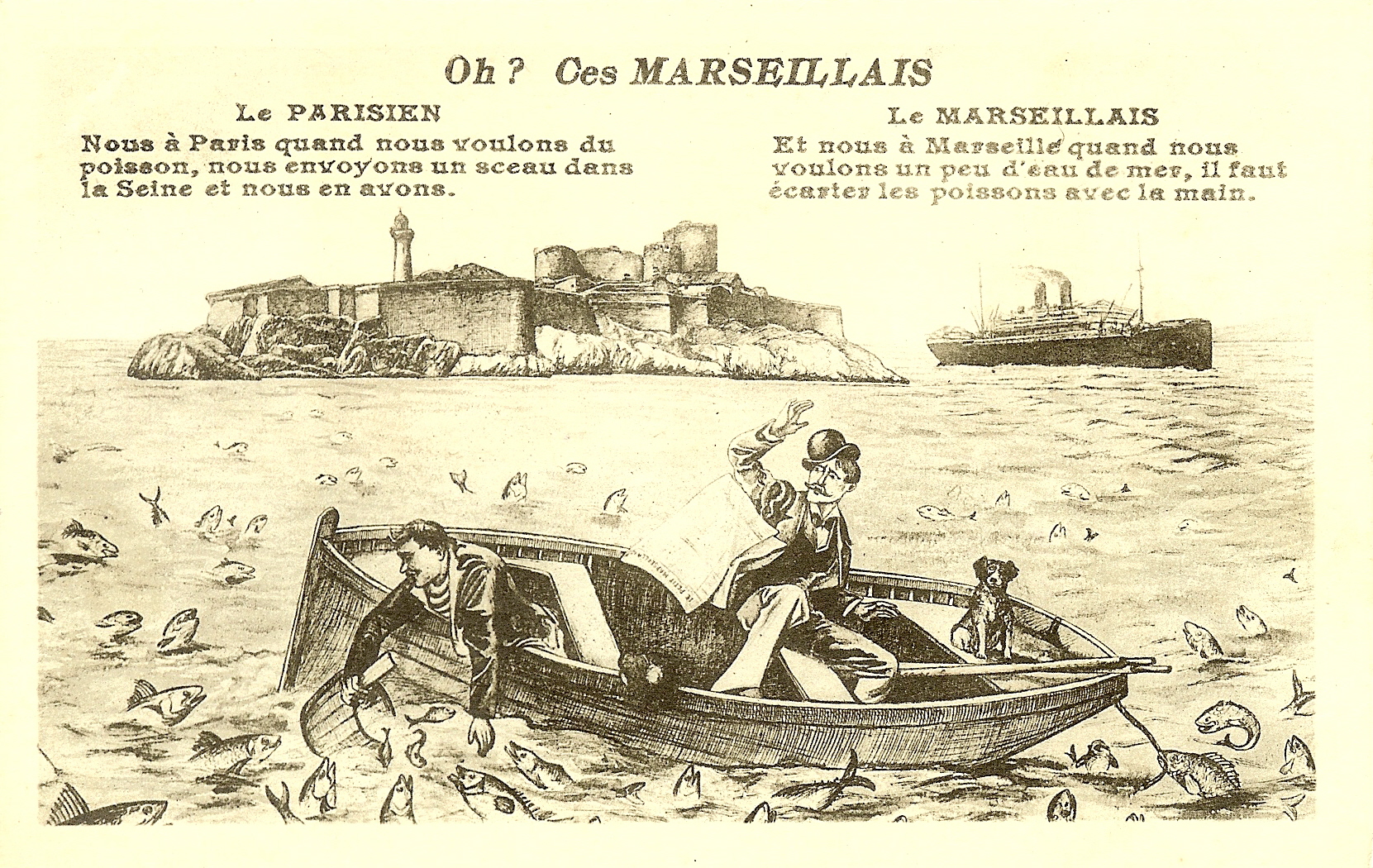
Although well inland, Paris sees itself as an important port. The city coat of arms bears a ship and Paris is in a region called l’Ile de France (the Island of France), although it is not an island at all. The postcard below is meant to remind Parisiens that real ports have more than just water and boats; real ports have plentiful fish.
The card titled “Oh? Ces Marseillais” might be translated as “Oh, these people from Marseille.” That part was easy. The translation of part of the wording under Le Parisien took us some time to figure out. The problem word was “un sceau,” which translates as the stamp or seal one would put on a document. But recently, when Philippa was stumped by a translation, she asked Lucie, a French friend in Paris, who promptly replied that the troublesome word was simply a typo. Thinking along those lines, Philippa realized out that what appeared as “un sceau” should have been “un seau,” a bucket. Now we can translate.

Le Parisien says, “When we in Paris want some fish, we hurl a bucket into the Seine and we have some.”

But in Marseille? “Those of us from Marseille, when we want a bit of water from the sea, we have to beat the fish away with our hands.”

The lesson: if you want some place where the waters are teeming with fish, then go to Marseille. The Paris/Marseille rivalry is also evident in the figures of the two men. The robust fisherman in the striped jersey is clearly the clever Marseillais, whereas the confused and frightened-looking dandy who has lost his newspaper and soon might be hatless is the effete Parisien. Note also the determined fish – clearly a Marseillais – who has grasped the bow-rope and the stunned Parisien dog.

The card was sent from Marseille and the written message (in French) on the back begins, “In order to give you an idea of the jokes made about those from Marseilles, I am sending you a sample of their tall tales (galéjades).”

Clearly only the first card — the bridge and the sardine — is a photomontage, while the others might be more properly labelled simply fantastical drawings or collages. However, they all fit into the tall tale genre made from composite images.

Other postcard images draw upon photos that are shot separately and then superimposed to create the final image. This image made of various components would then be photographed to create the final image.

The picture of the abduction of the Arc de Triomphe uses photos, along with some touching up to insert things such as the cables from the Zeppelin and probably the airplane in the upper left. (Note that the Arc appears to have already been dragged the length of the Champs-Elysées, since it appears near the Chevaux de Marly, the statues of horses that stand near the Place de la Concorde.) Rather than a tall tale card, this might be seen as expressing fear for the future or perhaps a certain grim humour and defiance. The Zeppelin is, after all, German and although we do not know when the card was conceived or printed, it was mailed 21 October 1915.**

As so often happens, what starts as a chance encounter piques my curiosity, reminds me of what I know, points out what I do not know, and inspires me to learn a bit more. With French collage and photomontage, I know so little and have so much to learn. What started with an unplanned visit to Artcurial led me to postcards depicting tall tales representing at first amusing rivalries between cities and later deadly struggles between countries.

Text and photograph by Norman Ball

*Mine, regrettably undated, is identical to that in Photomontages Improbables with one exception. Mine has no published or named photographer, only the words Modele Deposé (registered trademark). Weill’s includes “Photo. Bourse. Edit. 22, rue Pavillon” (The rue Pavillon is in Marseille.)

**Another card posted online shows even greater havoc wreaked upon French monuments by modern aviation – Zeppelins and airplanes – and German aggression. This also was mailed in 1915. France and Germany were at war and Guillaume would have been Kaiser Wilhelm, Kaiser Bill to the Brits.

Posted in Paris history, Paris popular culture, Paris postcards | Tagged , , , , , , , , , , , , , , | 1 Comment

The collectors

Before our last trip to Paris, a friend and fellow Francophile lent me a book to read on the plane: The Hare with the Amber Eyes by Edmund de Waal. I highly recommend this absorbing family saga, imaginatively told through the story of the acquisition, travels, loss, and rediscovery of a collection of Japanese netsuke (small carvings) first acquired by Charles Ephrussi, a Parisian art collector, in the 1870s.*

I had never heard of the Ephrussi family, although they were on a par with the Rothschilds in their day. The Ephrussis were wealthy Jewish bankers from Odessa, where they had originally made a fortune in the grain business. Charles Ephrussi, who dominates the first part of de Waal’s book, was an aesthete and patron of the arts who serves as the model for the character of Charles Swann in A la Recherche du Temps Perdu by Proust.

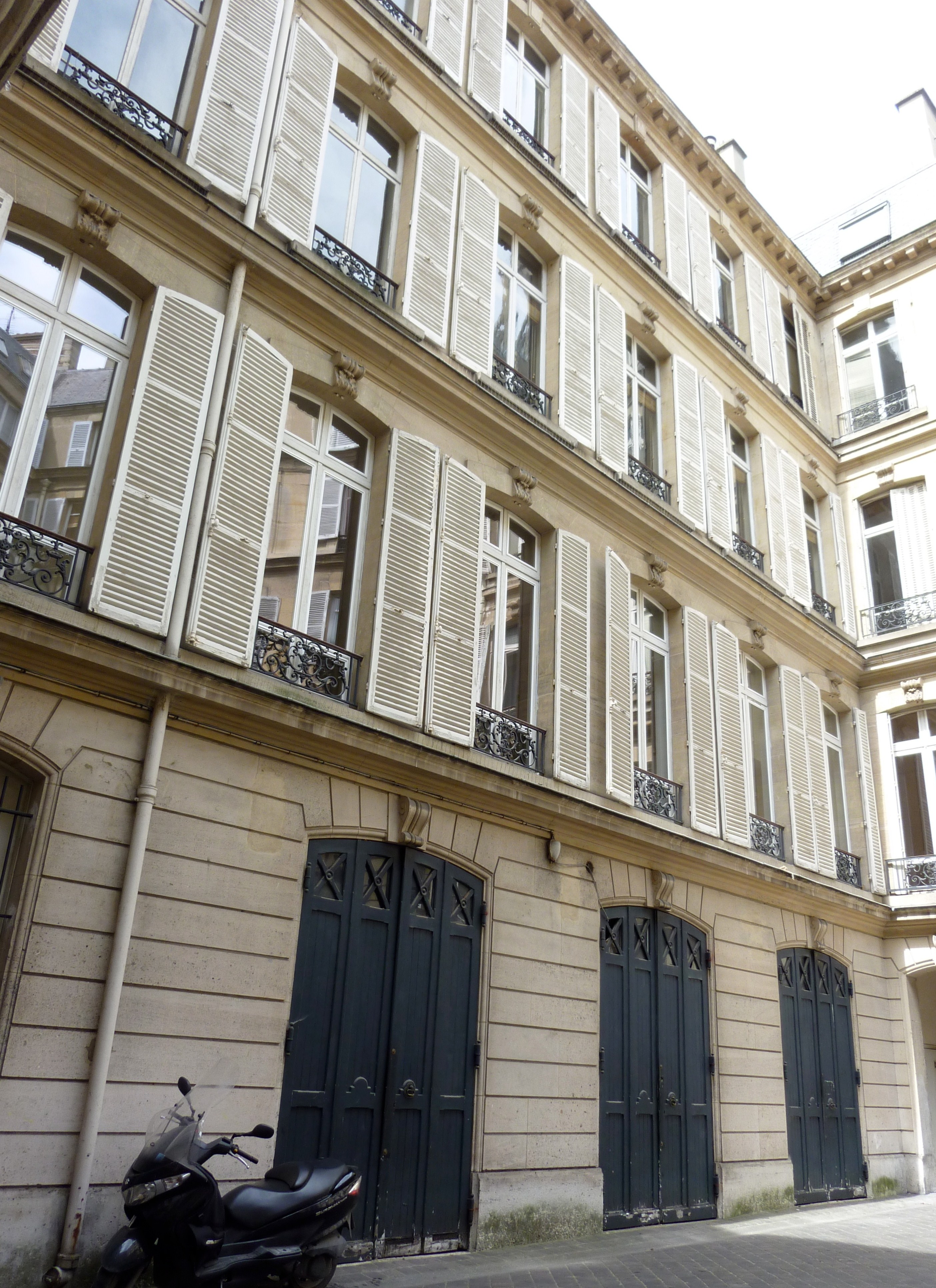
The book included a grainy photo of Charles’s Paris house. The author mentioned that it was not far from the house of the Camondo family (now the Musée Nissim de Camondo) on the rue de Monceau. So of course I had to go and look. I found the house at number 81 and stood in front to take a picture. Edmund de Waal notes that Charles’s rooms were on the second floor (what to North Americans would be the third floor), facing the street.

The house had been finished in 1871, just in time for the end of the end of the Second Empire and the upheavals of the Commune, in an area that de Waal calls “so of-the-minute that [it was an] unfinished, untidy, loud and dusty building [site].” It was the 1870s equivalent of today’s suburban subdivisions filled with oversized houses that have replaced farmers’ fields on the outskirts of many North American cities – enclaves of millionaires, many of them newcomers to Canada or the United States, as the Ephrussis were newcomers to France.

The Plaine Monceau, developed by the Pereire brothers around the Parc Monceau, was something like that, with one important difference – today’s suburban monster houses are surrounded by acres of lawn and highly visible. A good part of this Paris house was out of sight. So I walked into the courtyard (the building is now an insurance office). The house extended along the left hand side. Large windows looked into a courtyard with stable doors opening into it. Edmund de Waal says that the courtyard was once glassed over.

On Google satellite view, I saw that the street side of No. 81 is the narrow end of a large mansion with two short wings; the other end appears to overlook a garden with mature trees. Although tourists walking through expensive residential districts in Paris may wonder how people can stand to live in an environment that seems to be mostly stone, brick and concrete, in fact, nothing could be farther from the truth. Google satellite views show all kinds of gardens and greenery in the interiors of city blocks, overlooked by the windows of large houses, but invisible to mere tourists.

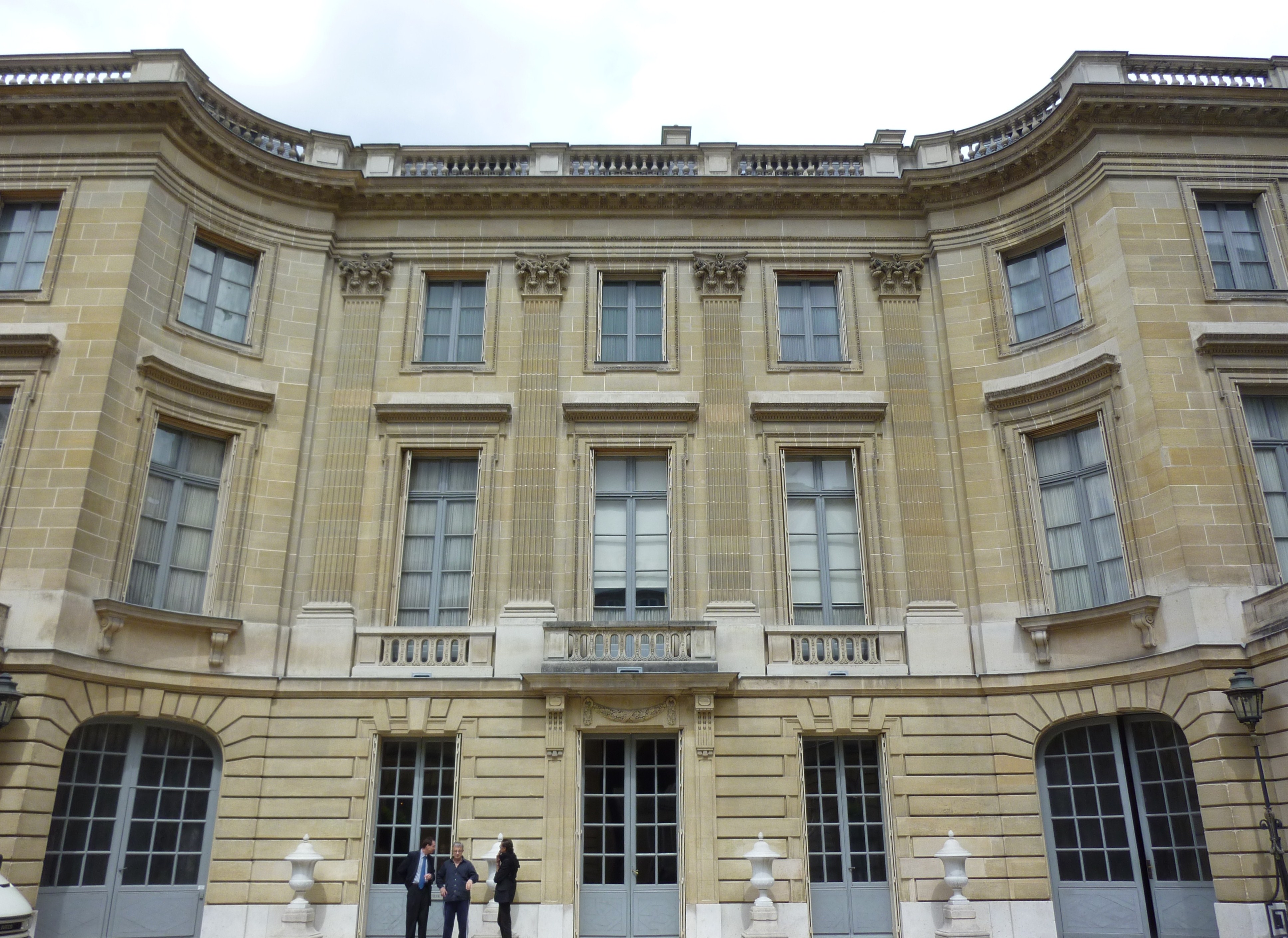
Eventually I wandered back in the direction of the Musée Nissim de Camondo, another huge hidden house. In this case, the façade is directly in front of you as you walk into the courtyard. There were few other visitors and the place was quiet. I paid for admission and received one of those audio guide contraptions.

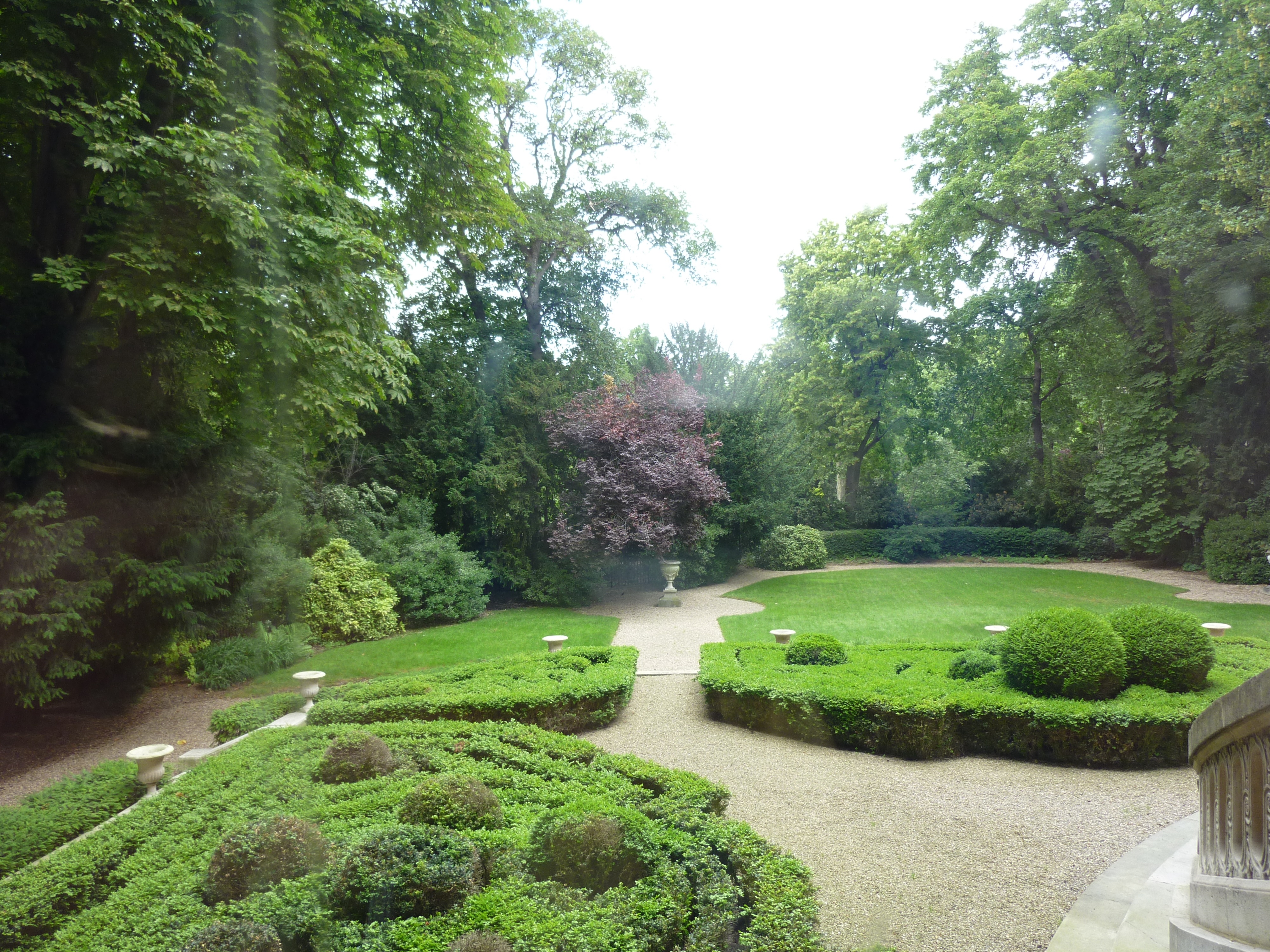
It’s an odd place, not at all typical of the houses of the period, and nothing like the original version of the Hotel Ephrussi up the hill. The house bought by Moïse de Camondo in the 1870s was rebuilt in 1911 to house his collection of 18th paintings, furniture, and décor. It was intended to resemble Marie Antoinette’s Petite Trianon, so it has little in common with the ornate 19th-century houses around it. The house also has its own garden, as well as a private entrance to the Parc Monceau.
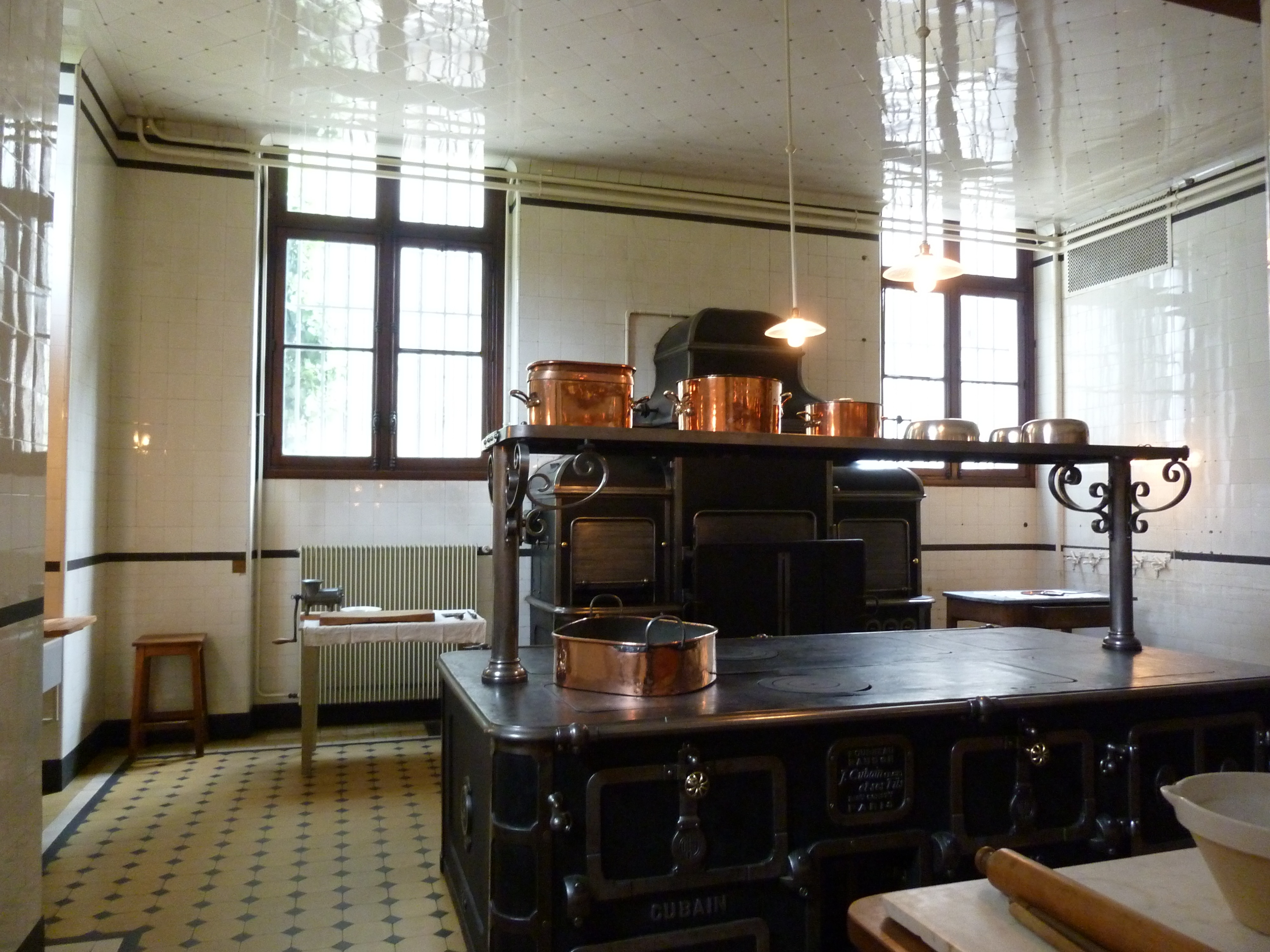
Inside, entire rooms were designed to accommodate expanses of wood panelling or collections of artwork Camondo had acquired. But he was not such an obsessive antiquarian that he insisted the whole house be authentic to the 18th century, so there is a lift, a kitchen with all the modern conveniences of the time, and two glorious tiled bathrooms with what would have been the latest in modern plumbing in 1911.

It is saddening to think that only a few years later, the son on whom Moïse doted was killed in action in the First World War (he is the Nissim de Camondo for whom the museum is named and he was a pilot) and that his daughter Béatrice and her family died in the Holocaust. And it is amazing to realize that because Moïse de Camondo donated the house, with all its furnishings, to the Musée des arts décoratifs in the 1930s, it remained intact, down to the family photographs on the tables, throughout two world wars and the rest of the turbulent 20th century, when so many other collections were dispersed.

From the stairway window, I saw a small cobbled lane to one side, clearly a service entrance allowing for deliveries to the kitchen. Later I found the lane behind the house and walked along it, stopping to watch someone photograph what looked like an aging actor (should I have recognized him?) for what might have been a magazine or commercial shoot.

On the other side of the museum, I also noticed a grand house next door at No. 61. When I left the museum, I saw that this was now the Paris office of Morgan Stanley. But it was not until later that I found out that it had originally been the home of another member of the Camondo family – Abraham, and his son, Isaac. When that branch of the family went bankrupt in the 1890s, the house was sold to Gaston Menier of the family of chocolate makers.** (Much later, in the Second World War, No. 61 went through an evil period as the Paris headquarters of the feared Milice – a French militia that fought on the side of the Germans and against the Resistance.)

Abraham de Camondo was also an art collector, but unlike Moïse and more like Charles Ephrussi, he patronized artists who were his contemporaries – including many Impressionists. When he died, his son wanted to give his collection of pictures to the Louvre, but the Louvre seems to have fumbled the acquisition. The collection was split up – some pieces stayed in the Louvre, some went to the Musée Guimet, and some ended up in what is now the Musée d’Orsay. Furthermore, the name of the donor was at some point eliminated from the public information about the artworks (I am not sure why), so visitors to these museums do not know the source of many well-known Impressionist pictures. The Camondos’ legacy to the city is much larger than most people realize.

This is one of the paradoxes of Paris. The staggering wealth, both past and present, that is so much in evidence is sometimes hard to accept in comparison with the staggering poverty, both past and present, of many inhabitants. And yet the collections amassed, first by aristocrats, later by bankers and other wealthy business people, are the foundation of the city’s reputation as a capital of the arts and are now part of a public heritage. The Camondos and Ephrussis enriched the city, even as they enriched themselves. Without them, the city would be a poorer place for everyone.

Text and photographs by Philippa Campsie

*Click here to read an excerpt from the book.

**Another member of the Menier family, Emile-Justin, had an even more over-the-top house around the corner at 5, avenue Van Dyck.

Posted in Paris gardens, Paris history, Paris museums | Tagged , , , , , , , , , , , | 10 Comments

French advertising postcards (I’ll drink to that)

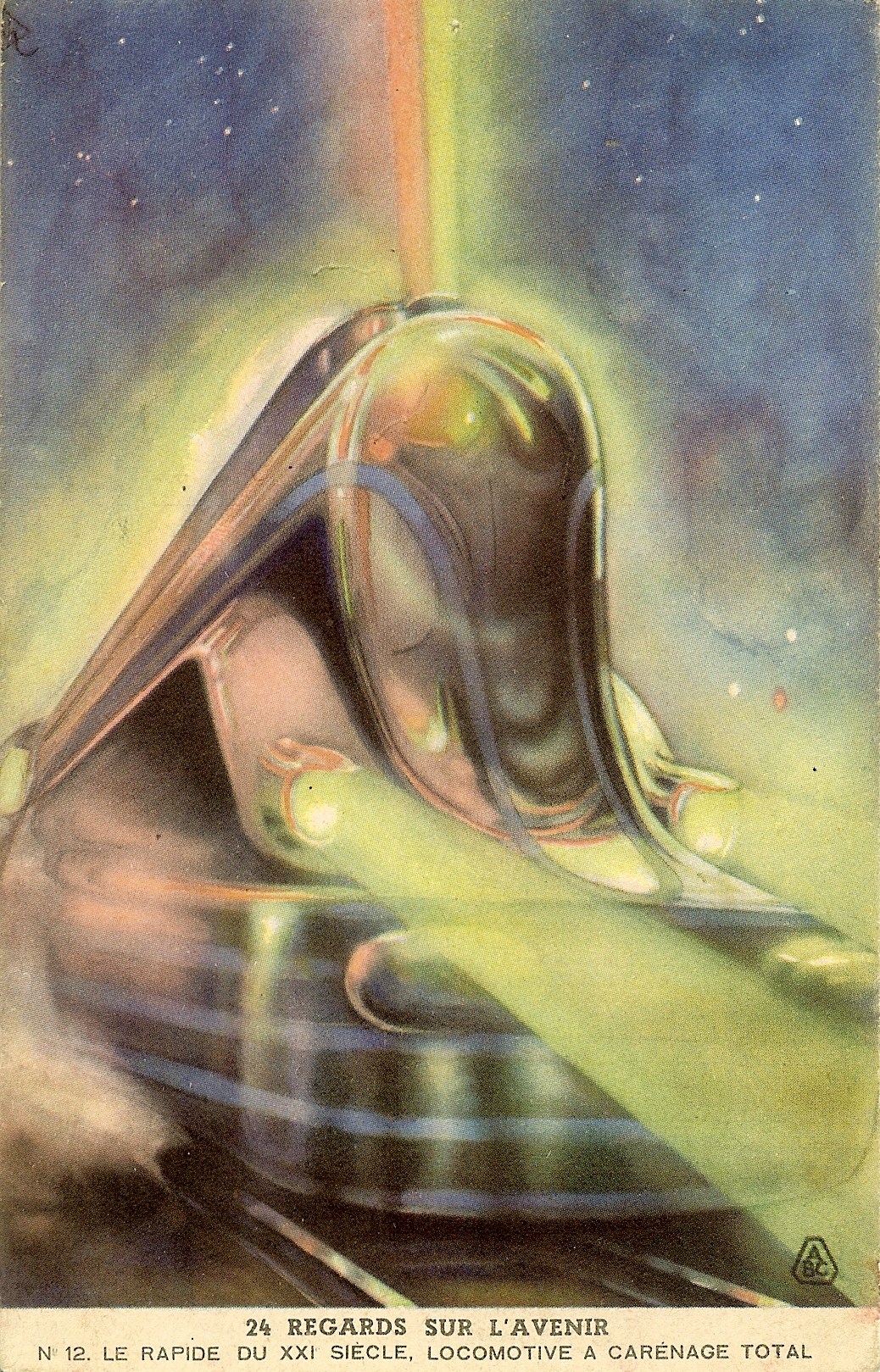
With our flat only steps away from the Garden of the Champs Elysées near Avenue Gabriel, it was inevitable that we would meet. How could I resist colour so wonderfully lurid in a science-fiction/absinthe sort of way? My eyes didn’t know which curve to follow in this 1930s futuristic vision of a streamlined locomotive.

The front of the card reads:

24 views of the future
Number 12. The express train of the 21st century, a completely streamlined locomotive.
(What were the other 23 visions of the future? Can anyone help me here?)

One the back of the card, one word jumped out from the others.

Byrrh was new to us. Finding out about it was the start of a voyage of discovery. At the postcard market, I had stumbled upon a French classic, a card designed to advertise a wine-based aperitif trademarked in 1873. Founded by the brothers Pallade and Simon Violet, the company is still producing Byrrh in Thuir near Perpignan in the Pyrenées-Orientales.

The late 1890s were the heyday of alcohol-based health products, patent medicines, restoratives, and tonics of all sorts. Byrrh started as a health drink sold at pharmacies, but came into its own as a red-wine-and-quinine-based aperitif. The name Byrrh is now associated with an astounding legacy of compelling advertising art.

Byrrh was so successful that when the company needed its own railway depot, Messrs. Violet Frères called on none other than Gustave Eiffel’s engineering firm for the design. The stunning depot still stands, but is no longer used for trains. Nonetheless the company, now part of Pernod Ricard S.A., thrives and hosts approximately 60,000 visitors per year. One day, Philippa and I will be part of that number.

But taste is what counts. After finding the postcard and reading about a “ghost sign” for Byrrh on one of our favourite Paris blogs, Invisible Paris, we decided we needed to carry out our own taste test. We tracked down a bottle (a dusty one, which had clearly been on the shelf for some time) in the Monoprix on the Champs Elysées.

We came home and poured it out into small glasses. After some experimentation, we discovered that we preferred it chilled with ice and a slice of lemon. It also seemed to taste best when consumed sitting in the open air on the balcony. In the name of scientific gustatory accuracy, we can report that subsequent tests (with minor variations) yielded identical results.

Alas, we cannot buy Byrrh in Ontario from our government-run monopoly (the Liquor Control Board of Ontario). So we now have one more reason to go back to Paris.

But I should return to the postcard. There is more to it than the drink it advertises.

The arresting image on the front was in the spirit of the streamlined locomotives designed by Henry Dreyfuss and French-born American industrial designer Raymond Loewy. Curiously, the unstreamlined dual headlights, which seem distinctly automotive, reminded me of the bug-eyed Austin Healey Sprites of the late 1950s.

In its own way, the back of the card is as interesting as the front.

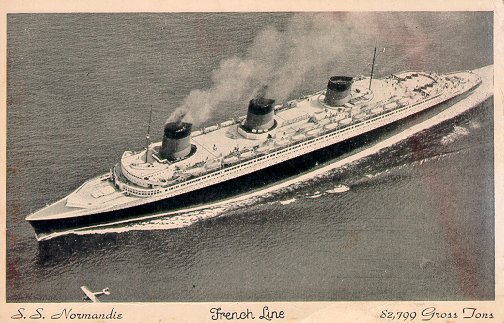
In the 1930s and 1940s, aerodynamic design was all the rage. Byrrh built on this interest with a fine piece of non-technical writing on the importance of aerodynamics and streamlining. The text points out (and I translate) that “at a speed of 80 to 90 kilometres per hour [48 to 54 mph],” two-thirds of the fuel burned in the engine of a modern vehicle is used to “fight air resistance and the last third of fuel is all that is needed to keep it rolling.” It adds that aerodynamic applications include not just planes and cars, but also transatlantic ships such as the Normandie and locomotives such as the French state railway system’s Pacific locomotive. After the Pacific had been given what then passed for a streamlined cladding, it “used 100 horsepower less at 120 kilometres per hour.”

The card explains that reducing air resistance “translates into an important savings in the cost of coal, which is going to inspire a transformation in the exterior of locomotives so that in the near future, they will have a new look such as that our image has tried to show.” This radical transformation of high-speed locomotives certainly came to pass.

The Pacific locomotive, known as Pacific 231,* although it looked nothing like the vision on the card, was apparently legendary in its day. Indeed, in 1923 a young French-born composer of Swiss parentage gave the locomotive a rare honour: a permanent home in musical history. Arthur Honegger (1892-1955) loved locomotives with a passion. “For me, they are living creatures and I love them as others love women or horses.” He expressed his love in his Symphonic Movement No. 1, more commonly known as “Pacific 231.” It was meant to evoke the feelings, sound and movement of steam locomotives.

You can hear the music and see the locomotive in an award-winning film on YouTube. In 1949 French filmmaker Jean Mitry won the Prix du Festival at Cannes for his Pacific 231, a short cinematographic essay (rather than a documentary) in which Honneger’s music accompanies evocative shots of a Pacific 231 journey. Take a look; it is almost hypnotic.

As for the ocean liner mentioned on the card, I had heard of the SS Normandie, which set out on its maiden voyage on 29 May 1935. However, I had always regarded it as an example of luxury travel and was surprised to learn it was a leader in energy efficiency. The novel hull designed by Vladimir Yourkevitch needed far less power—and fuel—than other massive liners travelling at the same speed.

To get back to the card behind these wanderings, the ultimate message is that even though “everything changes, everything progresses,” if we already have perfection, we need not change. The manufacturers hasten to assure us that “BYRRH alone cannot get better, for this tonic wine with quinquina is perfect.”

It is a brilliant piece of advertising image and copy. It starts with a strong contemporary interest—streamlining—gives the reader good information, and follows through with the message: Byrrh is beyond the need for change.

And so I sit at my desk in Toronto and reflect on a postcard from an outdoor market, a 19th-century drink, and a 20th-century ship and locomotive. How curious. But perhaps I should also reflect on Paris itself, where these things seem to happen to me. I tend to notice details, which become richer upon reflection, making one reflect on what one already knows and inspiring one to learn more.

My French is still abysmal, I seem to be lost half the time, I misunderstand much of what I am told or hear, and yet I love it. For me, Paris offers a confusing richness that is half destination and half starting point.

Oh and by the way, did anyone notice the fleeting appearance of a Byrrh poster in Woody Allen’s Midnight in Paris?

Text by Norman Ball

*From my train-loving industrial designer friend Ken I learned that the 231 referred to the number and purpose of the axles on the locomotive. He writes “starting from the front, there are two axles in the guide truck, the subassembly that helps guide the locomotive into curves. Then the 3 axles for the 3 sets of driving wheels; they’re almost always pretty big. Following that, the Pacific type has a single trailing truck (one axle) that helps hold up the back end.” Each axle has two wheels, and in the American system, which counts wheels rather than axles, the European Pacific 231 becomes the Pacific 462. Train buffs will appreciate a video clip showing the members of l’Association Pacific Vapeur Club, who lovingly maintain and operate a Pacific 231.

Posted in Paris film, Paris food, Paris popular culture, Paris postcards | Tagged , , , , , , , , , , , | 3 Comments

Guessing games

A little shop that we often visit is Tumbleweed on the rue de Turenne. As its name suggests, the owner is American, and the tiny boutique features everything from puzzles to children’s shoes to wonderful bags printed with images of Paris shopfronts.

We bought one of the bags as a gift for a friend. The young woman behind the counter wrapped it for us in paper printed with what at first looked like playing cards. However, a closer look revealed that the images were of odd-looking 19th-century characters, and each card had a question or a bit of dialogue written on it. The shop assistant told us they were “devinettes d’Épinal.”

Devinettes are guessing games or riddles. Each card contains a hidden image, and the question is a prompt to find a face or an animal hidden in the image. Here’s an example. The card says, “Find the rabbit?”


Give up? Look closely at the hunter’s hat.

This one is a reproduction of one of the devinettes – we found an inexpensive set in the gift shop at the Musée Jacquemart-André.

In many cases, the solution to the puzzle involves turning the card upside down (what the instructions call “tête-bêche”). Here is one that asks you to find the “Naturaliste.”

Turn it upside down and in the yellow part of the butterfly’s wing, you will find his face.

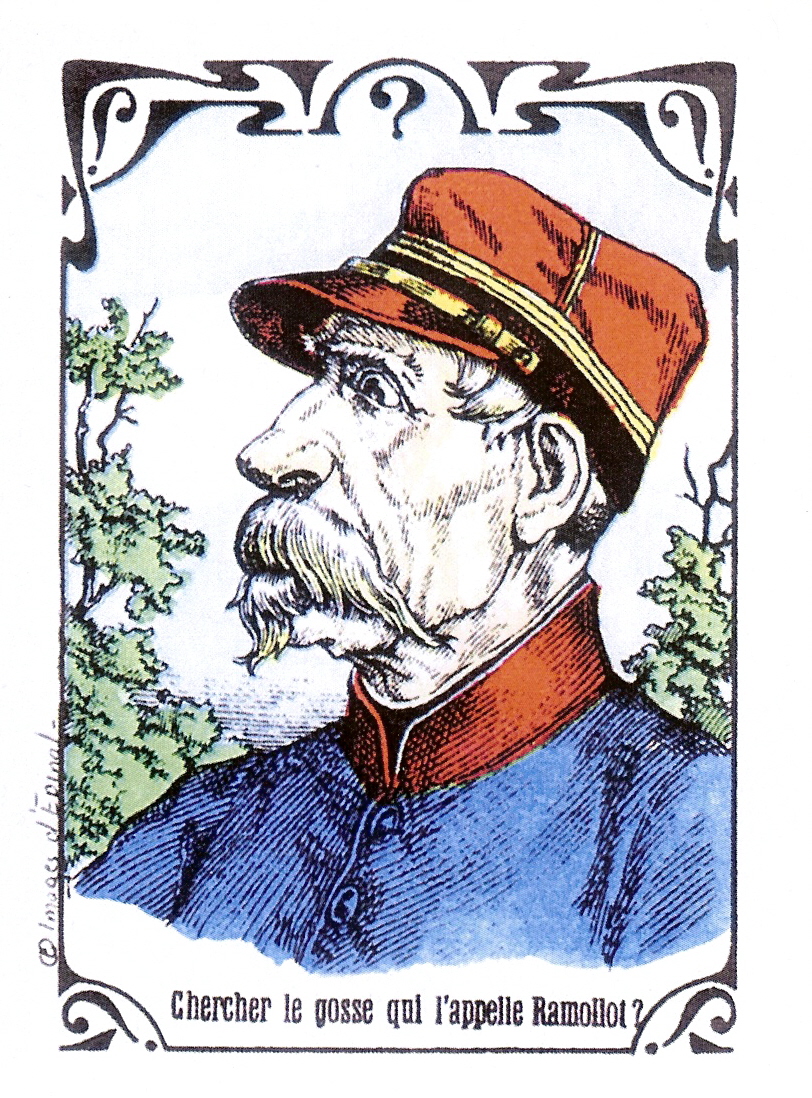
Or you may need to turn it sideways. This one tells you to look for a child called “Ramollot.”

The child is hiding in the man’s beard.

The original cards were created by a printer called Jean-Charles Pellerin in the town of Épinal in eastern France. His fame as a printer began in 1796, with little woodblock images of famous people – in those days, if you wanted to keep on the right side of the authorities, that meant Napoleon, his family members, and his military leaders. The small pictures were a bit like the hockey cards that Canadian children collect – or used to. (Trade you a Maréchal Ney for a Joseph Bonaparte?)

Pellerin branched out into images from well-known stories, such as Cendrillon (Cinderella) or Don Quichotte (Don Quixote). Rather like “Classic Comics” – remember them? By this point, the cards were being created as lithographs, and hand-coloured.

The devinettes came a bit later – the 19th century was the era of parlour games made possible as printing, especially in colour, became ever cheaper.

The modern set we bought was printed by a company called Marc Vidal, which makes these and other old-fashioned amusements and has a website in both French and hilariously non-idiomatic English (“Marc Vidal… it’s a universe aside which recognize itself at once and is a reference all over the world.” Right.) The devinettes are described as “play of vision on old picture which will amuse the SMALL ones as much as the LARGE ones.” Believe me, it sounds a lot better in French.

Here are a few more devinettes to keep you guessing. The answers are provided at the end of the blog. To keep it simple, I have chosen ones that will not require you to stand on your head.

1. The text reads: “If you haven’t already cooked it, please Monsieur Lustucru, give me back my Minet [my cat].”
“See here, Madame Michel, how could I have taken him, this cat that never leaves you? Look for him: if he is not in your skirts, he is somewhere else, but surely close by.”

2. Lantimèche, Father Lustucru, and Cassandra. Can you find the latter?

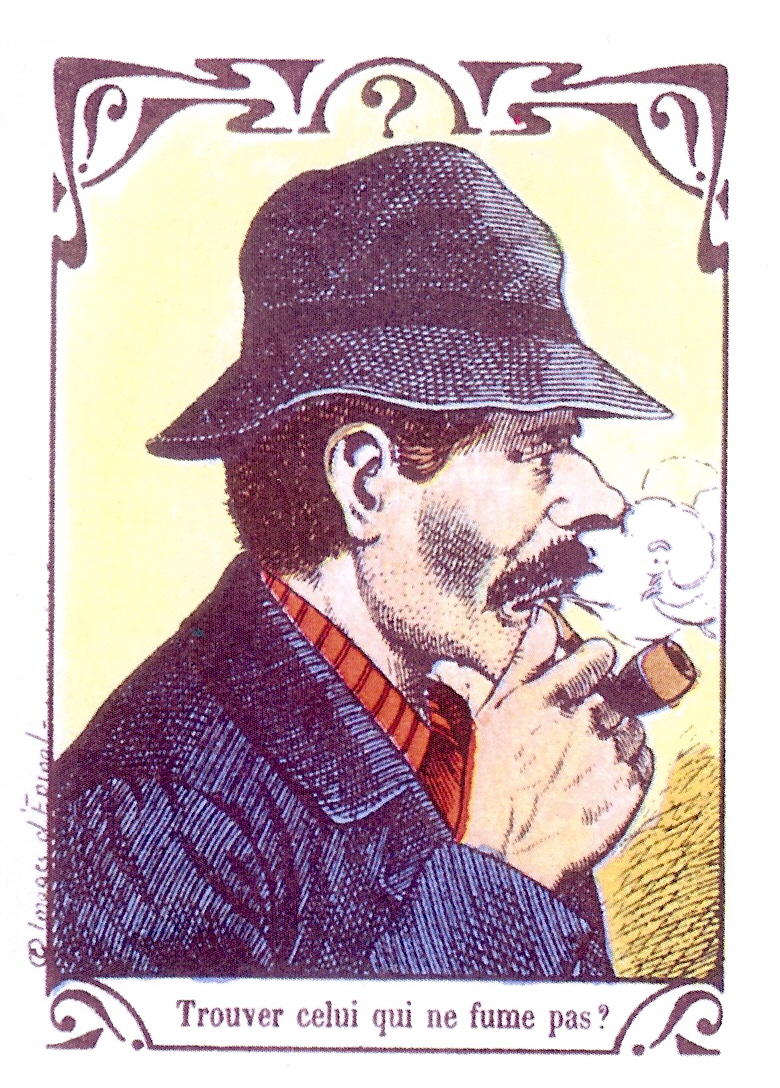
3. Find the person who is not smoking.

There is even a cast of characters with names from French slang, most of it dated and obscure.

Lantimèche: apparently this is a word for the lighter of gas lamps, which is sometimes used to mean “thingamajig.”

Lustucru: this means silly or simple and denotes a simpleton.

Ramollot: this was the subject of a series of 19th century stories, and a synonym for a blustery and not-too-bright military type.

And of course, Minet the cat. French cats often seemed to be called Minet, Minou, or Minouche. As for cooking cats, I’ve been told that when rabbits are displayed in French markets, they must be sold with their heads and feet on, because otherwise an unscrupulous butcher might pass off the body of a cat for that of a rabbit. Or perhaps this is an urban legend…?

If we ever get to Épinal, we will visit its Museum of Images, which makes the most of the city’s heritage as a centre of the printing trade and features everything from playing cards to paper dolls. (To see an English brochure of the museum, click here)

Meanwhile, we’re still working our way through the devinettes.

Answers:
1. The cat is on her head (part of her cap).
2. Cassandra’s profile is visible under the man’s arm (the tail of his coat is her mouth).
3. A profile is visible in the pipe smoke, nose to nose with the smoker.

Text by Philippa Campsie

Posted in Paris nostalgia, Paris popular culture | Tagged , , , , , , , , , , , | 2 Comments