The 37 Steps

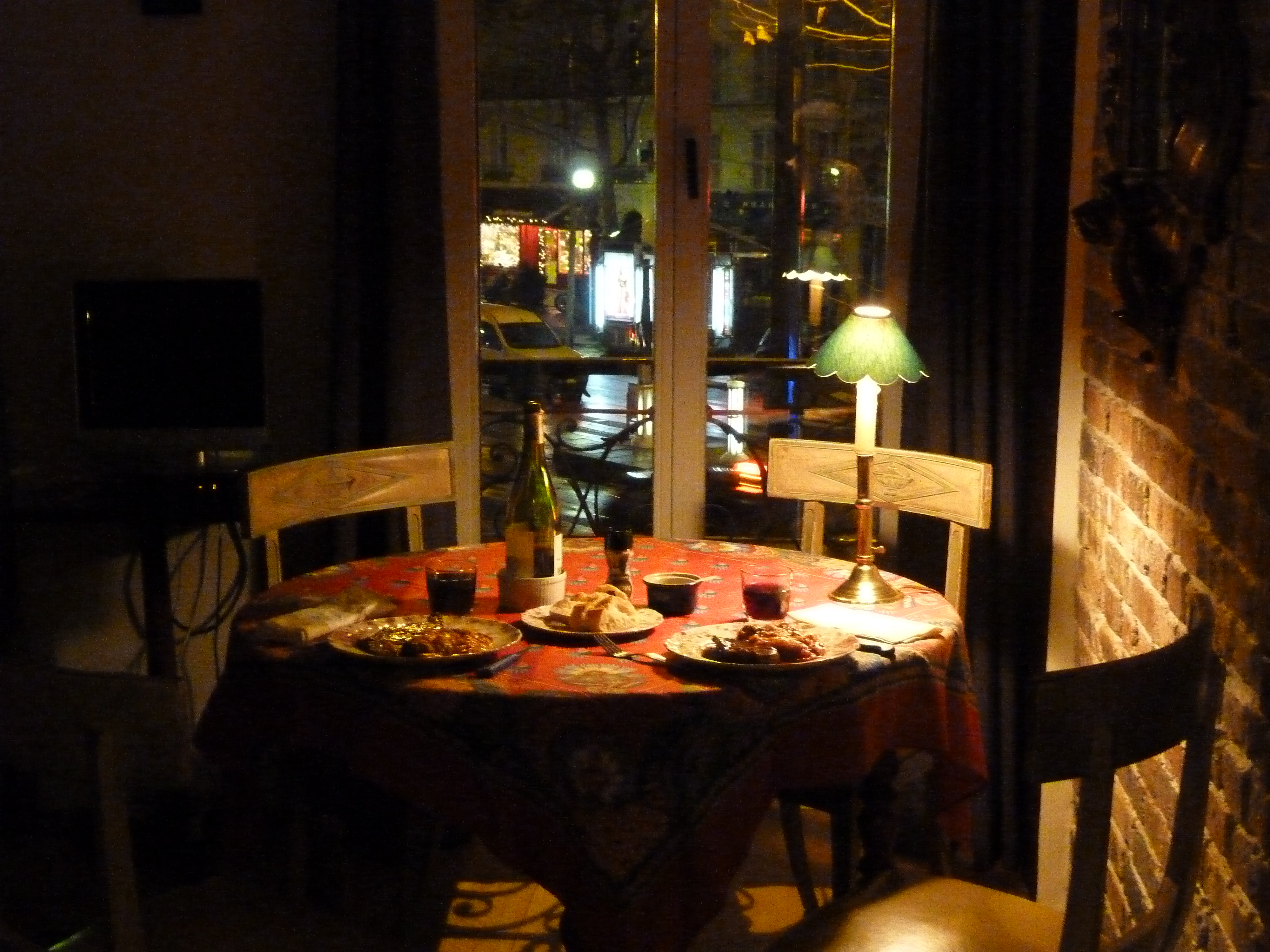
It’s January, and the papers are full of recommended diets to deal with the extra pounds we all gained over Christmas. Oh, phooey. I’ve got a great book on French food that is making me hungry just reading about it and my niece Alex has started a recipe project and blog and invited contributions. Forget the diet, there is cooking to be done.

I’ll start with the blog. It’s very new still, but Alex has committed to trying one new recipe a week for the whole year, and my sister and I are weighing in with our ideas, along with some of Alex’s friends. So do drop by and take a look: it’s called Eat and Two Veg.

As for the book, it’s by two people we have never met, but with whom we have a lot in common. Diane Shaskin and Mark Craft are a husband-and-wife writing team, just as Norman and I are. They are Canadians who are indifferent to hockey and have no objection to green Christmases. They travel to France as often as they can. And when a friend asks “You’re going back again?…Haven’t you been there, done that?” Diane’s response is, “I haven’t been to France for six months…I mean, it’s perfectly obvious, isn’t it? Think of all the things I’ve missed during those months. Parisian life is going on without me!”

But of course. Why go anywhere else? You can find new places, have new experiences, voyage into the unknown, without leaving Paris. And at the same time you can enjoy familiar scenes, revisit old haunts, and rejoin friends. The perfect combination.

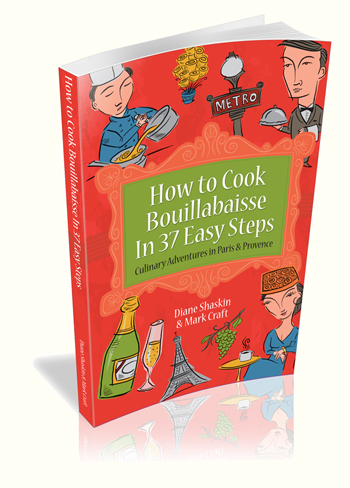
Diane and Mark’s book is called How to Cook Bouillabaisse in 37 Easy Steps: Culinary Adventures in Paris & Provence.* Don’t let the title scare you. It’s sort of a journal/scrapbook/cookbook. There are short chapters on Diane and Mark’s experiences dating back to their first trip to France 20 years ago, brief explanations of various French foods, memorable menus, preparation tips, photographs, a list of Provençal markets, and a directory of favourite Paris restaurants. And plenty of non-intimidating recipes.
The two of them rent places in Paris and Provence. What a relief. I’m not sure I could stand one more book about non-French people buying and fixing up a tumbledown house in France and dealing with dire construction problems and impossibly quaint local tradespeople.

Diane and Mark shop at markets and cook things, they eat at restaurants and bistros, they take tours and courses, they make mistakes and learn from them, they ask questions when they don’t know something. And they have studded the book with the useful things they have found out.

Item: “Tom’s Coquilles St-Jacques has the red foot [of the scallop] attached, which is common in France to assure the diner that the scallop is genuine and not a cut piece of cod.” (p. 22) I remember seeing that little orangey-red thing on the scallops that our friend Marie brought us on a recent visit, but I didn’t know why it was there.

Item: “Butter in France has an AOC, Appellation d’Origine Contrôlée. Two of them.” (p. 121) You don’t say.
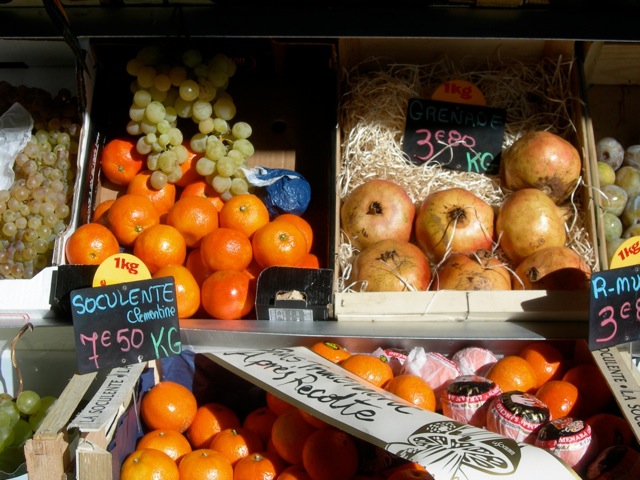
Item: Market vendors indicate the quality of the produce with three categories. “Extra means best quality: no bruising, no spots, perfect. Catégorie 1 means good quality with little bruising. Catégorie 2 is everything else, still good product, but perhaps suitable for cooking or preserving.” (p. 185) Something to remember next time we’re at the market.

Item: In making a green salad, after washing the greens, “spin several times to make sure the majority of water is removed. Water is the enemy of crisp salads…[then] place the greens in the refrigerator for at least 15 minutes. This guarantees that they will become crisp.” (p. 191) Something I will remember. (Norman wants me to add that he never spins salads, he blots the leaves dry with a clean towel. He says he read in an article about French chefs that this is how it should be done. And he can’t wait 15 minutes!)
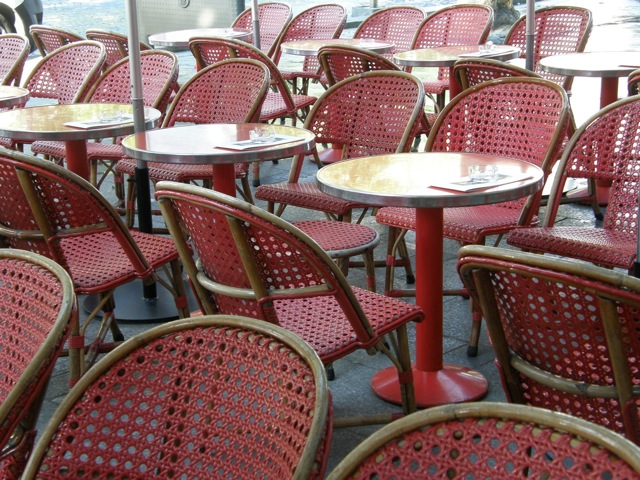
All in all, an informative and enjoyable read. And despite the title, it is not confined to Paris and Provence. There’s the visit to the Champagne region. And the trips to Hanoi to adopt a little boy, complete with a couple of Vietnamese recipes.

My copy is now studded with yellow sticky notes of recipes to try. I guess eventually I can add them to Alex’s blog.

Text by Philippa Campsie, photographs by Norman Ball.

*Diane Shaskin and Mark Craft maintain Paris Insiders’ Guide, a compendium of information for travellers to Paris. Their book is available from Amazon.

Posted in Paris food, Paris markets | Tagged , , , , , , , , | 4 Comments

Renault assembly line worker designs world’s fastest ocean liner

On its maiden voyage to New York City in 1935, the French luxury liner Normandie, owned by the Compagnie Générale Transatlantique, astonished everyone who saw it. It was the longest ship in the world and yet, with its long tapered bow and stern and the way it widened out amidships like an old-fashioned champagne glass, it had the graceful lines associated with yachts. Its luxurious interior was a showcase of French design and craftsmanship. Moreover, on that first crossing it set a new transatlantic crossing average speed record and won the coveted Blue Ribbon of the Atlantic. (This was not an actual prize, just an unofficial way to acknowledge speed records at sea.)

The ship was packed with celebrities on that voyage. In New York, 100,000 people jammed the harbour to await its arrival, 30,000 of them in grandstands put up for the occasion. The city’s eight daily newspapers each put the Normandie on the front page, and a radio station gave it seven hours of live coverage. This was news, glamour, romance.

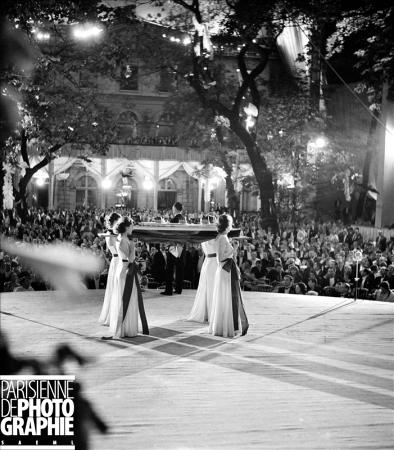
Back in Paris, the excitement was equally intense. At the Bal des Petit Lits Blancs (an annual charity ball held at the Opéra to benefit tubercular children and attended by everyone who was anyone), four beautiful women dressed in long white gowns cinched with floor-length sashes carried a large model of the Normandie before an admiring crowd.

Now you’d think that with such a French triumph, the designer of that distinctive hull might be considered a celebrity in his own right. You’d be wrong.

The design was the work of a Russian émigré called Vladimir Yourkevitch. His story is told in detail in a wonderful article called “The Age of Ships” by Michael Anton. Here is a short summary.

As a junior naval architect in Russia, Yourkevitch had first proposed his design to the Imperial Russian Navy of Tsar Nicholas II. He was so junior that he had a hard time convincing anyone of the value of his idea for a hull tapered fore and aft that swelled in the middle, which he argued would reduce drag so the ship could go faster while conserving fuel. Only after his design had been tested in in Europe’s most advanced marine test tank in Bremerhaven, Germany, were his claims accepted. The order came through to build four ships to his design—but war broke out, followed by the Russian Revolution. The ships were never completed.

And Vladimir Yourkevitch, who fought on the losing side, had to get out of Russia. He fled first to Turkey, and fetched up in Paris, nearly penniless. He ended up taking a job on the assembly line in the Renault factory. But he was still determined to turn his advanced ideas into a real ship. When he heard of a plan to build a fabulous transatlantic liner to reflect the greatness of France, he put forward his ideas. Nobody listened. Eventually, a friend who had known him in Russia and who had found a job in the French military arranged a meeting with the chairman of the Penhoët shipyard, where the liner was to be built. The chairman assigned a staff engineer to look at the drawings, fully expecting that the engineer would sneer. Instead he said Yourkevitch’s design was better than anything the French had.

Well, that was embarrassing. The French wanted the ship, and the government even agreed to split the cost of construction with the Compagnie Générale Transatlantique, but they weren’t going to make life easy for Yourkevitch. He got the job, but not office space. He drafted his dream ship in a cramped Paris apartment. And the French admiralty engineers insisted his ship model be tested against 25 different French-designed hulls. Back to Germany the design went. Same result as before—it was a superior design.

The Normandie was built, and outfitted in the grandest style, and it was every bit as fast and sleek as Yourkevitch promised. After its inaugural voyage in 1935 the ship shuttled passengers across the Atlantic to ports in North and South America. This was the heyday of luxury liners and leisurely crossings.

And Yourkevitch? Did people form a line outside his door asking for further designs? No. In frustration, he boarded his beloved ship and emigrated to the United States, and opened a naval architecture office in Manhattan.

But once again, war got in the way. The Normandie was in New York City awaiting a return voyage to Europe when in the autumn of 1939 war was declared. Nobody wanted to travel to Europe, so the voyage was cancelled. For months, the ship remained idle in port.

When the Americans entered the war after the attack on Pearl Harbor, the Normandie was no longer just a luxury liner with nowhere to go. With Northern France under German occupation and the rest under Vichy government, which was considered to be cooperating with the enemy, the Normandie was deemed under international law to be a belligerent ship. It was seized by the American government, which wondered what to do with it.

The military decided to make it into a troop ship. That meant stripping it of its luxury interior. Paintings, woodwork, furniture, lamps, carpets—everything had to go.

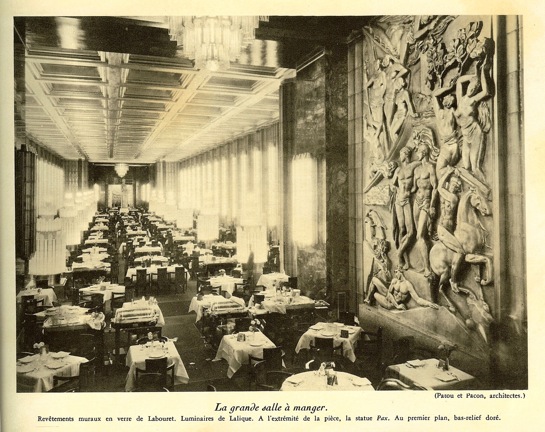
On the morning of February 9, 1942, a work crew set about cutting down the steel supports of the four giant Lalique glass lamps that were the pride of the Normandie. (You can see them in the postcard view, below.) Sparks from an acetylene torch ignited a pile of life jackets and soon a raging fire engulfed the Grand Salon and spread to passageways and rooms.

Fireboats arrived to pump enormous quantities of water into the vessel. Nobody seemed to be aware that the Normandie actually had a built-in system to prevent the spread of fire and that pouring more water into the hull was the wrong thing to do. When Yourkevitch heard from a friend about the fire, he rushed (along with thousands of rubberneckers) to the harbour and tried to tell those in charge to stop. Yourkevitch even volunteered to go on board the burning ship to open the seacocks and fill the bilge tanks with seawater to force the ship to slowly sink into the mud eight feet below, which would have saved the hull. Nobody listened to him. Nobody ever listened to him.

The ship began to list and eventually fell over sideways. There was a public outcry, and accusations of sabotage. People really loved that ship and could not accept that it had been lost through sheer carelessness. Yourkevitch had a plan to bring his ship back to life. Surprise: no one listened.

In 1943, the ship was hauled upright and refloated. But refitting the ship for use would have been so expensive that eventually the beautiful hull was towed off and used for scrap.

To the bitter end, officials in France could not bring themselves to fully acknowledge Youkevitch’s contribution. The government decorated all the major players at the shipyard and CGT for services to France—with the exception of Yourkevitch. Yet, as Michael Anton points out, “No single figure more changed the course of naval architecture in the last 100 years. Virtually every ship in the water today—from cruise ships to tankers to cargo haulers to aircraft carriers—owes its form to Vladimir Yourkevitch.”

Yourkevitch did eventually find work in the States and was honoured by being asked to give lectures at major engineering and naval architecture schools including MIT and the Naval War College. But he never got a chance to do any more big jobs, either military or civilian.

So what has his story taught us? That in one’s life, one single fabulous and lasting achievement is still well above average. That he saw the future earlier than others. Consider the impressive 31 knots his ship achieved on its first transatlantic crossing. When that record was surpassed by the Queen Mary, which topped the Normandie’s speed by a mere 0.7 knots, it was using engines that created 40,000 more horsepower and consumed vastly greater quantities of fuel than the Normandie had.

Better that we remember these things, rather than conclude something even this optimist must have felt on various occasions—namely that no matter where one goes, once an outsider, always an outsider. Nonetheless we keep trying, as he did. And history rewards us, even if our contemporaries do not.

Text by Norman Ball

We’d like to thank two special contributors to this blog. The photographs showing the two interior views and of the Normandie leaving the shipyard are from John Sayers’s collection of transatlantic liner ephemera. And the images showing the Normandie in New York are from the New York postcard collection of Kyle Jolliffe.

The photograph of the model of the Normandie at the Bal des Petits Lits Blancs is from the Roger Viollet collection, available online at Paris en Images.

You can see an additional photograph of the Normandie in our posting about French advertising postcards.

Posted in Paris history, Paris postcards | Tagged , , , , , , , , , , | 15 Comments

Discovery in a dairy shed

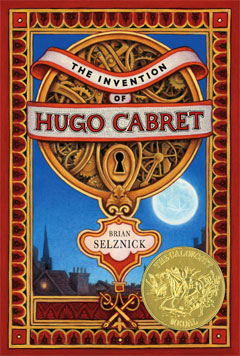
Some movie reviewers are saying that Martin Scorsese’s Hugo, a 3D fantasy set in Paris, is the best film of 2011. It certainly gets our vote. We loved the story, the characters, and the special effects (well done without being overdone). We also loved the book, The Invention of Hugo Cabret by Brian Selznick, on which the movie is based.

And we know something that most viewers do not know, which adds to our appreciation. We have discovered a secret that is hinted at, but never fully explained in Hugo.

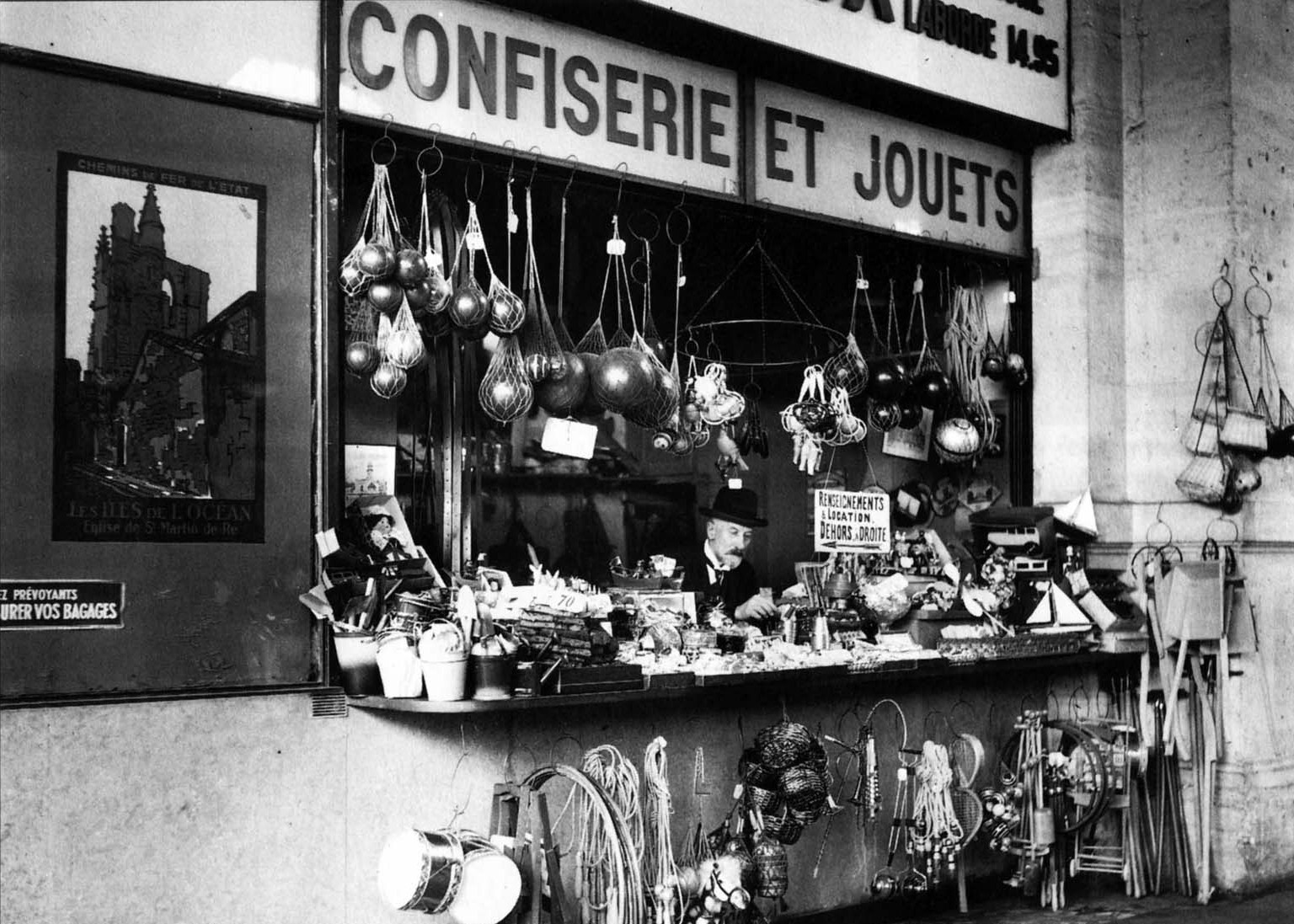
Although the book and the movie are mostly fiction, they incorporate the true story of Georges Méliès, who created hundreds of silent films before the First World War. He made ground-breaking fantasy and adventure pictures, experimenting with special effects and editing techniques that were ahead of his time, but he fell on hard times in the 1920s. Several bad business deals and the effects of the war on the film industry left him with barely enough money to get by. He ended up working in a toyshop in the Gare Montparnasse, as we see in the book and the film. (The photograph below is not from the film, it is the real Méliès.)

The movie ends with the rediscovery of Méliès’s work and a gala at Paris’s Salle Pleyel in which his work is introduced by a film historian called René Tabard (a fictional character). Tabard explains that although most people thought that Méliès’s films had been lost during the war, a search had recovered many of them from attics, barns, and other unlikely locations.

That is close to the truth, but here’s the real story.

In May 1929, Jean-Placide Mauclaire, who had founded the repertory cinema Studio 28 in Montmartre, was given a box of old film reels by a friend. The films, many of which were in poor condition, had been found in the dairy shed (laiterie) of a chateau in Normandy.

Mauclaire watched the films without, at first, knowing who had made them, entranced by their fantastic sets, costumes, characters, and stories. He ended up making three or four trips to the Normandy chateau to recover further reels and eventually collected about 800 or 900 containers of film.

Eventually he spotted the name Georges Méliès in the credits of one of the films. He knew enough to realize what he had discovered, and he was able to locate the impoverished film-maker in Paris. As Mauclaire later told a film historian, “One afternoon in July [1929], before an emotional Méliès and [my friend] Gilson, I screened Papillon fantastique, Le locataire diabolique, Les 400 coups du diable and La Fée Carabosse.”* These were among Méliès’s most celebrated films.

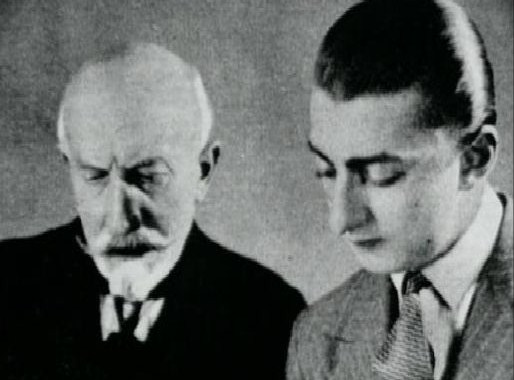
It was Mauclaire who helped stage the gala in December 1929 that restored Méliès’s reputation – if not his fortune. Méliès was awarded the Légion d’Honneur in 1931, but struggled financially until a social organization offered him an apartment in Orly, where he lived until his death in 1938. (In the picture above, Méliès is on the left and Mauclaire is on the right.)

So what had happened to the films between the beginning of the First World War and 1929?

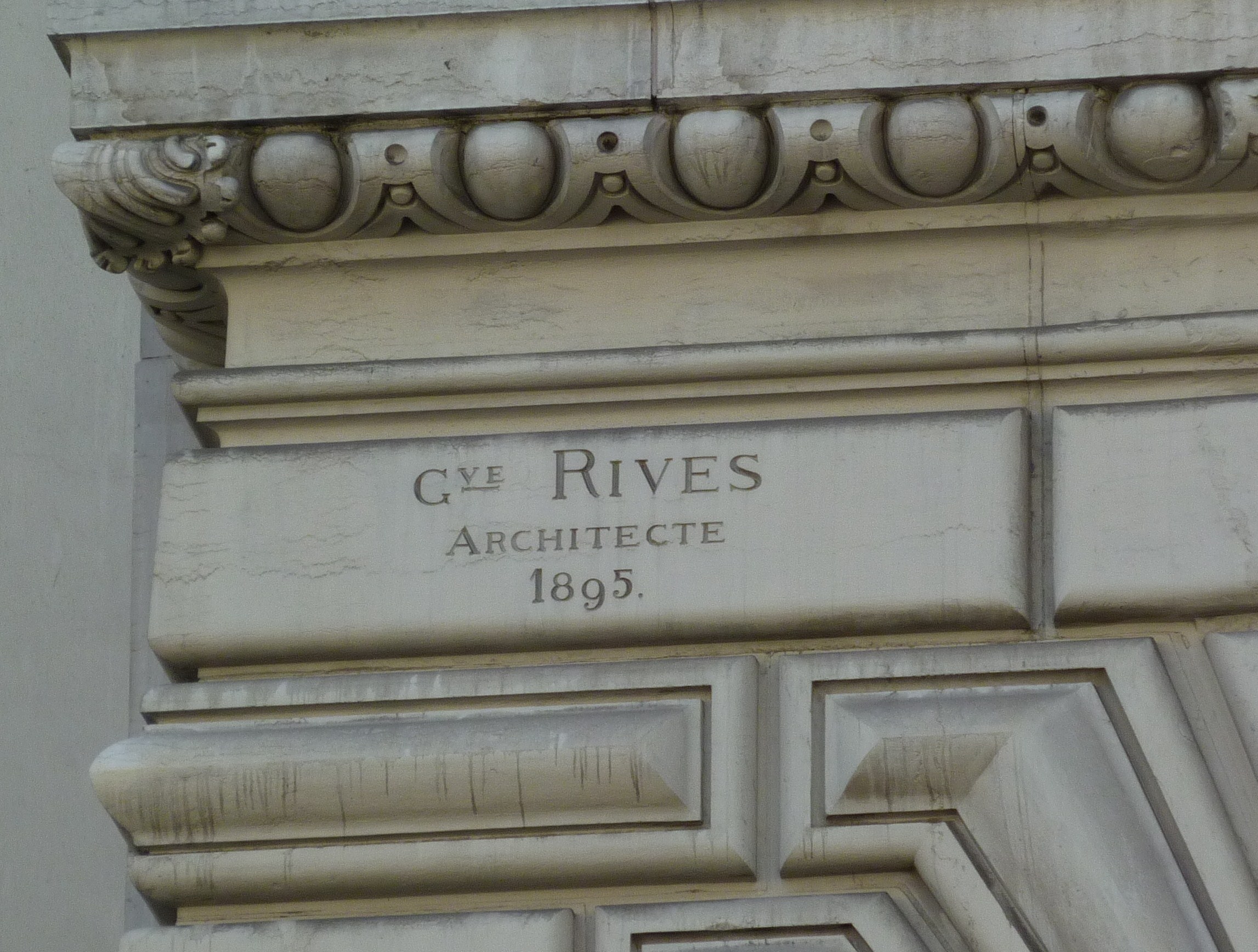
The dairy shed in question stood on the grounds of the Chateau de Jeufosse, near Gaillon, about 100 kilometres to the northwest of Paris. The chateau had once been the home of Gustave Rives, a turn-of-the-century Paris architect.

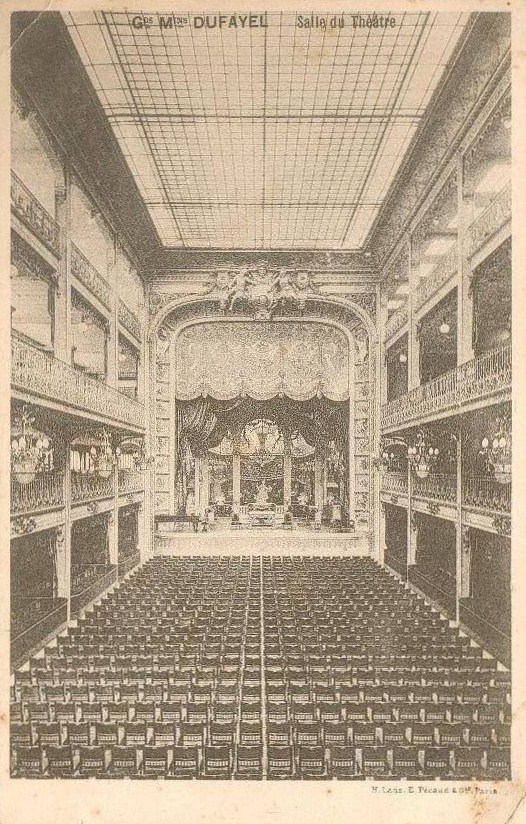
Readers of this blog may recall that Gustave Rives was the architect who enlarged and embellished the huge department store in Montmartre known as the Grands Magasins Dufayel.

This vast shopping emporium included a theatre, which was one of the first in Paris to project films. Dufayel used the cinema to entice customers into his store.

Jean Renoir (noted film director and son of the Impressionist painter) described a visit to Dufayel’s cinema in his memoirs, My Life and My Films. The story takes place in 1897:

The free cinema was another of [Dufayel’s] daring innovations… Scarcely had we taken our seats than the room was plunged in darkness. A terrifying machine shot out a fearsome beam of light piercing the obscurity, and a series of incomprehensible pictures appeared on the screen, accompanied by the sound of a piano at one end and at the other end a sort of hammering that came from the machine. I yelled in my usual fashion and had to be taken out…

So my first encounter with the idol was a complete failure. Gabrielle [Renoir’s nursemaid] was sorry we had not stayed. The film was about a big river and she thought that in the corner of the screen she had glimpsed a crocodile.

Dufayel died in 1916, and his theatre fell into disuse. For some reason, Gustave Rives took possession of the hundreds of reels of film that Dufayel had collected. Perhaps he was a fan of Méliès and decided to salvage the films. Or perhaps Dufayel had asked him to keep the films – according to one source, Rives was Dufayel’s executor.

Gustave Rives died in 1926. The new owners of the Chateau de Jeufosse presumably found the films on the property and alerted the movie enthusiast who passed them to Mauclaire in Paris. Thus a portion of the work of Georges Méliès was saved for posterity.

Other copies of Méliès’s films were found elsewhere, but this was one of the most important discoveries of his work in the 1920s.

Funny how Gustave Rives keeps popping up in this blog. I have already written about the Grands Magasins Dufayel and a few blogs ago, I learned that he had designed the former Hotel Astoria on the Champs-Elysées. Now I find him saving the films of Georges Méliès. I have a feeling I might be stumbling across him again.

Some of the places associated with Méliès, Dufayel, and Rives exist to this day.

The Chateau de Jeufosse is still standing and at some point functioned as a bed-and-breakfast.

You can see Hugo and other films at the cinema that Mauclaire established – Studio 28 at 10, rue Tholozé in the 18th arrondissement.

The Salle Pleyel continues as an important concert venue at 252, rue du Faubourg Saint-Honoré in the 8th arrondissement.

In the town of Orly, the park that surrounds the building in which Méliès was given an apartment in the 1930s has been named for the film-maker. It is located on the rue de la Libération. There is also a monument to Méliès at the nearby Hôtel de Ville (city hall) in Orly.

The building that once housed the Grands Magasins Dufayel is now the offices of a bank at 7, boulevard Barbès in Paris. The building occupies almost an entire block.

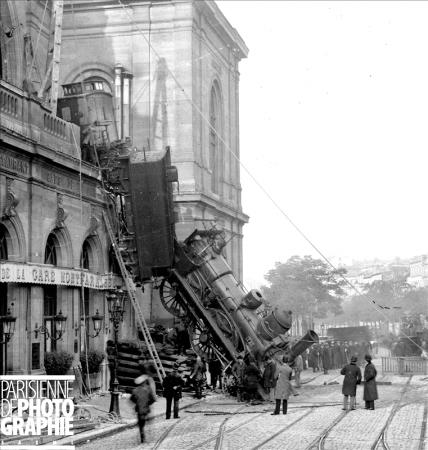
The 19th-century Gare Montparnasse that appears in the film was replaced by a modern building in the 1960s. The older building did not have the fabulous clock tower featured in the film, but the film does include (as a dream sequence) a very real catastrophe that occurred in 1895, when a train crashed through the station’s front wall.

In Paris, truth is every bit as interesting as fiction.

Bonne Année to all our readers, subscribers, followers, commenters, referrers, fellow bloggers, mentors, supporters, enthusiasts, and friends.

Text by Philippa Campsie

*The story of Mauclaire appears in a book called Georges Méliès, l’Illusioniste fin-de-siècle ? by Jacques Malthête and Michel Marié. Jacques Malthête is a great-grandson of Georges Méliès.

Photograph of the Gare Montparnasse from the Roger-Viollet collection, Paris en images.

Posted in Paris film, Paris history | Tagged , , , , , , , , , , , , , | 10 Comments

Merry Christmas and don’t forget the bûche de béton

I hope some of you enjoyed the traditional French Christmas treat, the bûche de Noël (Christmas log), as we did. But let’s not forget another great French tradition: the bûche de béton. Or as some would call it: faux bois.

Let me explain. The bûche de Noël is the traditional log-shaped Christmas cake with wonderful fillings such as chestnut cream, hazelnut, or chocolate (ours was chestnut, by the way). Béton is concrete, and faux bois means false wood. So I have invented the name bûche de béton for concrete that has been made to look like wooden logs or branches.

This beautiful example of bûche de béton is in the Parc des Buttes Chaumont. The former quarry was turned into parkland in the 1860s, and embellished with a lovely suspension bridge designed by Gustave Eiffel. Considering that the place was filled with rocks, we were surprised to see the approach to the bridge made of concrete formed to look like stone (faux pierre?).

And while we are busy faking it, take a quick look at this wonderful waterfall. Looks so natural. As it should. After all, the French are masters of concrete. Yes, this is a 20-metre-high artificial waterfall made of concrete in the same park.

Historically we owe a great debt to France for many pioneering advances in the use of this marvellous building material. However, allow me one more digression. I love much of the cast metal sculpture to be found in galleries, but am equally enamoured of the more anonymous but more-frequently-seen street furniture.

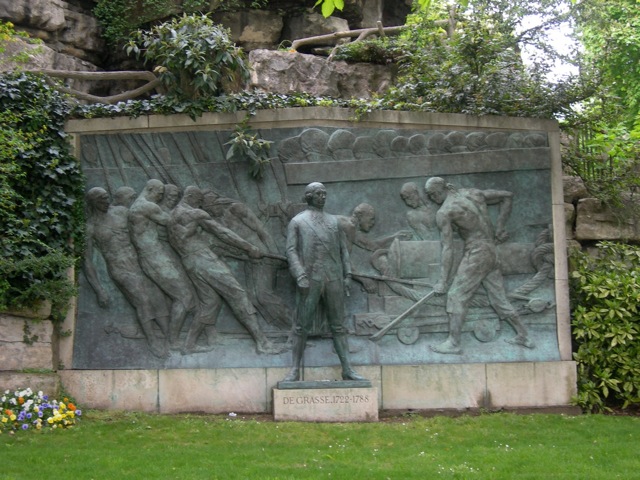
Here what seems like wood is actually cast iron. I regard this as part of the sculptural and artistic richness of Paris. But images of sculpture such as the one shown below are undoubtedly regarded as more mainstream. This one, in the park near the Palais de Chaillot, is dedicated to François Joseph Paul de Grasse (1722-1788), a French naval officer who aided the Americans during the American War of Independence. He even appeared on an American postage stamp in 1931.

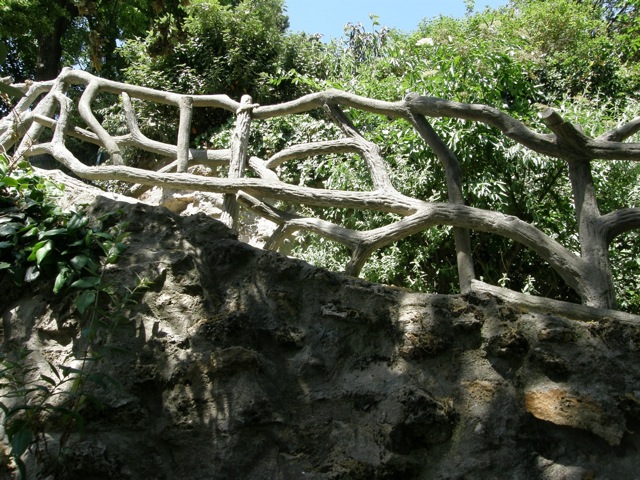
Now look carefully above the sculpture and you will see what looks like several denuded branches. Let’s look again from another angle.

You can still see de Grasse on his plinth on the right. And those branches? Faux bois railings. Beautifully executed, artfully placed, and very useful when walking up or down the uneven stairs.

On another occasion, as we scrambled about the Louise Michel park on the Butte Montmartre looking for a location from which to duplicate the view of the Dufayel department store Philippa had found on an early postcard, we were rewarded by some stunning examples of bûches de béton.

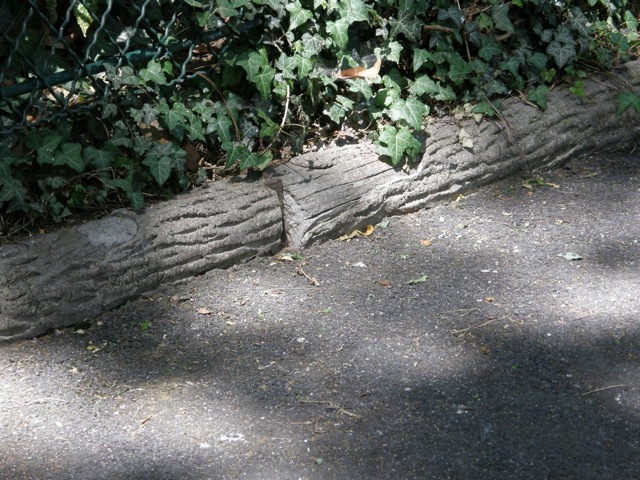
Sometimes they modestly marked the edge of the path.

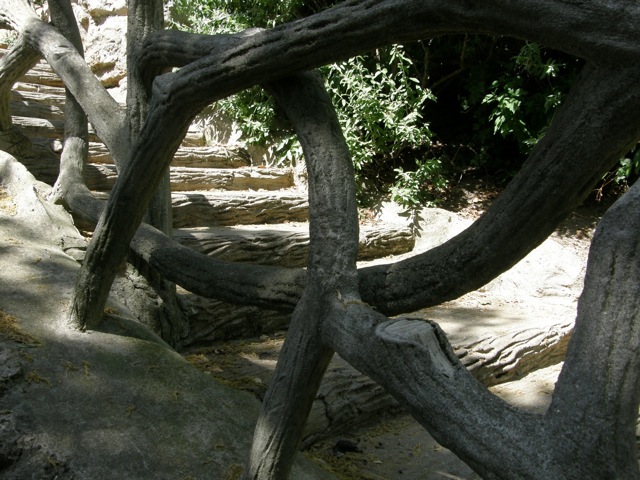
At other times they suggested what we should be climbing towards.

And then they offered a gentle stairway.

But perhaps most of all, they provided an attractive reminder of the richness of everyday outdoor public sculpture in Paris. For me these are French art—everyday art, but art nonetheless. Simple art, made by covering a steel framework with skilfully worked concrete.

Enjoy your bûche de Noël each Christmas. And enjoy your bûches de béton as often as you visit a Paris park. In the New Year, I will be looking for and enjoying more of them in Paris. Of course, if I get desperate and need a bûche de béton fix in a hurry, I know of a sacred grove of them just outside Toronto.

Text and photographs by Norman Ball

Posted in Paris parks, Paris streets | Tagged , , , , , , , , , , , , | 7 Comments

A closer look at Parisian streets

Over the past week, I have been pondering a comment made by Adam Roberts, the author of Invisible Paris (one of our favourite blogs), about our post on courtyards. He confessed to having mixed feelings about these interior spaces and concluded:

Much of Paris is quite oppressive because of these large, hidden spaces too, and sometimes it would be nice to have the garden/courtyard out front, to bring a little more air and break up the monotony of a Haussmannian street.

He has a point, although I think that residents need some private spaces in a city as dense and crowded as Paris. But what got me thinking are those last few words, “the monotony of a Haussmannian street.” He is referring to the kinds of facades shown in the background of this famous painting by Gustave Caillebotte.

Why are the streets created under Haussmann’s direction considered monotonous? What made them that way? And just how monotonous are they really?

When I went looking for answers, I found that nothing is as simple as it seems.

Here’s the simplified story of Georges-Eugène Haussmann and his transformation of Paris.

In 1853, during the period known as the Second Empire, Napoleon III gave him the job of modernizing Paris. Haussmann carved out wide boulevards in the heart of the city, destroying thousands of old buildings to do so. And he regulated the height and design of building facades on the new streets, thereby creating uniformity (read “monotony”) along many of the city’s major arteries.

All true. But it’s less than half the real story.

For example, it is often said that the demolition of old neighbourhoods in the centre of Paris was intended to break up hotbeds of dissent and create big boulevards that would allow for the deployment of military force during uprisings. Well, if that was one reason for the destruction, it was only one among many, and it was nowhere near the top of the list.

Among other things, Haussmann was concerned about public health (he also improved the water and sewer systems). Paris had suffered several outbreaks of cholera, including one in 1849 (one of cholera’s victims that year was Madame Récamier).

Cholera is bad for business, bad for national defence, bad for everyone. Narrow streets were considered unhealthy. Sunlight and air were health-giving. So Haussmann mandated wide streets and building heights that ensured the streets would get lots of sunlight. Moreover, the interiors of the new buildings allowed for larger rooms, better air circulation, and more light than those in the buildings they replaced.

But public health, too, is only a fraction of the story. During the Second Empire, the population of Paris doubled – doubled. Industrialization and changes in agriculture meant that people moved from the countryside to the city in huge numbers. So housing, lots of it, was needed, and fast. Big apartment buildings were a relatively new invention, and Haussmann and his architectes-voyers (the qualified architects working for the city who issued building permits) were writing new rules for a new kind of housing.

Moreover, while contemporary writers deplored the destruction in the heart of the city, they ignored the other purpose of those big, wide streets. Many new streets led outwards to the former countryside, which was rapidly becoming suburbanized (the word faubourg means suburb, and all those street names that incorporate this word, such as the rue du Faubourg St-Honoré, were once areas outside the old city walls). The boulevards connected the centre to the outskirts.

Today, the word “suburb” conjures up vast tracts of developer-built cookie-cutter housing. Well, guess what? Not much has changed. The developers who built Haussmannian Paris were as conservative and risk-averse as developers are today. In his excellent book on the history of Paris architecture, Anthony Sutcliffe says:

Standardisation and lack of decoration minimised building costs, and the effect was hailed as ‘modern’. The owners also saw the standardised façade design of the day as a protection against fashion changes which might easily have devalued their investment in so rapidly changing a city.*

Sound familiar? Building costs were also kept low through the mass production of things like windows and doors, just as they are today.

But again, that’s just another piece of a larger picture. Haussmann was concerned about the way things looked. He was all in favour of eye-catching one-off buildings by big-name architects, but he thought the big design statements should be reserved for major public buildings, while the apartment buildings lining the big streets should be like a frame, setting off these gems while not calling attention to themselves.

Indeed, I couldn’t find many pictures of them among my own photographs, because they do form a sort of background; that is why I have had to resort to historical photographs and paintings.

Haussmann had a sense for how streets are used. The flat classical facades were essentially the wallpaper in large public spaces that were endowed with abundant trees (the number of street trees increased from about 50,000 to more than 95,000 during the Second Empire), as well as benches, kiosks, and other bits of street furniture.

Finally, the 1859 regulations that created the “monotonous” Haussmannian facades were largely adaptations of existing rules. Parisians had long been hooked on classical-style architecture (consider the Louvre) and considered it the best of all possible styles. If Classicism was perfect, how could it be improved? Haussmann didn’t invent the style, he just codified some existing practices.

So where does the idea of “monotony” come from? Well, think about what was happening in other arts at the same time. Just as painters were struggling to break free of the old “classicism,” so were architects. They wanted to express themselves, and the 1859 regulations were getting in the way. In a book on changing architectural styles that I found in the Bibliothèque Forney, the author says, “The severe Haussmannian constraints on urban form pretty much froze all possibility of invention.”**

Architects, then as now, wanted to invent stuff. There weren’t enough one-off public building commissions to go around. They wanted to make personal statements. They resisted the restrictions. So did their clients, who wanted “look-at-me” buildings, just as they do today.

In the end, Haussmann’s original regulations lasted less than 25 years. By 1882, the requirements for flat facades and continuity from one building to another had been modified to allow for balconies and “encorbellements” (projections outwards from the façade). They were further relaxed in 1893 and again in 1902. By that time, new buildings positively writhed with ornamentation and the city awarded yearly prizes for building façades that generally went to the most over-the-top creations. I’ll talk about some of them in a future blog.

My little foray into architectural history has made me see Haussmannian boulevards with new eyes. Monotonous? Maybe. But there is a reason that they look the way they do and they have some redeeming features, including classical proportions and generous windows. Compared to today’s suburban housing, I’ll take Haussmannian monotony any day.

Text by Philippa Campsie; photographs include three from the Roger-Viollet collection, Paris en Images.

*Anthony Sutcliffe, Paris: An Architectural History, Yale University Press, 1993, page 86.
** “Les sévères contraintes haussmanniennes en matière d’urbanisme aviaient quasiment gelé toute possibilité d’invention.” Robert Dulau, Les dômes : ultime respiration baroque, Archives d’Architecture Moderne, c2005, page 15.

Posted in Paris architecture, Paris history, Paris streets | Tagged , , , , , , , , , | 9 Comments

The hidden city

One of the distinct pleasures to be had in Paris is the feeling you get when you open a door into a private space. Enter a digicode and hear the satisfying click-thunk sound, or simply push open a closed but unlocked door to find yourself in the world that normally only Parisians would see.

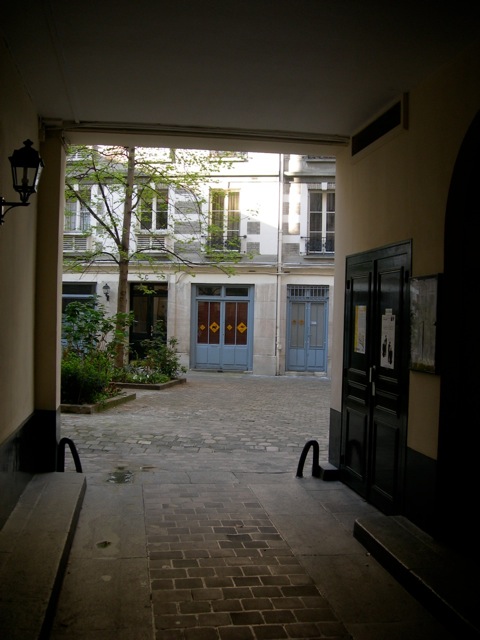
The first apartment we rented in Paris was enormously satisfying to enter. First, there was a huge street door big enough for a coach and horses to pass through, into which was cut a smaller door. Although it is now protected by a digicode, back then one simply pushed the little door and climbed over the raised sill. A short but spacious passage led into the courtyard. To one side was a full-sized tree and a flowerbed with some bushes and plants. Across the courtyard was Escalier B. We had a key to unlock this door. Inside, a flight of steps led upwards to the elevator landing. I never failed to enjoy the process of getting from the street to the apartment. Notice the chasse-roues in the photograph below.

The next place we rented had a street door with a digicode; one walked through a narrow corridor and out the back door to a tiny courtyard where the sun seldom penetrated. Across the cobblestones was another little building – a former workshop that had been built behind the apartment building, hidden from the street. A secret house. Norman took this picture of me looking down from the upper window of our secret house.

I am endlessly fascinated by hidden and secret spaces visible only to a few. The Paris of the boulevards and public spaces is only a fraction of the full city, and most of that other city lies behind walls, or behind entire buildings. Consider this satellite view: the buildings are hollow, and the streets take up a relatively small part of the space. Most of the open space is in the interior of the blocks. And look at all those trees – many of them are not visible from the street.

In the centre of the city, where former residences have been converted to offices, it is possible to enter some of courtyards, since the street doors are left open for customers and employees. Elsewhere, one catches only a glimpse as a resident enters or leaves the building.

I keep photographing courtyards and gardens on our trips to Paris. I am particularly drawn to those with greenery, but even a paved space with a few parked cars can excite my curiosity. There might a statue. Or an interesting door. Or a bit of an older building hidden behind a new one. You never know. You have to check them all.

Courtyards can be classified in various ways. Some are meant for vehicles to enter; others admit only pedestrians; and a few are little more than air shafts penetrated only by daylight.

Each type can be further categorized into forecourts separated from the street by a wall or fence, centre courts surrounded by buildings, and rear courts behind buildings.

Among those accessible to cars, a nice example of a forecourt is the one in front of the Canadian Embassy on the rue du Faubourg St-Honoré. Unlike the American and English embassies, which are bristling with unfriendly-looking security guards, this one stood open and welcoming. It made me feel proud to be Canadian.

And here is an example of a centre court for cars. It is mostly garages, some of which may be used as work spaces. Notice the little statues.

Older versions of this would have had stables rather than garages. More modern versions include the courtyard with access to underground parking.

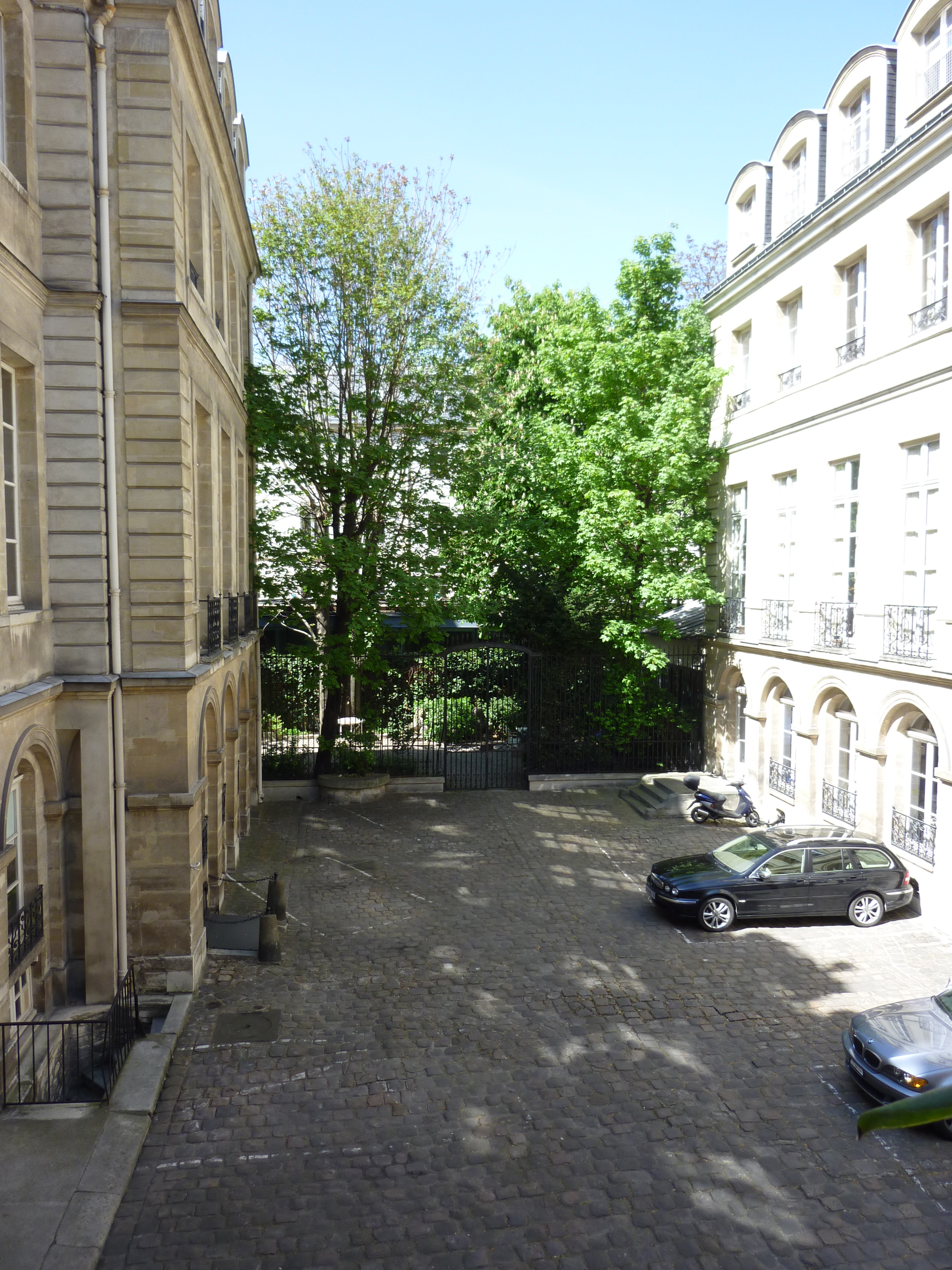
I took the photograph of this rear courtyard from the windows of Deyrolle, the taxidermy emporium. Photography inside the store is forbidden, but photography from the windows is allowed.

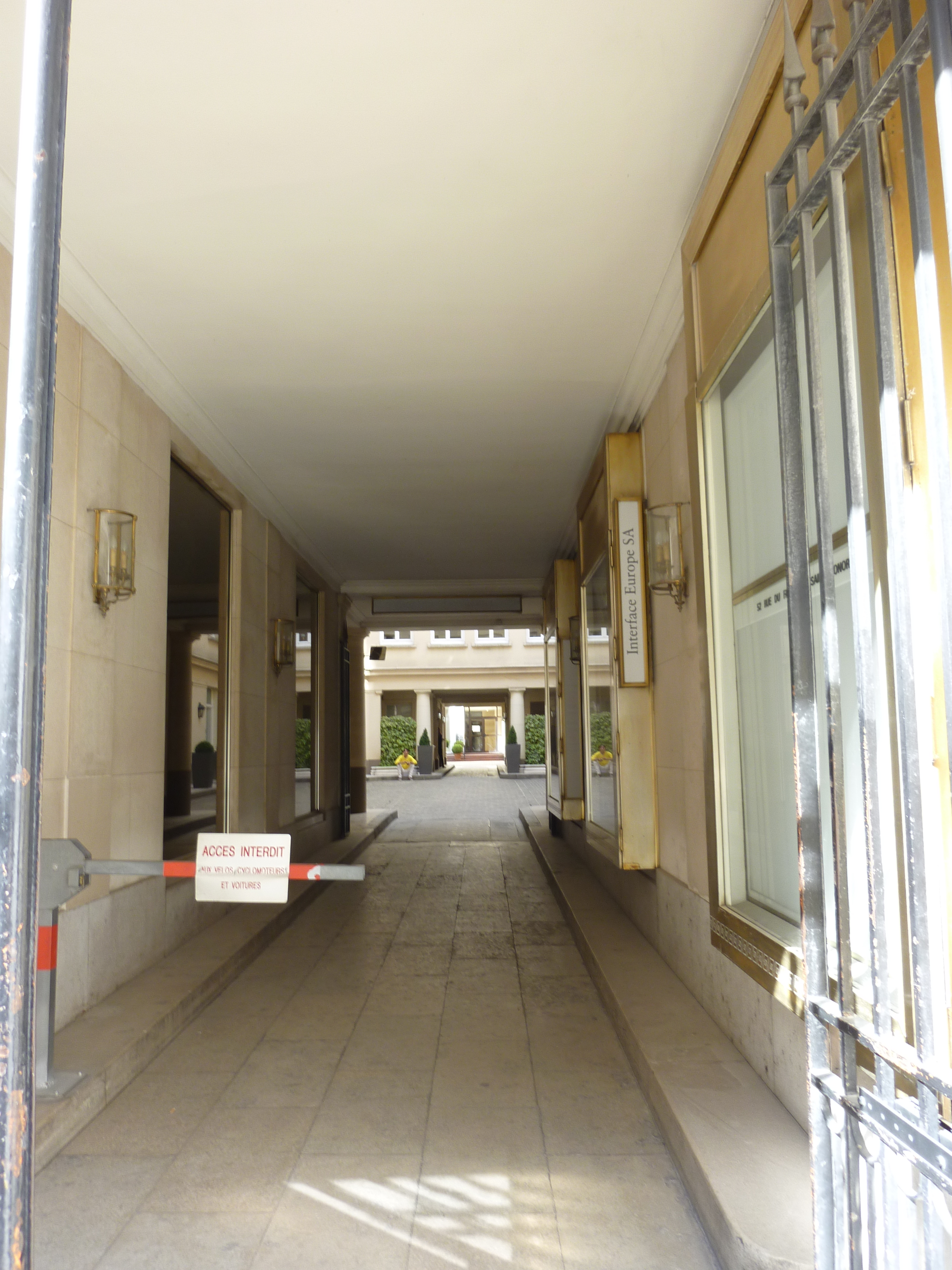
A further category might be the series of two or more courtyards. Indeed, the courtyard of our first apartment had an archway in one corner leading through to another courtyard. Here, the progression from one space to another can be seen from the entrance. Alas, the “Access Interdit” sign prevented me from exploring.

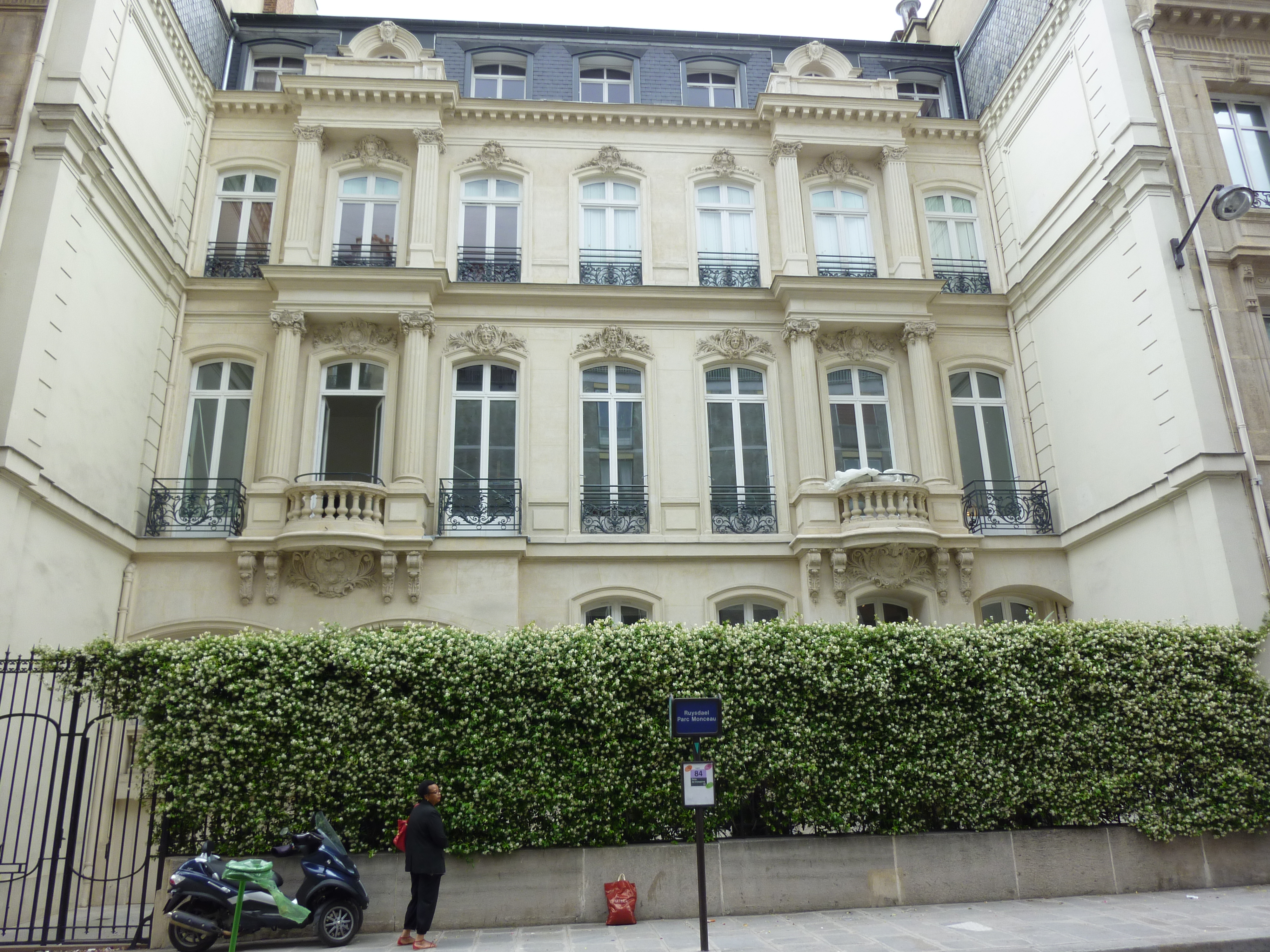
Then there are all the types of courtyard that are accessible only on foot. Most are the centre court type, but there are some forecourts, mostly on very grand buildings. This one is hidden from the street by a thick hedge.

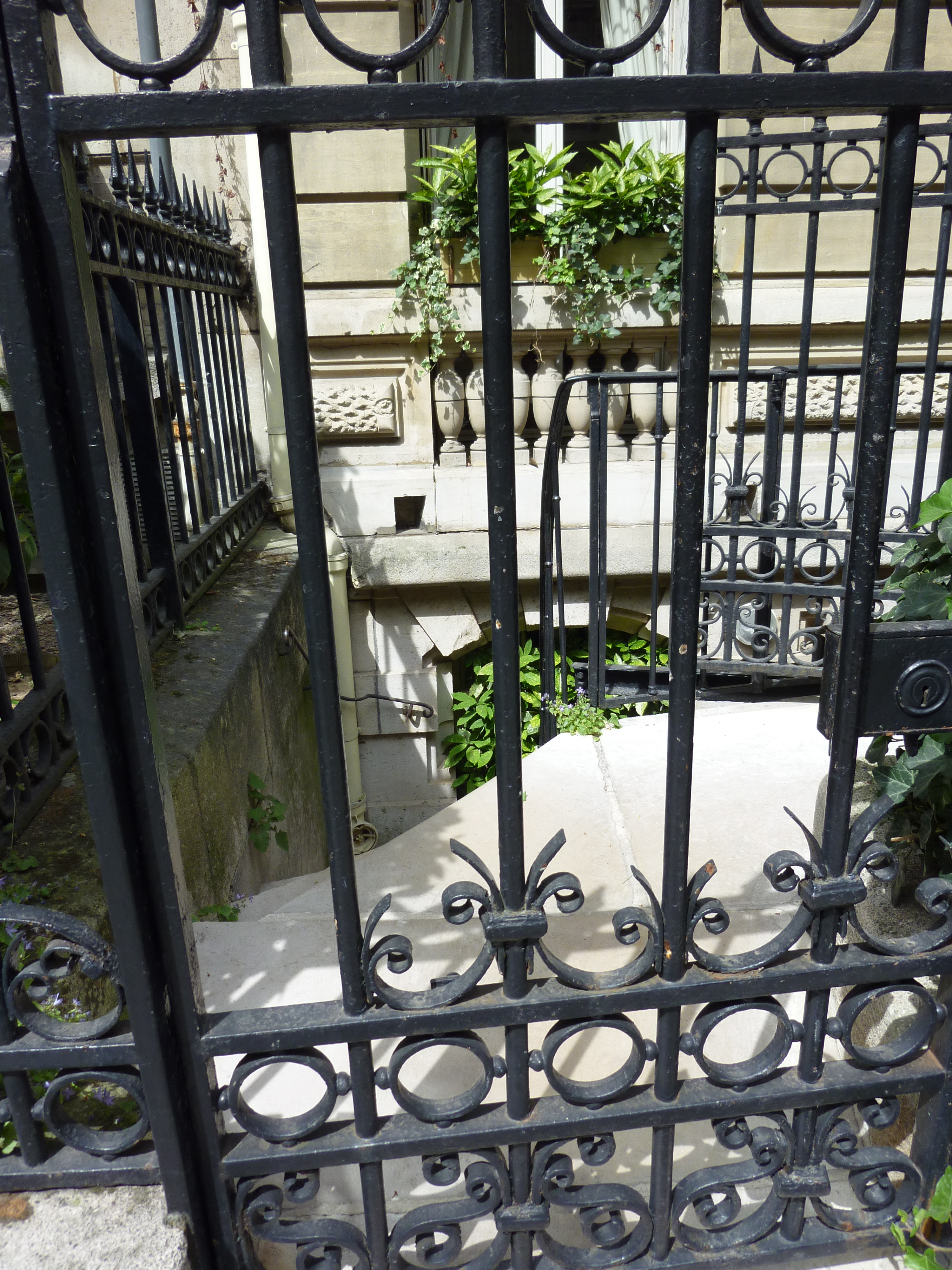
There are even a few examples of what the English would call an “area,” known in French as a “cour anglaise” – a sunken space between the street and the front wall of the building, entered by steps leading down.

Centre courts are more common. This woman, entering with her two children, kindly allowed me to photograph this hidden garden when I asked.

Centre courts may also be sunken. This is in one of the buildings belonging to the Ecole de Medicine of the Université de Paris in the Latin Quarter.

This one, taken behind a bookshop in the Oberkampf neighbourhood, has a little container garden on the roof of a lower storey which appears to open out to a sunken space below street level.

Spaces behind houses include a few rare instances of back gardens, like the lovely one at the Musée Nissim de Camondo, which backs onto the Parc Monceau.

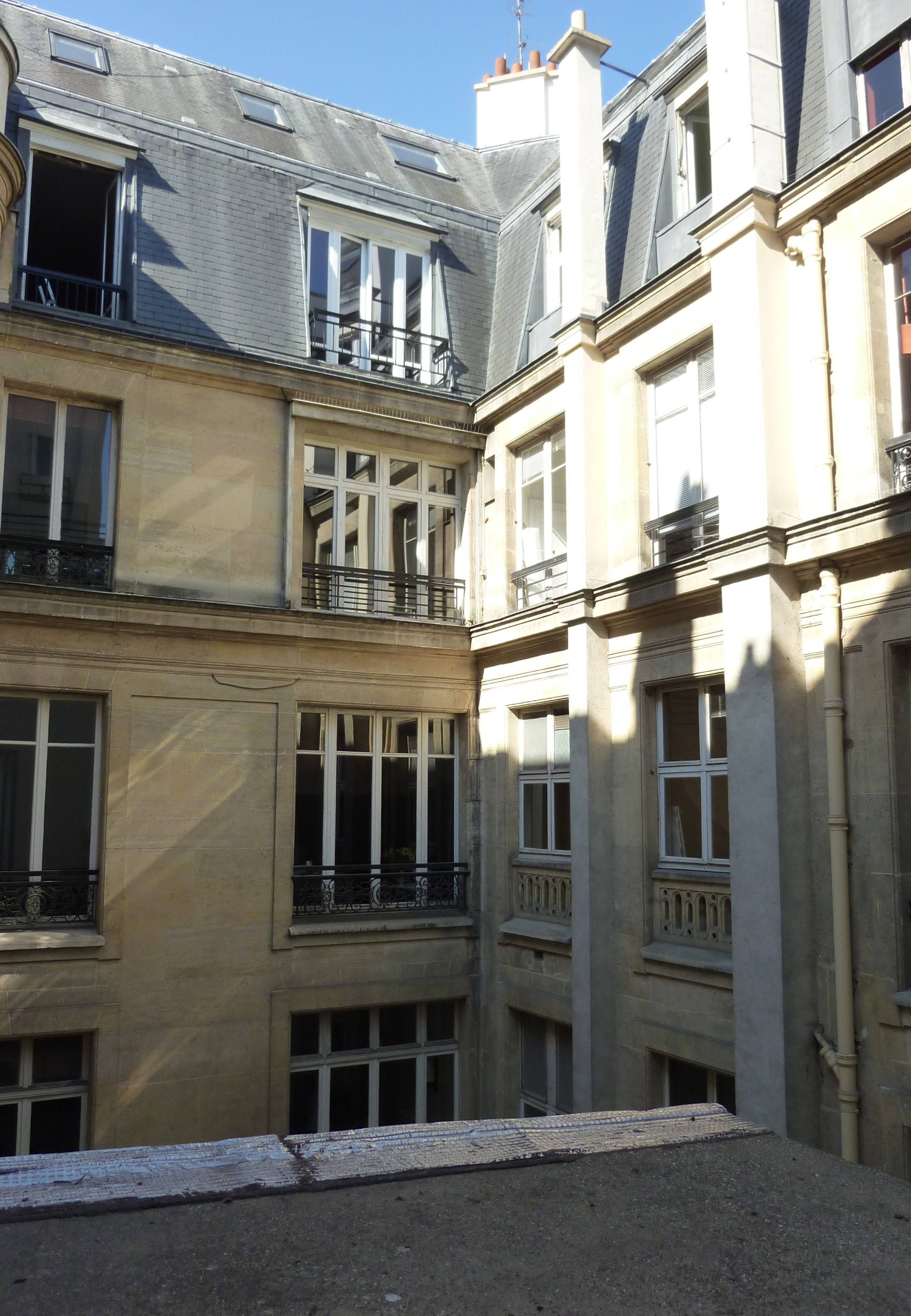
As for the air shaft version, here is the view from our bedroom window last May – a space that lets in daylight during the day and at night ensures a quiet sleep, since the noise from the nearby streets does not penetrate. We never found the entry to the ground level of this space; this is our only view of it.

The more I look for hidden spaces, the more I find, peering into cracks and tiny openings. And if I can see it, I can photograph it and enjoy it all over again when I get home.

Text by Philippa Campsie, photographs by Philippa Campsie and Norman Ball

Posted in Paris architecture, Paris gardens | Tagged , , , , , , , , | 11 Comments

Missing Christmas in Paris

Everything had been arranged for another Christmas in Paris—plane tickets, flat rental, friends to see—and then we had to cancel. We will spend Christmas in Toronto and will have a good time of it. But what will we miss about Christmas in Paris? Let us count the ways.

We will miss the sounds of Paris and the fact that when we are there, we are not forced to listen to the same schlocky Christmas tunes wherever we go. We both love music, but each time we go to Paris, we revel in going to stores, cafés, and restaurants where we have the privilege of listening to the sounds of conversation, laughter, cutlery on dishes, and the lovely ordinary sounds of people enjoying themselves, rather than being pressed down by the weight of obligatory holiday music.

In particular, when we go in search of a bottle or two of wine, we don’t want to hear about Frosty the Snowman, nor about chestnuts doing whatever they do by an open fire. Perhaps we should explain. Here in Toronto, we have to buy wine and liquor from a government store. Starting in November, the stores are required to play pre-programmed music that inserts Christmas songs at the rate of about one in five, then one in four…and so on, until in early December it is all Christmas music, all the time. How the employees stand it, we will never know.

In Paris, although there is certainly a pre-Christmas season of festivity and preparation, the actual Christmas season starts just before Christmas and continues until after New Year’s. People take time off, eat too much, sleep in, and take it easy. This is the time for Christmas music. Here, the so-called Christmas season starts in November and ends abruptly on December 26. The onslaught of carols stops and the sales pitches heighten in hysteria. The French, by comparison, enjoy their holidays and hold sales in late January.

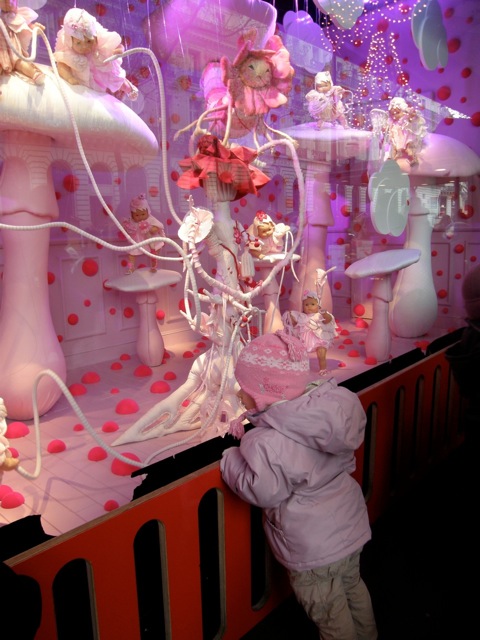
We like Christmas decorations—up to a point, and the point is too often exceeded here. We will miss going into French department stores and seeing wonderful merchandise artfully displayed rather than hidden under a blanket of Santas and reindeer and snowmen. And we will miss the carefully done window treatments that are festive and entertaining without being clichéd. French Christmas windows are expressions of joy, of mystery, of humour, things that help us slow down, talk with each other, share a sense of wonder or a laugh with strangers.

We will miss the sense that each person who enters a shop is important and the feeling it is well worth waiting for service, because when it comes, you are treated with attention and consideration. Last year, as we waited in line in the small neighbourhood butcher shop a few days before Christmas, everyone ahead of us seemed to need special complicated cuts, or something that the butcher had to find in the back of the shop. He somehow kept up a running conversation with the person at the head of the line as he worked, and he seemed to know their families well. One woman had brought in her newly married daughter, and he had some advice and encouragement for her about Christmas cooking. We were quite content to wait for our small order. The mood was convivial, not frantic. We like that shopping in small stores in Paris is still considered a social occasion, not just a rapid exchange of money for goods.

We will miss the Carol Service and Christmas Eve service at the church we attend when we’re in Paris. As an English church in a French city, it is a gathering of people who are to varying extents outsiders in the host culture, and that is probably why it feels so welcoming. The services there have a quality lacking in many other churches. They allow us to share beliefs, hopes, and aspirations without being identical. And they serve champagne on New Year’s Eve!

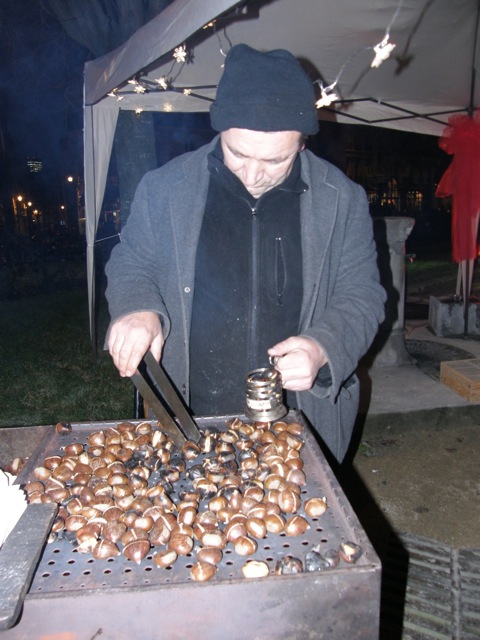
We will miss the Christmas markets and revel in the fact that we are buying things from people who are not pretending to be gnomes, elves, Santa, or anybody else. They know about the products they are selling and enjoy answering your questions, helping you choose the right thing, and making each purchase special. We can still remember that glorious Auvergne cheese we bought last year and the hot chestnuts in paper cones we bought from the chestnut man.

We will miss the quiet of Christmas Day. Unless the weather is too wet, there will be people strolling in the parks and on the streets where there is a sense that it is a special time, but it is a time that you make special in your own way. For us it is about serenity.

Most of all we will miss the sense that there is no rush. This may seem curious, because we have certainly been known to try to cram far too much into a Paris day, hour, minute or even moment. And Paris is a busy city. So why do we feel less rushed in Paris? We think it is because we are not surrounded by endless exhortations to spend money and to be merry. If we want to be reflective rather than festive, it is easier there. If we would rather just look than purchase, it’s okay.

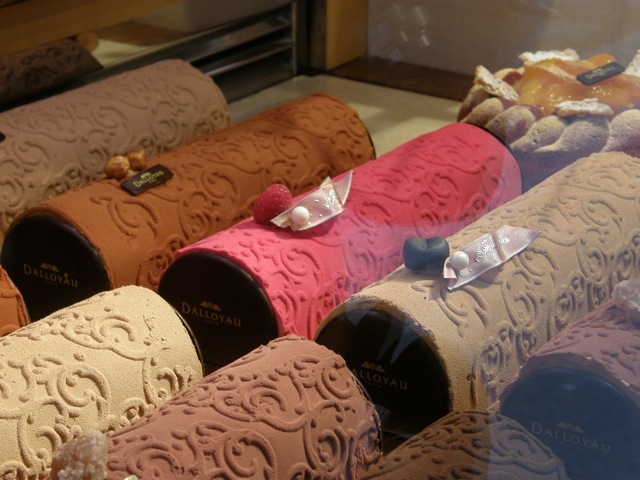
Still, we are going to try to bring the spirit of a Paris Christmas to Toronto. We will spend more time in art galleries than in shops, and we will walk in our nearby park, which has a lovely view of Lake Ontario. We have plans to try some new recipes using ingredients from the market (fortunately, we have good markets here) and to catch up on our reading. We have tickets to a concert and are planning to attend a community theatre production that promises to be very un-Christmassy. We shall substitute something different for the typical turkey on the day. Perhaps we will seek out a bûche de Noël from a French bakery and we will warm up with vin chaud on chilly days.

There are even a few compensations. Buses don’t stop running when it snows here. We won’t have to learn the idiosyncrasies of someone else’s kitchen. And family is nearby.

Still, a few things we can’t replace – the look of the Champs-Elysées in its holiday finery, the lights on the river in the evening, and those funny little Santas stuck on the sides of buildings that make us laugh.

Text and photographs by Norman Ball and Philippa Campsie

Posted in Paris nostalgia, Paris shops, Paris streets | Tagged , , , , , | 7 Comments

The story behind the sculpture

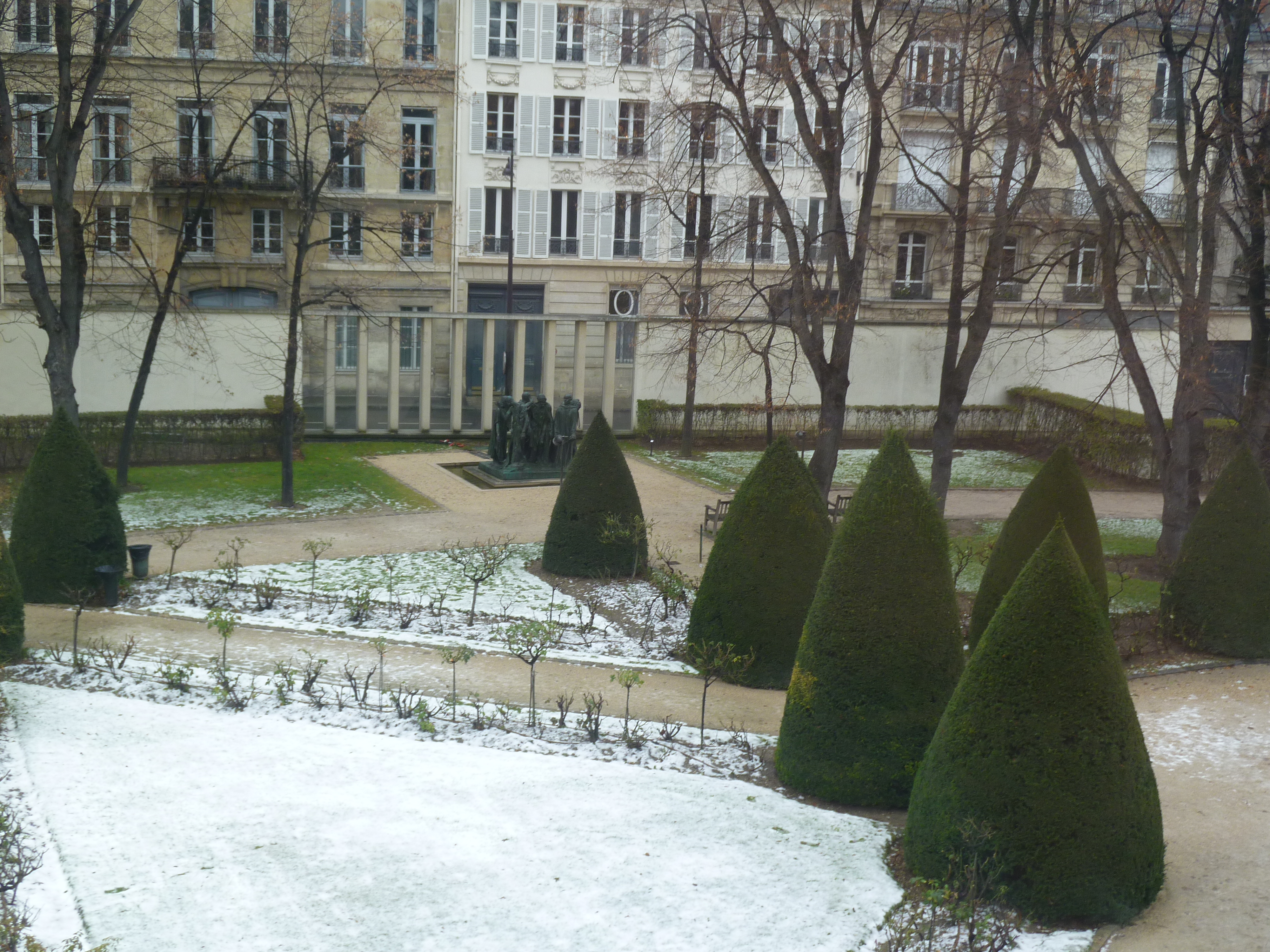
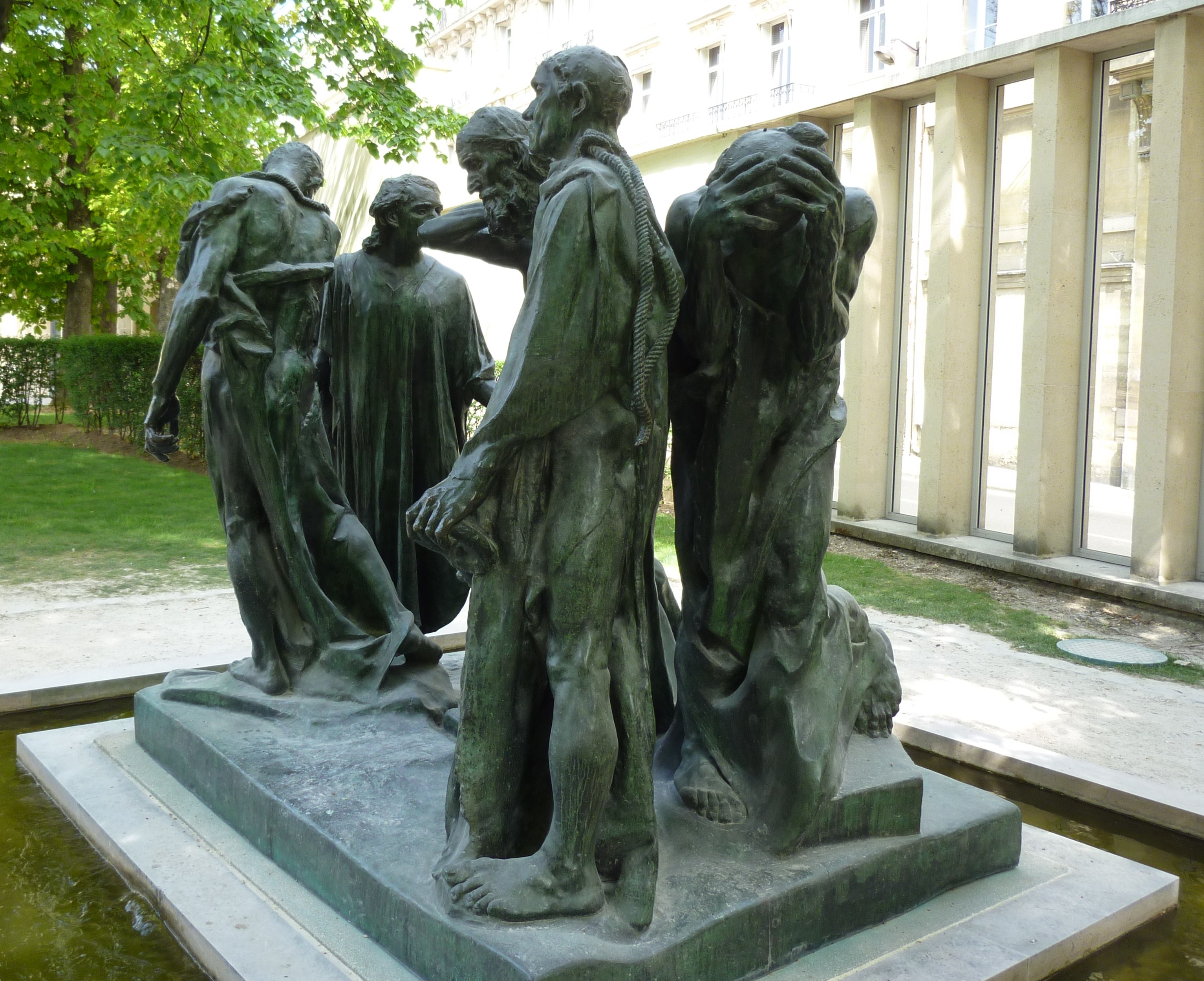
The Rodin Museum is one of the most popular tourist sites in Paris. It encompasses a lovely old house surrounded by a huge garden, with several of Rodin’s bronze sculptures positioned here and there in the grounds. One sculpture in particular is placed so that all passersby can enjoy it, even without entering the museum precincts and paying the admission fee. Rodin’s depiction of “The Burghers of Calais” stands near a glass wall, so that anyone walking down the rue de Varenne can see it.

Why that piece in particular? I think there is a reason.

Only a few visitors know the story behind this particular sculpture. And most guidebooks give the barest outline. Essentially, it is this:

In the early part of the Hundred Years’ War, Edward III of England conducted a siege of Calais that lasted close to a year. Eventually, in August 1347, the inhabitants of Calais surrendered to the English forces. Edward III demanded that six of the most prominent citizens (burghers) leave the city with nooses around their necks, carrying the keys to the city. Six Calais citizens walked out to meet the king barefoot, in rags, gaunt from a year of near-starvation. Edward ordered that they be beheaded. His wife, however, intervened. According to the medieval chronicler Jean Froissart, the heavily pregnant Queen Philippa threw herself at her husband’s feet and said:

“Gentle sir, since I have crossed the sea from my home in great peril to be with you, I have desired nothing of you. Now therefore I humbly beg you, in honour of God and for the love of me, that ye will have mercy on these six citizens.”

The king looked sullenly at the queen and then said: “Ah, dame, I would you had been elsewhere, for if ye make such request to me, I cannot deny you. Wherefore I give them to you, to do your pleasure with them.”

The queen caused the six citizens to be brought to her apartment, had them clothed in garments suitable to their station, and gave them dinner. Finally she had each of them brought out of the English host under safe guard and set at liberty.

Can’t you just see the scene? The six dignified but emaciated men, the stern king, the tender-hearted, pregnant queen, the menacing English soldiers, the exhausted survivors watching anxiously from the walls of Calais… and the chronicler scribbling it all down for posterity, complete with a happy ending for all concerned.

Question is: did it really happen like that? Well, yes and no.

Since I share a first name with one of the protagonists, I thought I would find out a bit more about Queen Philippa and her role at Calais in 1347.

Edward III’s queen was known as Philippa of Hainault. She was born in Valenciennes (either in 1311 or in 1314). The town is in the Pas de Calais region, so the burghers were her compatriates.

The chronicler Jean Froissart was also born in Valenciennes, in about 1333, and Philippa was his patron. So it is possible that Froissart was inclined to heighten the drama or romance of her life’s events just a bit, for posterity.

By 1347 she had given birth to at least 10 children since her marriage to Edward in 1328. Although she went on to have two more children, most historians think it unlikely that she was pregnant when she was in Calais.

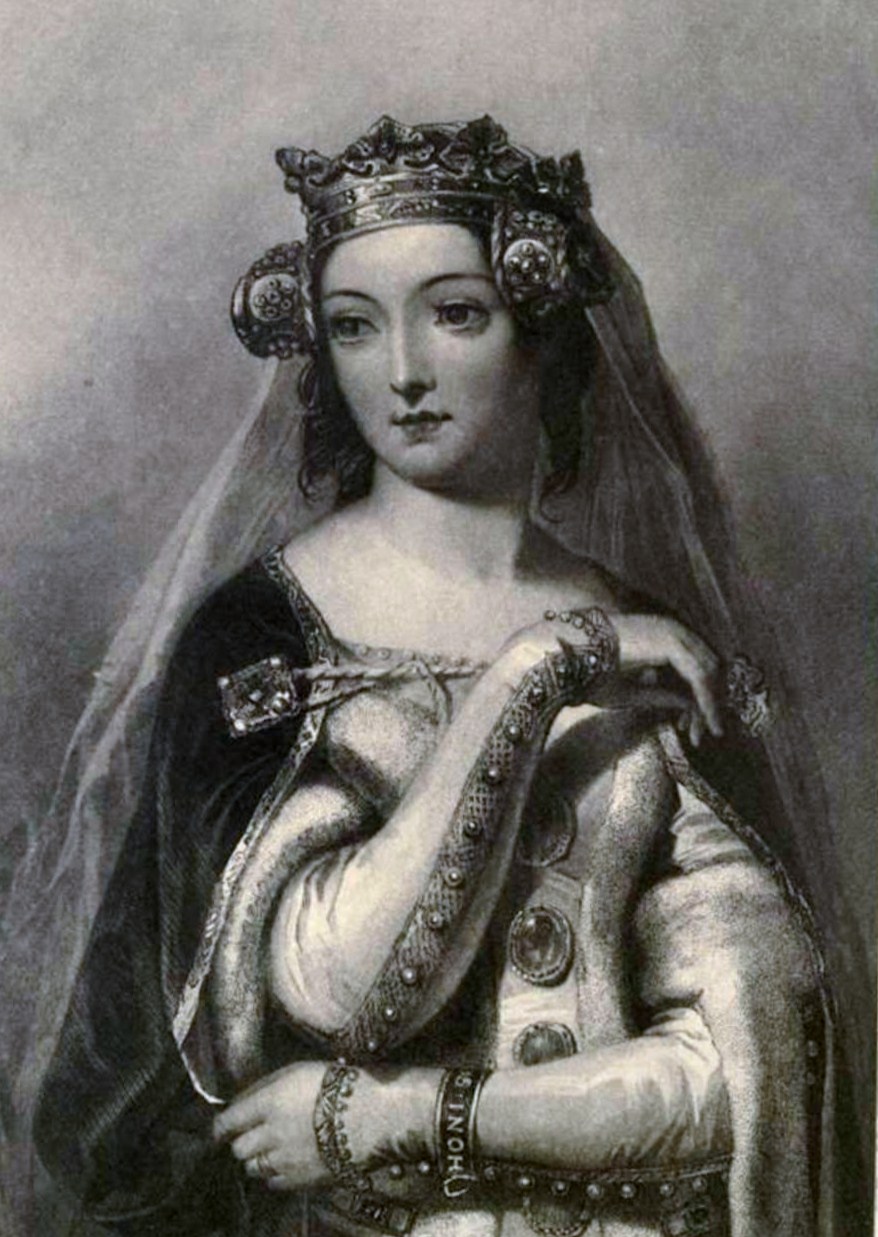
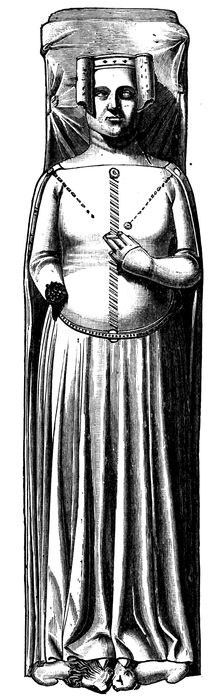
Some portraits of her, like the one above, make her look doe-eyed and willowy, but her funeral effigy below is probably more accurate. She was rather stout (having twelve children will do that to you), and no great beauty, but a sensible-looking woman who was apparently sufficiently authoritative to act as regent when her husband was away waging war (as he often was). She arrived in Calais fresh from having supervised a victorious battle against the Scots. Froissart says she led the troops herself, but he may be exaggerating. Still, she sounds brisk and competent, and battles didn’t faze her.

The siege itself is well documented. Edward needed possession of the town to keep the route from England to France open for English soldiers and military supplies crossing the Channel. Calais was a stoutly built stronghold surrounded by treacherous marshes, and attacking it would have been difficult – or perhaps Edward preferred to leave its fortifications intact. So he chose to starve out the residents.

In the early going, hundreds of women and children from the town were sent away by the French commander. The English let them pass without harming them.

The ensuing siege lasted eleven months, during which the English set up a small garrison town outside the walls. Edward was hoping that the French king, Philip VI, would come to the rescue of the people of Calais, which would allow for a proper pitched battle against his foe. Thousands of English soldiers were there, ready for a fight. But the French king (who was, by the way, Philippa’s uncle) never appeared.

When King Philip failed to appear after all those months, the residents of Calais had to admit defeat. At that point, things get a little murky. Froissart’s detailed account is all very well, but he wasn’t actually there. He got the story from someone else, and English accounts of the siege do not mention the scene with the pregnant queen on her knees. So what actually happened?

There seems to be agreement that the six men did emerge to signal the surrender of Calaias. According to one French historian, the business with the barefoot burghers was a typical surrender ceremony, based on medieval penitential rites, and by no means unique to Calais. Apparently, the ritual allowed the conquering sovereign to retain his authority while pardoning those at his mercy.* This theory suggests that executing the six burghers would have represented a shocking breach of protocol.

An English historian suggests that Edward gave the order to execute the burghers because he was furious that he hadn’t been able to fight Philip. It wasn’t the first time Edward had wanted to massacre those at his mercy – but every time he had been talked down. “Aware of the accusations of cruelty which would be brought against him if these men were killed, Edward did what he had always previously done: he relented when begged to do so by someone dear to him… It was as if in each case he was trying to play the dread king, ‘terrible to his enemies’ as well as the compassionate monarch. At Calais, as elsewhere, it was a method which confused and frightened his enemies.”**

Philippa’s biographer also sheds light on a marriage in which the queen’s role seemed to be that of sorting out her husband’s impulsive gestures, good and bad: “It has been remarked of Edward that he was always more ready to be generous to an enemy that just to a friend; and he gave away posts and honours so lavishly that sometimes he forgot, and granted the same thing twice and three times over to different people, and was then annoyed because they grumbled.”*** Philippa’s job seems to have been keeping everything straight and smoothing ruffled feathers, and one imagines that interceding for six burghers was all in a day’s work for her. But she probably did her persuading quietly behind the scenes, rather than in public.

Nevertheless, the story of a pregnant Philippa on her knees became celebrated through Froissart’s chronicles. The story also symbolized French heroism in defeat. Rodin created the sculpture in the 1890s, two decades after a French defeat at the hands of the Germans, giving three-dimensional shape to popular national heroes of the time.

I think that is why this particular sculpture is visible to all who walk down the rue de Varenne. It is (or was once) a part of the French psyche and their sense of national pride. Six humbled but dignified men, ready to accept their fate, holding the moral high ground, if not the military power.****

Froissart’s story also did wonders for Queen Philippa’s reputation, and may account for the survival of her unusual name. I’m happy to share it with her.

Text and original photographs by Philippa Campsie.

* Jean-Marie Moeglin, Les bourgeois de Calais: Essai sur un mythe historique. Paris: Albin Michel, 2002.
**Ian Mortimer, The Perfect King: The Life of Edward III Father of the English Nation. London: Jonathan Cape, 2006, p. 253.
***B.C. Hardy, Philippa of Hainault and Her Times, London: John Long, 1910, p. 184.
****As for the rest of the inhabitants of Calais, they were expelled, and the city was settled with English merchants and their families. It remained an English stronghold in France until the French reconquered the city in 1558.

Posted in Paris art, Paris history, Paris museums | Tagged , , , , , , , , | 7 Comments

Sitting on books in Paris

The libraries, bookshops, and bouquinistes’ stalls of Paris are justly famous. So, too, are places to sit, alone or with someone else. The city offers many spots for quiet contemplation and conversation. So why not combine them? Sit on some books and ponder, or just look around.

Imagine that it is late April, I will tell you how I discovered and fell in love with one more facet of Paris.

It was a day when even the pigeons looked wonderful, looked as if they belonged and were not intrusive flying rodents. I had never thought of photographing fallen cherry blossoms and pigeons. But spring in Paris is whimsical.

Square Gabriel Pierné (named for a composer who wrote some lovely piano and harp music) is a tiny Parisian park on the rue de Seine in an area known for galleries, cafés, and heavy traffic that pretty much stands still.

Surrounded by a graceful iron fence, the park beckoned, the bench surprised and welcomed us. Square Gabriel Pierné is more than just another tiny, elegant, Parisian park. It perfectly expresses an idea that I find quintessentially Parisian, namely that open space, unbuilt-upon space is precious and should be honoured. It should also be inviting to use.

Before going into the park, I lingered outside, looking in so I could see without disturbing others. And here is one of my favourite Parisian park scenes.

I was captivated by this elderly couple. Paris is many things to many people. My Paris is one that accepts age, says it belongs, even venerates and admires it. That extends to people as well as to buildings and other works of art.

Captivated as I was, I dared not disturb their private moment—but I was trying to capture, however inadequately, my appreciation of aging in a particular place. Eventually, the couple stood up and slowly walked down the street. I took no more photographs. I simply admired their grace and elegance. I knew nothing of the lives they lived, I only know they had given me something.

For a few moment, I thoughts of my long-departed grandparents, William Stevens and Elsie (née Pirie – a French name), and how they aged together, gracefully, lovingly, and tenderly. And I hoped that Philippa and I also might be given one of the great gifts of time: happily growing old together. Even though it cannot be in Paris.

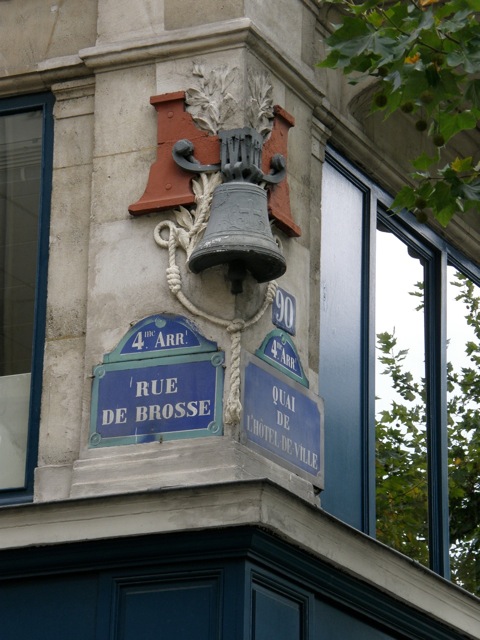
Paris has been good to us. Five years after I photographed the Square Gabriel Pierné, we found ourselves at the corner of Rue de Brosse and Quai de l’Hotel de Ville. A few steps along, the latter brought us to Le Trumilou for lunch with friends. The conversation, food, wine, champagne, and surroundings were superb in this unpretentious, traditional French restaurant. As we left, we noticed an unusual bookshop.

The Librairie du Compagnonnage is an astounding bookstore dedicated to the arts, skills, and crafts associated with preservation and restoration of buildings and artifacts. There we browsed and talked, but also enjoyed the company of books and interesting objects.

And we spotted some books to sit down on while we read. What else should one do in such a splendid city after lunch with fine friends and no real work on either the agenda or the horizon? Well, we did thank the staff profusely and paid for the physical riches we found and took home.

Text by Norman Ball, photographs by Norman Ball and Philippa Campsie

Posted in Paris bookstores, Paris parks | Tagged , , , , | 9 Comments

Eyes on the street

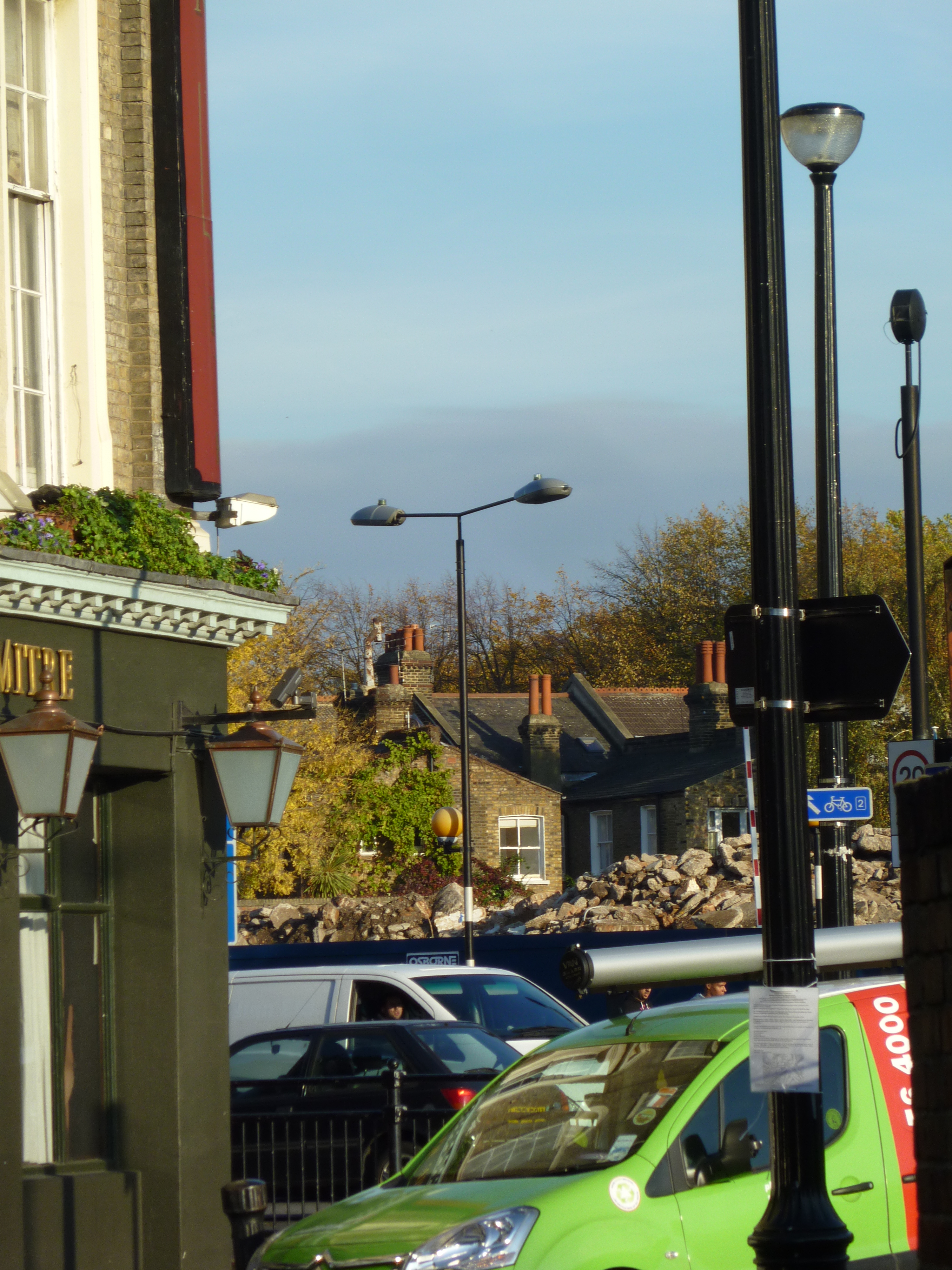
One hears a lot about the use of surveillance cameras in England. Indeed, when we returned from Greenwich, I spotted a few lurking in photographs I had taken. Can you spot the camera in the picture below? (There may even be two, I’m not sure.)

Paris has its fair share of security cameras and protective devices, but there hasn’t been the same sort of publicity attached to their use. After all, the Parisians are accustomed to being observed. For decades, their comings and goings were watched by concierges.

The stereotype is a middle-aged or elderly woman, single or widowed, lurking in the loge, constantly spying on tenants (there were some male concierges, and even a few couples, but in the mid 20th century, the ratio was something like nine women to one man on the job).

In 1974, the now-defunct journal Horizon published an article by Ormonde de Kay, Jr. titled “Adieu aux Concierges” that described this once-familiar figure:

From her lair off the vestibule she observes all their comings and goings—and those of their visitors. Distributing the mail, she learns more: that Monsieur Fifth-Floor-Left is being dunned for taxes, and that the gentleman who comes to see Madame Third-Floor-Right on Tuesdays and Thursdays is in Zurich. And as the rent collector, often, for the landlord or his agent, she knows just who is in arrears.

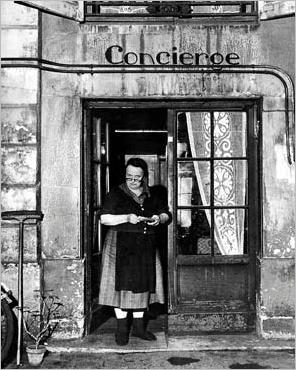
I found the photograph below in the Roger Viollet collections. I suspect the surprisingly young concierge is a model (or perhaps the daughter of the real concierge). Still, this rather stagy shot shows the letter boxes that concierges used: not much room for confidential communications here.

Another photo from the archives shows a more typical example of the species.

Concierges were a growth industry when the big apartment houses were being created in the late 19th and early 20th centuries. The buildings were designed so that one could not enter or leave unobserved by the hawk-eyed crone in the loge. Indeed, in the paranoid Second Empire, the authorities deployed them strategically to keep an eye on certain public figures.

Mind you, it wasn’t an easy life. A concierge’s duties were tightly regulated, as de Kay describes:

If she is a tyrant, she is also a slave: her humble home-cum-office, the loge, is often one cramped room; she is on duty, theoretically, six days a week from 6 a.m. to 10 p.m. and even after midnight has to awaken—or did until recently—to admit homecoming tenants by tugging on the cordon, a rope that releases the door catch. In addition to keeping out intruders and emptying the garbage, she must keep the stairs and hall clean; she also has to clean the courtyard once a week, devoting, in the maniacally precise language of a government decree, “one and a half minutes per square meter for the first forty meters and thirty seconds per square meter for the remaining surface.”

Not a job many people would want, surely, despite the advantages of a roof over one’s head, and the power that comes with knowledge of others’ lives.

For years, concierges were a fixed feature of Paris life. Robert Doisneau did a series of photographs of them. Here is an example.

This link will take you to a whole portfolio of his concierge portraits. It’s all there — the overfurnished, ill-lit apartments, the pot plants, the cats…

Today, concierges have been replaced by functionaries known as “gardiens” or “gardiennes,” who accept deliveries and deal with cleaning and maintenance, but are not necessarily the eyes and ears of a building as the concierges used to be. This transition began years ago, and was noted by de Kay in 1974:

Today the concierges are fast disappearing from the Paris scene. Of the 40,000 to 50,000 in the city, most are over fifty… some 20,000 will die or retire in the next decade. They are being replaced in many new buildings by buzzers, intercoms, and mailboxes; and in older buildings, increasingly, by live-out doormen.

The concierges may be gone, but there are still eyes on the street. They have been there for decades. Every move one makes on a Paris street is observed.

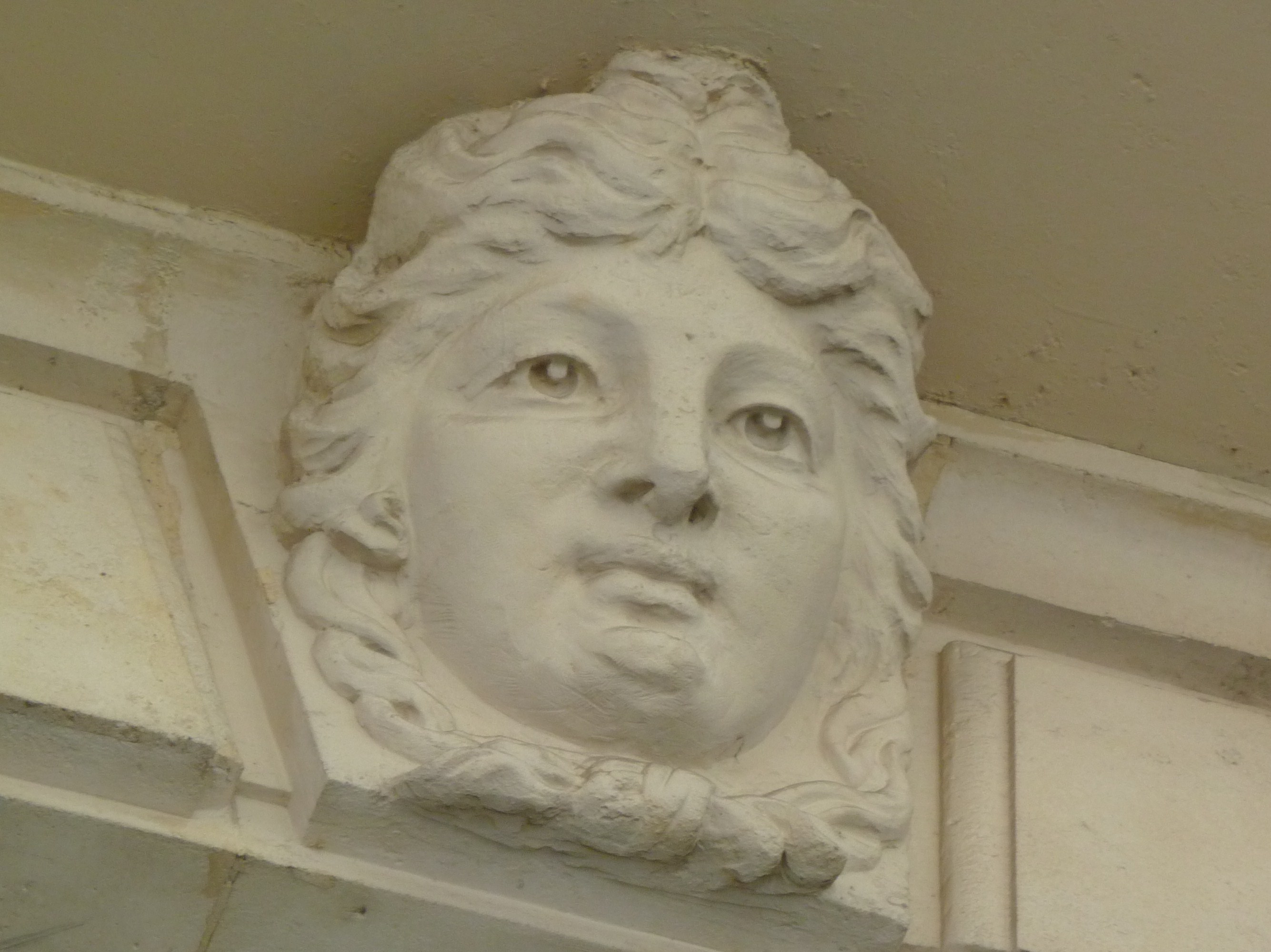
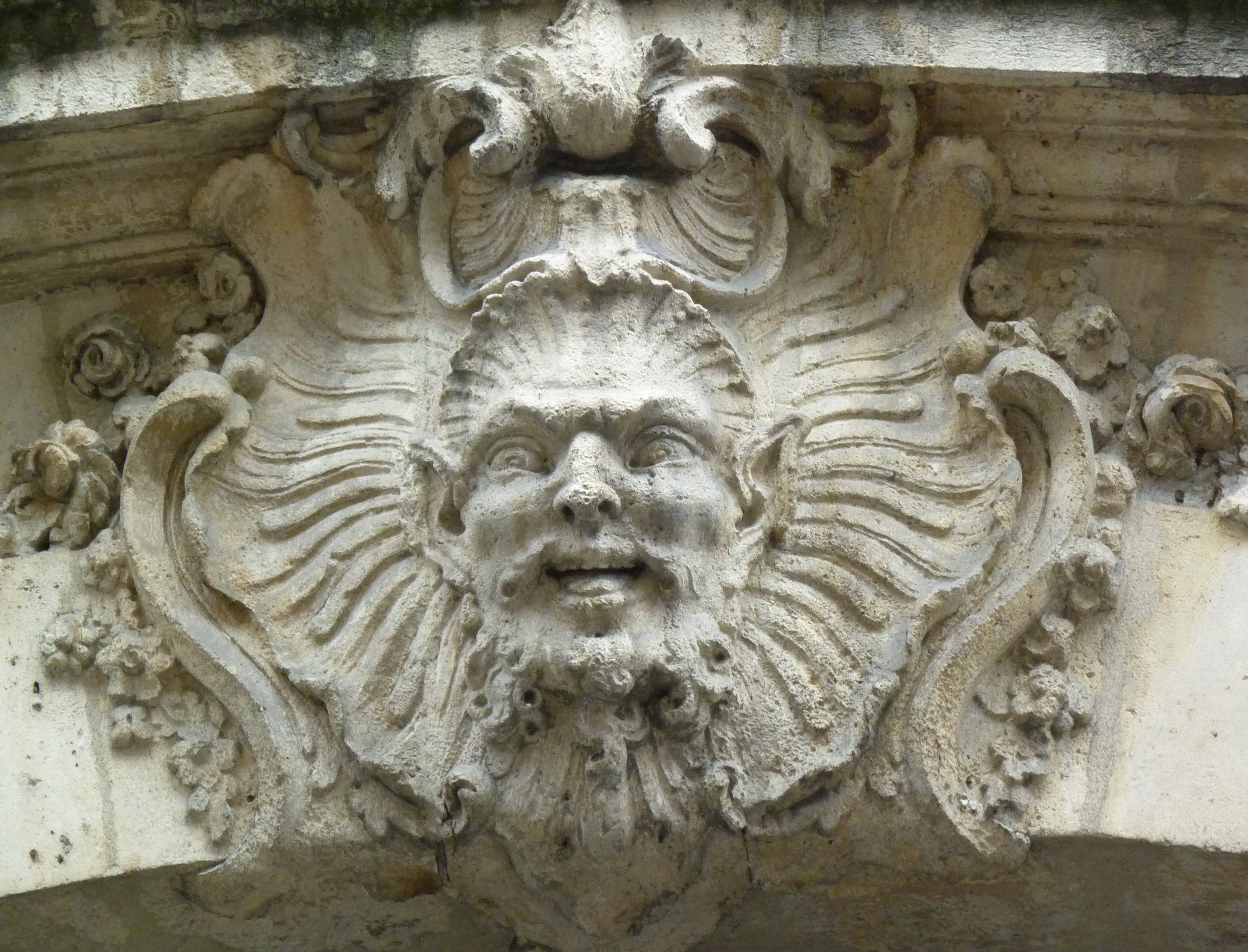
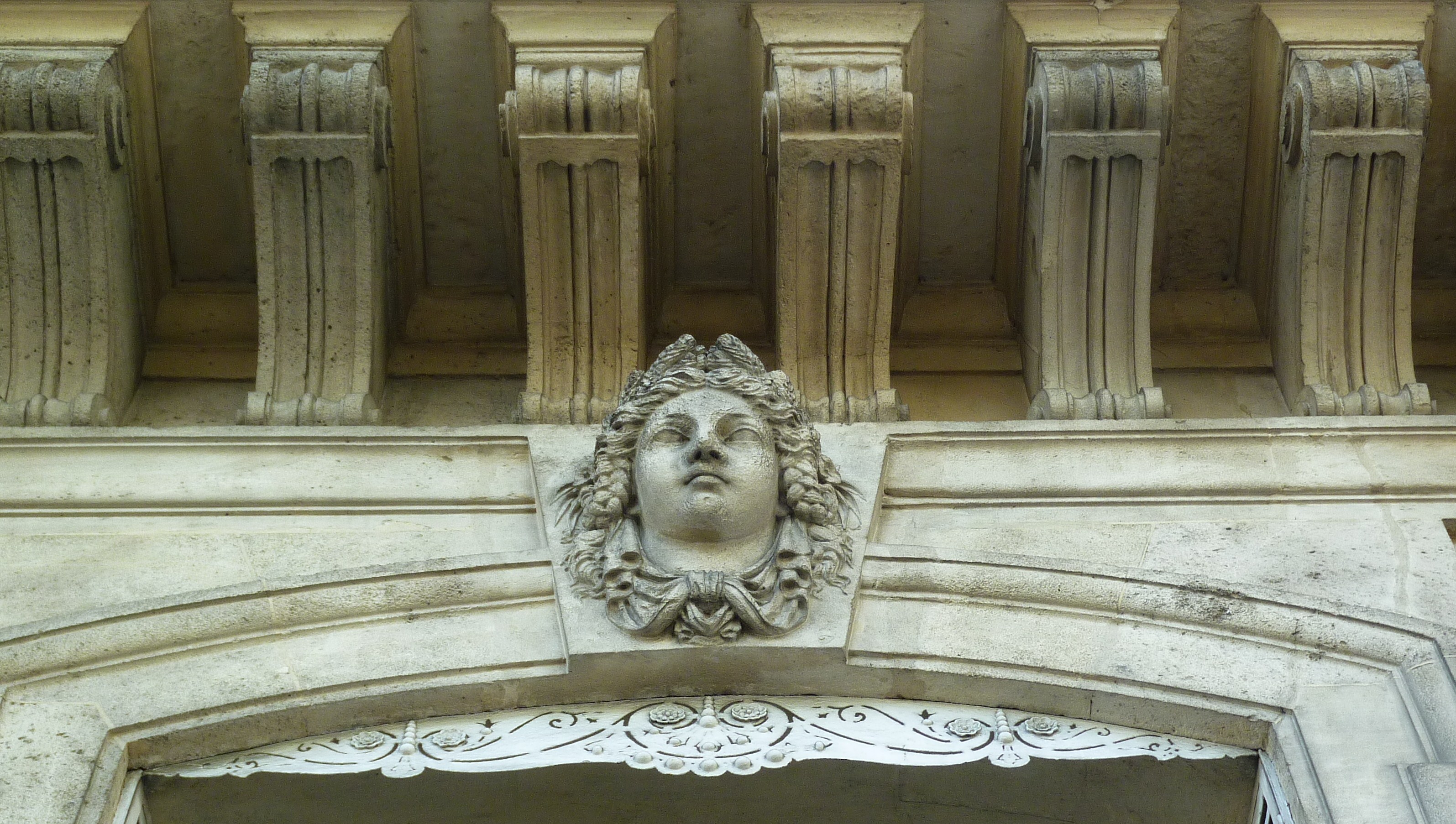
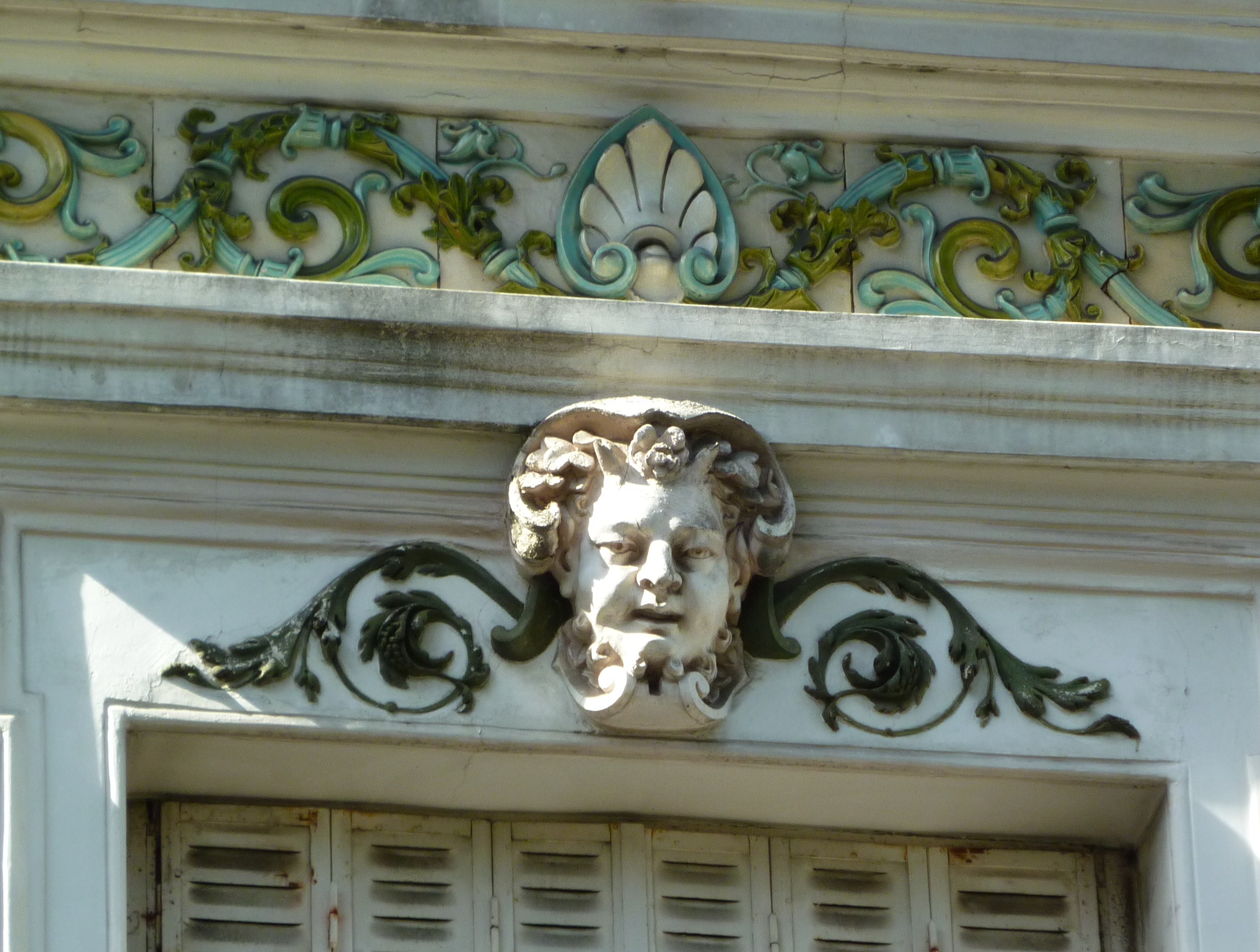
I am thinking of the countless faces on Paris facades. They gaze down at us, unblinking, noting our comings and goings.

Some have kindly faces; others seem disapproving.

A few appear demented.

Rarely does one walk down a Paris street unobserved by these countenances.

My father grew up in Malta, where it is traditional to paint eyes on the front of a boat so it can see where it is going. I can’t help thinking that the eyes on Paris buildings allow the buildings to watch the comings and goings of everyone on the street, just as the concierges used to do.

Who needs security cameras when the walls have eyes?


Text and original photographs by Philippa Campsie

Posted in Paris art, Paris history, Paris streets | Tagged , , , , , , , | 4 Comments