Reminders of Paris in Greenwich and London

Ah, Paris! We still love you, and we’re coming back, but you have a rival. Thanks to the generosity of Alison and David, we had the use of a superb flat in Greenwich for a week. And perhaps because we spend so much time thinking about Paris, we ended up discovering elements of Paris in Greenwich and London. We also noticed some striking differences.
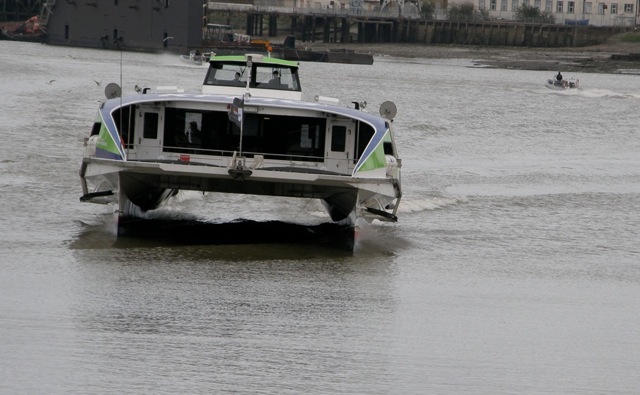
Moving quickly and turning sharply, the catamaran headed towards us at the dock at Greenwich. It looked like one mean mother of a boat. The Thames Clipper gets you to London in a hurry.

As we stood on the outside deck near the stern, the city raced by. Churning water, the roar of the engines mixed with the wind, and the vibrations coursing through the hull were exhilarating. While all too short, the trip up the Thames was unforgettable. This is not the Batobus. Of necessity, the boats on the narrower Seine are more sedate.

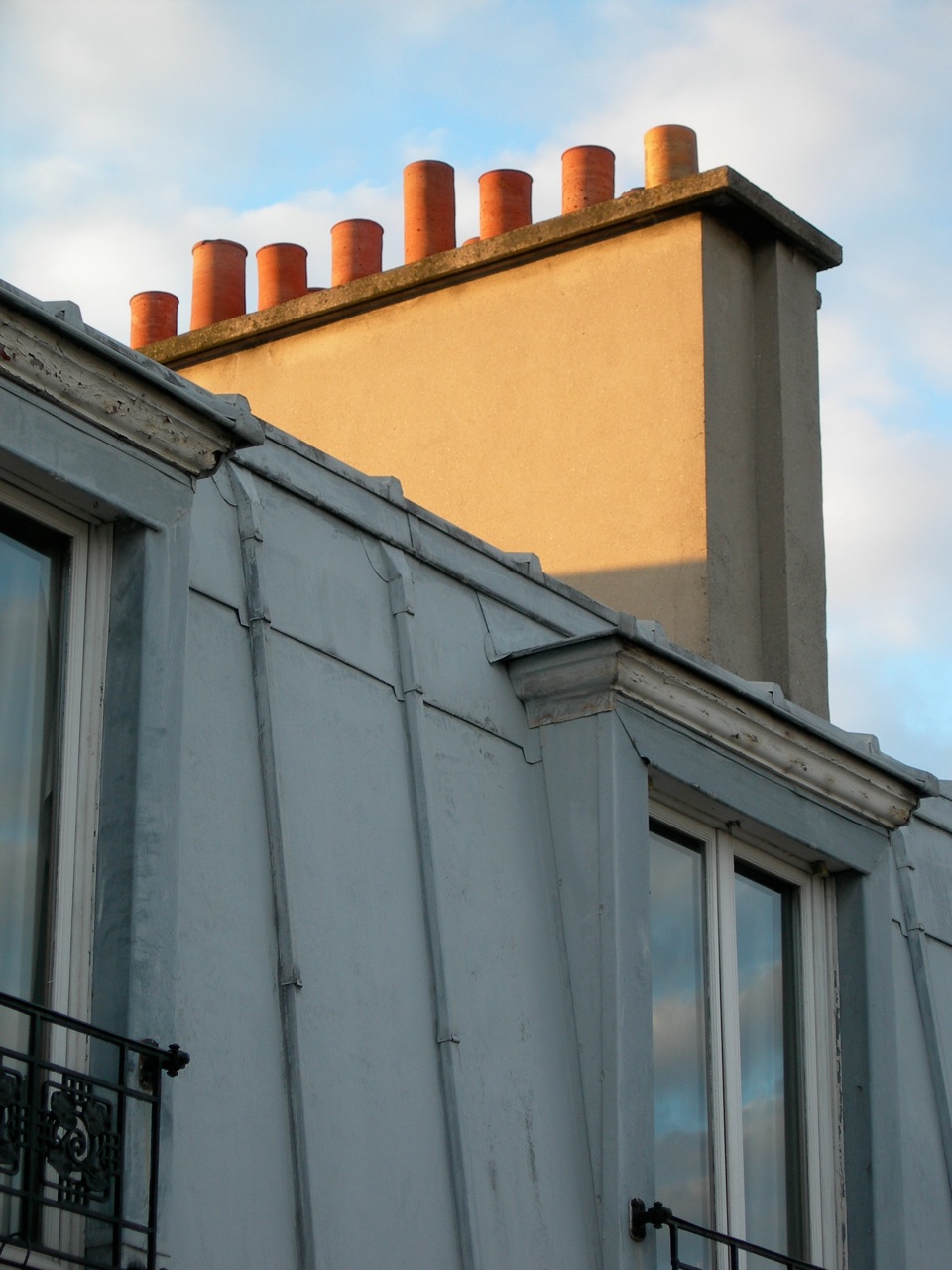
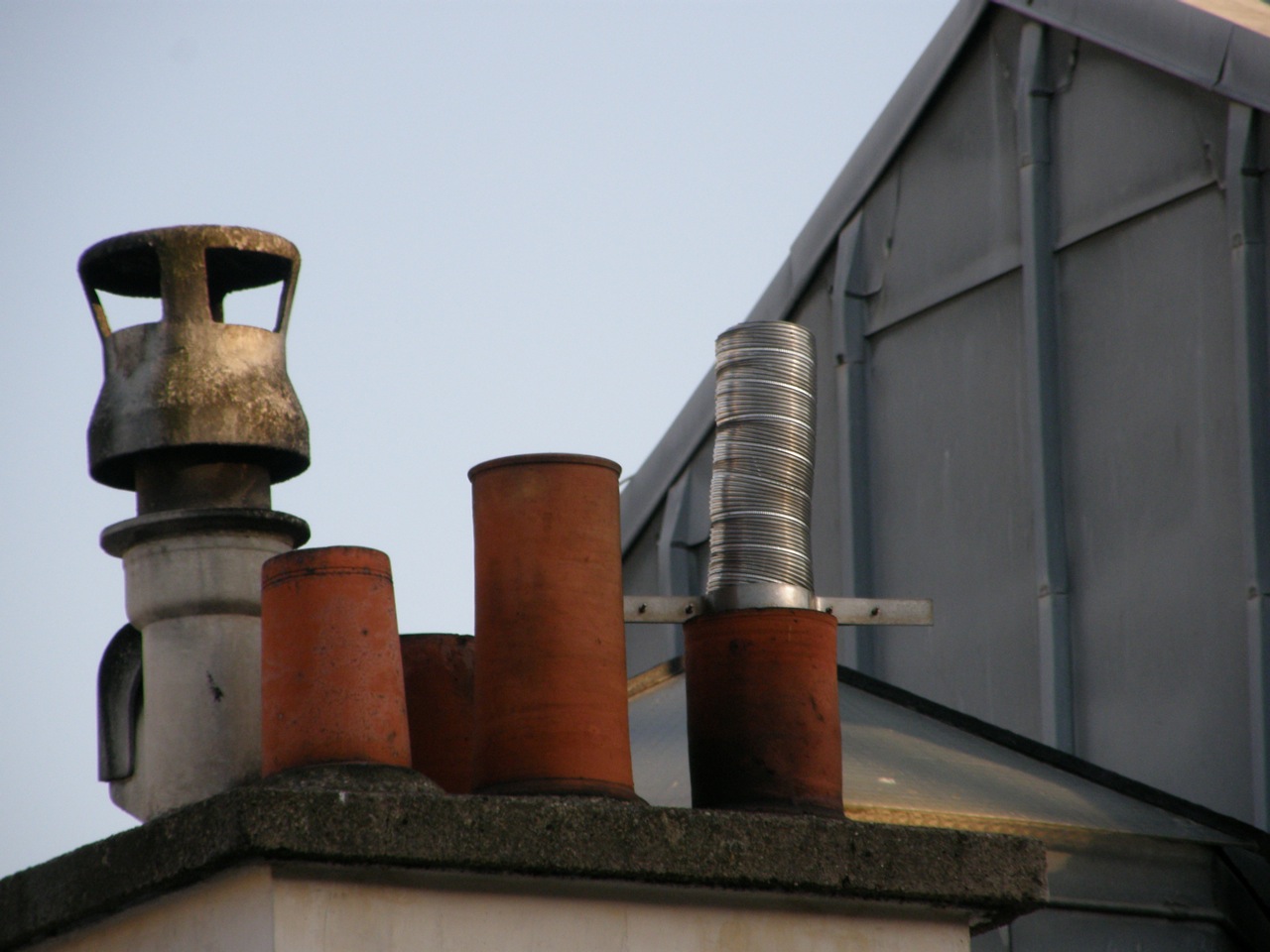
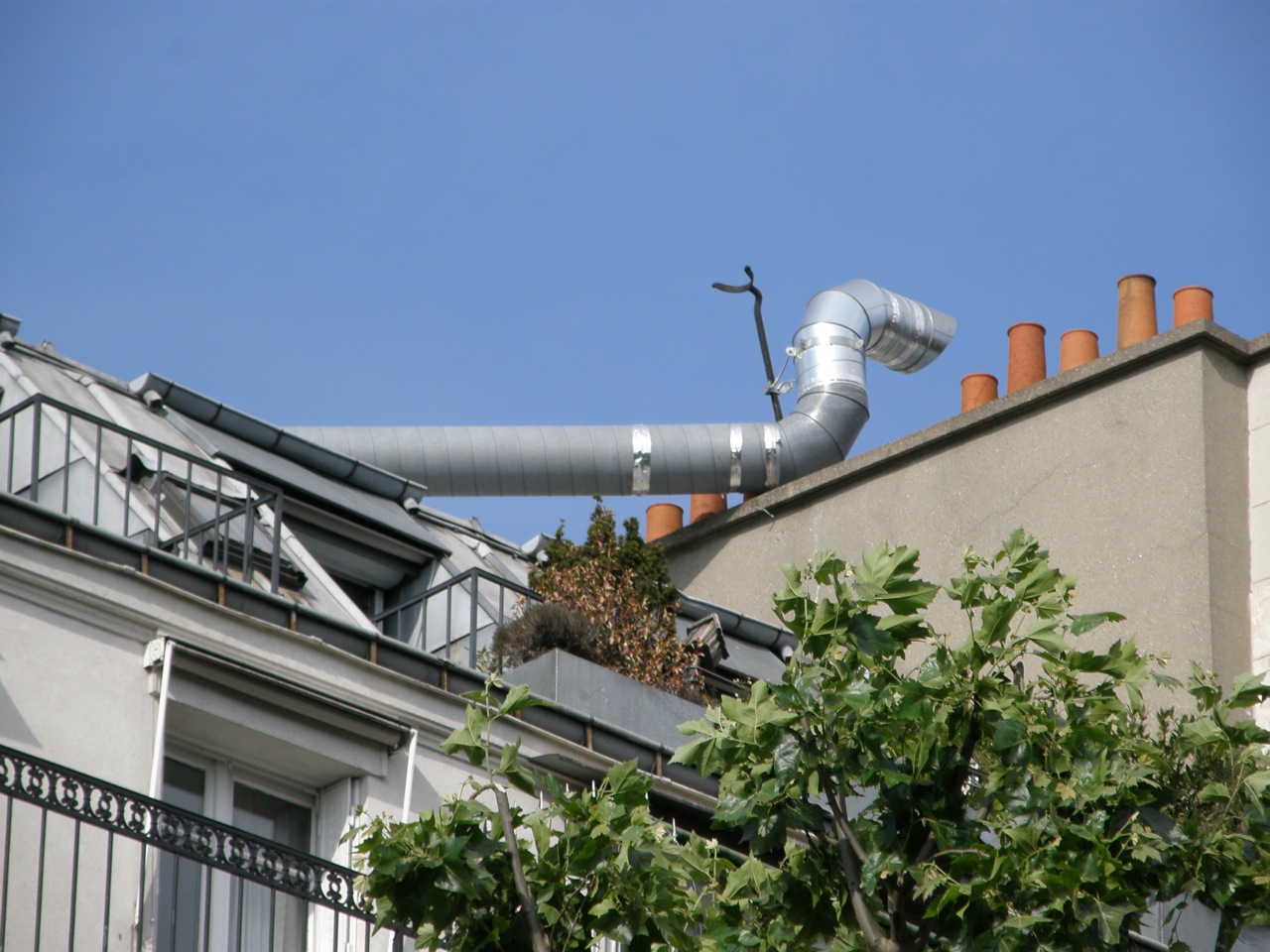
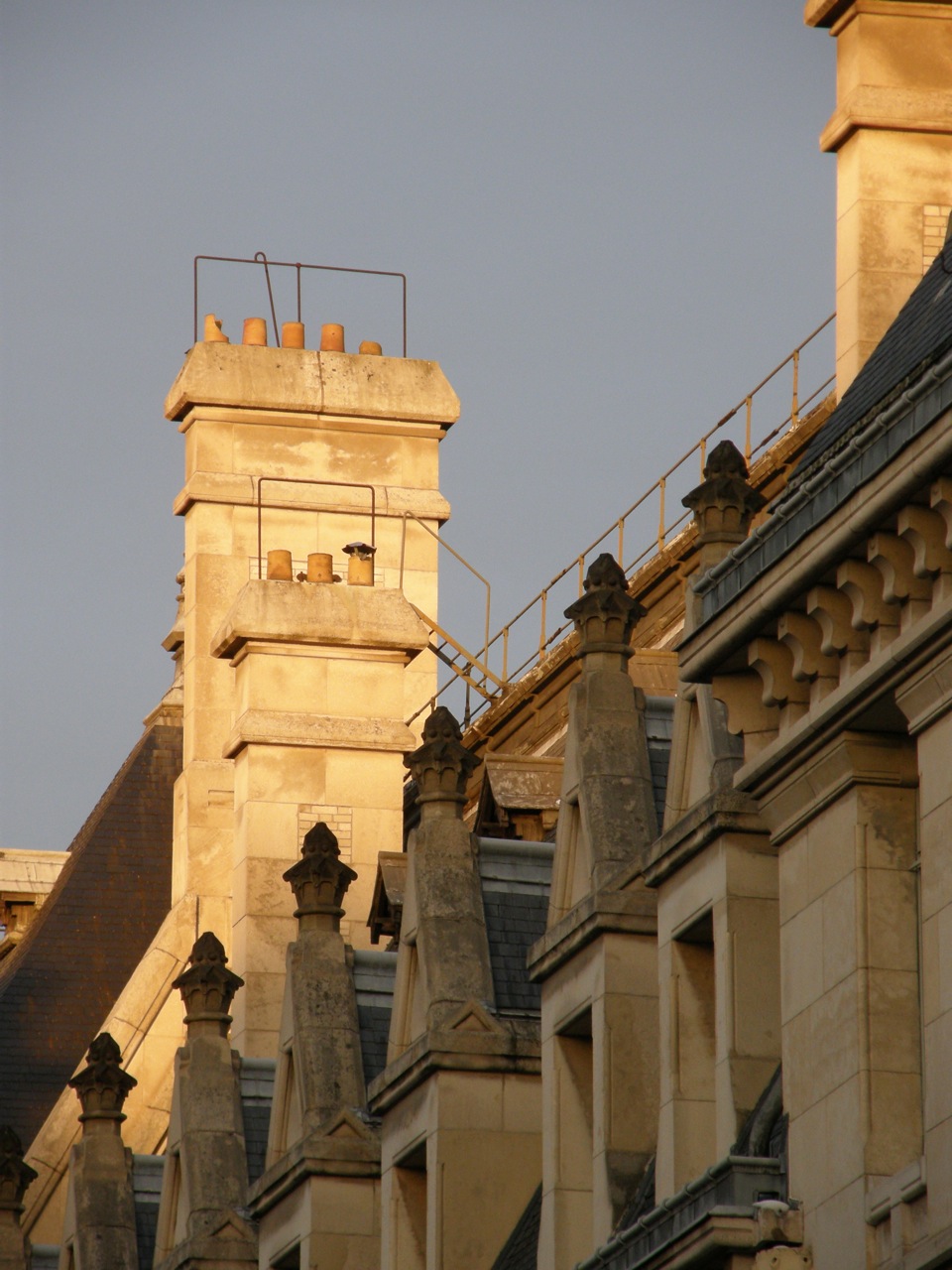
In an earlier blog, I talked of how Paris taught me to be aware of the geometry, colour, and patterns of chimneys and chimney pots. London and Greenwich continued my education.
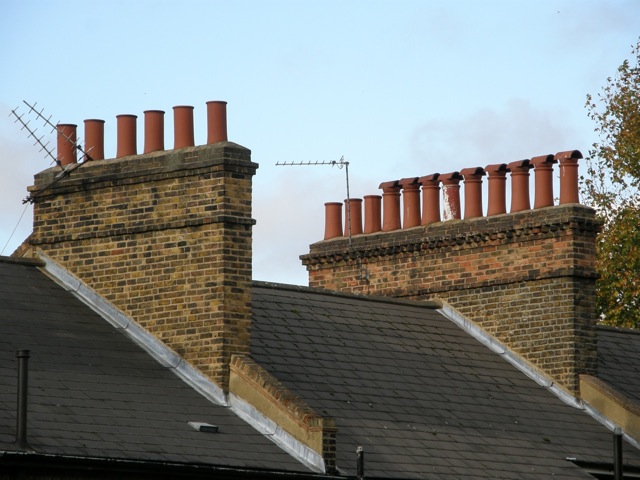
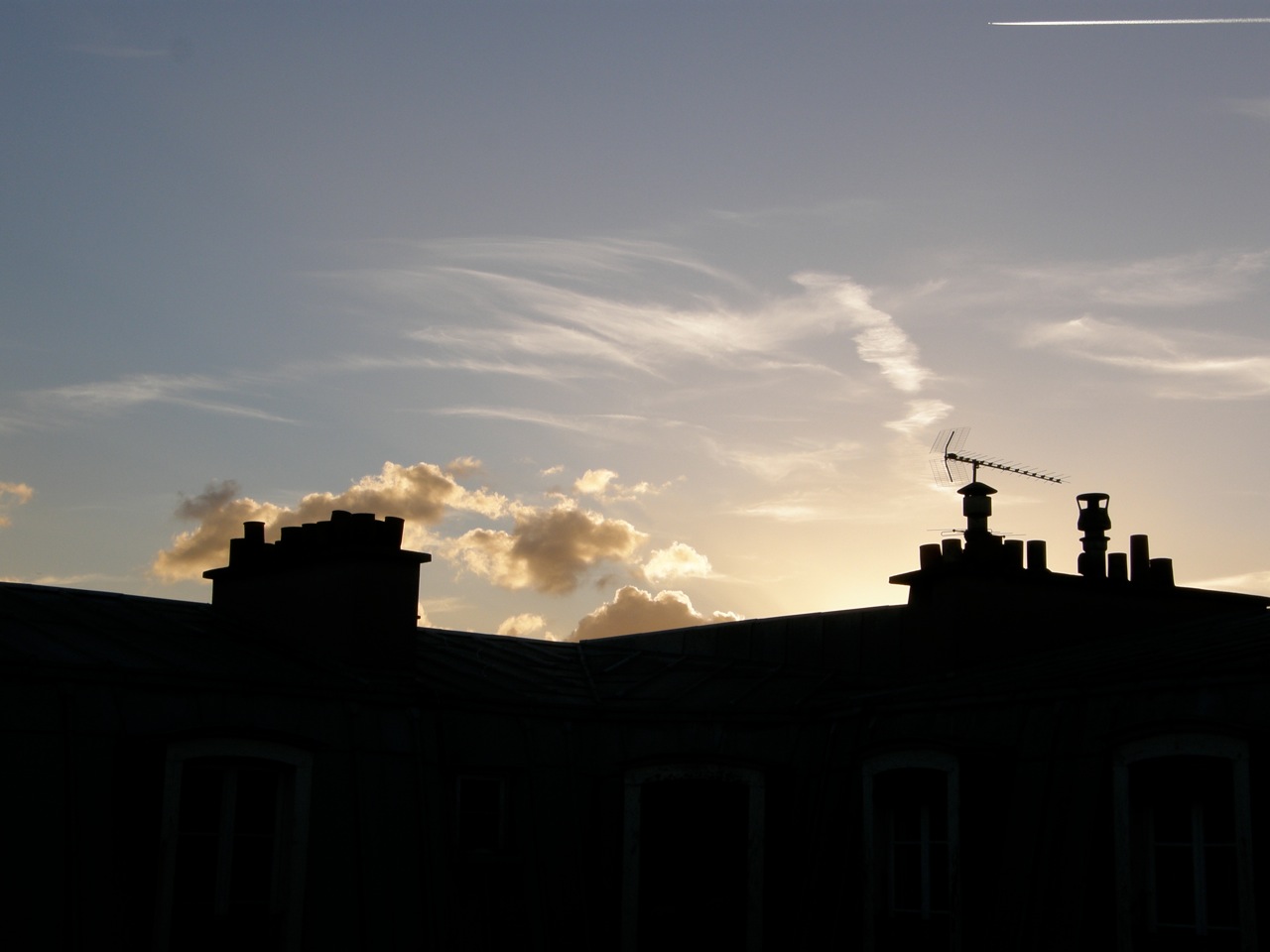
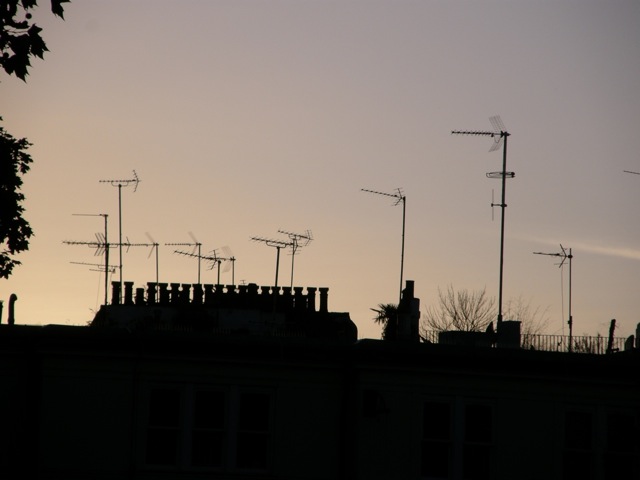
And as night fell, the colour drained from the chimneys and flowed into the sky. The chimneys became pure geometry, which included more TV aerials than one is accustomed to seeing in Paris. The Greenwich skyline was as intriguing as the scale was comforting.
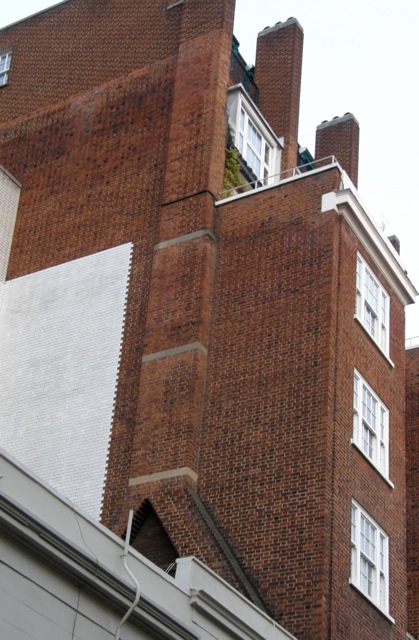
I even found some interesting chimneytracks to photograph, although nothing quite as dramatic as the Paris versions I described in a previous blog.
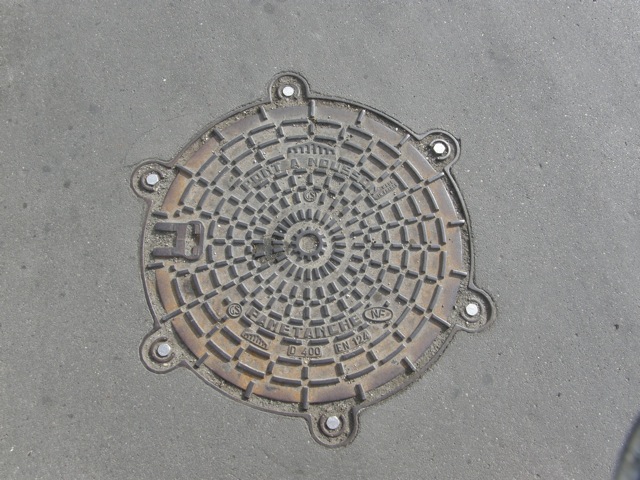
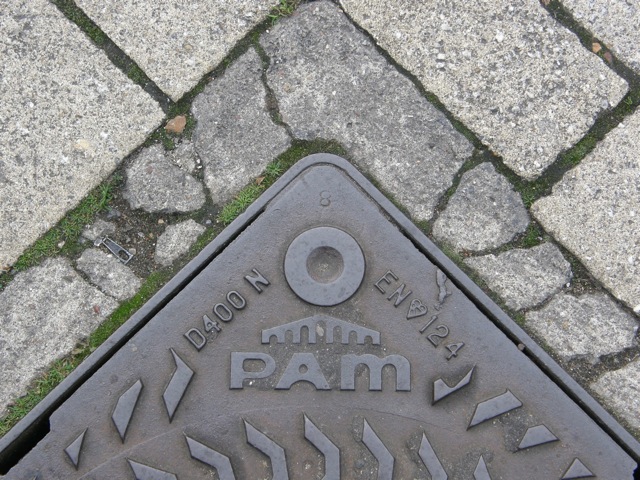
In Paris, I enjoy photographing the cast iron beneath our feet. Greenwich, too, rewarded me. How surprised I was to see my old friend Pont-à-Mousson with its characteristic seven-arch bridge profile and the familiar letters PAM.
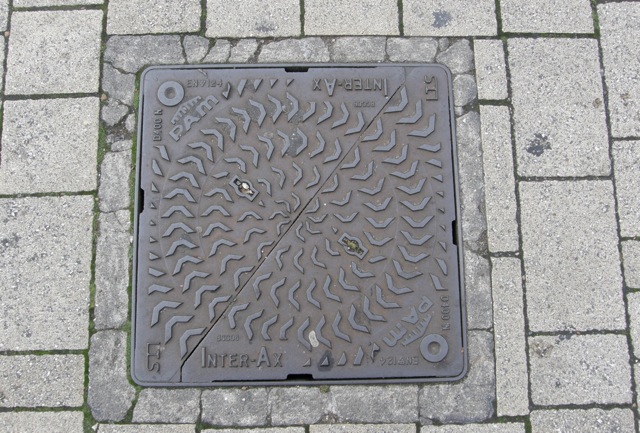
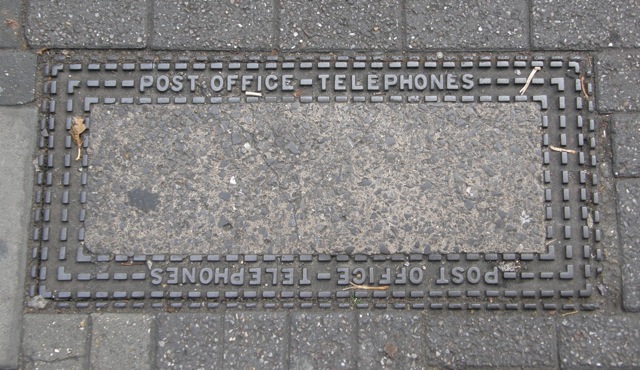
Perhaps nothing beneath my feet caught my attention as much as two subtly different access covers bearing the name Post Office.

The one above was originally installed to provide access to buried telegraph lines. Then, with the advent of a new communications technology, there was a new sign and buried telephone lines, also run by the Post Office.
In Paris, I have seen many devices to make sure that the wheels of carts and trucks do not run into and damage buildings and posts at entryways and corners. In France they are called chasse-roues (literally chase-wheels-away) and in England they are called guard stones.

Some were of cast iron such as the above, which stood near Davy’s Wine Vault in Greenwich. We highly recommend Davy’s wine boutique and its restaurant.

The stone—or concrete—guard stone shown above is paired with a don’t-go-there reminder. I have written about some of the sterner anti-trespassing devices I have seen in Paris. Greenwich offered a few threatening versions of its own.
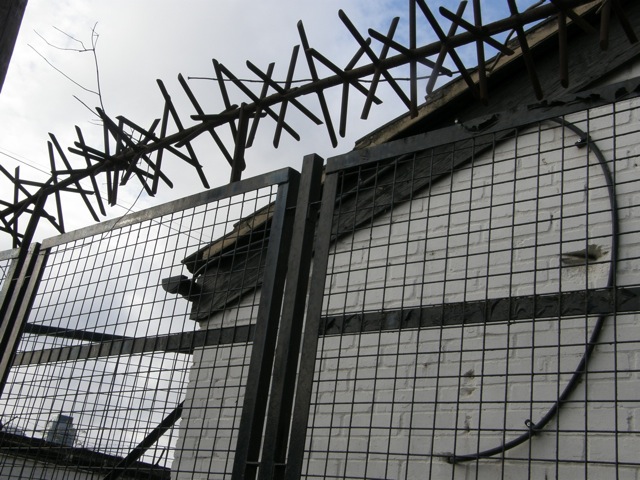
I photographed the image above as Philippa and I walked through an area where dockyards and businesses stood cheek-by-jowl with new flats. The spikes looked as if they had been made on site for the purpose. I guess on Savile Row it would have been called a bespoke version of a barrier.

Close by, the same lack of welcome came from a fence that looked very modern, something stamped out and mass-produced to a standard industrial design. I guess we could call this one an off-the-rack barrier.

We did not have to walk far to see a stark sign that left no doubt that life for intruders would not be pleasant.

I lingered about this place and photographed the wire, actually the wires. I noticed a curious blending of the old and the new. Can you see the old and the new in the image below?

There are two kinds of wire in the photo. Look in the centre of the image to see sharp edges mounted on wire; this is razor wire, a 20th-century invention. There are also pieces of 19th-century technology in the picture. Here we see a traditional form with short pieces of sharp-ended wire wound around and held in place at right angles to the length of the wire by two twisted strands.

Barbed wire was developed to keep animals in place—or out of places—whereas razor wire was directed towards people. Barbed wire has a long and complex history that includes many variant designs. It might even be French in origin. And here endeth this digression.

Greenwich and London are every bit as intriguing and exciting as Paris. And it is because I am more familiar with Paris that I kept seeing reminders of Paris in them. But when I return to Paris, the tables will be turned and I will see reminders of Greenwich and London. I find travel most satisfying when I am able to draw links between places and to see things in unfamiliar ways. I prefer to see a few places in detail rather than rushing through many places. Greenwich and London have been added to the list of places I must see more deeply.

There is the sign I glimpsed quickly through the dusty windows of a London Transport No. 188 Bus. I want to know more about that.

And this is an image taken from the Greenwich flat, created in what was once an elementary school, whose history, design details, and architectural complexity I am still struggling to capture.

We will also have to find again the little hole-in-the-wall eatery where the food and coffee were excellent, tables were shared, and wi-fi was not available. It was the kind of place where customers were expected to help keep the business alive, not take up residence in multiples of half days.

It might be near The Cartoon Museum to which we plan to return, or maybe the Museum of Brands, Packaging & Advertising, which will be another repeat visit. Or maybe it was near the Victoria and Albert Museum, or the Science Museum, where they have some typewriters I need to see for a book I am writing with a friend who collects pre-1900s typewriters.

Greenwich and London went by in a glorious blur, but we will be back.

Text and photographs by Norman Ball.
Posted in Paris streets | Tagged , , , , , , , , , , , , | Comments Off on Reminders of Paris in Greenwich and London

One address, many stories

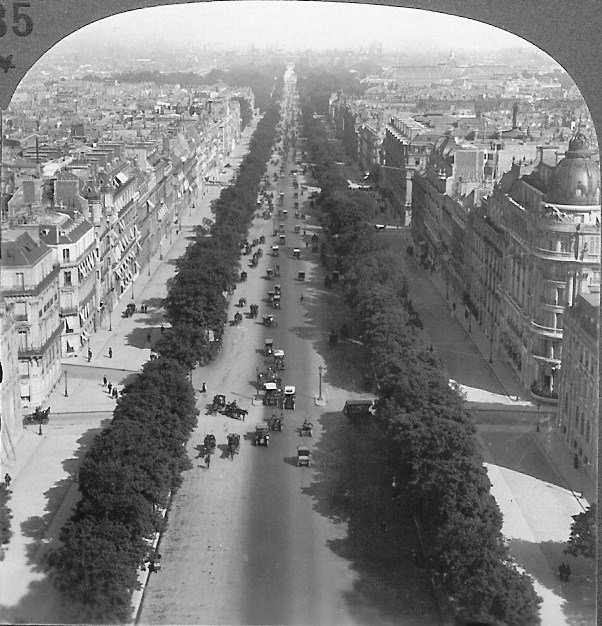
“What’s that building with the dome, there, on the right?” Norman pointed to a building shown in a stereographic photograph of the Champs-Elysées he had recently bought at an antique photo show. The photo had been taken from the top of the Arc de Triomphe. I had no idea. Which means, of course, that I had to find out.

From the look of the early automobiles and horse carriages, the photo was taken some time before the First World War. The location was on the south side of the avenue, just beyond the row of buildings that fill the space between the Place de l’Etoile and the rue de Presbourg (which follows a concentric course around the Place). This is where Publicis is now, so the address would be 133 avenue des Champs-Elysées. It should be possible to identify.

But wait (I hear some of you say), what is Publicis? Ah, that is an interesting story in itself. Publicis started out as a fairly modest French advertising agency and is now a huge holding company for advertising agencies around the world. Its headquarters on the Champs-Elysées close to the Arc de Triomphe incorporates the convenience-store-to-end-all-convenience-stores, with a shop selling newspapers and magazines, a separate bookshop, a pharmacie, an épicerie that sells everything from bottled water to fresh macaroons, a restaurant, a bar, a gift shop, and other boutiques selling makeup, cigars, wine… you name it, all open until 2 in the morning. It is called the Publicis Drugstore.

Marcel Bleustein-Blanchet, who founded the Publicis agency in 1926 on the Faubourg Montmartre, opened the original Drugstore on the Champs-Elysées in 1958, cashing in on the craze for all things American. It became a hangout for youth at the height of Beatlemania. It was even mentioned in a song by Serge Gainsbourg called Les Sucettes (The Lollipops/The Suckers – the song includes several double-entendres).

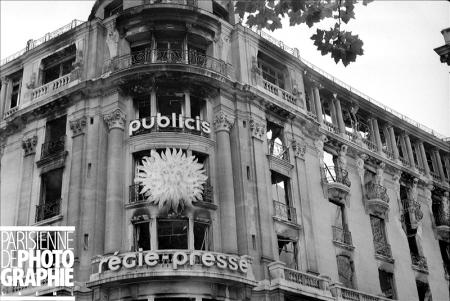
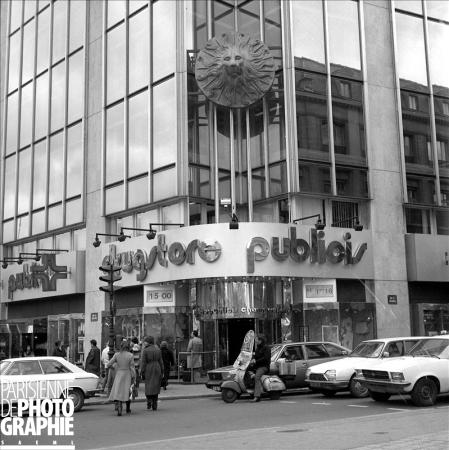
But in 1972, the place burned down. The photograph from the Roger-Viollet collection shows that it was completely gutted. It also shows that what burned had originally been quite ornate.

It took three years to rebuild, in the chromy, curvy, shiny style of the 1970s. Here is a picture from 1977.

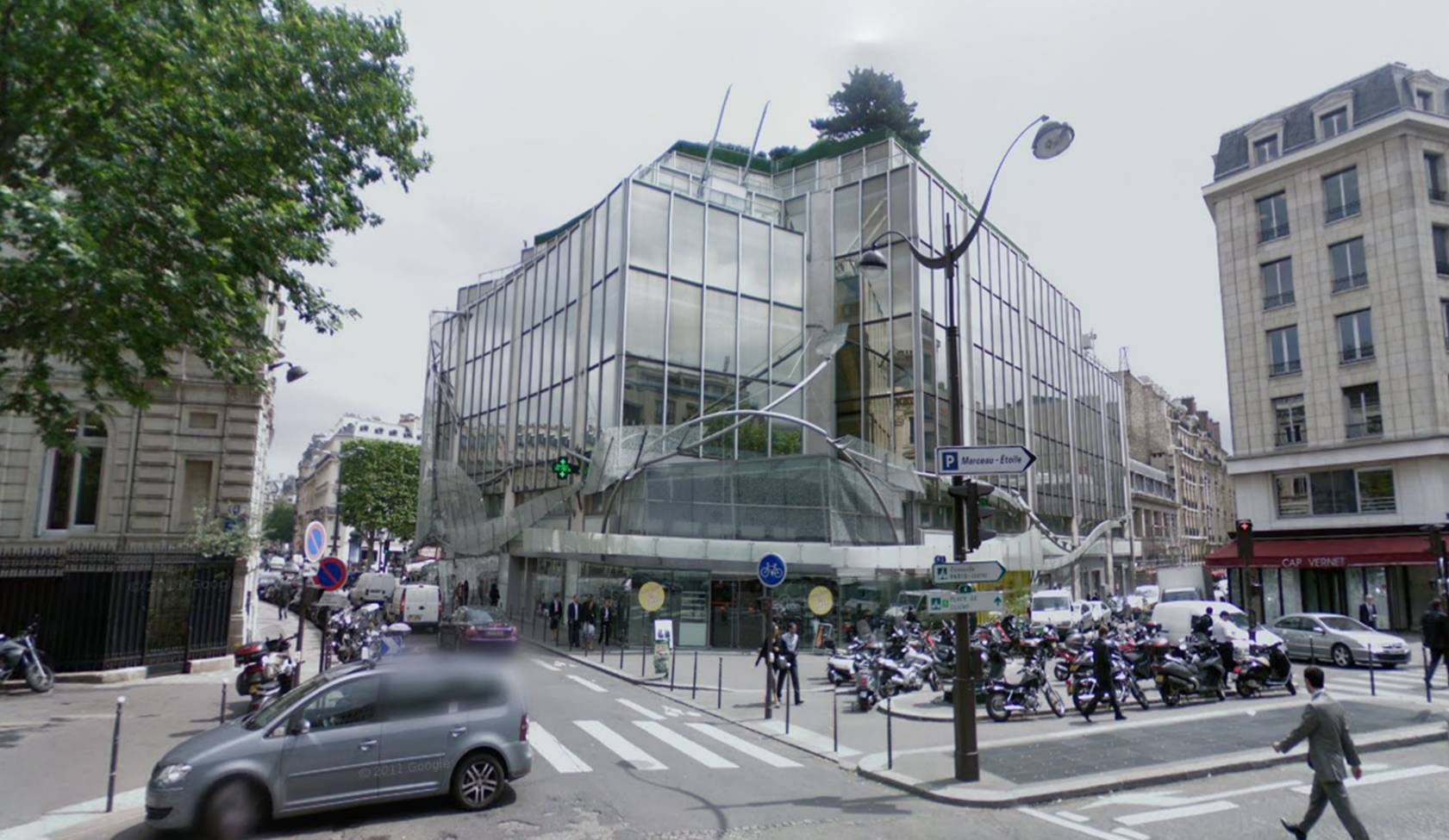
It was transformed once again in 2003 by architect Michele Saee, with glass and swooping metal lines on the exterior, curvy and shiny in a very 21st century way. Here is a Google Street View image, taken from the side away from the Champs-Elysées.

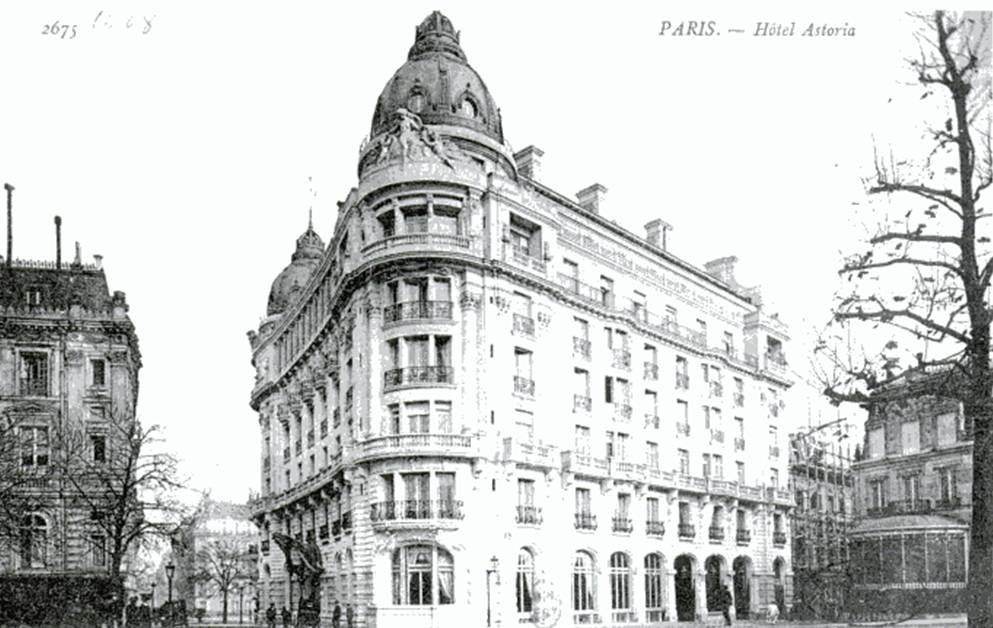
But I still haven’t answered the original question: what was there before? It turns out it was the Hotel Astoria (which continues in Paris at a different address*). I found this information on French Wikipedia, which has a helpful list of all the current and former buildings on the Champs-Elysées.

The French Wikipedia contributor notes that it was built in 1907 and that Félix de Rochegude, author of Promenades dans toutes les rues de Paris: VIIIe arrondissement (Hachette, 1910), had this to say about it: « l’élévation exagérée et agressive de cet hôtel détruit la belle harmonie de la place de l’Étoile. » (The exaggerated and aggressive elevation of this hotel destroys the beautiful harmony of the place de l’Etoile.)

Hm. Too big. Too much. Where had I heard that before? In an earlier blog, I had written about the over-the-top department store of Georges Dufayel, designed by Gustave Rives. Rives specialized in extreme ostentation. He had even created a house for Dufayel that was so grand that its owner (who was no shrinking violet) couldn’t live in it and inhabited a smaller building in the courtyard.

Well, guess who designed the Astoria? None other than good old Gustave. You want domes? How about two? Sculpture on the façade? Bien sûr. Loggias? Terraces? Elaborate balconies? Pile ’em on. Nothing suited Rives quite like excess. Here’s what it looked like in its heyday (this is the same perspective as the Google Street View version).

In 1910, the Scientific American Handbook of Travel (no, I hadn’t heard of this before, but I found it on Google Books) described the hotel in a terse entry: “Up to date. Unique position. High-class restaurant. Celebrated orchestra.”

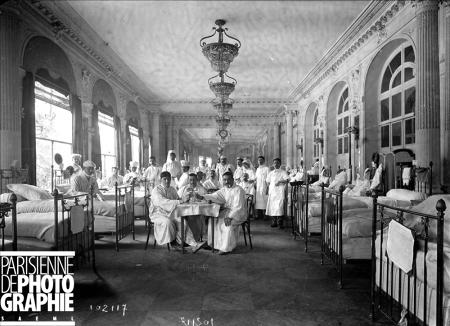
The only problem was the timing. The Hotel Astoria had only a few years of regular operation before the First World War made high-class restaurants and celebrated orchestras unimaginable luxuries. The hotel became a hospital. It was an unusual one, though – a Japanese military hospital, staffed by Japanese doctors and nurses and equipped entirely by Japanese manufacturers of medical equipment. Apparently the Japanese decided not to fight in the First World War, but supported the Allies by sending medical teams to free up British and French resources for the war effort. The Roger-Viollet archival photo collection was my first clue to this fascinating but obscure piece of history.

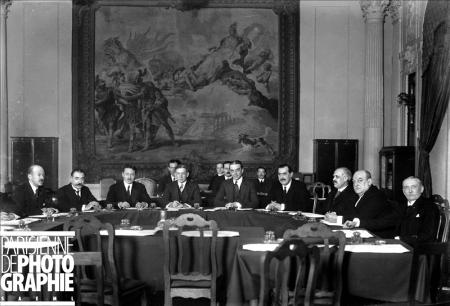
Shortly after the war, the hotel was pressed into service during the peace conference of 1919.

Margaret Macmillan, in Paris 1919: Six Months that Changed the World, says it took five hotels to accommodate the 400 officials, advisors, and clerical assistants in the British Empire delegation. The centre of British activity was the Hotel Majestic** on the Avenue Kléber, and the Brits went to the trouble of replacing all the French staff there with English hotel workers. Macmillan writes:

The food [at the Majestic] became that of a respectable railway hotel: porridge and eggs and bacon in the mornings, lots of meat and vegetables at lunch and dinner and bad coffee all day. The sacrifice was pointless, [Harold] Nicolson and his colleagues grumbled, because all their offices, full of confidential papers, were in the Hotel Astoria, where the staff was still French.

After this brief appearance in world history, the Hotel Astoria seems to drop out of sight. My 1927 copy of Muirhead’s Paris and its Environs (found at a secondhand store in Canada) does not mention it at all. I wonder why.

Perhaps it had become more office-like than hotel-like. Nonetheless, it was used by the Germans during the Second World War – along with many other luxury hotels. After the war, Dwight Eisenhower used it as his headquarters in the early days of the North Atlantic Treaty Organization (NATO). Publicis took it over in the 1950s, and what burned in 1972 was the original hotel building that the advertising agency had used for more than 20 years.

That brings the story up to date. But while doing the research, I found out that before it was the Hotel Astoria, 133 avenue des Champs-Elysées was the address of a noble family, the kind in which everyone has about a dozen names. For example, in the 1870s, the owner was Olivier Emmanuel Auguste Louis Nompar de Caumont La Force, who married Blanche Aimée Elisabeth Jeanne de Maillé de la Tour Landry. There is probably a story behind all those names. One day I will find out who they were and what their house looked like, back when the Champ-Elysées still looked bucolic.

So many stories, so little time.

Text by Philippa Campsie

* It’s a Best Western hotel on the rue de Moscou.

**The Majestic Building has been used as offices in recent years, but it is due to return to its former glory as the Peninsula Hotel in 2013.

Posted in Paris history, Paris hospitals, Paris hotels, Paris streets | Tagged , , , , , , , , , | 14 Comments

Propping up Parisian trees

Paris. City of light? Yes. Bridges? Indeed. Trees? Absolutely. The trees and their changing colours are one of the marvels of Paris. But it is no accidental marvel. Parisians work hard at maintaining their trees.

Paris abounds in small parks such as this. They are refreshing oases of calm and often elderly dignified beauty.

At street level, the Champs-Elysées seems awash in stores for all levels of ready cash and credit card limits. We are buffeted by a steady stream of tourists of all sizes, shapes, descriptions and dispositions and the sounds and sights of an endless stream of vehicles. It is easy to forget that the Champs Elysées is almost a wooded glade. As one stands on the top of the Arc de Triomphe, and looks along the Champs Elysées, it is the trees rather than the merchandising that stand out.

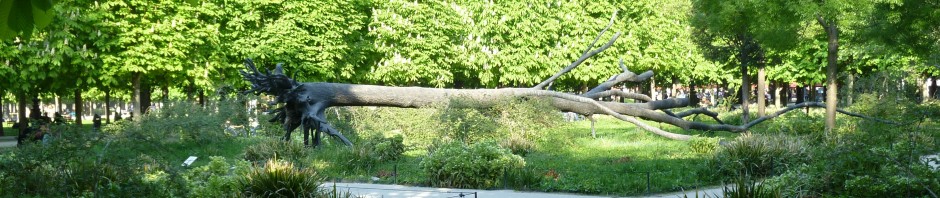
Paris’s trees often have to fight for our attention. The one shown below is certainly an attention grabber, and a reminder that trees have a finite lifespan. Some fall down. This tree in the Tuileries Gardens did not fall down. Called L’arbre des voyelles (the tree of vowels), it is a magnificent bronze sculpture by the Italian-born sculptor Guiseppe Penone. Born in 1947, his youth in the Piedmont forests gave him a love of nature and trees that one sees in his works of art.

Our discovery of L’arbre des voyelles was a quintessential Parisian moment. We return to it for calming renewal and to be reminded that the more you wander, the more Paris gives up its secrets. Only later would we realize that the same sculptor had created the striking wooden sculptures we love to show visitors we take to the Art Gallery of Ontario in Toronto. And yes, it is the same tree that has appeared at the top of every blog since we first started to write about the city.

Philippa and I first stumbled upon this extraordinarily realistic work of art quite by accident. We had crossed the river on the Passerelle Solferino and as we walked through the Tuileries Gardens we became aware of the apparently fallen tree. Aside from its beauty, two other things captivated us. It seemed so different from much of the geometric formality of French landscaping; Paris landscape designers are to be commended for exploring new forms. Second, it seemed so familiar, because at home in the Canadian woods and forests, we have often seen fallen trees with roots flailing at the sky.

Being a tree that lives to ripe old age in Paris often requires human commitment and sometimes rather heroic support.

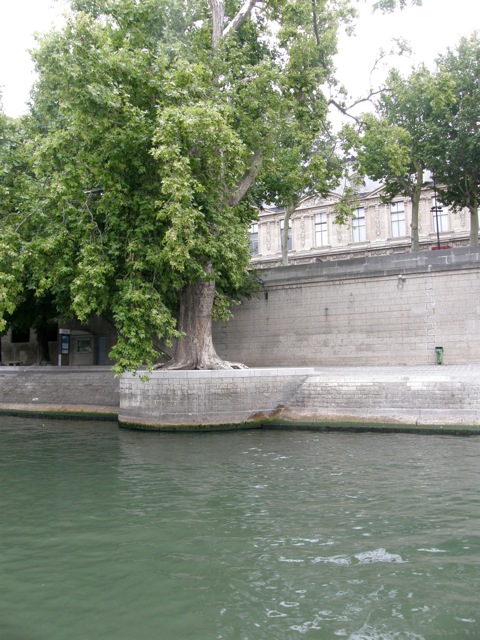
As we drifted along the Seine on the Batobus (one of the best transportation bargains in the city), this tree stood out like a living punctuation mark to salute the beauty of the Seine and Paris. But the beauty was supported by the quayside extension that gave the tree a proper place to live and to grow.

In early November as we walked along the bank of the Seine near the Quai Henri IV, we were suddenly aware of some trees that seemed to arise out of the river as if they were floating.

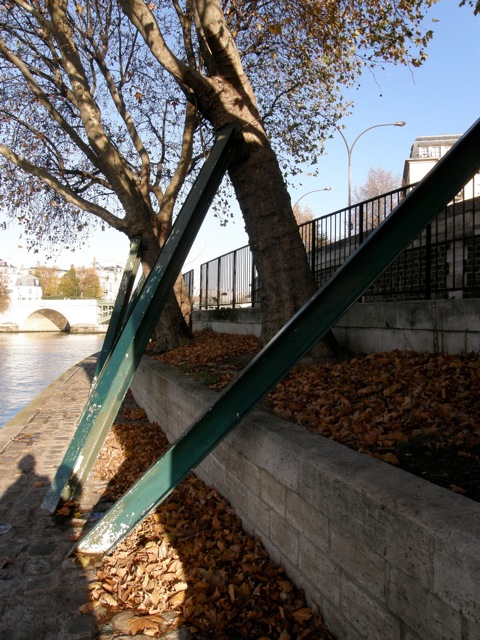
As we got closer, we had to walk carefully, in order not to trip over the I-beams that were propping up the trees lest they fall over and end up floating or dipping into the water.

And it was thanks to the I-beams and the great care and pride of those who keep Paris a city of trees that several minutes later gave us this magical moment.

On a hot August afternoon, we were grateful for the shade afforded by a former church and this tree near the entrance to the Musée des Arts et Métiers (Museum of Arts and Trades/Technology).

The museum has stunning collections showcasing human ingenuity, skill, and imagination in areas such as instrument making, building technology, and transportation. It is also a fine place to eat. It is a popular museum and many visitors come through the doors or pause to sit in the shade and rest their feet. But how many pause to think of the engineering that helps to keep one tree upright and healthy?

How many look closely at the stainless steel ring circling the trunk about 4 metres above ground height? How many notice the cables and reinforcing stays that let the tree draw on the strength of the building? Or see the traces of the building itself having been reinforced?

Many of my photos start when changing light and reflections enter my consciousness. Without the tree, without the dedication and engineering that helps the Musée des Arts et Métiers tree stay alive and structurally sound, the reflections in the photo below would be less interesting. And without the carefully tended tree, Paris would have lost a precious asset.

I am grateful for the many ways Paris works to protect that which is rooted. While I might not be of Paris, while I am there I feel rooted. Rather like this chair on the rue St-Paul. One day, I may take up root at a café table myself.

Text and photographs by Norman Ball

Posted in Paris gardens, Paris parks, Paris streets | Tagged , , , , , , , , , | 10 Comments

Mary Callery, sculptor and collector

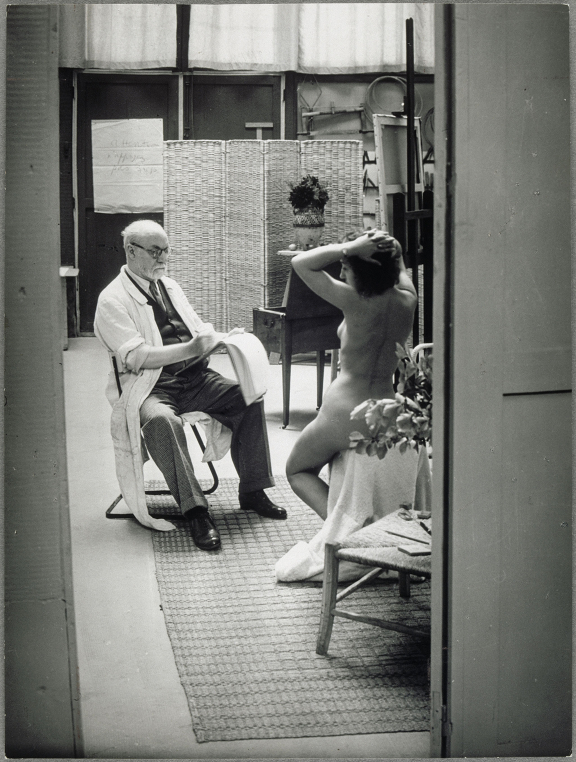
Last February, I wrote a blog about the Villa d’Alesia, a small street of artists’ studios in the 14th arrondissement. In my research, I came across a photograph of Henri Matisse taken by Brassaï in 1939. The title was “Matisse dessinant un nu couché dans l’atelier que lui avait prêté Mrs. Mary Callery à la Villa d’Alesia.” (Matisse drawing a nude in the studio lent to him by Mrs. Mary Callery in the Villa d’Alesia).

The photograph shows Matisse in a smock that looks like a doctor’s labcoat, sitting in a chair, drawing a female model posing in the nude.

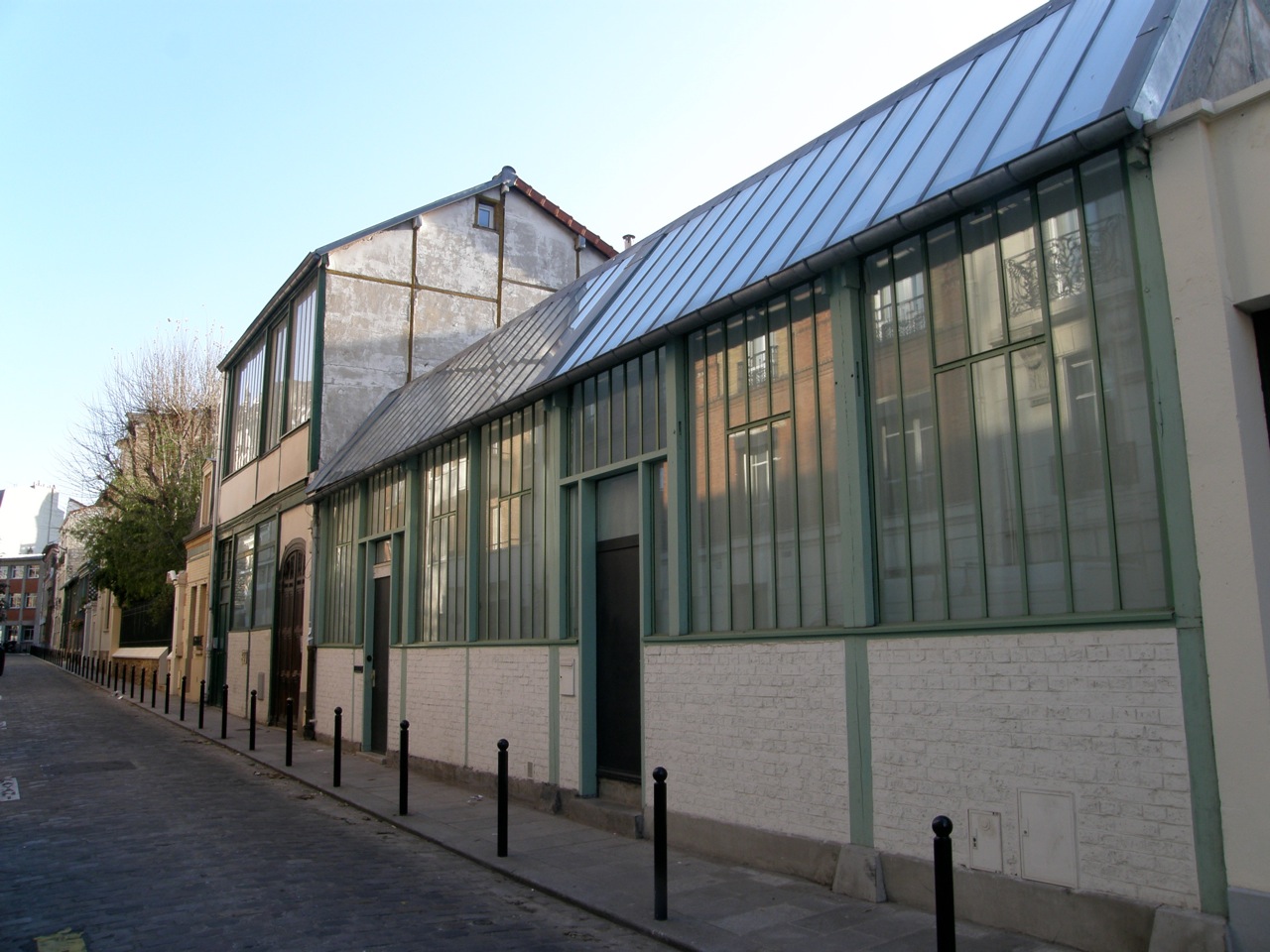
I think the studio was the one shown below, a photo that appeared in the earlier blog.

Who was this Mrs. Callery who lent studios to artists? I found a Wikipedia entry for Mary Callery (1903-1977) that described her as “an American artist known for her Modern and Abstract Expressionist sculpture.” The entry listed numerous solo exhibitions, several group exhibitions, and many institutions that owned her pieces, from the Museum of Modern Art to the Eastland Shopping Centre in Detroit. It was a useful assemblage of facts as far as it went, but it told me next to nothing about who she was.* I decided to do a little digging on my own.

This was not a job for Google. Mary Callery had the misfortune to die in the 1970s, and that means that she was pre-Internet, but many of the likely sources of information would be still under copyright, or the kind of things that have never been digitized. You can find more information from the 1890s than from the 1970s online, it seems.

So I started with the New York Times online archives. I love this resource; it is a treasure trove of detail. One of the first things I found was a short notice from May 1934, titled “To Be Wed in Paris Today.” It began, “Mrs. Dawson Callery announced tonight that her daughter, Mrs. Mary Callery Coudert of New York City would be married in Paris tomorrow to Carlo Frua Dangeli of Milan.”

That one sentence told me a lot. It included the names of both of Mary’s husbands and her mother. It put her in Paris in the 1930s. And it implied that her family was of sufficient consequence that her marriage plans were considered of interest to the readers of the New York Times.

With the name “Coudert” to add to the mix, I found a longer article, dated April 1930. It had three subtitles under the main title, “Mrs. F.R. Coudert Jr. Off to Seek Divorce.” Then “Incompatibility Is Given as Ground as Wife of Lawyer Sails for Paris,” followed by “Her Plan a Surprise.” And finally, “She Had Actively Aided Husband in Race for District Attorney—To Have Art Studio in France.” The headline writer was apparently too excited by this event to make do with a single heading.

The article mentioned the marriage breakdown between her and her Republican lawyer husband, “a member of one of New York’s distinguished families.” She had apparently sailed to France without telling anyone other than immediate family, leaving “her 5-year-old daughter with Mrs. Frederic R. Coudert Sr.” In between details of her first marriage and her husband’s political ambitions, the article writer added one further note: “Mrs. Coudert has long been interested in art and is desirous of developing her artistic talents, especially in sculpture, according to her friends…She plans eventually to have a studio in Paris, it is said.” That was all.

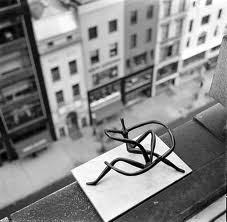
Finally, I found her 1977 obituary. Whereas the anonymous writer of 1930 had described her as “interested in art,” this article explained that Mary, the daughter of a wealthy Pittsburgh family, had been “encouraged to pursue an interest in art from the age of 12, when she constructed a bear cub out of clay… She later attended the Art Students League in New York City, where she studied under Edward McCartan. In 1930, she continued her studies in Paris under Jacques Loutchansky.” A small example of her art, with her trademark attenuated figures, is shown below.

What a difference a few decades can make. In 1930 she is a faithless wife, abandoning husband and child for an mere “interest” in art; by the time of her death, she is a serious artist who has followed a clear program of study, with no mention of what was involved in moving to Paris. The obituary listed her most important shows and noted specific artworks, and only briefly mentioned her marriages at the end (the second one lasted only two years). It tactfully omitted the names of those with whom she was believed to have had affairs, such as Mies van der Rohe.

Apparently, at the time of her death in Paris she was an artist with a considerable reputation. She had received important commissions – including one for the United States pavilion at the Brussels World’s Fair in 1958, another for the proscenium arch in the Metropolitan Opera House (Lincoln Center) in New York in 1966. The one shown below was created for a New York school; the theme was the fables of La Fontaine and Mary Callery designed it so that children could climb on it (safety requirements being what they are, this is no longer permitted).

But four more decades have passed and her reputation has changed yet again. Her works are not on display in the cultural institutions that own them, as far as I can determine (if anyone reading this is in New York and can check Lincoln Center for me, I would like to know if her piece is still there). There remain only some public art installations in office buildings or outdoors. Although she is considered one of the Abstract Expressionists, a recent retrospective of these artists by the Museum of Modern Art, which we saw when it came to Toronto, does not include a single mention of her.

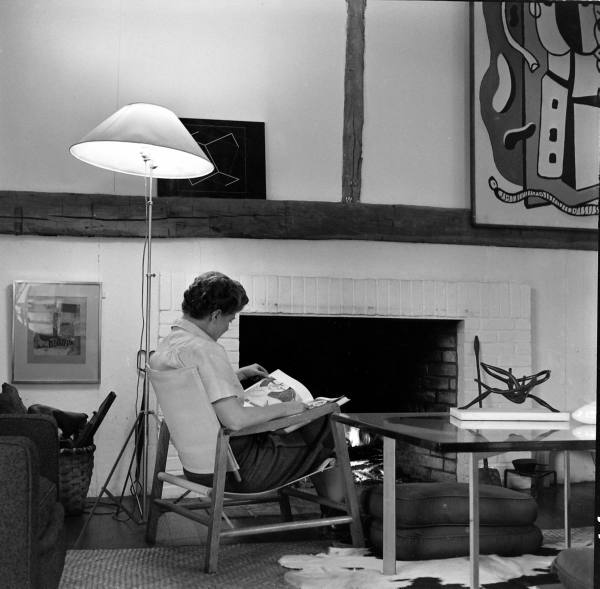
What she is remembered for now is not her work, but her collection. She amassed an enormous body of modern art, including works by Picasso, Matisse, Fernand Leger, Alexander Calder, Salvador Dali, Jasper Johns, Andy Warhol, Man Ray and many others. It has been sold off and dispersed, but one catalogue from a Christie’s sale in 2009 indicates its range.

And here is something curious. In many of the documents associated with her collection, including gallery records, she is listed as “Mrs. Meric Callery.” It sounds like Mary, but it is a man’s name. The twice-divorced Mary seems to have used a name that makes her sound like someone’s wife (back when women were often known only by the name of their husbands). Perhaps the name started as a mistake, something that some official wrote down in error, assuming that since she was calling herself “Mrs.,” the first name had to be a man’s.

In the decades since her death, it seems that Meric Callery the collector has overshadowed Mary Callery the sculptor. If she is remembered at all, it seems, it is as a wealthy patron of the arts. Her second husband shares this reputation, and although their marriage ended in 1936, she emerged with the wherewithal to continue collecting art.

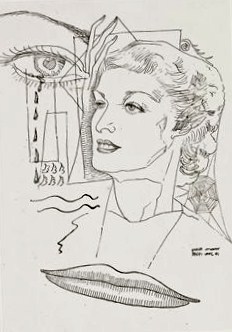
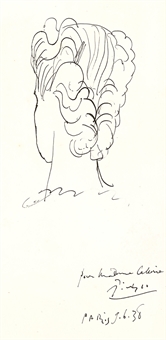
The artists all seemed to know her. Picasso drew a picture of the back of her head (shown above). Man Ray both photographed her and sketched her (that is his photo portrait of her and his surrealist sketch shown above). Alexander Calder made her a brooch featuring her initials. She bought artworks, made introductions, encouraged those she knew to offer commissions.

How seriously did they take her as an artist in her own right? Impossible to tell. How good was her art, really? I like it, but I’m not a critic. What happened to turn Mary Callery the artist into “Mrs. Meric Callery” the wealthy benefactress?

I have many questions (and a growing file of research findings about her life), but it would take a professional to tell me why her art is now largely forgotten. If you happen to know an art historian or art critic, do please ask on my behalf.

Text by Philippa Campsie

*Some of the biographical details now contained in the Wikipedia entry are those that I have contributed, but it is still pretty bare bones.

Posted in Paris art, Paris history | Tagged , , , , , , , , , , | 29 Comments

Walking on cast iron in Paris

Every day, hundreds of thousands of feet pound, skip, saunter, or slog across them. Yet very few people stop to look at the cast iron embedded in Paris’s roads and sidewalks. Some pieces are intricately designed; many glisten with the patina of feet and the passage of time. They are beautiful artworks in their own right, insights into history and clues to the everyday workings of Paris.

Welcome to the world of cast-iron manhole covers, sewer grates, street tree covers, and other pieces of urban street furniture embedded underfoot.

Time and countless feet have polished into high relief this seemingly simple cast-iron manhole cover (the French translation is regard de chaussée or plaque d’égout). The design consists of geometric shapes spaced in concentric rings. The closer we look, the more we see the honourable scars of time.

The manhole covers allow city workers to go beneath the ground to service a labyrinth of pipes, wires, and other necessities of modern urban life. (It also allows urban explorers access to the vast network of tunnels underneath the city.)

Others, such as the one shown above, allow access to the pipes that deliver gas to buildings.

On my first trip to Paris, I was intrigued by the signs that announced “Eau et gaz à tous les étages” (water and gas supplied to all floors) and I still tend to notice these signs on buildings when I walk through the city. Pumped water to all floors meant water for drinking and cooking as well as flushing toilets. Pumped water was a great convenience, but sometimes breakages meant the water supply to the entire building had to be turned off. For the solution to this problem, look down, not up.

Open this kind of access and use a special long-handled tool to turn the valve off. Then the water that was leaking from the broken pipe on the third floor will stop dripping down to the ground floor. (The recriminations are a little harder to stop.)

The Parc de Bercy is a modern urban park in the old wine warehouse area. The buildings that have survived remind us of a former industrial era. Cast-iron covers such as the one shown above speak of another underground technology: telecommunications. And the greenery tells us this cover been here for some time.

I am particularly fond of the image shown above. It bears witness to the way in which trees are respected in Paris. In so many cities—I see this everyday in Toronto—trees are tightly surrounded by impermeable asphalt pavement or bricks. The stunted growth and premature deaths of so many trees on busy urban streets testify to how little water gets through to the roots.

The shape of the grate above intrigues me. Does anyone know who made it? I would love to have one of the two pieces with the straight edges as examples of beautiful industrial design. I would put them in our garden, or even my study, as art objects.

Not all trees survive. However, even in death there is something dignified about the way the trunk has been left to indicate something of interest. The generous grating testifies to the care that allowed the tree to grow to the size it did.

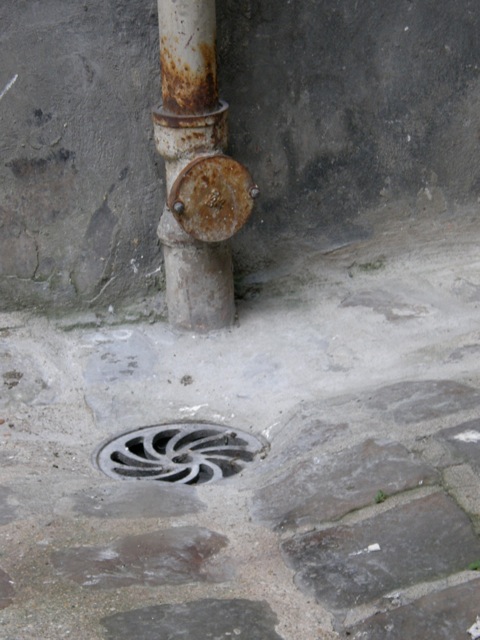
Visitors to Paris are sometimes intrigued—well, okay, I was intrigued—by the collections of exterior drain pipes that collect water from roofs as well as interior waste water (not sewage). Where does the water go? Follow the route of the pipes and you will see.

The cast-iron pipe disappears underground to join the larger water collection system. It collects the water that drains from streets, sidewalks, and courtyards and disappears down drain covers such as this one.

Once you are aware of these features of Paris streets, you will find it is hard to go very far without seeing them. You will also find that if you re-examine many of your photos of Paris street scenes, you will be amazed by the number of drain covers, manhole covers, and other bits of cast iron lurking in your photos. Look closely and try to decipher the clues on each one.

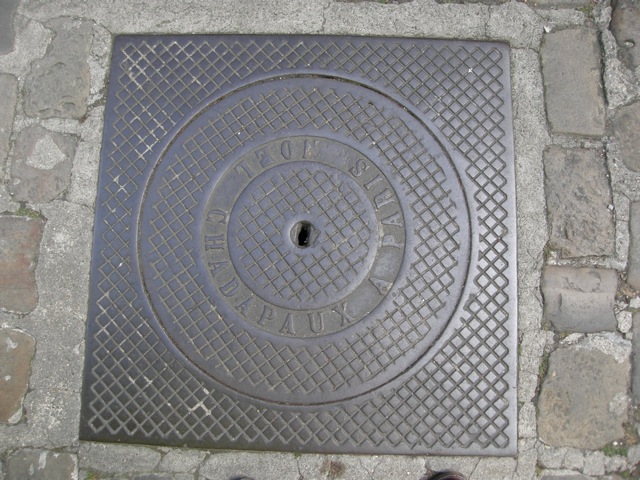
This one came from the foundry of Noel Chadapaux in Paris. Who was he? I am not entirely sure, but Google Books turns up his 1878 patent for “enamelling side culverts.” This is important work in the public health field. The name also led me to a website containing hundreds of photographs of French manhole covers.

When I looked at the manhole cover shown above, I did a double take. There in the streets of Paris was a name I had known as a car-crazed teenager.

I was one of many car fanatics at Delta Secondary School in Hamilton, Ontario. I was particularly inspired by our English teacher, Mr. Smith, a quietly impressive man who owned a screamingly fast Chrysler 300F, which had a fully synchronized Pont-à-Mousson four-speed transmission. Later I would learn that the transmission had proven itself in the Chrysler-powered French luxury car, the Facel Vega.

Back then, all I knew was that Pont-à-Mousson was a factory somewhere in France. Now a manhole cover on the streets of Paris rekindled half-forgotten memories of four-barrel, full-race cams, solid lifters, low-back-pressure-exhaust, and other essential elements of teenaged fantasies.

Thanks to the Internet, I now know that there are others who share my interests. At the website “Manhole Miscellany,” I found out more about Pont-à-Mousson (PAM). The foundry dates back to 1854, but in 1970, along with several other firms, it merged with the firm of Saint-Gobain, which got its start as a firm that made mirrors. Alas, the Pont-à-Mousson bridge across the Moselle River depicted in the company logo (which still appears on all its products) was destroyed in the Second World War.

(My researches also turned up the fact that there is an International Manhole Museum near Venice in Commacchio. Who knew?)

I took the picture above because I liked the bamboo and the colour of the walls in a quiet little enclave. Later I saw the chasse-roue. Now I see the manhole cover and drain.

Or consider this one. It is one of dozens that I have taken for other reasons. But now I see numerous examples of the cast-iron artwork that I previously overlooked.

Baron Haussmann is remembered for creating Paris’s wide boulevards, lined with uniform facades. But let’s not forget that his legacy includes a functional water and wastewater system, bringing eau et gaz to tous les étages while taking away sewage from tous les étages as well. For modern-day Parisians, the second achievement may be even more important than the first.

Text and photographs by Norman Ball.
Posted in Paris streets | Tagged , , , , , , , | 9 Comments

Come walk with me in Paris

I have a confession to make. I have been moonlighting. That is, I’ve been writing for some other Paris blogs and websites, and recently, one of them published two walking tours that I created.

Walking tours, whether the group or the self-guided version, are a great way to learn about a city, and creating one is an education in itself. You string together interesting points like beads in a necklace, but you also find out more about the spaces in between.

You begin by planning with a map, and end up walking the route, finding even more interesting ways to get from A to B – look, I can cut through this garden or lead people through this arcade, instead of simply following the roads. You note unsuspected views (who knew you could see Sacré Coeur from here?), and telling details (a fountain, a historical plaque, an unusual street sign). You take hundreds of photos, masses of notes, bring it all home, and sort it all out. Start to finish, it took me about eight months from the early planning to the final product.

The two walks are posted on the website Girls’ Guide to Paris. If you follow the link and scroll down to the bottom, you will find them: Shopping with Jackie Kennedy in Paris and Audrey Hepburn in Paris. At the moment, they are available as PDFs that you can download and print. Eventually, we hope to turn them into iPhone apps (I don’t own an iPhone, but, hey, I can learn).

I had written articles about these two women for GG2P (click here for the one about Jackie and here for the one on Audrey), and the walking tours seemed like a natural extension of my research.

The Jackie Kennedy walk crosses the 16th arrondissement. The only things that I have in common with Jackie Kennedy are that we both studied at the Sorbonne and we both lived in the 16th (but unlike her, I was an au pair as well as a student during my stay). She was there in 1949-50; by the time I went to Paris, she was already working for the publisher Doubleday (wait a minute – there’s a third thing we have in common, since I once worked as an editor for Doubleday Canada).

Jackie returned to Paris 11 years after completing her studies in France. At that point, she was the wife of the U.S. President and she entered the city in a grand motorcade with people lining the route and shouting her name. I returned with my husband 15 years after finishing my Sorbonne studies, but we were travelling on a rather more modest scale. Somebody may have waved at us.

I found that there weren’t many walking tours that covered the 16th, and I wanted to include some of my favourite bits. At first, I planned something ludicrously ambitious (it’s a big arrondissement), but eventually scaled it down to focus on the Passy area. I worked out a route that started at the building on the Avenue Mozart where Jackie lived as a student, and wended its way to the Palais de Chaillot, where in 1961 John Kennedy gave that famous speech about being the man who brought Jackie Kennedy to Paris.

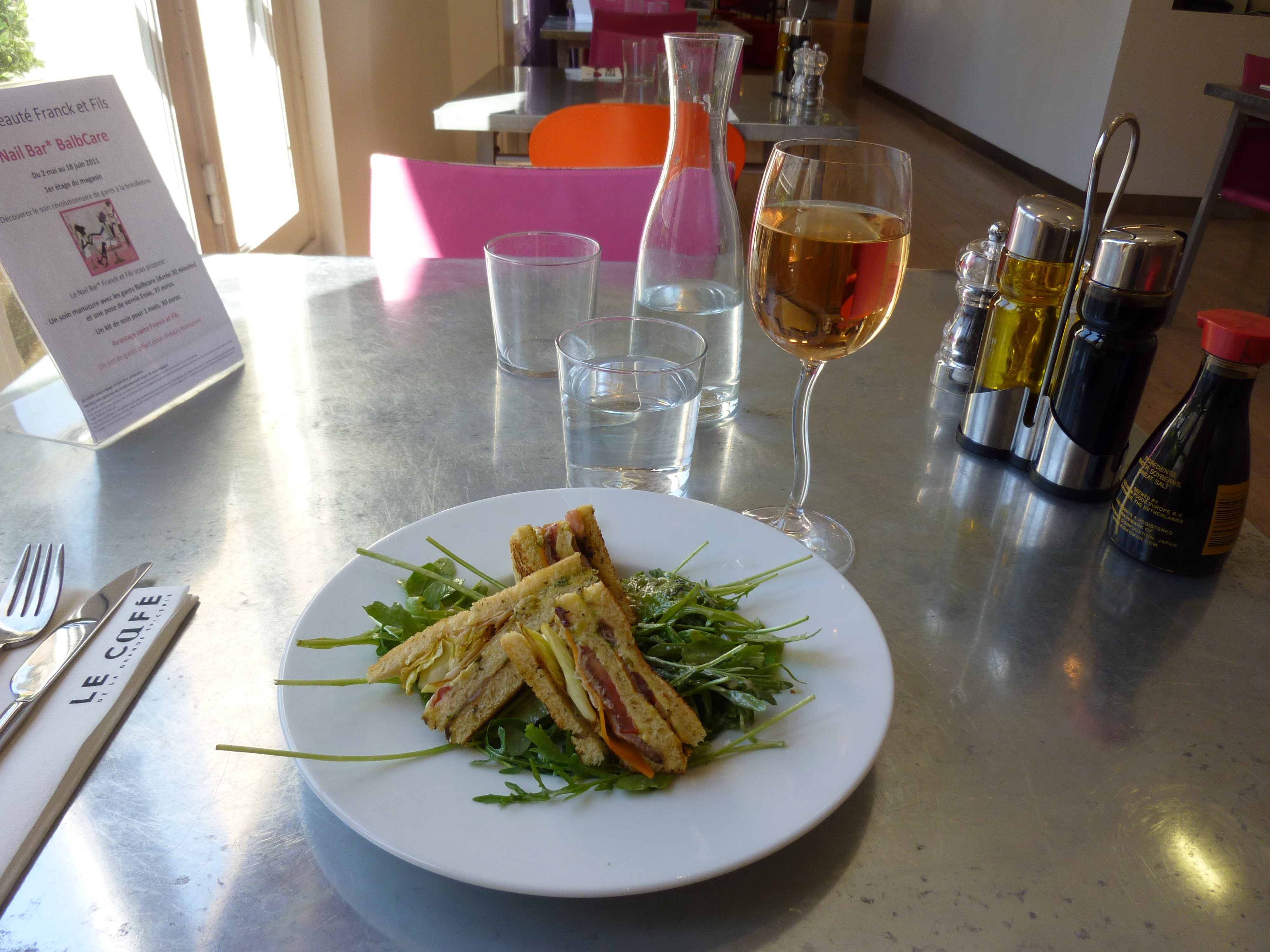
I test-walked the route on a gorgeous day in May. Because Jackie was an extravagant shopper, I included some good shopping streets, and paused for a delightful lunch at Franck et Fils, the department store on rue de Passy.

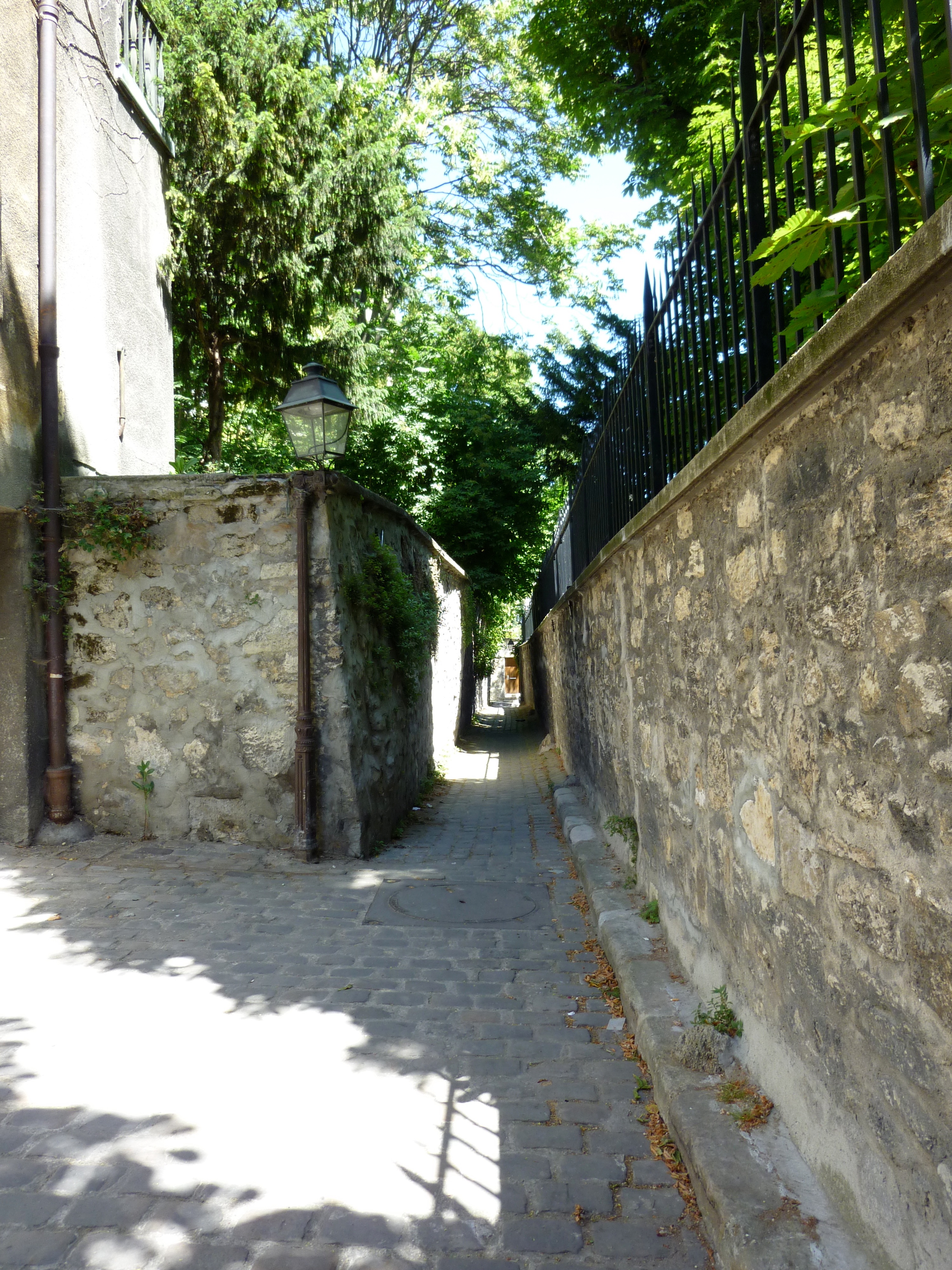
I also included several museums and gardens, a cooking school and a market, and one of my favourite Paris streets, the rue Berton. This is a charming little cobbled alley between the gardens of Balzac’s house and the Turkish Embassy. It is somehow left over from a more countrified version of Passy, when the slopes were covered with big houses and huge gardens cascading down to the Seine.

The Audrey Hepburn walk is quite different, because Audrey Hepburn never lived in the city. And I cannot think of a single thing that she and I have in common (my film career consisted of a brief stint as an extra, and I think the results ended up on the cutting room floor). She starred in five movies shot on location in Paris: Funny Face (1957), Love in the Afternoon (1957), Charade (1963), Paris When it Sizzles (1964), and How to Steal a Million (1966). The first one is amusing if improbable, the second is a bit creepy, the third is one of my all-time favourite Paris movies, the fourth is just silly, and the fifth is a delight from beginning to end (I’ve written about it before).

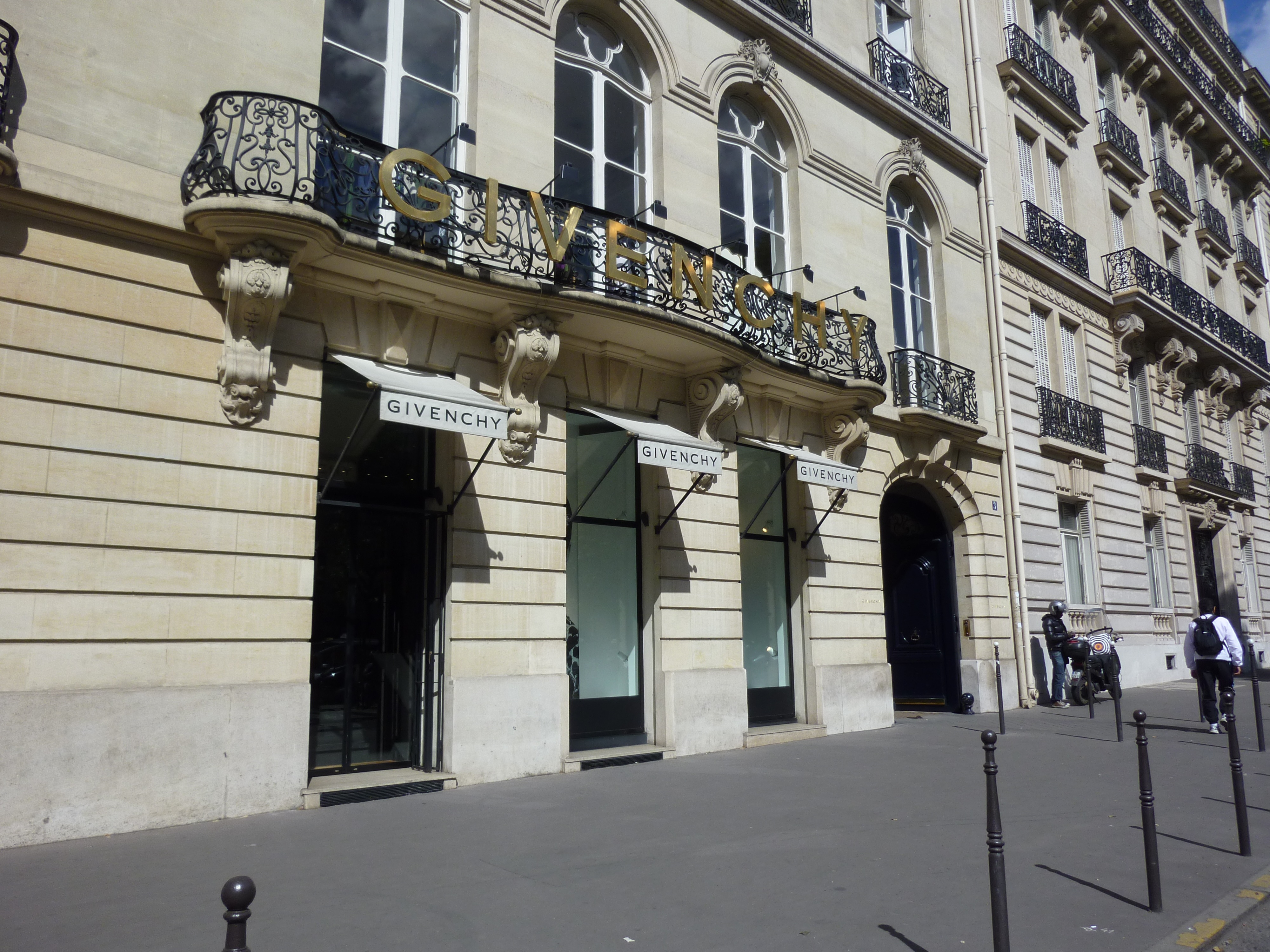
I was able to identify many of the locations in these films, using biographies of Audrey, online sources, and the informative book Paris Movie Walks by Michael Schürmann. I plotted every location I could identify on a map, and was delighted to find that about a dozen of them could be joined up in a route leading from the Palais Royal in the 1st to the Givenchy headquarters in the 8th. That’s how I originally planned the walk – east to west – but eventually I realized there was more logic in covering the route from west to east.

So the route now starts at the building in the 8th where Audrey met Hubert de Givenchy before filming Sabrina (1954). That movie was shot in the United States, but Givenchy was given the job of creating the Paris couture that Audrey’s character wears after her stint at a cooking school in Paris. Here is Hollywood fantasy at its finest – what cooking school graduate would return to her home over a garage in Long Island complete with designer clothing and designer dog?

Before making Sabrina, Audrey Hepburn (who had starred in only one film, Roman Holiday, to that point) went to Paris to meet the couturier. She wasn’t yet very well known, and nobody in the House of Givenchy recognized her. In fact, told to expect a “Miss Hepburn,” Hubert de Givenchy was looking forward to meeting Katherine Hepburn. Despite this unpromising beginning, Hepburn and Givenchy forged a relationship that lasted decades. He is probably best known for the Little Black Dress he created for the film Breakfast at Tiffany’s – in a shop along the route I saw a souvenir of this classic.

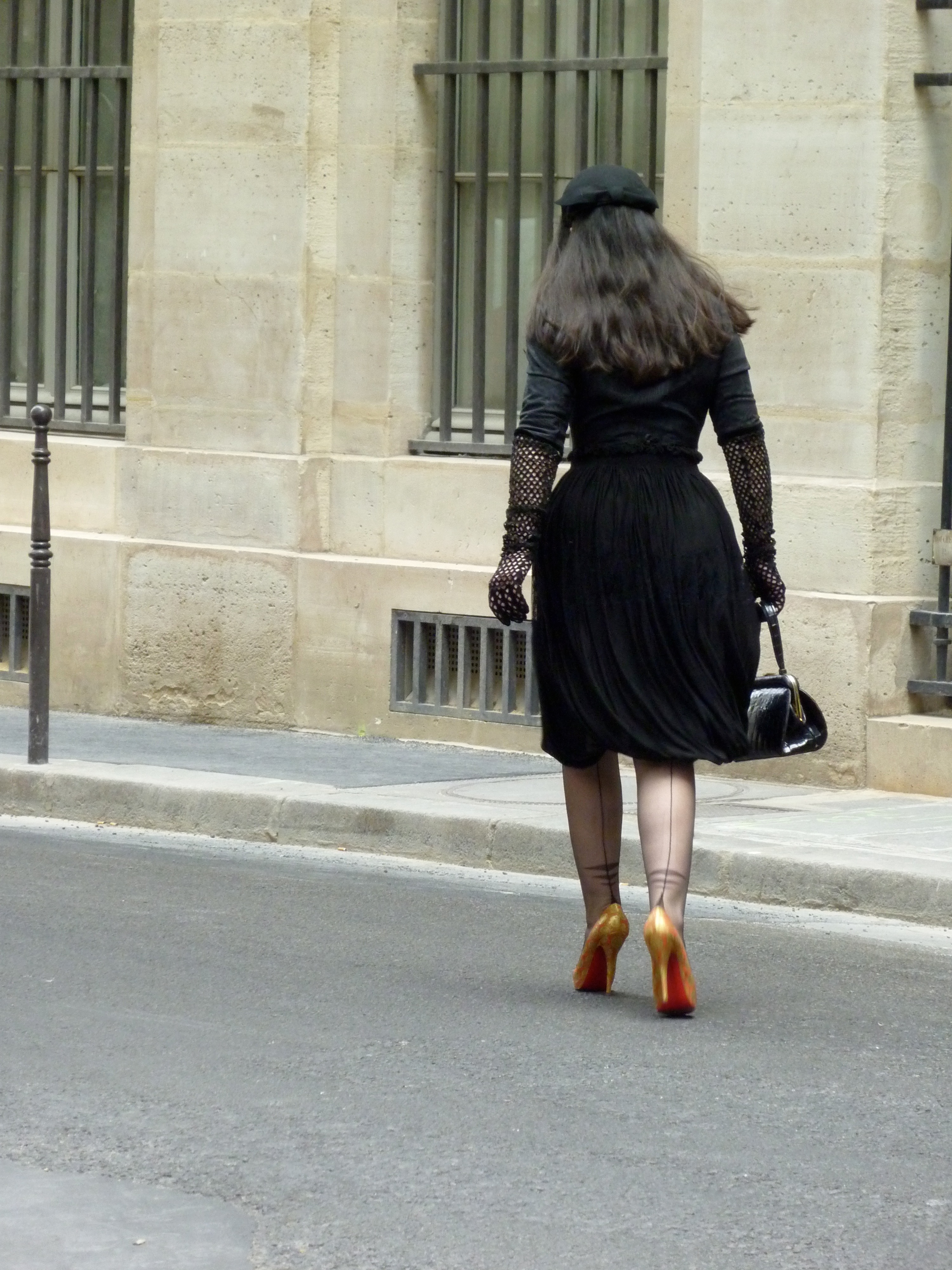
I also saw a little black dress on a young woman who passed me in the street, but it was not, I think, a look that Audrey would have recognized.

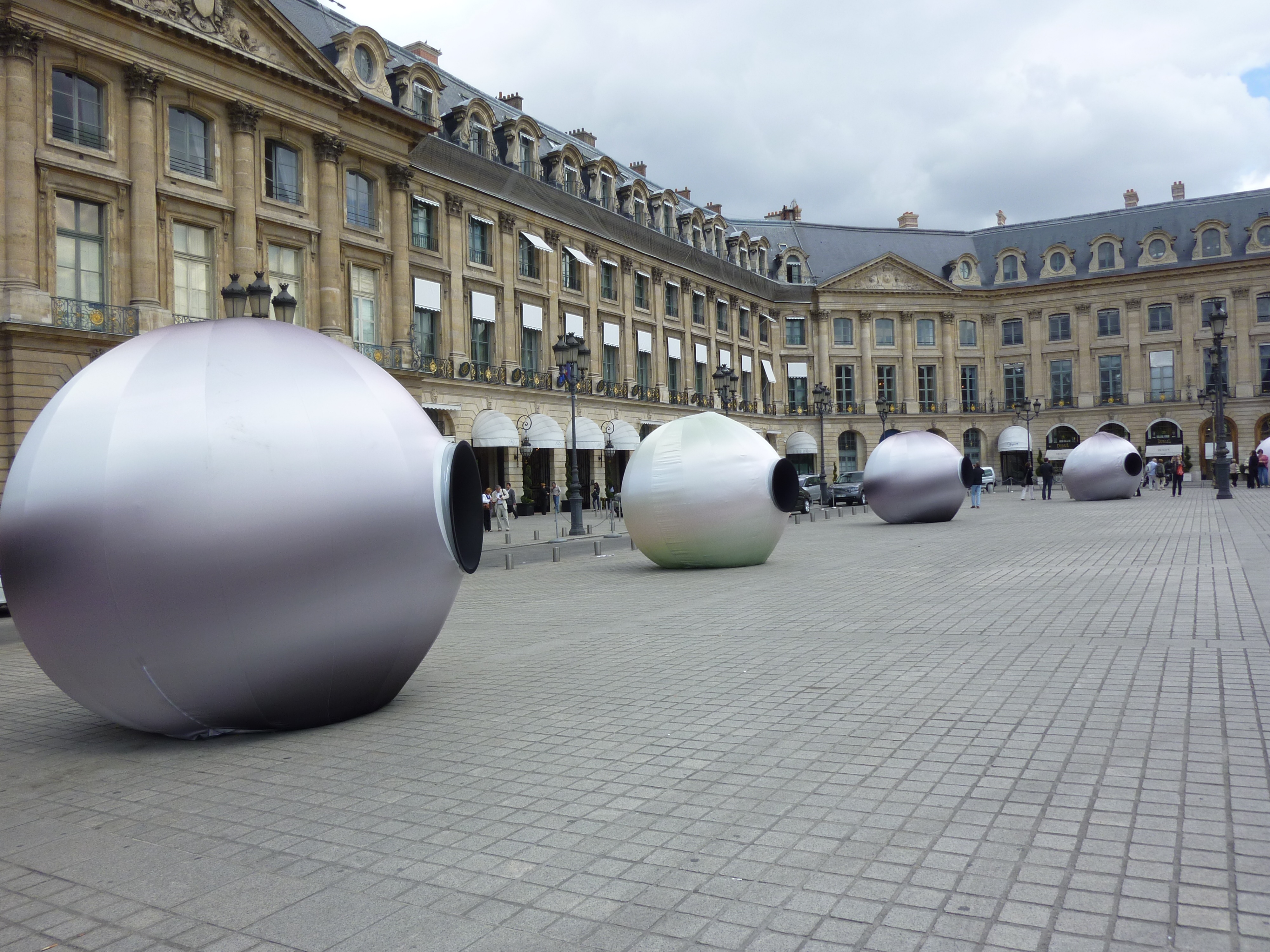
From the House of Givenchy, the route winds its way to the Ritz. The hotel figures prominently in Love in the Afternoon (a disastrous film, in my opinion: Gary Cooper was not aging well and Audrey’s character’s attraction to him is impossible to fathom). I prefer the Ritz in How to Steal a Million. Consider the scene in which Audrey drives Peter O’Toole there in his own Jaguar after she has accidentally shot him in the arm. She is very fetching in a short nightie, raincoat, and gumboots. And he is, well, Peter O’Toole, impeccably attired. Audrey’s attraction to him is perfectly understandable. The day I passed by, one of the jewellers in the Place Vendôme had a promotion for pearls, and there were huge pearly spheres containing tiny displays arrayed around the square in front of the Ritz.

The walk ends at the Palais Royal, the site of the climactic scene in Charade. I cannot decide between Charade and How to Steal a Million as my favourite Audrey-Hepburn-in-Paris film. When I turned the route back to front, I decided it would be best to approach this location from the northwest corner near the Théâtre du Palais Royal, through an archway and down a flight of steps. I’d never explored this corner behind the Palais before.

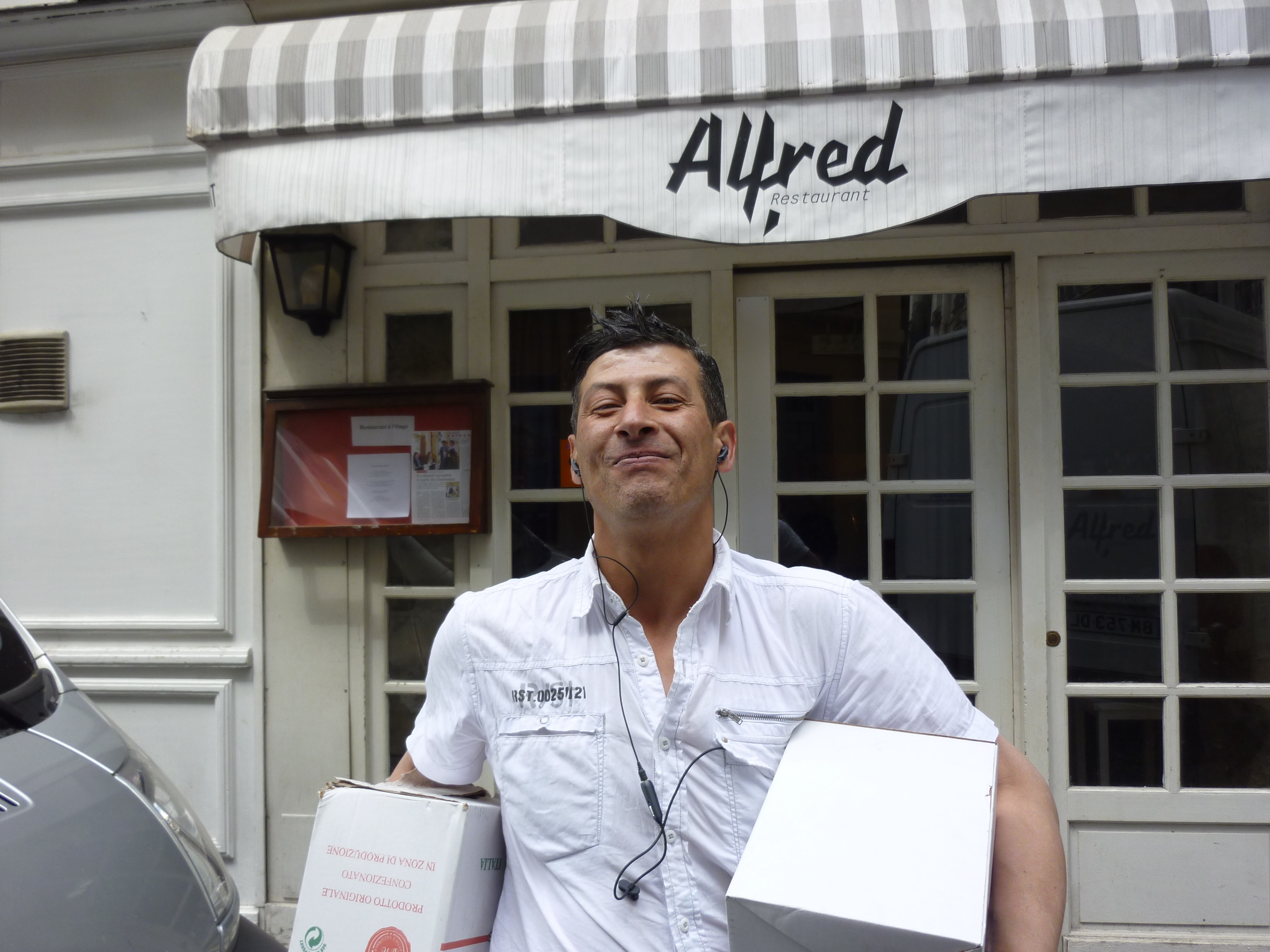
I was busy taking notes and photos, when I realized I was being watched. A man was unloading supplies from a van, and when I spotted him, he smiled and said in French, “Aren’t you going to take my picture too?” So I did. Here he is.

This is the thing about creating a walking tour. Suddenly you have a reason to engage with the people you meet. On the two days that I was walking the two routes, I told people, “I am creating a walking tour for an American website, can you tell me more about this or that?” People went out of their way to provide information, and I returned each time laden down with brochures and suggestions of all kinds.

Creating the final versions was an exercise in extreme editing. People walking through Paris want to know what they are looking at, but they want to spend more time looking than reading, so I had to boil down all the information I had collected into a dense script that doesn’t get in the way of someone else’s exploration of the city. As for the maps, I will spare you the details. It took about two months of experiments before I figured out the best method.

I had no idea that creating walking tours would be so complicated. But I enjoyed every step of the journey. I also have a new respect for others who have created walking tours, and a new appreciation of the city. I’d like to do some more. Any suggestions?

Text and photographs by Philippa Campsie

Posted in Paris film, Paris shops, Paris travel | Tagged , , , , , , , , , , , , , , | 12 Comments

Tracing the tracks of Paris chimneys

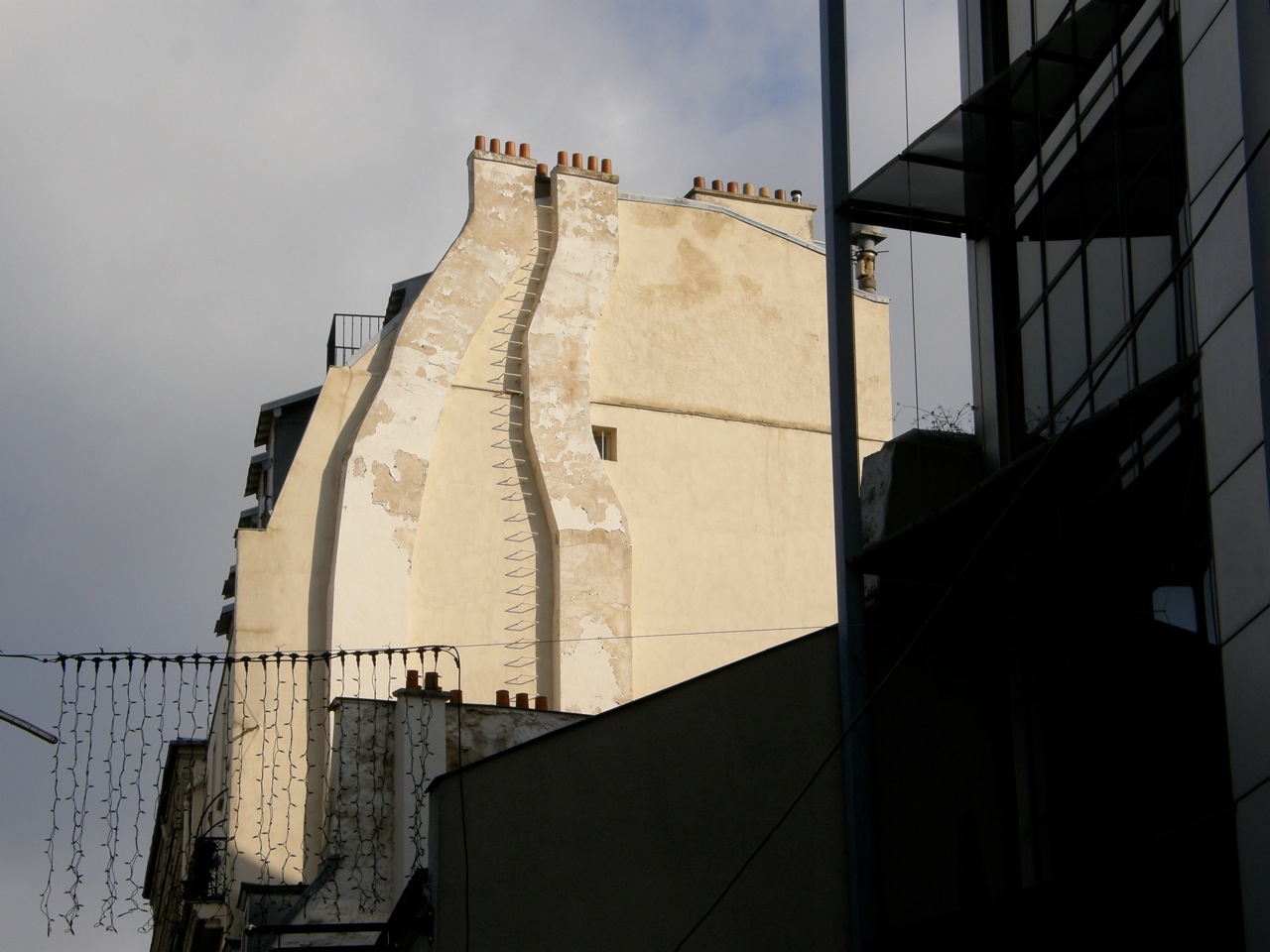
As we walk past the restaurant Monsieur Lapin on the rue Raymond Losserand in the 14th, my eyes are drawn upwards to a ladder of iron steps embedded in the wall. We are looking at the other half of a story I started two weeks ago, when I wrote about Paris chimneypots. Stories like this help us “read” Paris through traces of the past on the walls and streets of today.

The building appears to be in fine shape, and the stone or brick of both wall and chimneys are carefully plastered over. Each chimney appears to have four fired clay flues, each leading to a chimneypot.

Chimneys should allow a free upward flow of air, so the fumes (including deadly carbon monoxide) can be dispersed in the outside air. Whether old or new, chimneys need to be cleaned. The ladder embedded in the wall allows chimneysweeps to climb to the top and then drop the linked brushes they use to clean accumulated soot and debris from the flues.

What does the chimney look like inside? We can’t peer inside this one. However, Paris has a rich collection of chimneys in various states of undress. And so let us peer, so to speak, at chimneys in various states of déshabille.

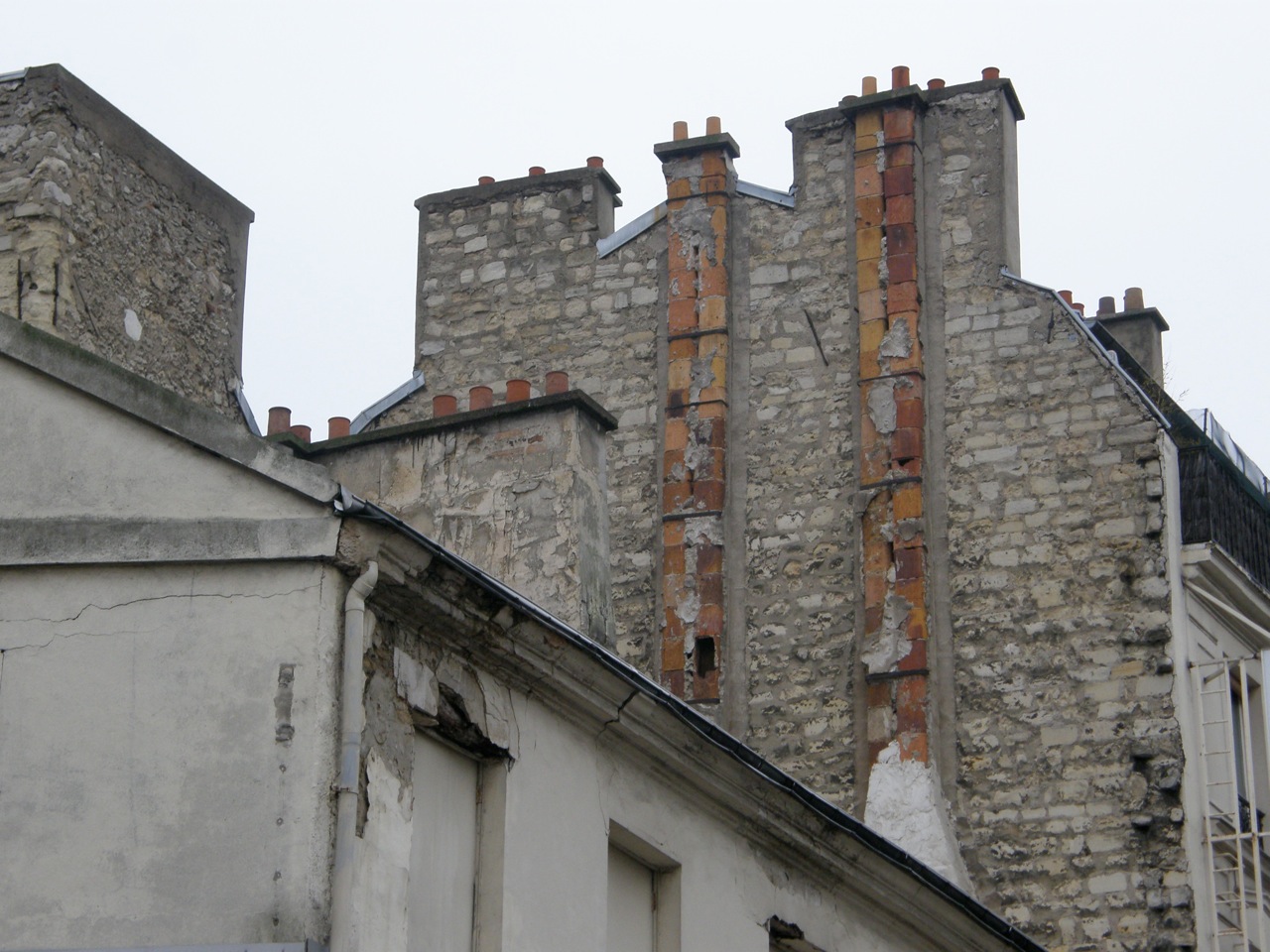
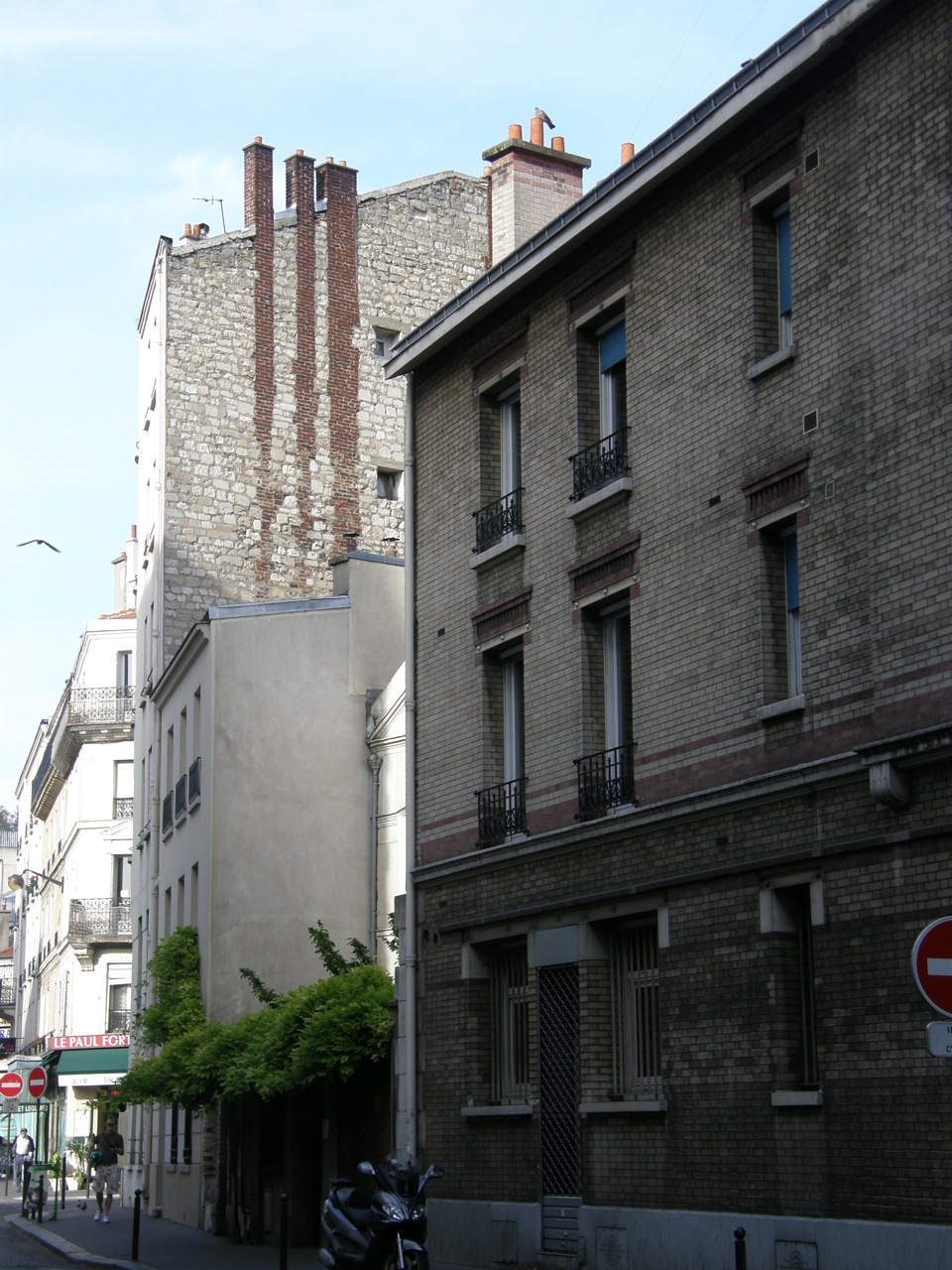
Here it is not just the chimney that is undressed. The stone wall looks coarse and crudely made. This type of stonework is often called rubble stone and normally, once a building was finished, this type of wall would not be seen. It is a thick barrier intended to prevent the spread of fire. Most likely another building abutted this firewall. However, the other building has been taken down, exposing the coarse stonework and two sets of chimney flues.

Each set consists of two parallel flues made of fired clay tiles. Each set is topped by two chimney pots. The flues are exposed to the elements and broken in places. Clearly these are not working flues, but they show the path once taken by smoke from a fireplace. The chimneypots for which we see no flues are probably for working fireplaces, stoves, or boilers.

Once one knows what to look for, one finds that Paris is filled with exposed chimney tracks. In the photo below, at first glance it appears two exposed flues once converged into one and climbed to the roofline.

However, when the telephoto lens moves in more closely, one can see three flues, since there are at least two chimney flues merged into one near the front of the building. The building they once served is no more, but the tracks are there to tell—or at least hint at—the tale.

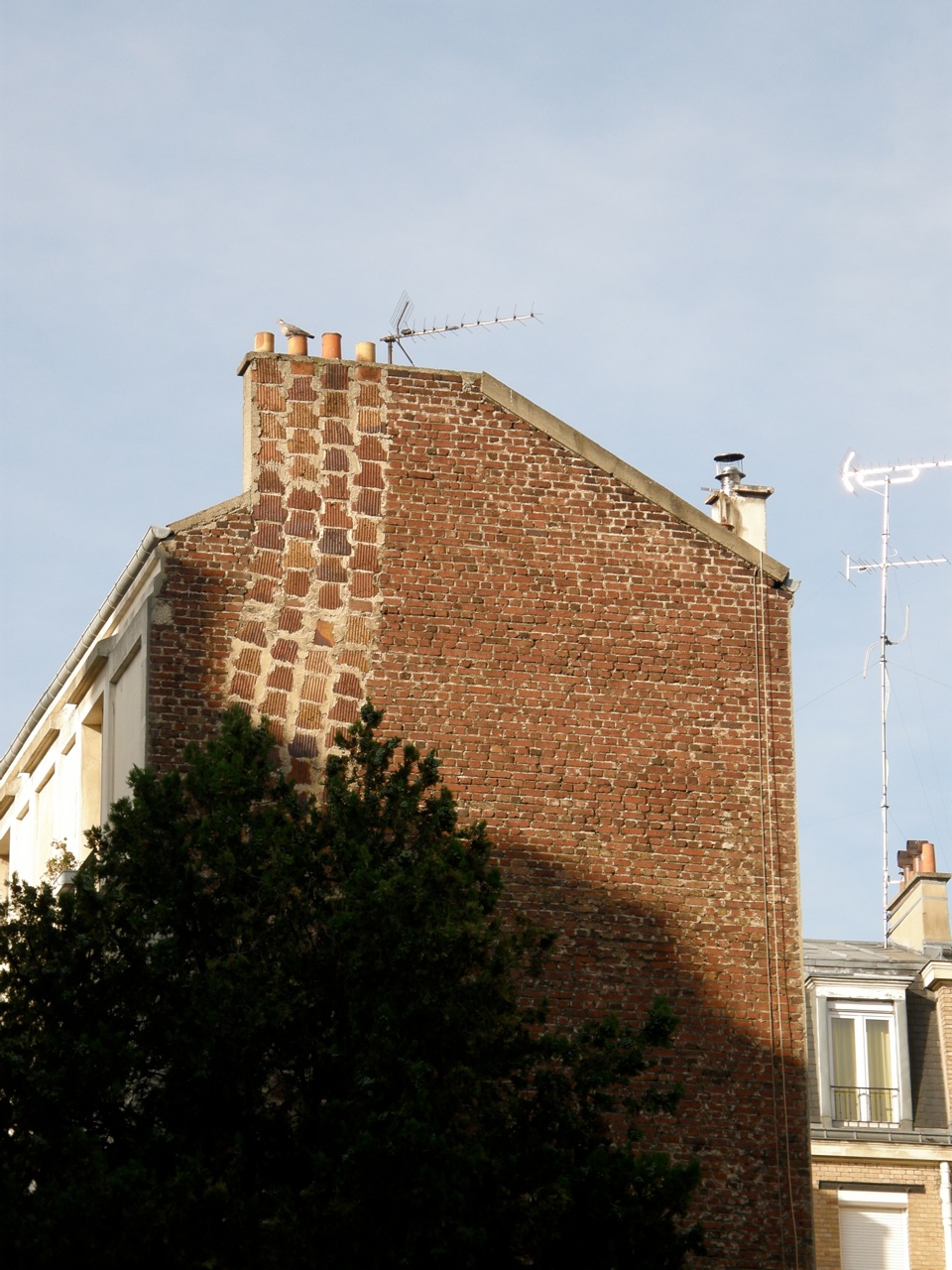
Working chimneys on end walls or firewalls need not look unpolished or unfinished. Here the flues are flush with an attractively finished brick wall. Moreover, it looks as if there are no gaps in the flues; they represent a complete system safely drawing smoke and fumes from at least four sources.

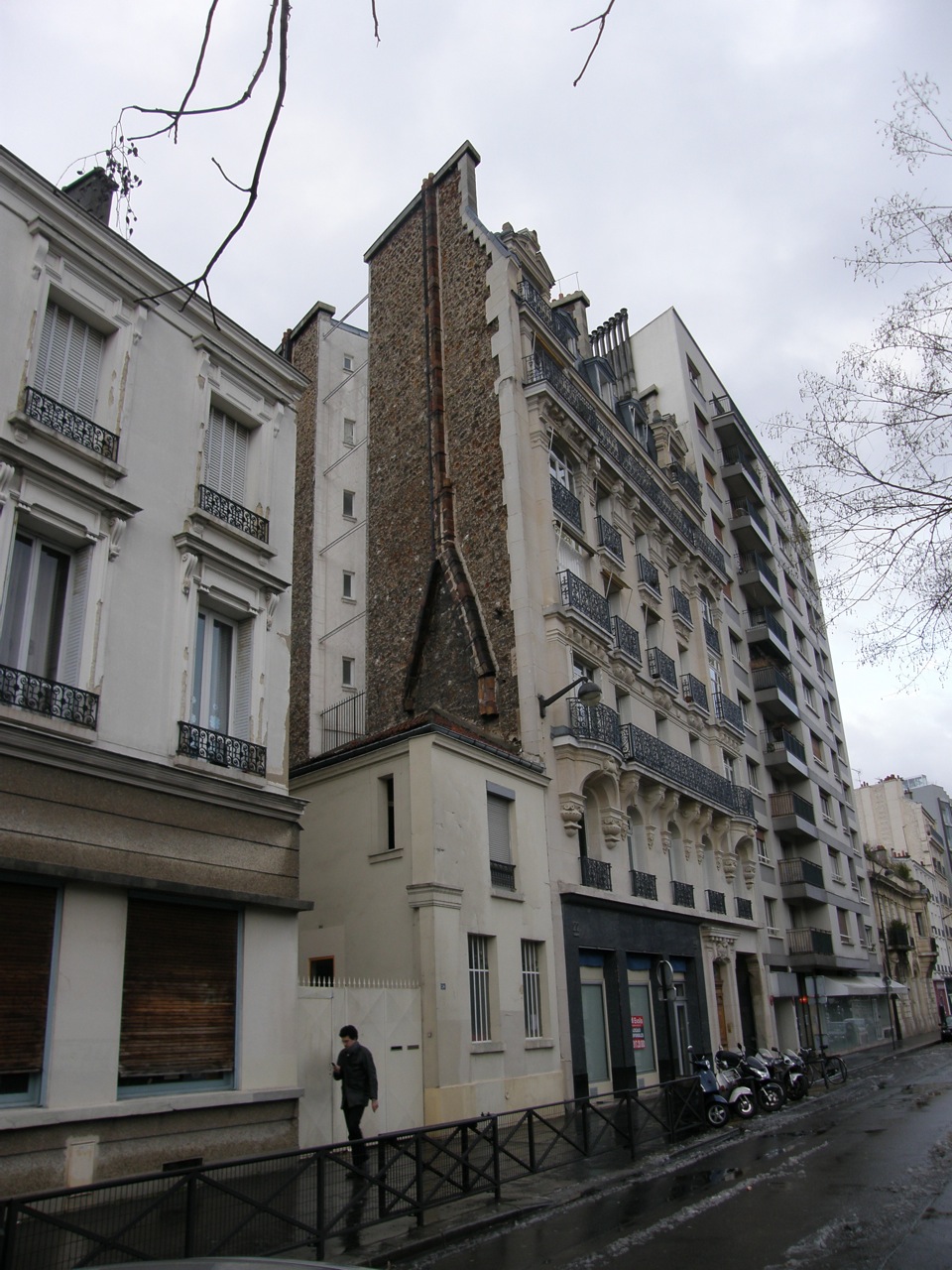
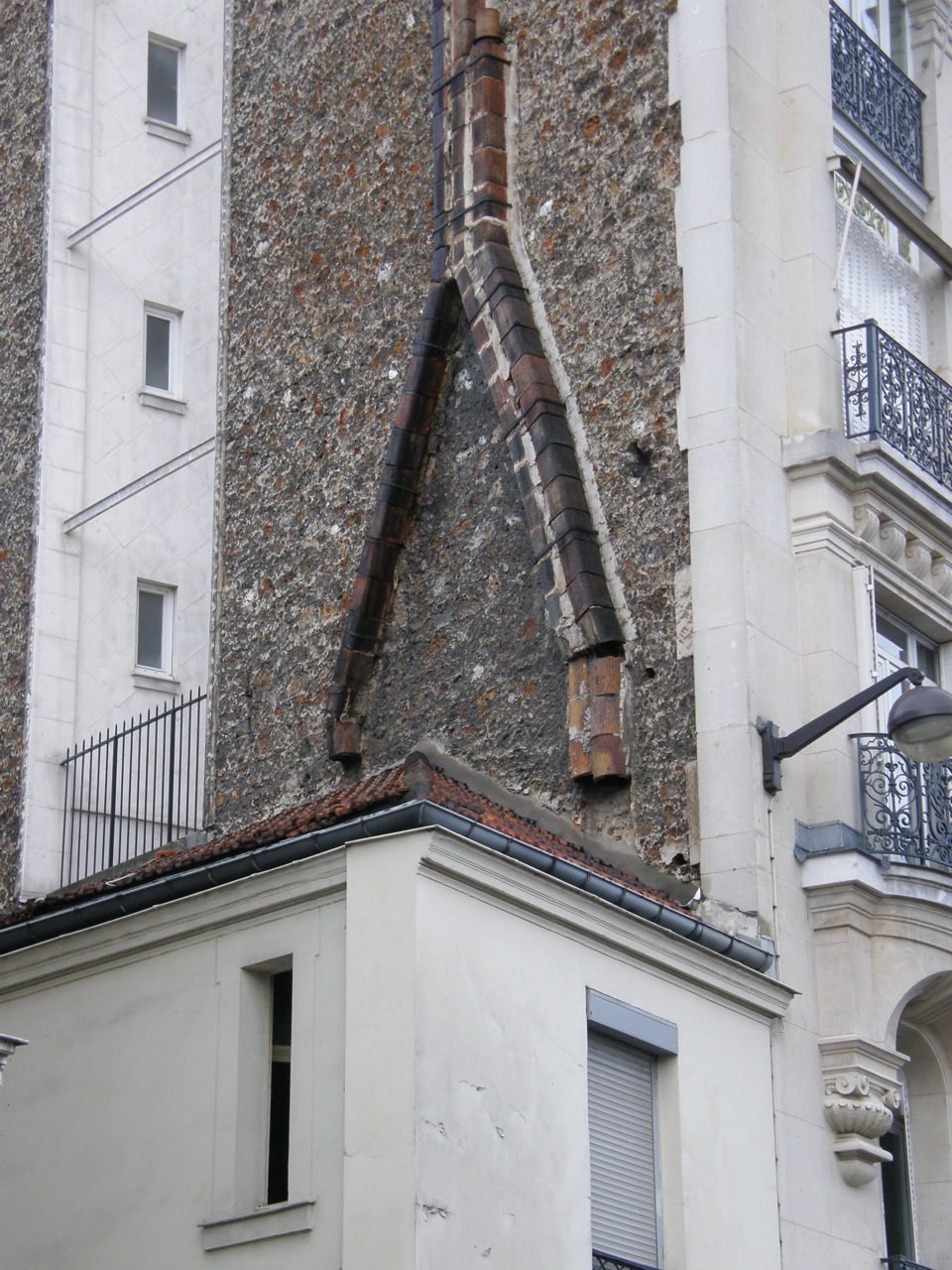
In the photo below, we see the brick cladding over three flues near the front of the building. This chimney has only one exposed side. Perhaps the lower building was originally intended to rise to the height of its taller attached neighbour, or perhaps the taller building was once lower, and a few storeys were added on later. However, no matter where they come from, chimneys must rise above the roof line of any attached building. That explains the sturdy chimney rising from the lower building to the top of the taller building. Chimneys must be taller than the adjacent buildings or downward-flowing winds will force the smoke back down the chimney—much to the chagrin of those near the fire, which then “draws poorly,” as they say.

Below, we see a more modern version of how to get the chimney top from a lower building up to the height of a taller one.

Once one starts looking for chimney tracks, one sees interesting versions everywhere in Paris. This is what I found one morning as I stuck my head out of the skylight over the sleeping loft of a flat on the rue de Gergovie.

Or this one, not far away on the rue de la Sablière, where it is clear that a building has been taken down, leaving a wedge-shaped house that is too narrow even to call a flat-iron building.

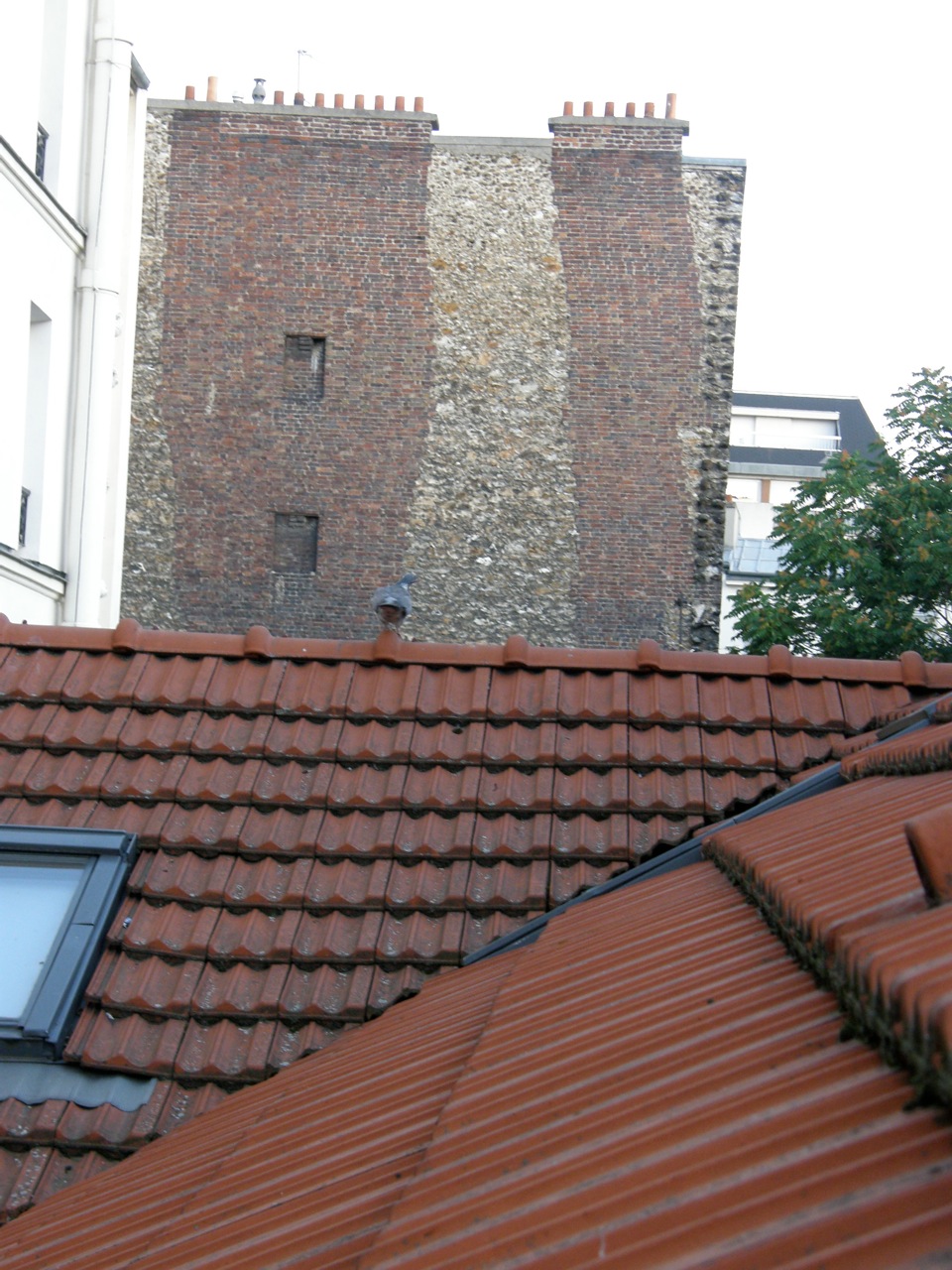
Of all the chimney tracks I have photographed, the next one is my favourite. I call it the “swamp creature.”

Doesn’t this weird shape suggest a B-movie monster climbing the side of the house? However you wish to imagine it, this too is a set of chimney tracks. And the pattern reveals its function when we know how to read it.

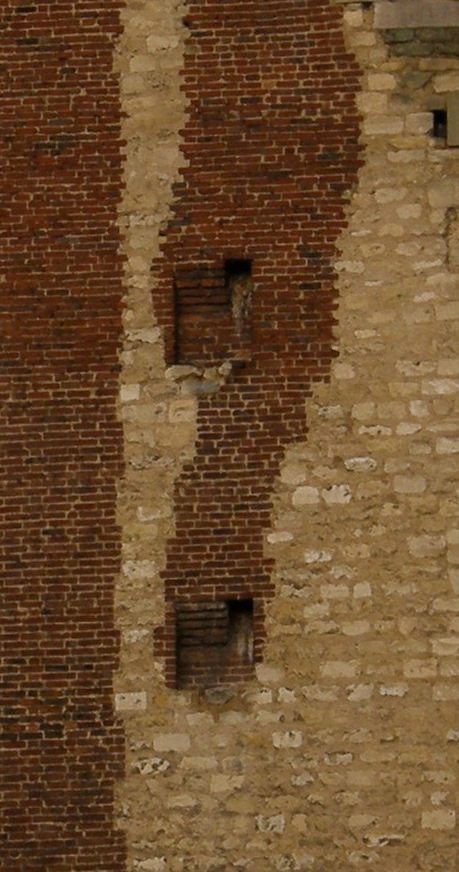
The coarse exposed stonework suggests an earlier wall. When we zoom in more closely, we can see some important details.

Note the two openings, each of which marks the point at which a chimney flue started its upwards journey to a chimneypot. While the brick hiding the flues and the stonework are flush with the rest of the wall, there are recesses going in further; we can see how the brickwork is stepped in. Beside these insets, we see openings where smoke could go up, or where the brushes of the chimney sweep could be drawn up and down to dislodge the collected soot, lest the flues and chimney become plugged.

And what is so bad about a plugged chimney? Émile Zola can’t talk to us about that subject. He died prematurely from carbon monoxide poisoning resulting from a blocked chimney in his Paris apartment. Some say it was an accident. Others say the chimney was blocked intentionally, a revenge murder for his leading role in exposing the institutional prejudices behind the Dreyfus affair that led to the exoneration of a wronged man. Zola too was deeply wronged for his courage and years later, he died from a blocked chimney. Murder? Negligence? Opinion is divided. But whatever you choose, don’t overlook the importance of chimney flues. Admire the chimney tops and scrutinize the flues.

Text and photographs by Norman Ball.
Posted in Paris history, Paris streets | Tagged , , , , , , , | 6 Comments

One thing leads to another

We both like to listen to Web radio while we work. We were particularly pleased to discover that Radio Classique, which we listen to in Paris (at call number 101.1) is available on the Internet. (Go to the site, click on “En direct” and then choose “Haut débit” or “Bas débit” and it will begin.) The music is enjoyable and you can practise your French comprehension by listening to the news broadcasts or the occasional interview.

We also have Apple computers, which offer umpteen different music streams from the radio available through iTunes. The other day, more or less at random, I chose AAA Classic, which makes up in its imaginative choice of music what it lacks in its pedestrian choice of name. It is a French station, and every so often I had to stop what I was doing to look at the little window that identified the music being played.

The first time, it turned out to be a piece called “Crime aux Champs-Elysées” by someone called Georges Delerue – a jazzy little number straight from a film noir. Later that day, I heard a quaint little accordion tune on the same channel. This one was called “Pissenlits par la Racine” and it was by the same fellow. Georges Delerue. Hm.

First of all, what did the song title mean? Le Petit Robert dictionary came to the rescue. I knew that pissenlits were dandelions, but I didn’t know that “manger les pissenlits par la racine” (to eat dandelion salad by the roots) is a colourful expression meaning to be dead and buried. The movie is a black comedy featuring a dead body.

Then I needed to find out more about the composer Delerue. Why had I never heard of him? Eventually I found an entire website devoted to the man and his music.

He was born in 1925 in the town of Roubaix, way in the north of France, close to the border with Belgium. His father was a factory foreman and he went to work in the factory in 1940 when he was in his mid teens, but studied music part-time. It took some time for his music teachers to realize that he had talent. In fact, at one point he was actively discouraged from continuing, and it was only the sudden death of an unsympathetic teacher that made it possible for him to carry on.

When the war ended in 1945, he went to Paris to study at the Conservatoire, and in time became amazingly prolific. He poured out works for ballet and theatre, concert pieces, musical scores for about 350 films, even music for commercials. He worked with François Truffaut (Jules et Jim, Shoot the Piano Player, Le Dernier Métro), Jean-Luc Godard (Le Mépris), and many other well-known French directors. Then he went to Hollywood.

At that point, I spotted something that sent my thoughts off in a new direction. In 1979 Delerue had won an Academy Award for the film A Little Romance directed by George Roy Hill. Goodness me. That took me back.

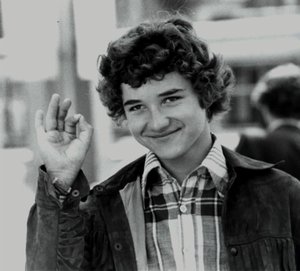
I remember the film well. It starred a seventysomething Laurence Olivier, a 13-year-old Diane Lane, and a young French boy with the extraordinary name of Thelonious Bernard. You can see the trailer on YouTube.

Oh, I loved that film. It was charming and touching and summed up all the romance of Paris for me – even though the most romantic part of all takes place in Venice. Two precociously bright teenagers fall in love and run away together, helped by a kindly if unreliable old gent (Olivier), while evading disapproving parents and others who don’t fully understand their intelligence and intellectual interests. She is the daughter of wealthy Americans; he comes from a working-class Paris suburb.

I found the film so delightful that when I went to France as a student, I hunted up a copy of the book on which the film was based: e = mc2, mon amour by Patrick Cauvin. I still have it.

The book was important to me, because it was the first one I read in French that was not something on a course syllabus, and because it was written from the point of view of the two teenagers, and the French is very colloquial. The very first line in the book is: “L’année scolaire se tire des pattes.” That sent me scurrying to Le Petit Robert. “Se tirer des pattes de quelqu’un” means to get out of someone’s clutches, so it’s a way of saying the school year is ending.

It took me weeks to get through that book. I had to look up something in every paragraph, if not every sentence. But I enjoyed it so much I that when I finished it, I bought another by Patrick Cauvin (Huit jours en été) and repeated the whole process.

Cauvin (whose real name was Claude Klotz) was as prolific as Delerue in his way, and churned out dozens of novels under both names. He wrote hard-boiled, violent thrillers as Klotz and tender romances as Cauvin. When he wasn’t teaching French in a lycée, that is. You can see a list of his books here. He even wrote a sequel to e = mc2, mon amour called Pythagore, je t’adore. At the time, though, I knew none of this.

Having rediscovered the movie, I wondered what had happened to that delightful young man called Thelonious Bernard from A Little Romance. Diane Lane went on to make many more films; what did he do?

Although he pretty much steals the film, he made one more movie, then decided that the life of an actor was not for him. He went back to his studies and became a dentist. According to the Internet Movie Database, he lives in Nantes with his wife and family.

What a delightful ending to the story. Unlike those former child stars who try and often fail to stay in the limelight, he firmly closed the door and went back to private life. How very sensible and, in some ways, how very French. Good for him.

I cannot forget the last frame in the film. As the young American girl drives off with her parents, on their way to the airport and back to the States, he runs after the car. When another car pulls in front, he hops up and down to get a last glimpse of her. The film freezes on this image of him in mid-hop.

The music playing behind this scene is not that of Georges Delerue, but a quiet bit of Vivaldi. There is a lot of Vivaldi in the film. Despite Delerue’s Academy Award, all I remember is the Vivaldi.

Georges Delerue died of a heart attack in Los Angeles in 1992, at the age of 67. He had just finished recording the music for a Bruce Beresford film. Patrick Cauvin/Claude Klotz died in 2010, aged 77. I wonder if they met during the filming of A Little Romance. And if so, whether they found they had anything in common.

How odd to be remembering books I read years ago and movies I loved, all because of a piece of music I heard on AAA Classic. But that’s the way the memory – or at least my memory – tends to work. One thing always leads to another.

Text by Philippa Campsie

Posted in Paris film, Paris music | Tagged , , , , , , , , , , , , | 19 Comments

Seduced by the chimneypots of Paris

Many a seduction starts by looking through a window. The allure of chimneypots started to seduce me as I gazed through the generous windows of a rented flat on rue Charlemagne in the Marais.

Okay, I liked les mitres de cheminée, but I could keep it under control. There was nothing wrong with one last look before going to bed. If I woke during the night, why not part the curtains for another look in the moonlight? And early in the day, morning coffee could wait for a few moments. Let’s be practical, the look of the sky held up by Paris chimneypots helped me see the weather for the coming day.

Soon I began to see the drama of the sky and weather simply as projections on and backdrops for chimneypots. I didn’t tell a lot of people about this; it was a private passion and pleasure, I guess.

Slowly, well actually rapidly, I began to question my interest in chimneypots. After all here I was Paris in all its glory, and I was thinking about chimneypots—well, lots of other things as well, such as in cars, motorcycles, galleries, old photographs, shops and museums—but chimneypots were right up there. So yes, I was normal, maybe a bit fringe, but still in the normal range.

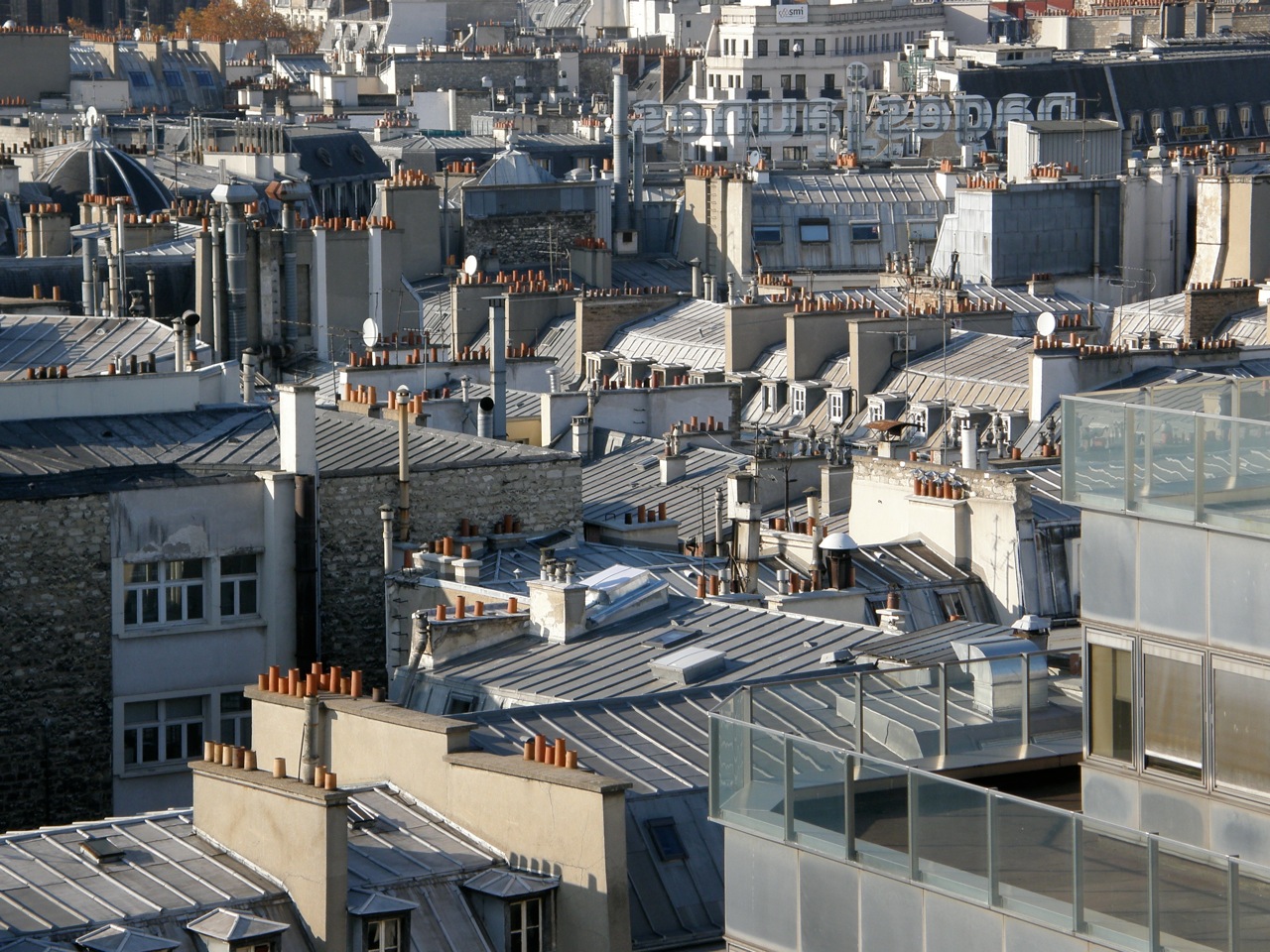
So what would a normal visitor do on a fine November day? Go shopping. But shopping can be hard work, so we took time for lunch on the rooftop of Printemps. And what would be more normal than to take a few photos of the view? After all, this is Paris.

But look. There they were. I had tried to stop looking for them. Now they were looking for me. Was I being stalked by chimneypots? Maybe I just had my eyes open, and slowly I was discovering one of the ubiquitous, albeit hidden-in-plain-sight wonders of Paris: a glorious profusion of chimneypots. Suddenly I had a whole new view of Paris. And I could look more carefully.

[Philippa wants me to add for those who are interested in other things that appear on rooftops that the backwards sign in the distance advertises Les Pages Jaunes (Yellow Pages); it sits atop a building on the Place Gabriel Péri near the Gare St-Lazare.]

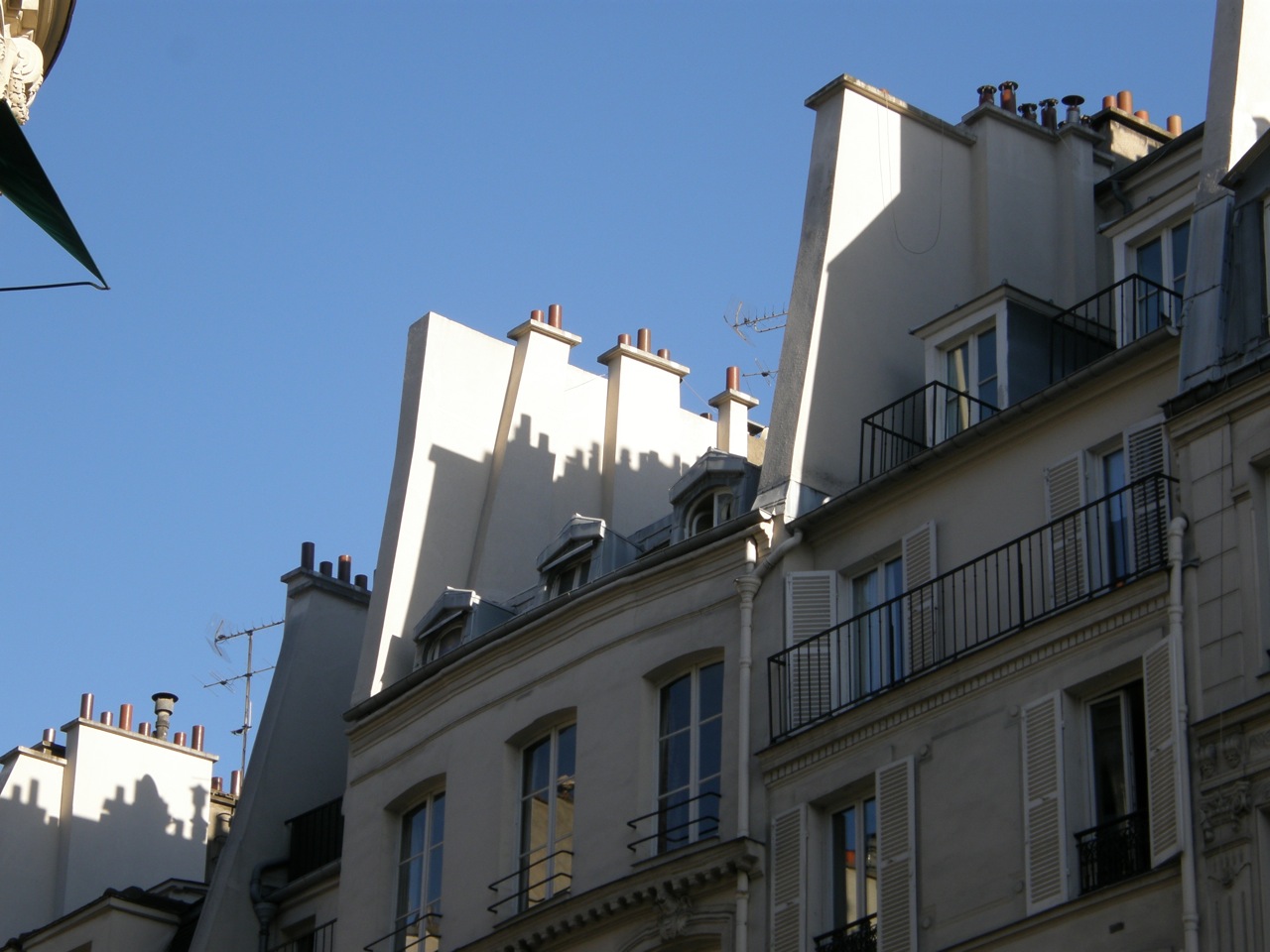
I had long been intrigued by the geometric purity and visual strength of some of the firewalls separating parts of the buildings of Paris. Now, with new eyes, I saw that as the sun moved across Paris, the firewalls of buildings became screens for chimneypot shadow plays.

The chance discovery of a postcard showing the now-defunct department store Dufayel eventually led three of us to scramble about Montmartre trying to get the matching shot. We succeeded and wrote about our explorations in an earlier blog. But I also found something else. There patiently waiting for me was another wonderful collection of chimneypots.

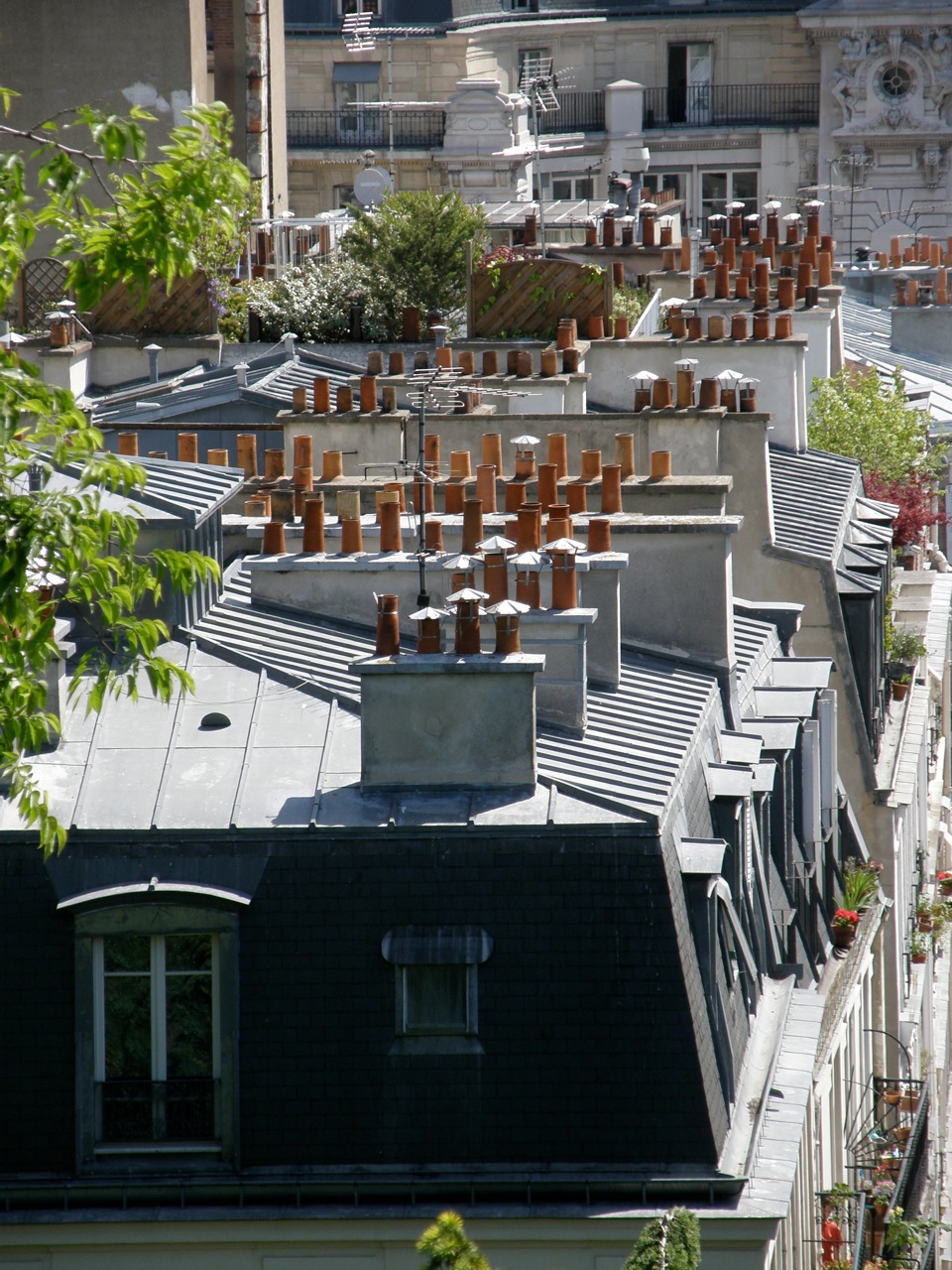
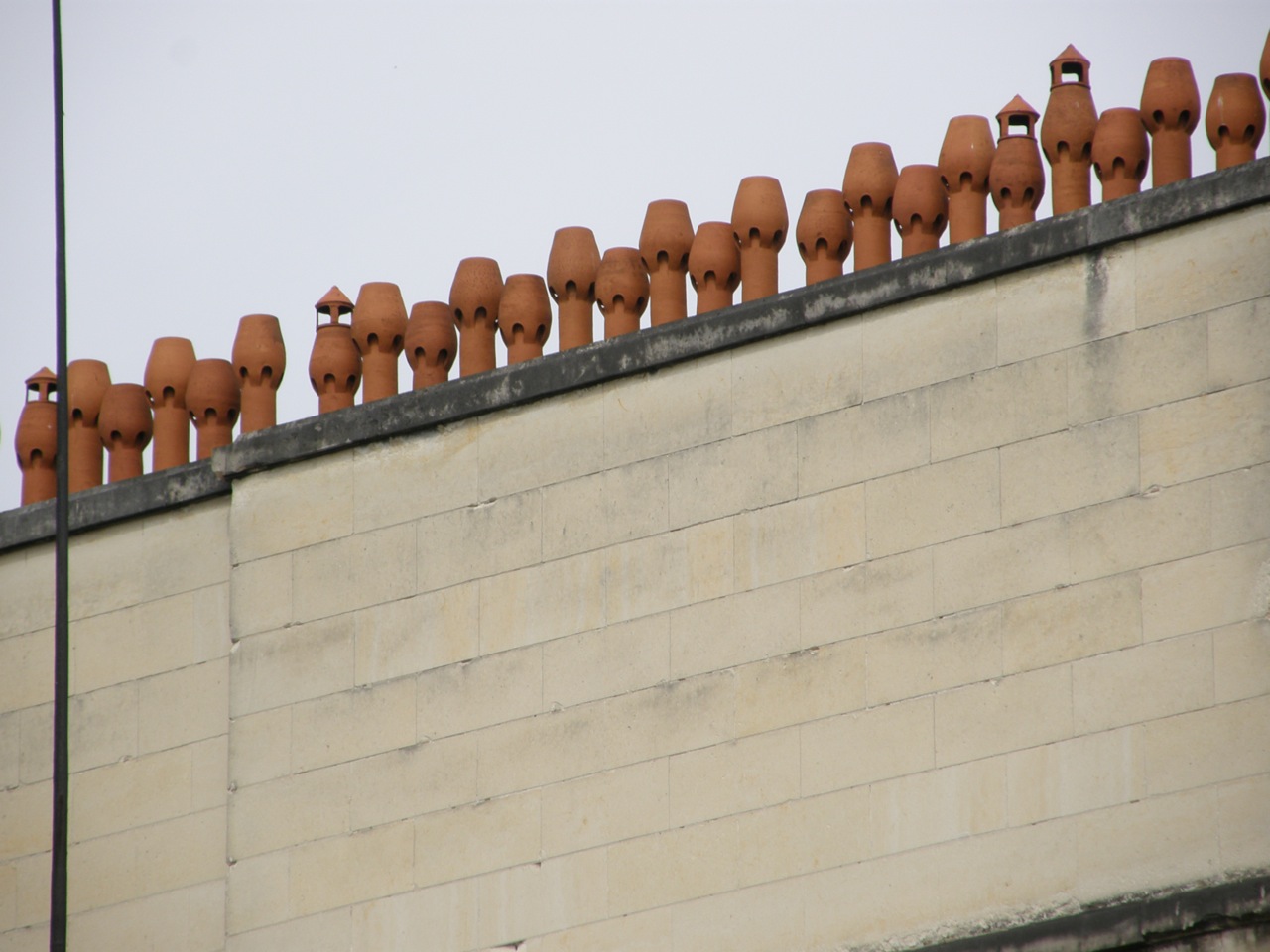
As you might imagine, there are no Paris days for me without chimneypots. I don’t search them out, we just find each other. As we walked through the 6th arrondissement to visit our friend Karen in what turned out to be the most glamorous Paris apartment I have ever been in, they were lined up with military precision and dressed to impress an admirer.

On closer examination, they looked sculptural, like an art installation or a Paris version of those clay funerary soldiers I once saw in China.

Karen, a delightful host, knew the view from the balcony was wonderful, but probably little suspected the fascination her neighbouring chimneypots would hold for one guest.

In the next shot, we can see a wonderful bit of bricolage or making-do. I love how the chimney has been reinforced with two metal bands. The clay chimneypot on the right has been given a covering to keep water and snow out. And what do we have on the left and the centre? Flexible stainless steel liners, which probably indicate that below lurk new higher-efficiency appliances of some sort. Above all, it is about how one keeps things going in a historic city as time passes. This is one of the things I find so intriguing about Paris.

Another view from Karen’s balcony gives the same message.

And as we bid adieu to Karen and walked down the stairs to the street, we were more floating than walking: a considerable quantity of bubbly and an equal amount of good company. And the chimneypots on the way to and then from Karen’s balcony helped me realize that I could keep on finding bits of my Paris in all kinds of unsuspected places.

About a week later, I thought of the view from Karen’s balcony and the modernizations of an older chimney system. I had looked skyward about seven storeys and with a strong telephoto lens snapped something that might have been from a B horror movie about an outer-space invader that ate chimneypots. Actually, it’s just a very imaginative exhaust system for a restaurant. Not glamorous, but interesting.

Yes, chimneypots are part of my Paris. How could one fall in love with the city without falling in love with skyline? I have taken many photos where I have tried to capture reflections. Chimneypots are often there.

I think of the soft Parisian stone that turns into the warmest yellow in sunlight. How many see the chimneypots that belong with the glorious carvings?

I also think of a lovely afternoon near the Place des Vosges and the raven that would not stay still. Finally it did. Only later did I wonder if this should be called “Raven on lamp standard” or “Chimneypots with raven in foreground.”

Several times we have stayed in a flat in the 14th. I loved to peer through the tiny spaces into a minuscule courtyard. Surely this view existed solely to pay homage to the chimneypots of Paris. Near that apartment we saw signs advertising “ramonage.” We had to look that one up. But of course! It meant chimneysweeping.

In a future blog, I will write about another aspect of chimneys in Paris.

Text and photographs by Norman Ball

We’ve been asked by our friend Laurie at the Paris Blog to announce the opening of an exhibit of photography by Raul Vega. If you are in Paris, have a look and let us know what you think. We wish we could be there ourselves.

Posted in Paris streets | Tagged , , , , , , , , , | 8 Comments

The genius of the opera-ballet

On July 10, 2011, the world of dance lost Roland Petit, a brilliant and original French choreographer. His best-known works were not the pretty-pretty ballets of fairies and swans in white fluffy tutus, but human dramas of passion, violence, elation, despair, and sex.

If you want to see all five elements in one short sequence, just watch the six-minute YouTube video of Le Jeune Homme et la Mort (Death and the Young Man), based on a story by Jean Cocteau using music by J.S. Bach. The most accessible version (though not necessarily the best) is the opening scene of the film White Nights with Mikhail Baryishnikov.* Take a look.

I think of Roland Petit whenever I catch sight of the Paris Opéra, because the first performance I ever attended in that building was one of his ballets. Appropriately enough, it was his take on Le fantôme de l’Opéra. This was well before Andrew Lloyd Webber got his hands on Gaston Leroux’s story and turned it into a cliché. Roland Petit’s version, with music by Marcel Landowski, was darker and spookier, with no trace of sentimentality, and the staging was extraordinary.

I remember so many details, even after all these years. And I still have the programme.

The story unfolds in twelve scenes, for which the set designer recreated parts of the building on stage – from the domed roof with its statues and the grand foyer with its staircases to the backstage areas (coulisses) and the underground lake (la cuve).

For the scene in which the chandelier crashes into the orchestra pit in the middle of a performance, the stage was recreated back to front. That is, the back of the real stage showed the reverse side of a huge curtain, with an audience dimly suggested beyond it and a chandelier visible near the ceiling. The dancers performed facing this curtain, with their backs to the real audience. As the chandelier started to fall, the curtain swung shut, so one heard only the crash as it landed and saw the pandemonium among the frightened dancers on stage as they tried to figure out what had just happened.

In another scene, the Fantôme vanishes into a mirror. The mirror on stage had been created with vertical strips of reflective mylar in a huge gilt frame. The Fantôme simply threw himself towards the frame and disappeared between the strips, which shimmered briefly, and then were still.

The Paris Opéra was the building in which Roland Petit trained as a young boy (he started ballet school there at the age of nine), and he must have known it at least as well as Gaston Leroux did. It is beautiful and creepy, full of grand public spaces and obscure backstage passages, gleaming gold statues and dusty disused corners, exciting and frightening and bewildering all at the same time. Norman’s photo below captures the view of the building from the roof of the Galeries Lafayette, rather than the customary tourist view from the front.

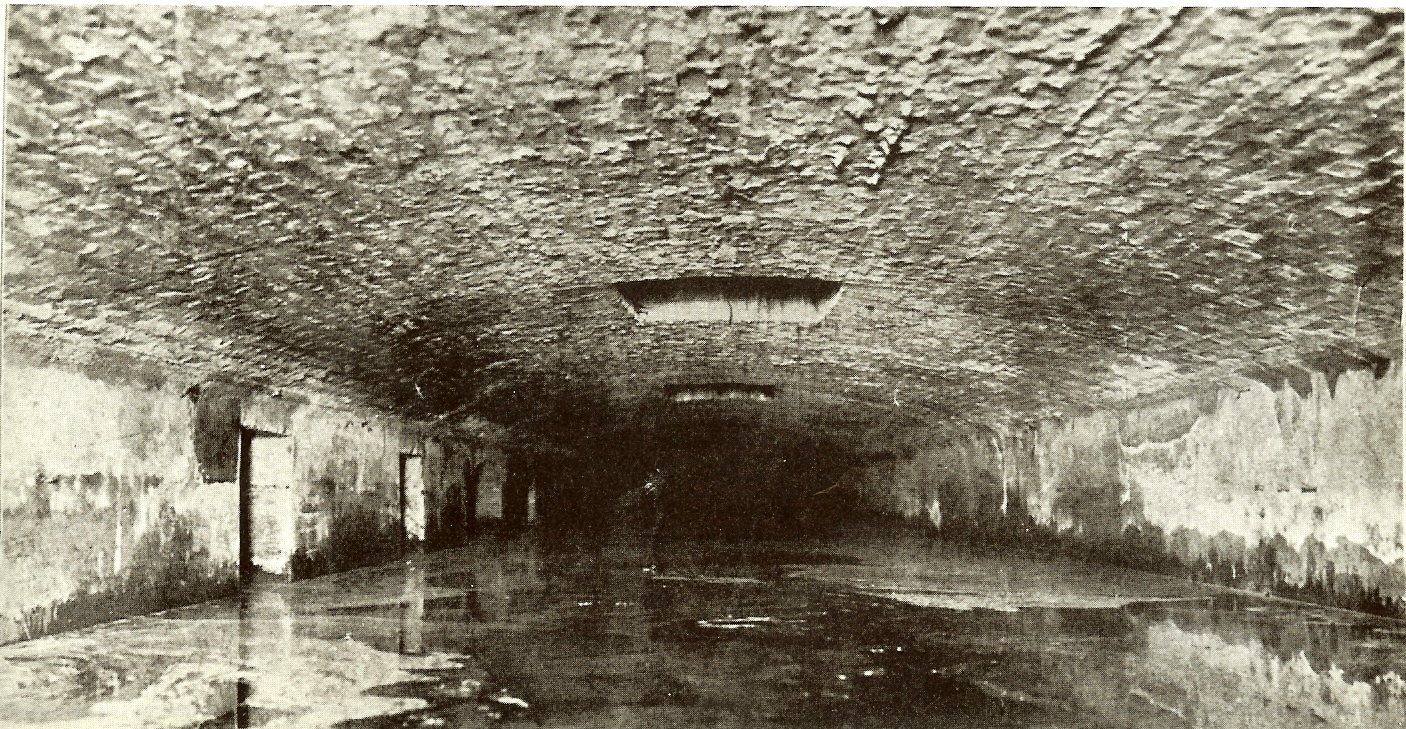
The programme I saved from the Fantôme performance devotes an entire page to the Opéra’s underground lake, which is the site of a crucial scene in the ballet (but without the corny gondola used in the Andrew Lloyd Webber version). This is a lake of ink, a lake of lead, a threatening space from which intruders do not return. There are rats. Big ones.

The programme explains that the purpose of the original lake was to stabilize the building. Just as one talks of fighting fire with fire, the builders of the Opéra fought water with water. The ground was sodden, and the water table too high. The only way to prevent water rushing into the foundations was to incorporate water into the foundations from the start, in the form of an artificial lake or reservoir (the French term la cuve means a tank).

In 1862, when construction began on the Opéra building, after the start of excavations, the ground had to be pumped out. It took a year. Eight pumps removed a quantity of water that (according to a contemporary writer quoted in the programme) would have filled an area the size of the courtyard of the Louvre to a depth one and a half times the height of Notre Dame. Then a foundation was built with concrete and cement, bricks and bitumen. Finally, the whole thing was flooded, so that every cranny was filled and more water could not enter. And on this watery foundation, the Opéra Garnier was built. Apparently Paris firemen now use the cuve for exercises in underwater rescue.

Other remarkable spaces under this massive building include stables for the horses that were once used in spectacular tableaux on stage, air raid shelters from the war, and vast elevators for raising and lowering pieces of scenery. The stage machinery is massive – in fact, the stage itself is massive. Another performance I attended there was an end-of-term concert by the Paris Opera “rats” (the ballet students), at the end of which, the layers of backdrops were raised one by one until the entire stage was visible all the way to the loading doors at the back. The space revealed was vast.

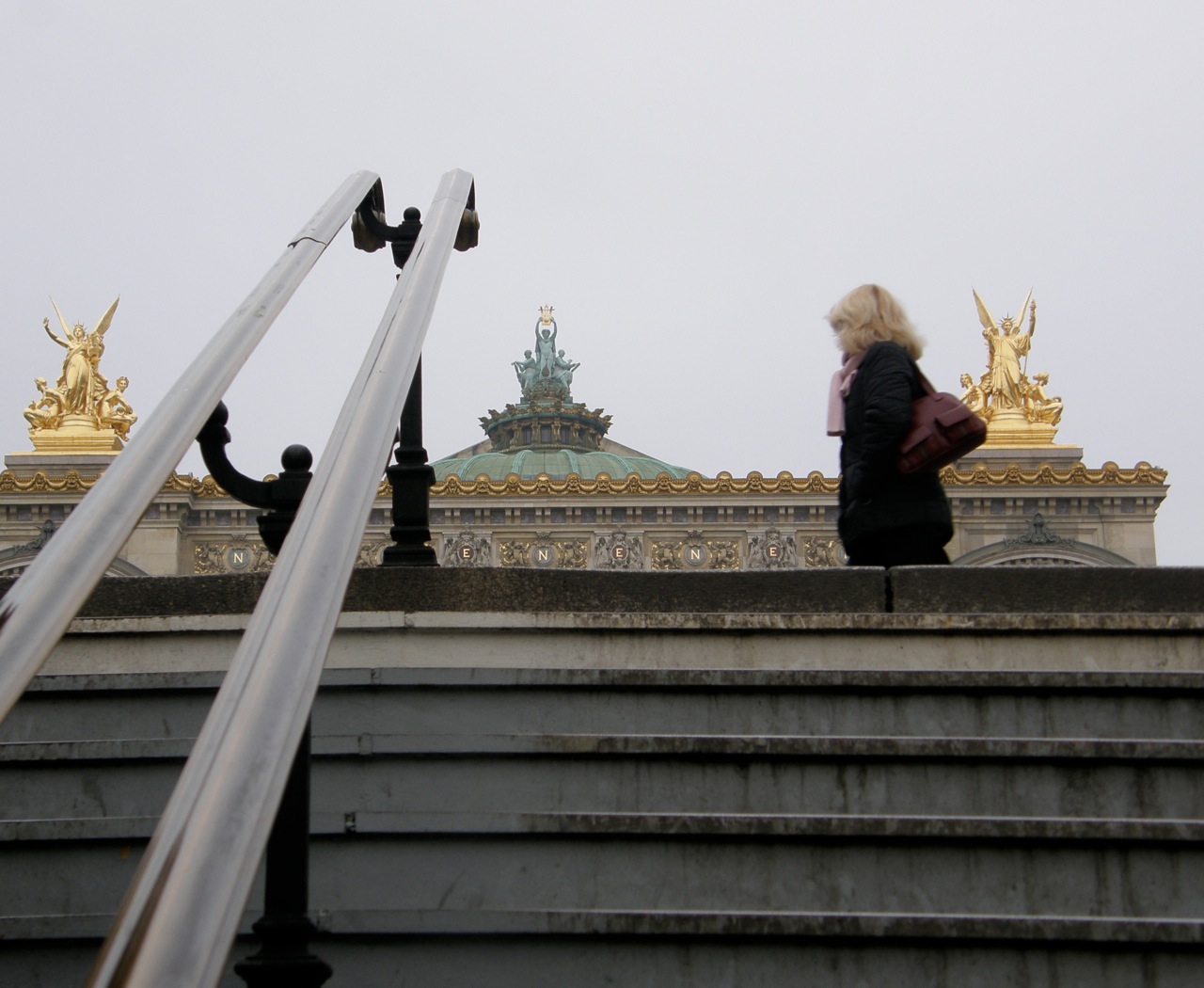
It remains an extraordinary place and an extraordinary ballet company. If you have not seen the 2009 Frederick Wiseman documentary, La Danse: Le ballet de l’Opéra de Paris, you have a treat in store for you. The photograph below captures the first view that most of us have of the building, as we emerge from the Metro.

Roland Petit spent many years working in that building with its ballet company, although he is also known as the founder of the Ballet National de Marseille and its director for 26 years. Over the course of his career, he created more than 150 ballets, of which perhaps Carmen (1949) is the best known. He choreographed it with Zizi Jeanmaire in mind – the vivacious ballerina who became his wife and muse. Click here to see the two of them in the love scene from Carmen that was considered shocking at the time.

His choreography for Notre Dame de Paris (The Hunchback of Notre Dame), with costumes by Yves St-Laurent, is another of his celebrated achievements. Petit even worked in Hollywood for a while. At various times, he collaborated with a range of performers from Margot Fonteyn to Serge Gainsbourg to Fred Astaire to Pink Floyd. Nothing was off-limits to him, it seems.

As for me, I will always associate him with the Paris Opéra and my first visit there.

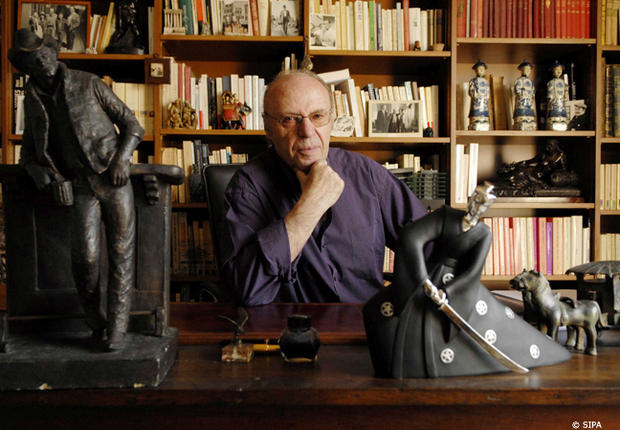
Text by Philippa Campsie, original photographs by Norman Ball. Photograph of Roland Petit by F. Levieux.
*This version was modified from the 1946 original, and rather downplays the part of the woman. It is worth comparing with the version in which the woman’s part is played by Zizi Jeanmaire with Rudolf Nureyev as the young man.

Posted in Paris dance, Paris music | Tagged , , , , , , , , , , , , , | 4 Comments